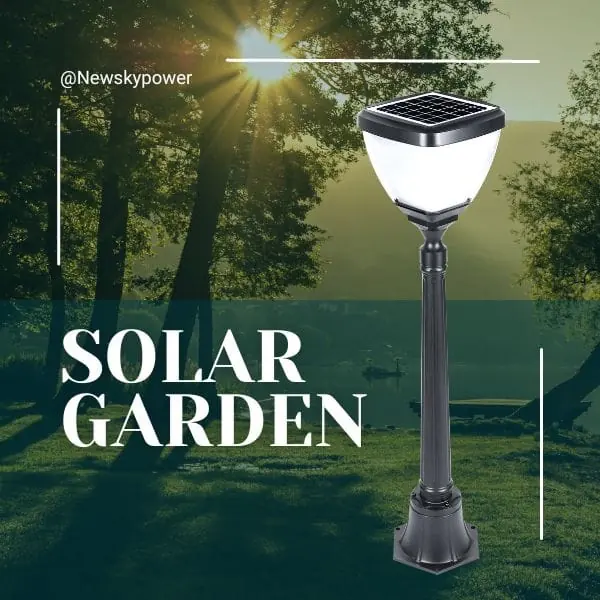


To judge a solar light’s weather protection, match the exact product and its installation conditions to the available evidence. An IP marking is useful, but it does not turn “outdoor” or “waterproof” into an unlimited promise. Rain, sprinkler spray, standing water, cleaning, corrosion and temperature involve different questions.
Start with the environment at the proposed position. Then request the model-specific rating, relevant report and installation requirements. A solar lights waterproof rating becomes meaningful when you know what was assessed, which configuration it covers and whether the installed unit preserves those conditions.
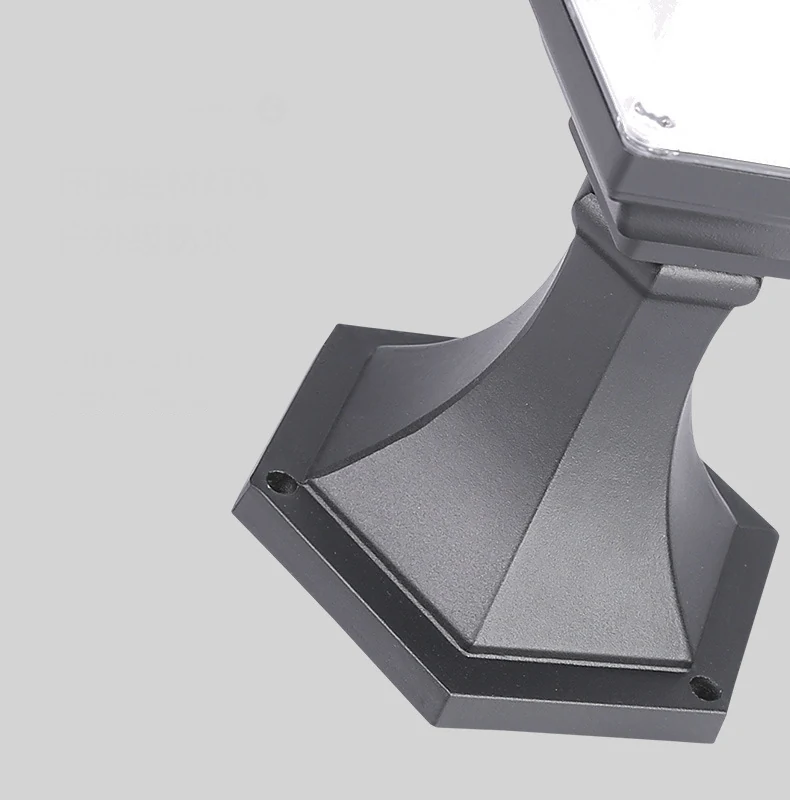
What an Ingress Rating Describes
Treat the marking as a defined classification
IEC 60529 concerns degrees of protection provided by electrical enclosures, commonly identified through the IP Code. Its official publication description establishes that scope. A rating should therefore be read as an enclosure classification with defined conditions, not as a general promise covering every outdoor exposure.
For a purchasing decision, request the exact claimed code, the standard and edition cited by the evidence, and the product identity assessed. Do not replace a specific rating with the broader word “waterproof” when those qualifications matter.
Do not combine unrelated assurances
Ingress protection is not a complete statement about corrosion resistance, impact, battery charging temperatures or years of service. Those matters require their own relevant evidence and instructions.
Equally, avoid assuming that all IP classifications mean the same thing about immersion. If a product is proposed for conditions involving submersion, the exact rating, test scope and manufacturer-approved use must support that condition. A general outdoor-light description is not enough.
For ordinary garden selection, a practical first step is to identify a rain-exposed, sprinkler-adjacent or non-submerged position accurately. That is more useful than asking for “the highest waterproof number” without describing the installation.
Match the Model, Test and Intended Use
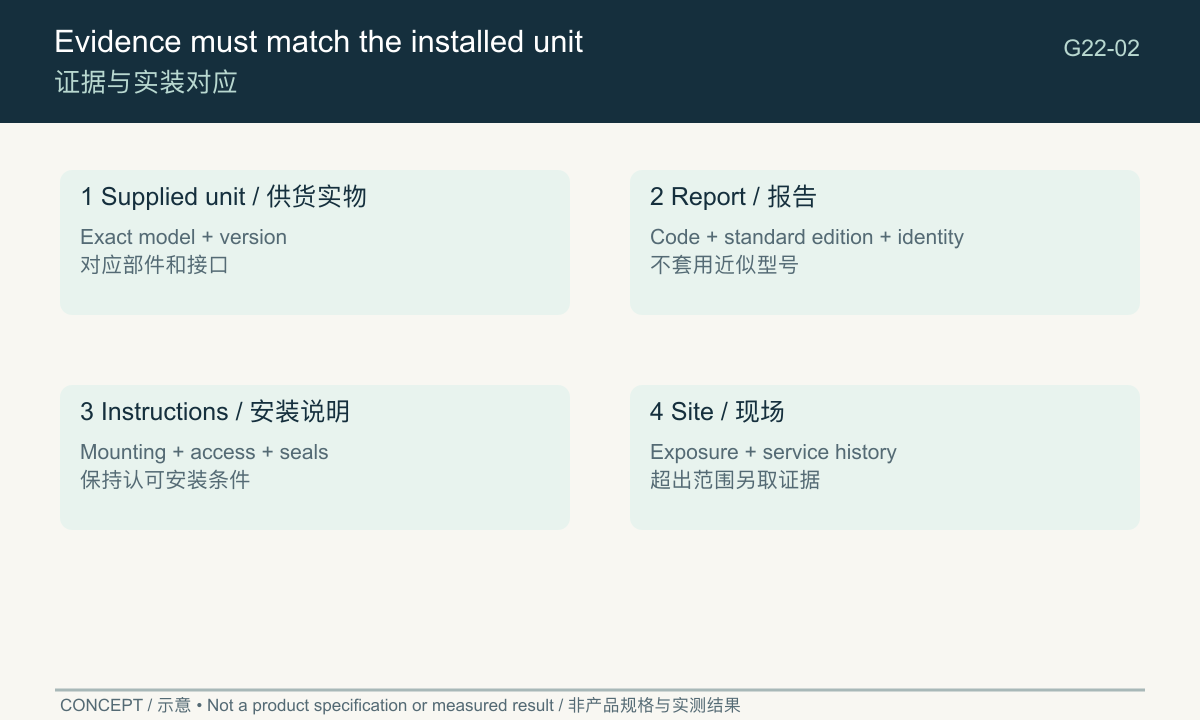
A report-backed claim needs a traceable connection between the document and the supplied light. A report for a similar housing or an older version should not automatically be applied to another configuration.
Check the identity chain
Record the model code, version, applicant or manufacturer identity, report reference and the configuration described. Ask which enclosures and interfaces were included. Where a product has separate components, establish whether the claim applies to each component or a defined complete assembly.
A public product page can help identify the claimed feature, but a marketing statement is not an independent test report. Request the relevant supporting document when protection is a purchasing requirement.
Compare the report with the real location
Describe exposure concretely: open rain, nearby irrigation, a low point where water collects, coastal conditions or a cleaning practice. Include photographs showing the mounting position and the source of exposure.
A report can answer only the questions within its scope. If the site introduces a different condition, ask for an explicit suitability response rather than stretching the original claim. The answer may be a different location, a supported configuration or another product.
When shortlisting solar bollard lights, note how close the enclosure and mounting interfaces will be to soil, irrigation and pooled water. The category name alone does not establish suitability.
Check Seals, Connections and Installed Condition
The condition of the actual assembly matters. A correct product identity does not prove that a damaged, altered or incorrectly assembled unit retains its declared protection.
Inspect externally before service or installation
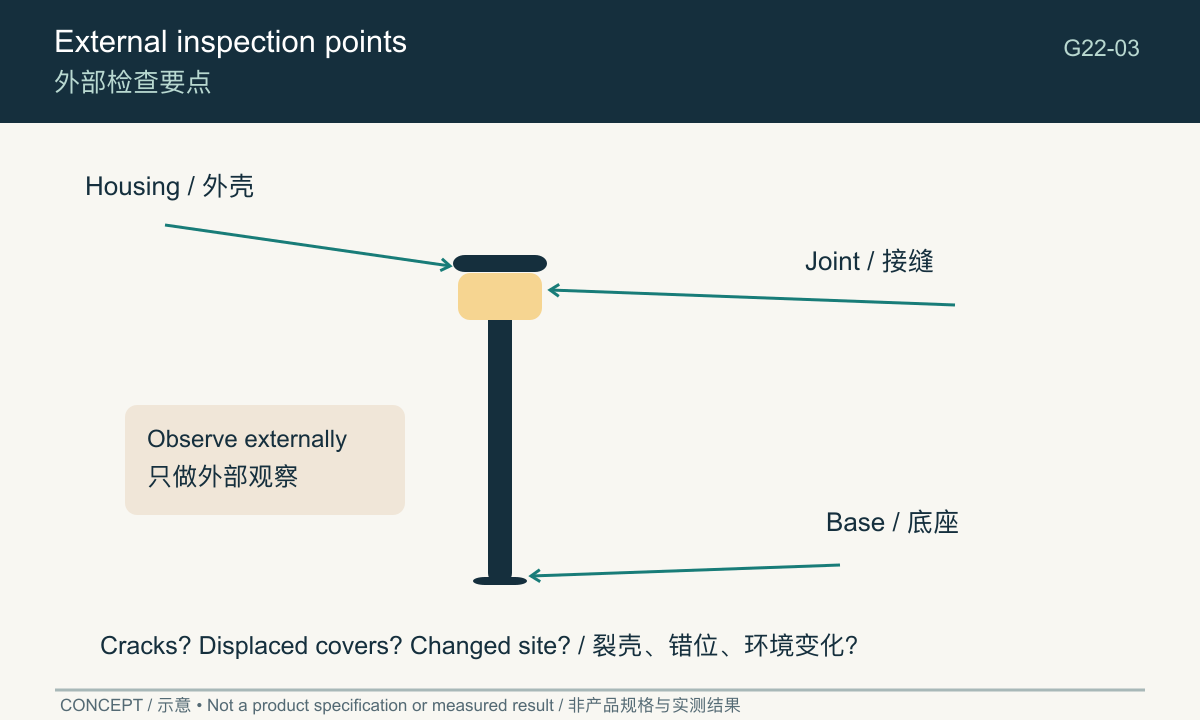
Look for cracked housings, displaced covers, damaged visible seals and loose or missing external parts. Record anything unusual with photographs. Do not open a sealed enclosure merely to demonstrate that it looks dry inside.
For serviceable designs, follow the exact procedure for access, seals and reassembly. A replacement gasket or connector should be the approved part for that configuration. Similar appearance does not establish that it will preserve the intended fit.
Do not improvise protection
Adding glue, tape or sealant is not a substitute for a supported repair. It can obscure damage or alter the intended arrangement. If the instructions require a particular sealing step, follow that documented detail; otherwise obtain guidance.
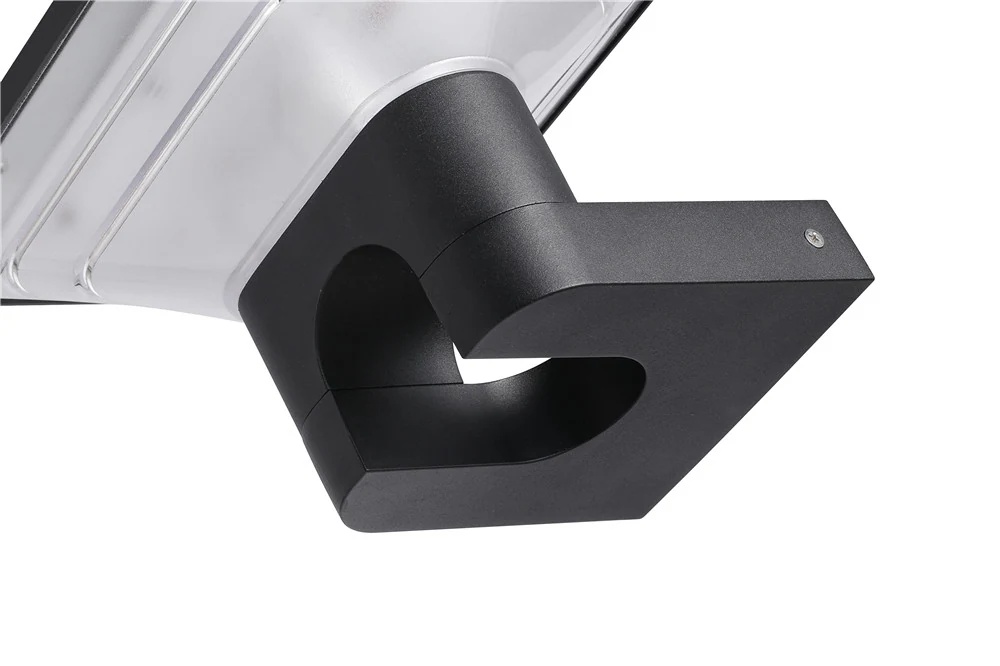
Also distinguish the lamp enclosure from the supporting structure. A sound housing does not correct a loose pillar cap, unstable base or unsuitable mounting surface. Installation and product protection need to be checked together.
Keep the installation record with the product documents. If an enclosure has been opened for approved service, note the date, person and parts used. That helps explain later observations without assuming the product’s condition has remained unchanged.
Separate Rain, Standing Water, Cleaning and Condensation
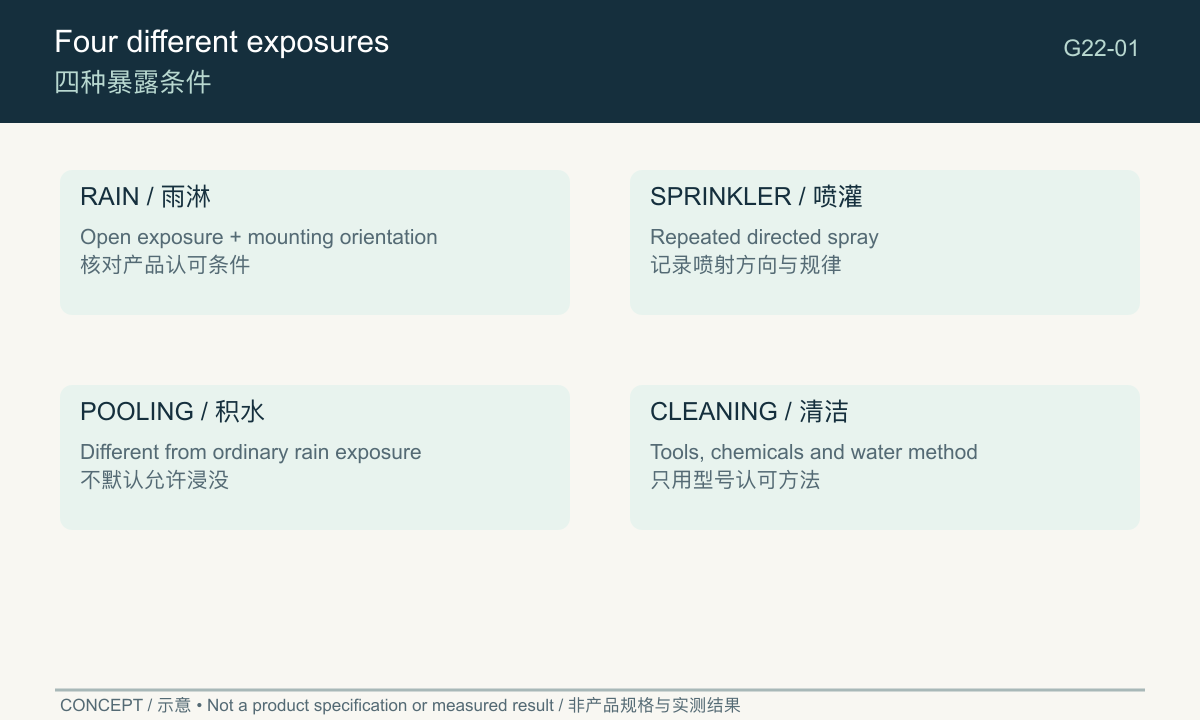
These four conditions are often grouped under “waterproof”, but they call for different checks.
Rain and irrigation
A product intended for outdoor rain exposure should be selected and installed according to its stated conditions. A nearby sprinkler can create repeated directed spray at a different angle from rain. Identify the actual irrigation pattern and ask whether the proposed position is suitable.
Where practical, reconsider a position that receives avoidable direct spray. Do not assume that moving the fixture slightly higher resolves every exposure, especially when connectors or the base remain in the spray path.
Standing water and cleaning
A low point can collect water around a base after rain or irrigation. Treat that as a distinct condition, not simply “more rain”. Avoid a submerged or waterlogged installation unless the exact product and arrangement are approved for it.
Cleaning also needs a defined method. A rating should not be treated as permission to use any pressure washer, chemical cleaner or directed jet. Follow the manufacturer’s cleaning instructions, including any restrictions around interfaces.
Condensation needs observation, not a guess
Visible moisture does not by itself establish whether water entered from outside, condensation formed internally or another condition is present. Record where it appears, when it occurs and whether it persists. Include the surrounding weather and any recent service.
Do not describe recurring internal moisture as harmless without an assessment. Stop operation where damage or abnormal behaviour raises a safety concern and contact the supplier. Do not open a suspect unit simply to dry it out and assume the original protection is restored.
Assess Corrosion, Temperature and Maintenance Separately
A garden light may face more than water ingress. Coastal air, cleaning products, surface damage and temperature conditions can influence suitability in ways that an IP marking alone does not resolve.
Ask for the relevant evidence
For corrosion concerns, identify the environment and request information about the materials, finish and applicable evidence. Do not infer a corrosion life from colour, housing thickness or a generic “outdoor” description.
For temperature, separate storage, operation, charging and discharging conditions. A battery’s permitted charging range is not automatically the same as its discharge range. Ask for the limits and control behaviour of the actual configuration instead of applying an LED operating claim to the whole solar system.
For seasonal charging and temperature checks, see our guide to using solar lights in winter.
The solar courtyard light category can help identify candidate forms, but environmental suitability remains a model-specific question.
Make maintenance practical
Provide access for routine external inspection and approved cleaning. Record changes to nearby plants, irrigation and ground levels, because a suitable installation can acquire different exposure later.
A newly redirected sprinkler or added mulch can change conditions around a fixture. These changes deserve review even when nobody has altered the light itself. Site maintenance and product maintenance should therefore share the same location references.
Inspect after unusual weather or visible disturbance according to the applicable maintenance plan. The purpose is to identify changed conditions early, not to promise that inspection prevents every failure.
Request Evidence with an Environment Checklist
Use a checklist that connects each exposure to the evidence needed. A single column marked “waterproof: yes” loses the distinctions that matter.
| Site requirement | Information to provide | Evidence to request | Decision to record |
|---|---|---|---|
| Rain-exposed position | Mounting orientation and photographs | Exact model rating and relevant report | Approved position and conditions |
| Sprinkler-adjacent position | Direction and pattern of spray | Explicit suitability and installation guidance | Retain or relocate |
| Possible pooling | Ground levels and observed water collection | Approved exposure limits | Non-submerged location or another supported solution |
| Routine cleaning | Intended tools and products | Model-specific cleaning instructions | Permitted method |
| Corrosive environment | Site description and relevant exposure | Materials, finish and supporting evidence | Suitable configuration or further review |
| Cold or hot conditions | Relevant site conditions | Separate operating, charging and storage limits | Supported use and controls |
| Previous service | What was opened or replaced | Approved parts and reassembly requirements | Verify condition before returning to use |
Use the answers to change the installation when necessary
Keep the supplier’s response against the actual site photographs and report reference. If the response only repeats a catalogue code, ask which of the described exposures it addresses. A useful answer identifies the supported condition and any required change. Record unanswered conditions as open so they cannot be mistaken for acceptance when the quotation moves to installation.
Suppose a hypothetical bollard location sits beside a sprinkler and in a shallow drainage low point. A catalogue rain-protection claim does not answer both conditions. The useful next step is to review a drier position and obtain the exact model’s exposure guidance, not simply add a stronger-sounding adjective to the order.
For broader position and fixture choices, the yard lighting guide provides a useful starting framework. Keep the protection decision attached to the chosen location and configuration.
Send the completed environment checklist, product reference and installation photographs to the supplier. Ask for a response against each relevant exposure. That produces a clearer decision than asking whether a solar light can “stay outside in any weather”.
Frequently asked questions
Can solar garden lights stay outside in rain?
A model intended for that exposure can be used under its approved conditions. Check the exact product, mounting and condition rather than generalising across all solar lights.
Does an IP rating permit standing water around a light?
Not automatically. Establish whether the specific exposure and installation are within the supported scope.
What evidence should a buyer request?
The exact rating, applicable report identity, matching model and version, installation instructions and separate information for environmental requirements outside the ingress claim.
For an overview of fixture types, site conditions and selection priorities, see our garden and courtyard lighting guide.