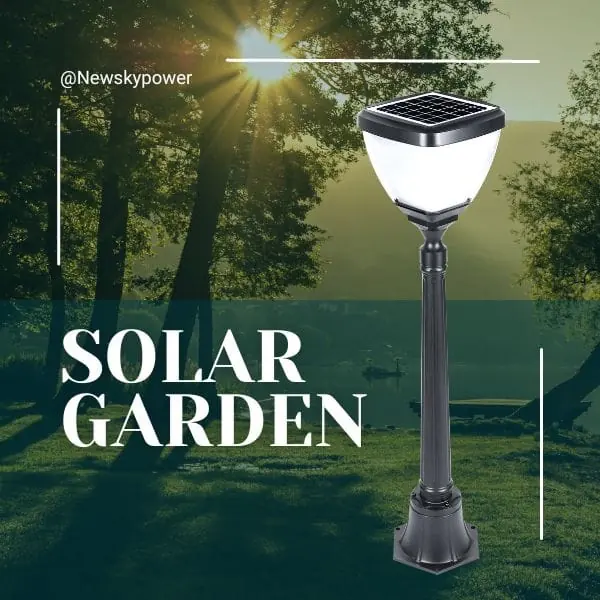


A solar landscape lighting sourcing checklist should connect each proposed SKU to a real configuration, packaging version and service arrangement. A coordinated range is more than a group of products that look similar. Importers and distributors need to know what can be ordered, how it is identified and what happens when a customer needs support or replenishment.
Start with the intended channel and customer needs, then build a multi-SKU matrix. Confirm options, labels, packing, compatible parts and sample approval separately for every identifiable configuration. Do not assume a common appearance establishes shared components, one minimum order quantity or identical market documentation.
This guide concerns series procurement and version control, not the visual design of one garden. Wholesale and OEM enquiries can be organised with the same method, but those purchasing interests do not prove that a supplier offers a particular customisation, lead time or certification scope.
Define the Channel, Customer and Range Positioning
Describe who will buy and use the range
Record the target country or countries, sales channel, intended customers and service model. A distributor supplying landscape contractors may need information different from a brand selling directly to household buyers. Identify the installation forms and questions the customer actually needs answered before choosing a long list of products.
Avoid inventing market size, expected sales or a best-selling configuration. A range plan can begin as a set of hypotheses to validate with customer and supplier information. Its usefulness does not depend on an unsupported forecast or a claim that one product type is popular everywhere.
Separate regional enquiries from assumed requirements
For island distribution, ask how final delivery, replenishment and service identification will work for the intended destinations. Do not assume every island is remote or every site coastal. Record the actual exposure and logistics conditions relevant to the range and its customers.
For Southeast Asian, Australian, European and North American markets, list the specific destinations and channels rather than treating each region as one rule set. Applicable language, labelling and product-documentation requirements need appropriate market-specific review. A file accepted for one destination does not automatically cover all the others.
State the proposed range without claiming availability
Write the initial scope as candidate forms and required information. If private label or OEM solar garden lights are part of the enquiry, describe the requested change and ask whether it is available for the particular configuration. A commercial keyword is a purchasing topic, not evidence of an existing factory capability.
The supplier contact channel can be used to confirm the current scope of an enquiry. Include the target channel, candidate forms and documentation needs so that the reply can address a defined proposal rather than a general request for wholesale prices.
Build a Fixture-Type and Configuration Matrix
Give each configuration a traceable row
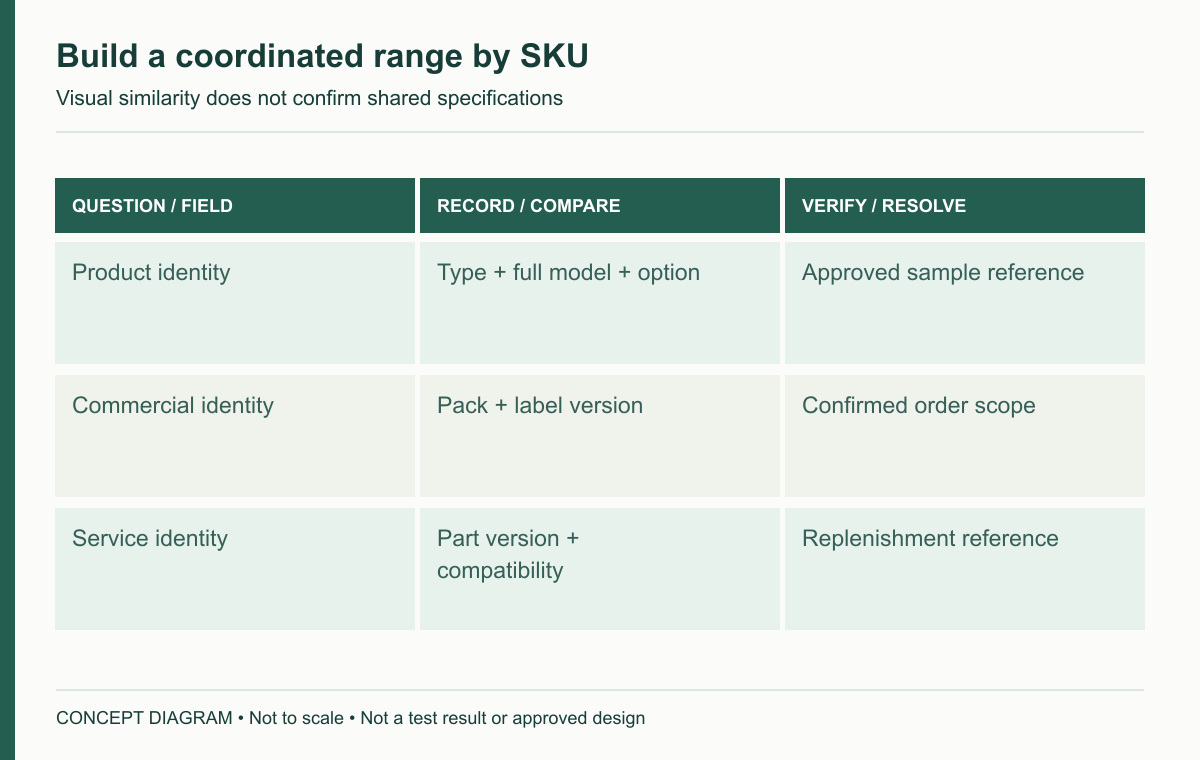
Use one row for each SKU or candidate configuration that can be identified consistently. Record the supplier’s complete model and version alongside any internal SKU. If an option changes the supplied product, label or service requirement, ensure the matrix can distinguish it.
Compare solar bollard lights, solar pole lights and solar pillar lights as different installation forms. A coordinated appearance does not make them interchangeable or establish that they share a mounting method, power arrangement or replacement parts.
| SKU field | Information to record | Verification question |
|---|---|---|
| Internal SKU and supplier model | Exact identifiers and version | Can both parties identify the same configuration? |
| Installation form | Low-level, pole, pillar or other actual form | What supporting arrangement is required? |
| Supplied items | Head, support and accessories as quoted | What is included, separate or unresolved? |
| Configuration and options | Confirmed available combinations | Is this exact combination orderable? |
| Documents | Specification and manual references | Do the documents match the SKU? |
| Status | Candidate, under review or approved for a defined purpose | What evidence supports that status? |
Keep unavailable or unconfirmed ideas out of the saleable list
A source catalogue may contain historical products or images of several forms. Confirm current supply before presenting a candidate as an available range member. Do not create an imaginary model simply to fill a gap in a coordinated product family.
If a configuration remains unconfirmed, keep it in the internal candidate list with a specific enquiry. The customer-facing range should reflect the versions actually confirmed for the intended offer. This prevents an attractive planning matrix from becoming an accidental promise to supply every combination.
Confirm Colour, Modes and Available Options
Distinguish factory choices from user controls
Ask whether light colour, finish, operating programme or head arrangement is selected during manufacture, selected on order or adjustable by the user under the instructions. These are different capabilities and should not share one vague options field.
A selectable function on one model does not prove the same feature exists on another. Likewise, two products described with the same colour term may need a sample comparison before the designer or buyer accepts their visual relationship. Do not promise matching output or appearance from a shared series name alone.
Confirm combinations, not just individual options
An available finish and an available mode do not automatically mean they can be ordered together in every model or quantity. Ask for the actual configuration combinations and the conditions that apply. Record written replies next to the relevant SKU rather than in a general note disconnected from the range.
For a distributor seeking wholesale solar garden lights, mixed-model and mixed-option ordering should be a specific question. Do not assume one minimum order quantity applies to the entire range or that different versions can share a single production arrangement. The reply should identify the exact scope it covers.
Keep customer requirements and supplier capability separate
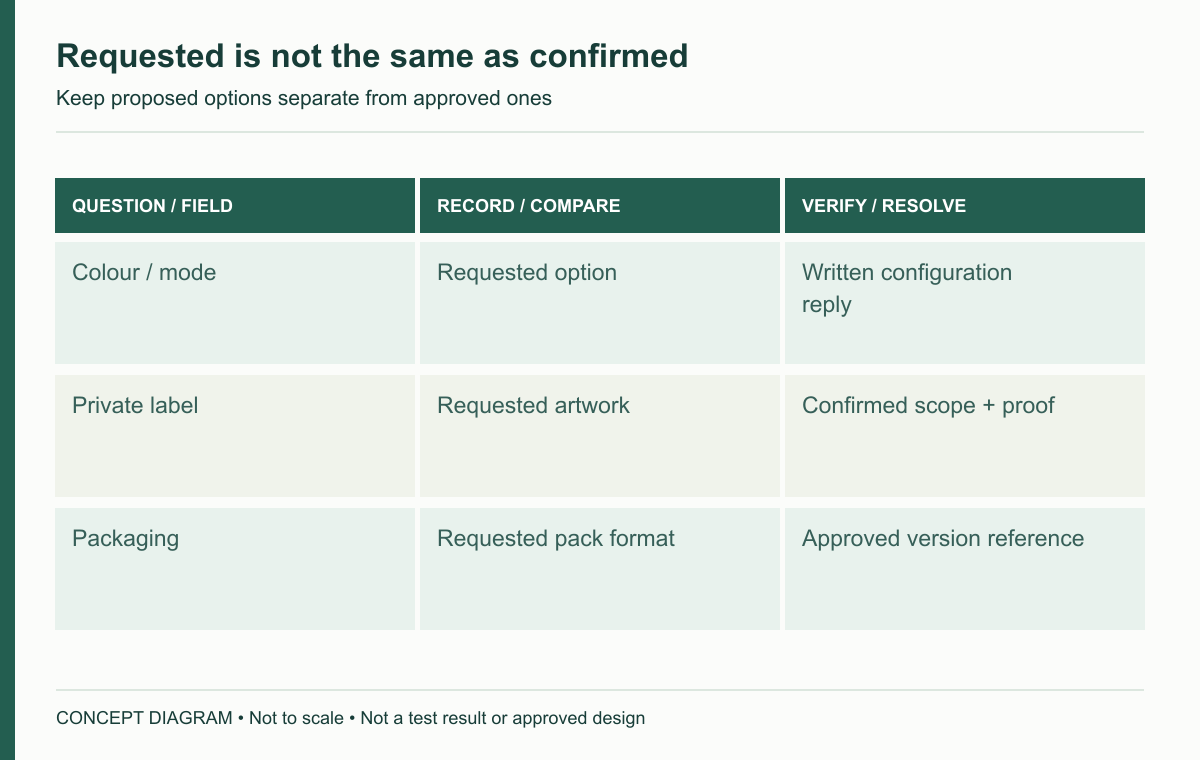
Use two columns: requested and confirmed. A customer may want a particular mode, finish or installation accessory that is not currently confirmed. Keeping that distinction visible allows the distributor to discuss alternatives without presenting a requested feature as an existing product fact.
When a requested change affects the sample, packaging or supporting documentation, carry the change through the matrix. An apparently small option can otherwise become a mismatch between the advertised SKU, the approved sample and the goods received.
Confirm Branding, Labels and Packaging Information
Review each SKU’s information set
Record the authorised brand, model naming, relevant instructions, label artwork, packaging quantity and barcode information where applicable. A common visual style can be developed across the range while the actual content remains configuration-specific.
Do not automatically place the same certification marks or technical values on every product label. Market and product requirements need appropriate confirmation. A design template is not evidence that the label is suitable for a destination or that the product has a particular approval.
Connect artwork to approval and production identity
Keep the artwork file reference, revision and approval record with the SKU. State who approves content and which sample or configuration the approval covers. A picture of a carton is helpful only when its relationship to the intended order is clear.
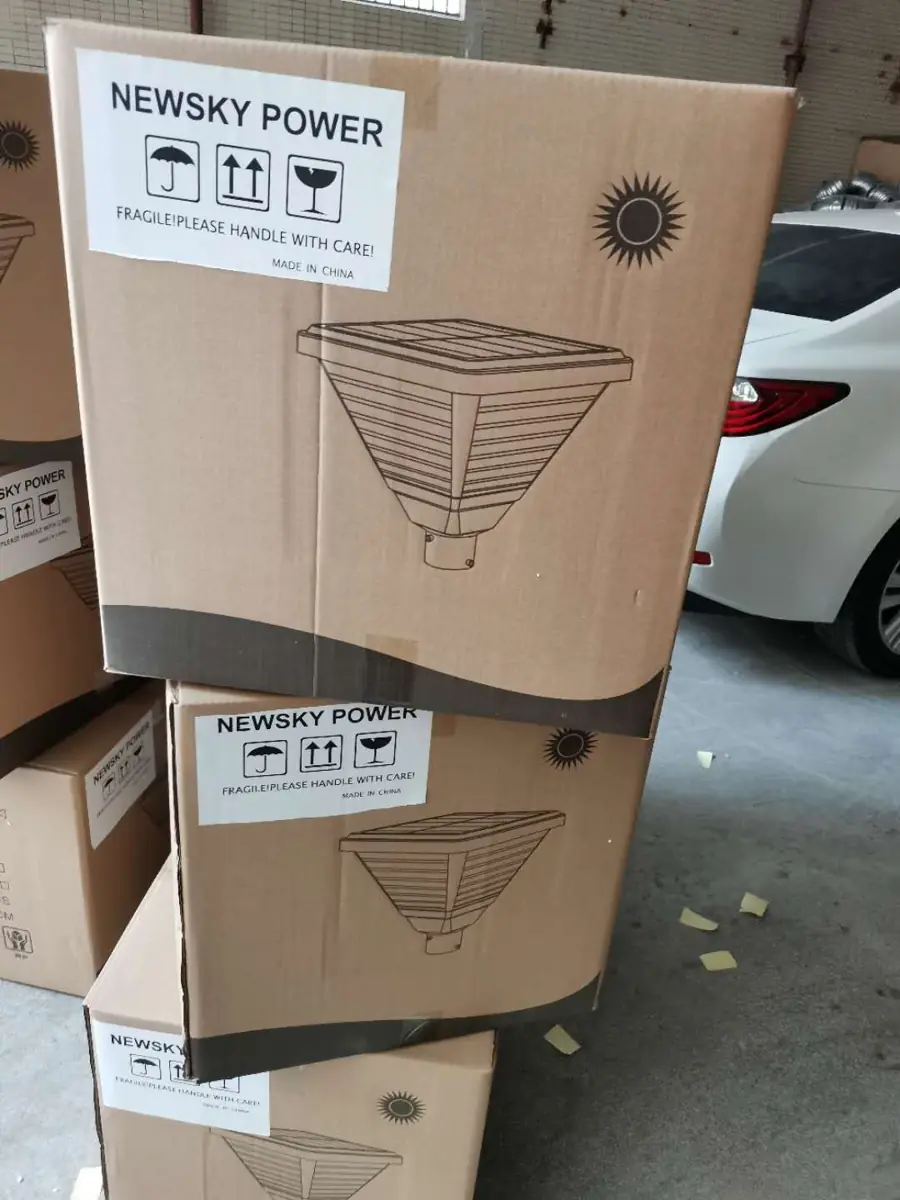
If the supplier changes a model code or the brand uses a different customer-facing name, preserve the mapping. Receiving and service teams should be able to translate between those identifiers without guessing. This becomes particularly important when a customer requests a spare using only the label visible on an installed fixture.
Confirm packing as part of the order
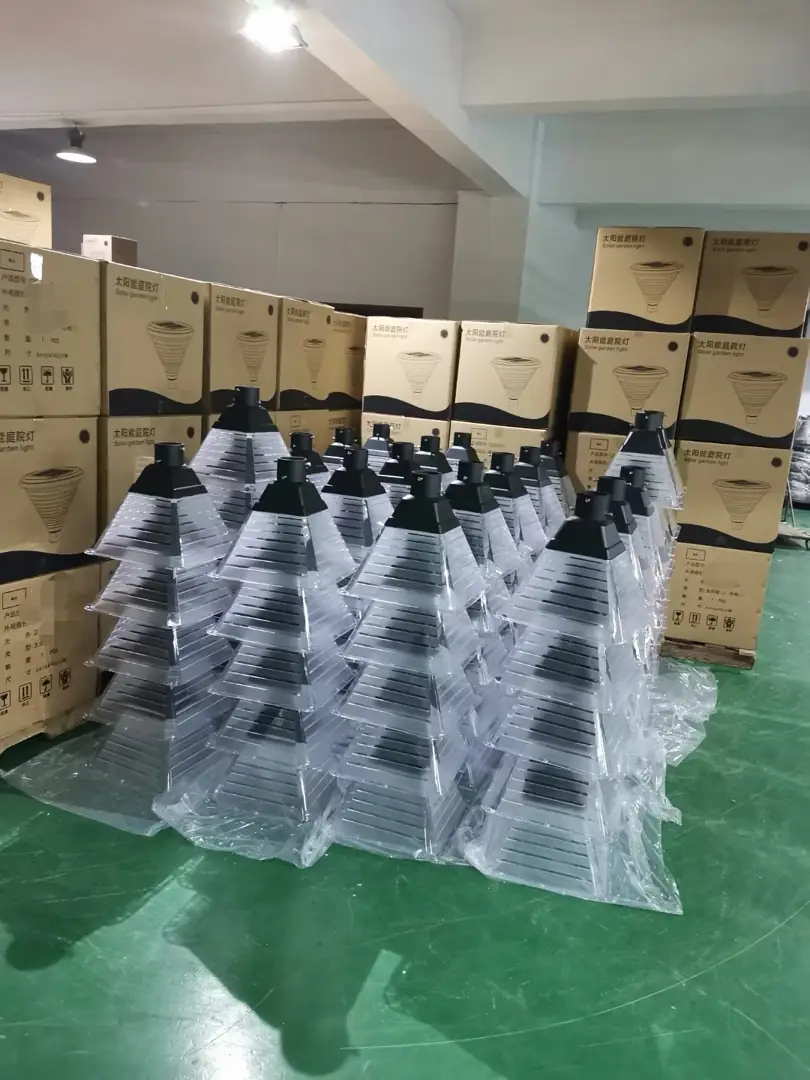
Ask which parts share a carton, how accessories are identified and how the packing list connects to the order quantity. A photograph from an earlier shipment can show a visible arrangement but does not establish the packing specification of a new order.
For destinations involving onward transfers, discuss handling and identification requirements with the responsible logistics parties. Do not invent freight, protective-packaging performance or delivery promises. Keep any agreed changes to packing connected to the quotation and order revision.
Plan Spares, Replenishment and Version Control
Build a confirmed compatibility record
Record the supported spare reference, product version and supplier’s compatibility confirmation. External similarity does not establish an interchangeable battery, controller, lens or fixing. Different solar light models can share a design language while needing different service components.
| Service field | Required record |
|---|---|
| SKU and product version | Exact customer-facing and supplier identities |
| Spare reference | Manufacturer’s confirmed identifier |
| Compatibility | Written model/version relationship |
| Permitted service | Applicable instructions and responsible personnel |
| Availability enquiry | Current reply and conditions, not an assumed guarantee |
| Change notification | Who receives and records a revision or discontinuation |
| Replenishment | Order reference and confirmed replacement configuration |
Make changes visible before the next order
A replenishment order should not rely on a photograph and “same as last time.” Compare the previous approved configuration with the supplier’s current offer. Ask what has changed in the product, controls, packaging and supported parts, and record the answer even if the commercial model name remains unchanged.
If a part or product is discontinued, retain its history and identify the confirmed alternative process. Do not assume the next visually similar model can be substituted automatically. A range remains serviceable through accurate information and appropriate support, not simply through a promise that spare parts will always be available.
Set stock and timing from actual business information
Minimum order quantities, production timing, transport periods and stock arrangements should come from current written information and the distributor’s planning. No universal number follows from the words wholesale or island market. Different SKUs may have different conditions.
Record who monitors those conditions and when the information needs refreshing. A prior reply can be useful history while no longer representing the current offer. Keep that distinction visible to sales and service teams so that an old planning assumption does not become a new customer promise.
Move from Sample Approval to Order Verification
Reconcile the final matrix
| Order-verification item | Approved record | Proposed order | Required action |
|---|---|---|---|
| SKU/model and configuration | Exact sample or configuration reference | Current order line | Resolve differences before confirmation |
| Options and supplied items | Agreed combination and scope | Listed order scope | Confirm every changed option |
| Labels and packaging | Approved artwork and packing revision | Production document references | Match or obtain new approval |
| Spares and service | Confirmed version relationships | Current support information | Clarify changes or missing entries |
| Quantity and delivery | Relevant commercial agreement | Actual order terms | Confirm with responsible parties |
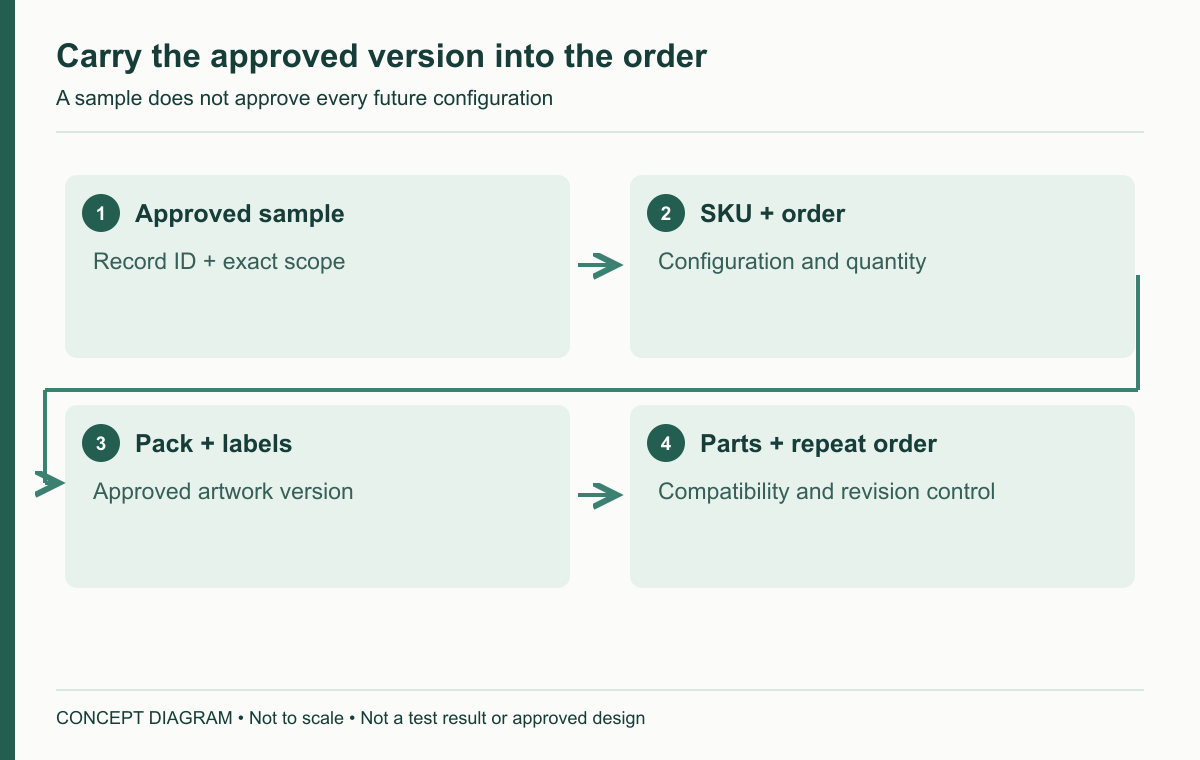
An approved sample is a reference with a defined scope. It does not automatically approve all finishes, labels, modes or future batches. If the final order differs, identify what needs renewed review rather than attaching the old approval to a new configuration.
Keep the range matrix distinct from other purchasing records
A sample report records checks on a sample. A quotation sheet compares offers. The series matrix connects each SKU to its configuration, documentation, packing and service identity. They should reference one another without becoming one oversized table that no team can maintain accurately.
Before releasing customer-facing materials, confirm that the claims and images correspond to the identified configurations. A product range can be expanded later; there is no need to advertise an unconfirmed option to make the initial selection look complete.
Frequently asked questions
Does a coordinated range necessarily use common spare parts? No. Visual coordination and component compatibility are separate matters. Use confirmed model and part relationships rather than assuming interchangeability.
Can all models use the same label artwork? A common design style may be possible, but model-specific values, language and applicable requirements must still be checked. Do not automatically reuse marks or declarations across the range.
What remains to confirm after sample approval? Check the final configuration, quantities, options, labels, packaging, delivery and version differences against the approved scope. A sample photograph alone does not confirm the complete bulk order.
A well-managed range is one that sales, receiving and service teams can identify consistently. Begin with a manageable set of confirmed configurations, retain the evidence behind each one and make every change traceable before the next order is placed.
For an overview of fixture types, site conditions and selection priorities, see our garden and courtyard lighting guide.