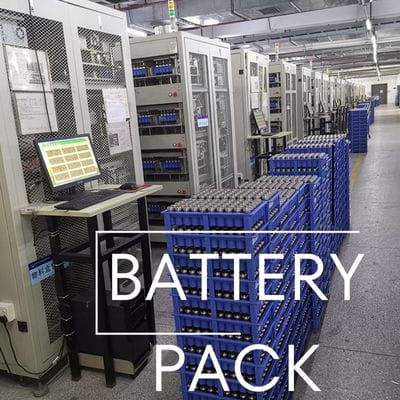


Ternary lithium-ion and lithium iron phosphate are both lithium-ion battery families. Their cathode materials differ, but chemistry alone does not determine the performance of a complete solar street light battery. Compare the actual pack, its protection system and its operating conditions before selecting either option.
Cathode Materials: NMC/NCM and LFP
“Ternary lithium” in this comparison refers to nickel-manganese-cobalt oxide cathodes, commonly abbreviated NMC or NCM. The proportions of these metals vary between formulations. A chemistry name does not specify a particular cell design or guarantee that it outperforms every alternative.
Lithium iron phosphate uses LiFePO4, also abbreviated LFP, as its cathode material. That cathode formulation does not require nickel or cobalt. This does not eliminate supply risks or establish the price of a finished pack: cells, manufacturing, protection electronics, enclosure and service provision all affect a quotation.
Both families need compatible charging and electrical protection. Their different cell-voltage characteristics also mean that a pack should not be substituted merely because it has the same advertised ampere-hour capacity.
Specific Energy: Compare Wh/kg at the Same Level
For energy stored per unit of mass, use Wh/kg, technically specific energy and often called gravimetric energy density. W/kg expresses power per unit of mass; it does not tell you how much energy a battery stores.
Nickel-based lithium-ion cells can offer higher specific energy than LFP cells, while LFP is often considered for its thermal stability characteristics. These are chemistry-level considerations, not a fixed numerical ranking of every commercially available pack.
Compare cells with cells, or complete packs with complete packs. A cell figure excludes the mass of the BMS, enclosure, wiring and other pack components. A high cell Wh/kg value does not by itself establish the installed system’s usable energy or lighting duration.
For a solar street light, ask for nominal pack voltage, rated capacity in Ah, nominal energy in Wh, pack mass and usable discharge energy under the intended operating conditions. Nominal energy can be estimated as nominal voltage multiplied by rated Ah; usable energy also depends on the allowed discharge window, temperature, load and ageing.
Temperature Performance: Charging and Discharging
Cold-weather discharge
Cold conditions can reduce the energy and power available from either chemistry. The extent depends on the actual cell, discharge current, cutoff voltage, temperature and battery condition. Compare manufacturer discharge curves measured under equivalent conditions. A percentage without those conditions is not a reliable winter-runtime comparison.
Do not select a battery for a cold site solely because it is described as “ternary,” or reject every LFP battery as unsuitable. Evaluate the specified pack and thermal design for the project’s winter operating profile.
Cold-weather charging
Discharging in cold weather and charging in cold weather are different requirements. Charging a lithium-ion cell under unsuitable low-temperature and current conditions can cause lithium plating and damage. A pack’s permitted discharge temperature must not be reused as its charging limit.
Request separate charge and discharge temperature limits and the low-temperature charging protection logic. If heating is provided, confirm when it operates and include its consumption in the daily energy budget. Do not bypass a temperature cutoff to restore charging.
Heat and pack safety
LFP’s thermal stability characteristics do not make an LFP pack immune to failure. Neither chemistry can guarantee safe operation or long life regardless of installation. Check the actual pack’s temperature limits, BMS functions, enclosure design and relevant test documentation. Thermal stability is not the same as permission to charge or operate continuously at high temperatures.
What to Compare Before Choosing a Solar Street Light Battery
| Decision | Evidence to request |
|---|---|
| Will it fit the system? | Pack voltage, chemistry, dimensions, connectors and controller/BMS compatibility |
| Will it meet the lighting schedule? | Usable Wh at the expected load and temperature, with the operating programme stated |
| Will it recharge in winter? | Charging temperature limits, protection behaviour, any heater load and seasonal solar input |
| How should lifetime be assessed? | Cycle-test temperature, current, depth of discharge and retained-capacity endpoint, plus warranty terms |
| Can it be maintained? | Approved replacement part, service instructions and collection/recycling arrangements |
Choose from documented system requirements rather than a universal “best chemistry” claim. For the wider maintenance plan, see component lifespan and replacement planning; confirm any service-life target against the selected battery’s evidence.