

Select a lithium battery pack for a solar street light by checking four things together: compatibility with the controller, usable energy for the lighting schedule, protection and outdoor operating conditions, and evidence that the delivered pack meets its specification. A large amp-hour number alone does not answer these questions.
For project buyers and distributors, the useful question behind “how to build a lithium-ion battery pack” is what the manufacturer must design and verify before the pack is accepted. The checks below help you compare proposals and request meaningful manufacturing records.
1. Start with the load and the controller
Before comparing batteries, obtain the luminaire’s actual electrical input power at each programmed brightness level. A product name containing “400 W,” a solar panel rating, or a lumen figure cannot substitute for this information. See our solar street light lumens and wattage guide for the different roles of these values.
Prepare the following information for the supplier:
| Project input | What it determines |
|---|---|
| Hours at each brightness setting | Nightly energy demand |
| Sensors, communications or camera loads, if fitted | Additional energy demand, including daytime operation |
| Controller model and accepted battery voltage range | Electrical compatibility |
| Battery space, connector drawing and polarity | Physical fit and serviceability |
| Site temperatures and required backup nights | Conditions for sizing and testing |
Confirm the chemistry, nominal pack voltage, operating voltage range, charging settings and discharge cutoff as one compatible system. A connector that fits mechanically is not proof of compatibility. Victron’s battery manual illustrates why charger settings must match the battery; use the selected pack’s own documentation for its limits.
2. Compare watt-hours, then check usable energy
Nominal energy in watt-hours is approximately nominal voltage × capacity in amp-hours. Thus a hypothetical 12.8 V, 40 Ah pack is 512 Wh, while a 3.2 V, 40 Ah pack is 128 Wh. The same Ah label can describe very different stored energy.
For a schedule with several settings, calculate energy for each stage, then add the other loads. Use measured or documented input power for each setting; “50% brightness” need not mean exactly half the electrical power.
Worked example: comparing a proposed pack with a night schedule
This is a hypothetical calculation, not a NEWSKYPOWER model specification or a verified project result.
| Assumed load | Energy per night |
|---|---|
| Luminaire input: 20 W for 4 hours | 80 Wh |
| Luminaire input: 8 W for 8 hours | 64 Wh |
| Other loads: 12 Wh per night | 12 Wh |
| Total | 156 Wh |
Assume two nights with no useful charging, an allowed usable fraction of 80%, and 90% efficiency between the battery and the stated load inputs:
Starting nominal energy requirement = 156 × 2 ÷ (0.80 × 0.90) ≈ 433 Wh.
The hypothetical 512 Wh pack passes this preliminary arithmetic check. It does not yet prove two-night performance: temperature, ageing reserve, initial state of charge and the pack’s actual discharge limits still need evaluation. The 80% and 90% assumptions must be replaced by documented design values; they are not universal battery ratings.
The panel must also replenish the daily demand and recover the reserve after poor weather. A larger battery cannot correct a persistent charging shortfall. For the wider system calculation, see solar street light autonomy in cloudy and rainy weather.
3. Check protection, temperature and replacement compatibility
A battery management or protection system should be specified by its functions and settings, not just the letters “BMS.” Ask for the protection response to excessive voltage, low voltage, overcurrent and short circuit, plus the temperature protections required by the selected chemistry and site. Texas Instruments describes these protection functions; their presence in a particular pack must be confirmed by its supplier.
Request separate charging and discharging temperature ranges. A pack able to discharge in cold weather may not be permitted to charge at the same temperature. Also check the permitted continuous current, connector pinout, enclosure fit and replacement procedure. For a multicell design, ask whether cell monitoring and balancing are included and how they work.
If a supplier quotes a cycle-life figure, ask for the test conditions: temperature, discharge depth, charge/discharge rate, and retained capacity at the stated cycle count. Compare like conditions before treating one figure as better than another.
4. Five manufacturing checks a buyer can verify
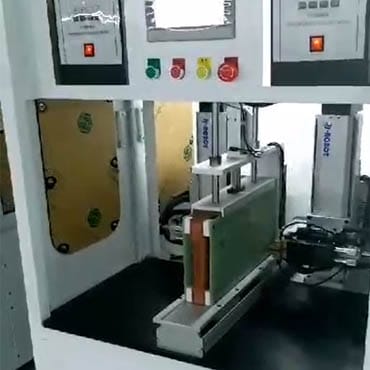
The existing photographs illustrate the five stages below. Photos show equipment and activities; the records for your selected pack and order are what establish the actual test coverage and results.
Check 1: incoming cell inspection
Ask for the cell manufacturer and model, batch traceability, and the incoming inspection record. The record should identify which characteristics were checked, under what conditions, and against which acceptance limits. A voltage reading alone does not establish capacity.

Check 2: cell grouping and matching
Ask which criteria are used to group the cells for the pack: capacity, voltage and resistance, as applicable to the design, and how the groups remain traceable. Analog Devices explains how capacity and impedance mismatch affect a multicell pack. Request the supplier’s actual matching limits rather than assuming a sorting machine guarantees consistent performance.

Check 3: assembly and interconnection quality
Request the assembly inspection plan covering interconnections, insulation, wiring, polarity and connector identification. Where welding is used, ask how connection quality is checked and recorded. Automation is a process choice; it is not, by itself, evidence of a quantified reduction in defects.
Check 4: finished-pack electrical testing
Obtain a pack-level test sheet listing the checks performed, acceptance limits and results. Agree which checks apply to every unit and which are sample or design tests. Include protection functions and the correct controller/interface combination in the agreed validation plan; testing cells alone does not verify the assembled system.

Check 5: charge/discharge verification and release records
Request the charge/discharge protocol, duration, conditions and release criteria used for the selected pack. An “aging tested” label is incomplete without those details. Analog Devices distinguishes cell formation and grading in battery manufacturing; a finished-pack check should not be confused with cell manufacture or proof of multi-year field life.

5. Documents to request before approving the order
Use this list to make competing quotations comparable:
- Pack and cell model identification; chemistry, nominal V, Ah and Wh.
- Usable energy basis, lighting schedule and autonomy calculation.
- Controller compatibility, BMS/protection settings and temperature limits.
- Dimensions, connector/polarity drawing and replacement instructions.
- Agreed manufacturing inspection plan and model/batch-linked test records.
- Cycle-life evidence with conditions, and the written battery warranty.
- Applicable transport documentation, including a model-linked UN 38.3 test summary where required for the shipment. PHMSA explains the test-summary requirement. Transport testing does not establish lighting autonomy or complete street-light compliance.
Frequently asked questions
Is a higher Ah battery always better for a solar street light?
No. Compare Wh at the stated nominal voltage, then check usable energy, physical fit, controller compatibility and the charging system. More storage is useful only when the whole system can support it.
Can a factory aging test prove several years of service life?
No. It can provide information under its recorded test conditions. A service-life claim needs relevant cycle-life evidence and operating conditions; the warranty is a separate commercial commitment.
What should I send when requesting a battery configuration review?
Provide the site, required lighting schedule, actual luminaire input power, controller information, backup requirement, battery-space dimensions and connector details. If you are comparing complete NEWSKYPOWER solar street light configurations, include the proposed luminaire model and quantity so the battery proposal can be reviewed with the rest of the system.