


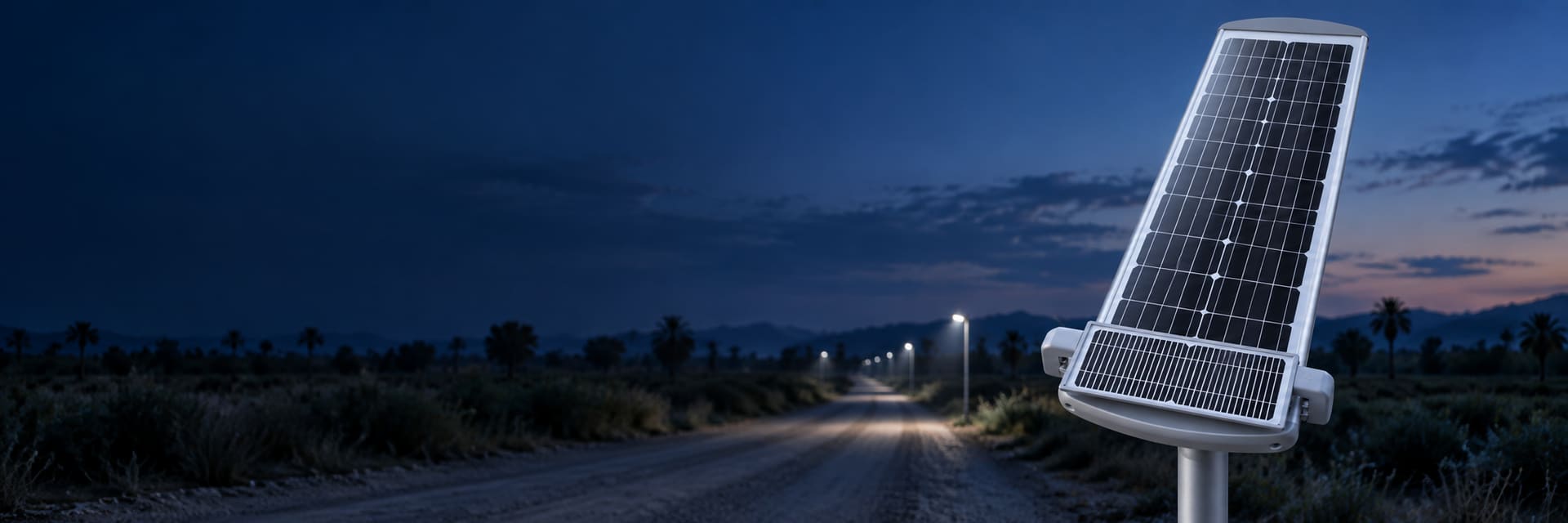
Choose the cleaning feature around your maintenance task
For dispersed access roads, agricultural transport routes and remote facilities, cleaning panels can require repeated journeys and high-reach work. The SC series is worth assessing where recurring deposits and difficult access make that work a practical burden.
First identify the deposit and available sunlight. Then compare the solar panel, battery and lighting duty together. Tree shade needs a siting solution; sticky residue needs a mechanism suited to that material. Use the SC configuration reference further down this page to start the selection discussion.
If panels are easy to reach and rarely become dirty, compare the wider engineering solar street-light range as well.
Compare SC Self-Cleaning Solar Street Lights
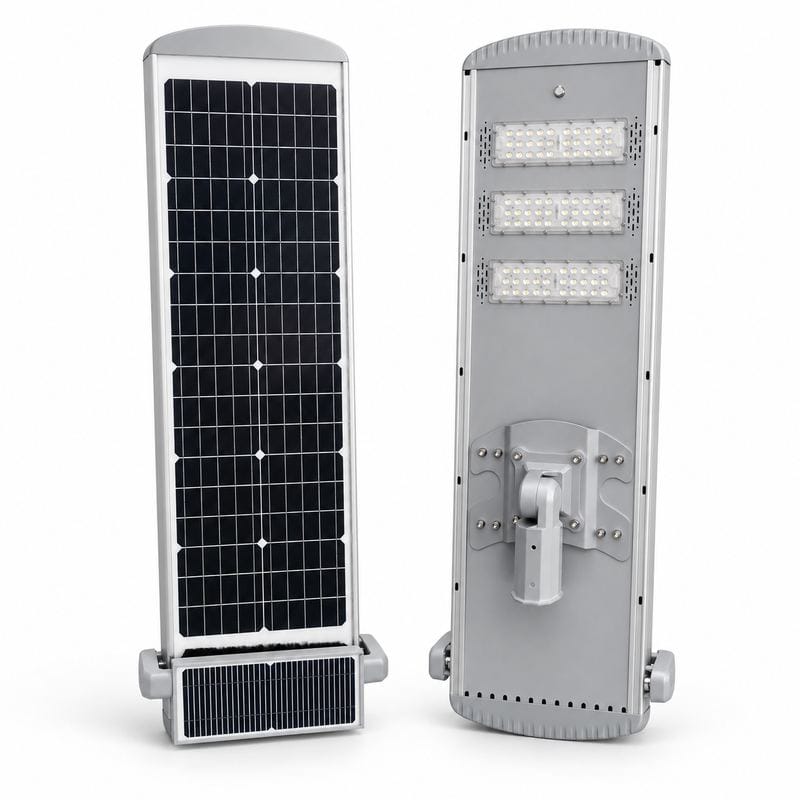
2025 catalogue configurations. Confirm the current specification with your quotation. Images illustrate the SC series; module count varies by model.
- Nominal LED power: 30 W
- Monocrystalline solar panel: 45 W / 18 V
- LiFePO₄ battery: 12.8 V / 18 Ah (230.4 Wh)
- Controller: PWM
- LED modules: 2
- Nominal LED power: 40 W
- Monocrystalline solar panel: 60 W / 18 V
- LiFePO₄ battery: 12.8 V / 24 Ah (307.2 Wh)
- Controller: MPPT
- LED modules: 3
- Nominal LED power: 60 W
- Monocrystalline solar panel: 80 W / 18 V
- LiFePO₄ battery: 12.8 V / 30 Ah (384 Wh)
- Controller: MPPT
- LED modules: 3
- Nominal LED power: 80 W
- Monocrystalline solar panel: 100 W / 18 V
- LiFePO₄ battery: 12.8 V / 36 Ah (460.8 Wh)
- Controller: MPPT
- LED modules: 4
- Nominal LED power: 100 W
- Monocrystalline solar panel: 120 W / 18 V
- LiFePO₄ battery: 12.8 V / 48 Ah (614.4 Wh)
- Controller: MPPT
- LED modules: 5
Four points to compare in an SC proposal

A separate cleaning assembly addresses suitable panel-surface deposits. Match its action to the dust or residue present on your site.

Compare panel power and battery energy in Wh against the required lighting hours and the site's lower-sun season.
Match the offered light distribution to road width, pole height and spacing; nominal wattage alone cannot establish road coverage.

Consider how crews will inspect the cleaning unit, remove remaining deposits and service components after installation.
Match the cleaner to the deposits
For an automatic cleaning solar street light, the important question is what the mechanism can remove under your site's conditions. Loose dry dust, hardened residue, oily film, bird droppings and leaves require different assessments. Moisture can strengthen the adhesion of some deposits.
Send a close-up photograph of the deposits and confirm the supplied version's cleaning action, schedule and power demand. Plan periodic inspection of moving parts and mountings, with suitable manual treatment for remaining residue. Cleaning does not correct shading, a damaged battery or insufficient solar capacity.
Check the energy available through the night
Define the required output and hours for each period of the night before choosing the battery and panel. A timed dimming profile and all-night full output create different energy requirements. Include controller and cleaning-unit consumption in the calculation.
Battery Wh and the available solar resource should be considered together. Check the lower-sun season, orientation and shading, then confirm the operating reserve required by the project. The calculation method and the historical SC configuration table appear in the technical section below.
Check illumination on the actual road
Road width, pole height, spacing and mounting position determine where light must go. Specify whether the task is vehicle movement, pedestrian access, a bend, an entrance or a loading area. These tasks should not automatically receive the same arrangement.
Request an IES/LDT file for the exact offered configuration and a calculation using the actual layout. Review the required maintained illumination, uniformity and glare criteria with the project's designer. Nominal watts and a photograph of a bright lamp cannot verify these results. Confirm CCT and CRI in the final specification where the project requires them.
Related Product



SC configuration reference
SC is a product family, not one universal road-lighting specification. A useful shortlist compares the PV module, battery energy and lighting requirement together. Increasing the lamp's nominal wattage alone does not establish better road visibility or longer operation.
The table below comes from the SC offer dated 17 April 2025. Current supply is subject to the project-confirmed specification.
| Catalogue model | Nominal LED power | PV module | LiFePO₄ battery | Controller |
|---|---|---|---|---|
| SC-30W | 30 W | 45 W / 18 V | 12.8 V / 18 Ah / 230.4 Wh | PWM |
| SC-40W | 40 W | 60 W / 18 V | 12.8 V / 24 Ah / 307.2 Wh | MPPT |
| SC-60W | 60 W | 80 W / 18 V | 12.8 V / 30 Ah / 384 Wh | MPPT |
| SC-80W | 80 W | 100 W / 18 V | 12.8 V / 36 Ah / 460.8 Wh | MPPT |
| SC-100W | 100 W | 120 W / 18 V | 12.8 V / 48 Ah / 614.4 Wh | MPPT |
For example, SC-30W and SC-40W differ in controller type as well as energy hardware. SC-60W and SC-80W offer different PV and battery capacities; a greater nameplate wattage does not itself prove a better light distribution. Shortlist the configuration that satisfies the road calculation and operating profile, then compare its supply scope. All five rows refer to catalogue configurations, not verified current stock.
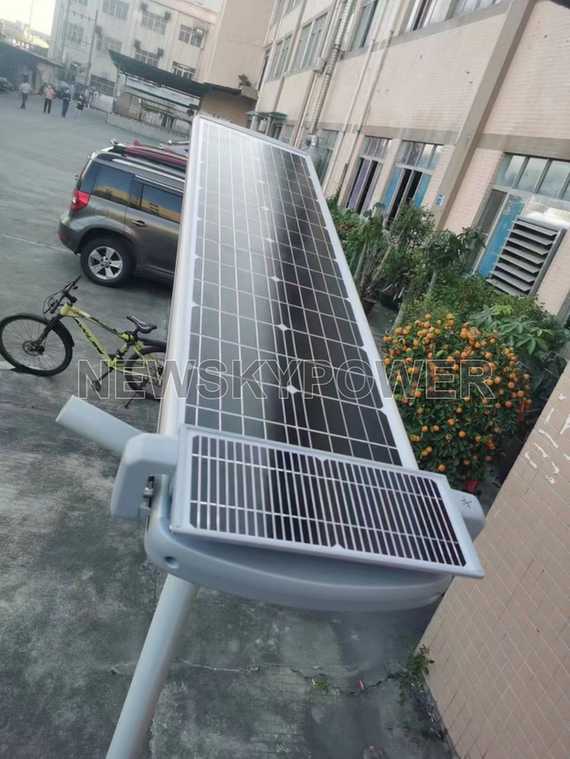
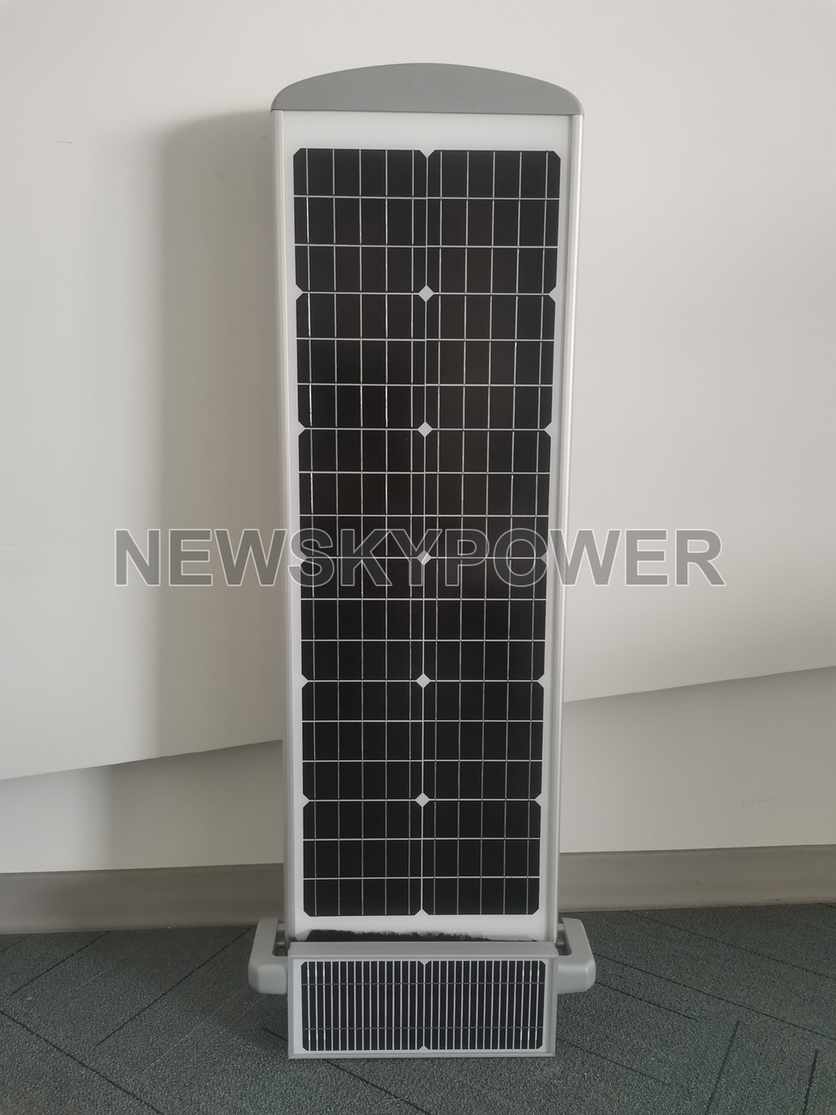
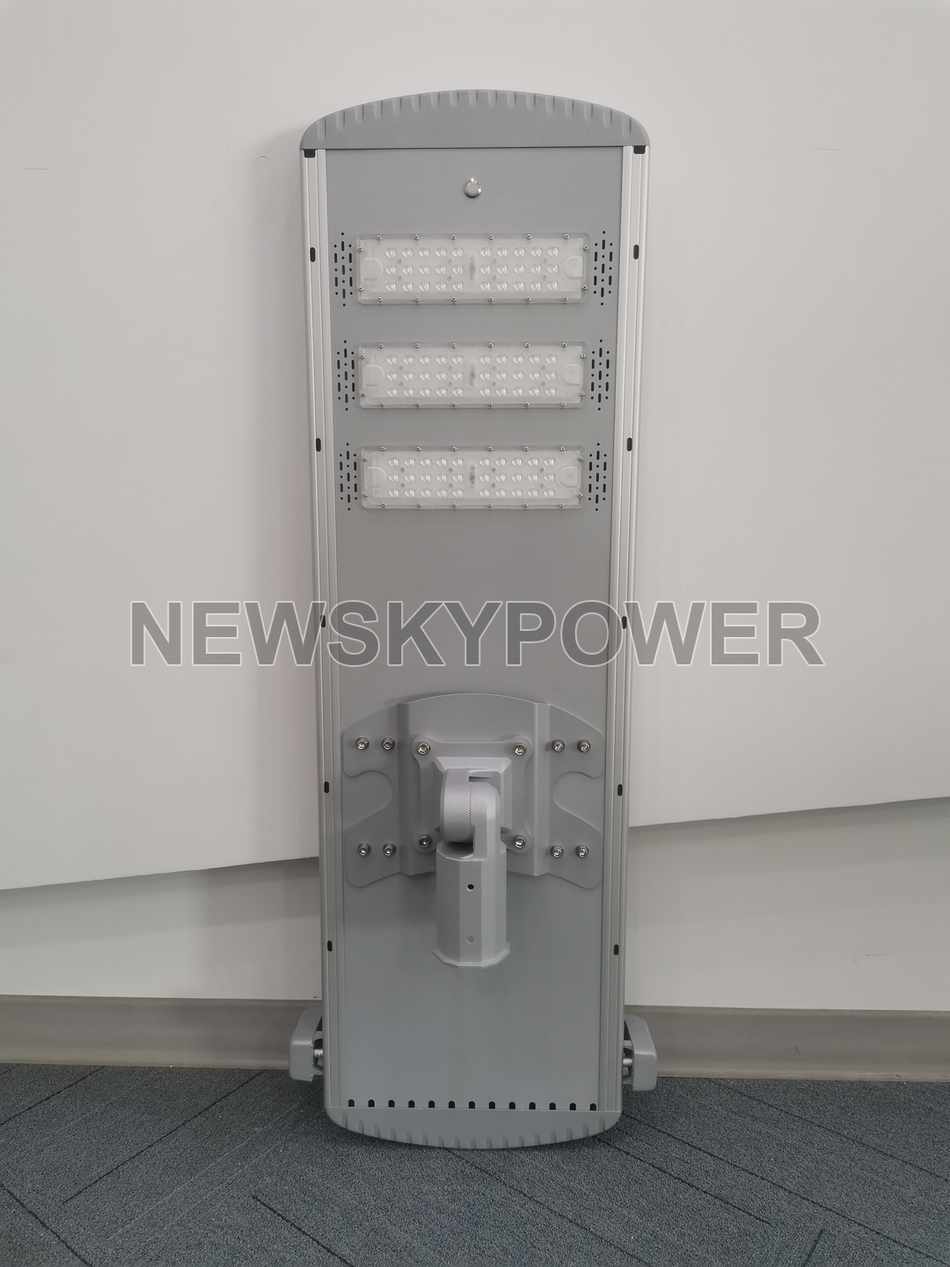
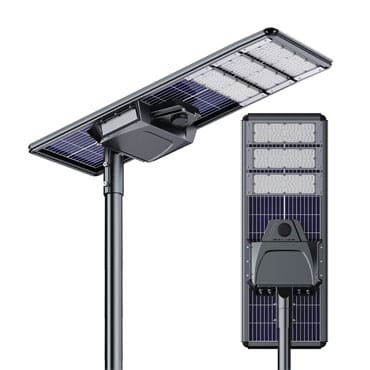
Use the table to start a configuration discussion. Final selection needs the current specification sheet, the requested nightly operating profile and a lighting calculation for the actual layout. The photographs on this page show different views of SC products; they do not identify a separate model for every image.
Calculate the required night-time energy
Start with the required light output through the night. A lamp operating at full output for the whole night has a different energy requirement from one using a timed dimming schedule. Any motion-triggered mode needs its own defined assumptions; do not treat it as a confirmed SC feature without the selected version's documentation.
Battery energy in watt-hours is more useful for comparison than amp-hours alone: nominal Wh = nominal voltage × Ah. The energy available to the load is lower once operating limits and system losses are considered. Panel wattage is a rated power, not the amount of energy generated each day.
For a preliminary energy check, add the electrical load for each operating period, plus controller and cleaning-unit consumption. As an illustration only, 30 W for 4 hours followed by 10 W for 8 hours equals 200 Wh of LED load per night, before those additional loads and losses. This is not an SC operating schedule or an autonomy claim.
Then check the site's lower-sun season, panel orientation, shading and the required reserve. A larger battery can hold more energy only if the solar module and conditions can replenish it. Ask for the stated assumptions behind any proposed consecutive-night autonomy.
Compare complete proposals from suppliers
When comparing self-cleaning solar street light suppliers, align the operating profile and scope of supply. Check the PV module, battery voltage and Wh, controller settings, cleaning assembly, pole interface and the documentation included. A lower price is not directly comparable if it assumes fewer lighting hours or excludes equipment needed on site.
Agree how the cleaning unit will be accessed and serviced, and request the current component warranty terms, spare-part information and installation requirements with the offer. These details should belong to the selected configuration, not a general claim covering every lamp.
No. They may reduce suitable routine panel-cleaning work, but inspections and cleaning of remaining deposits are still needed. The mechanism and electrical components also need the maintenance described for the supplied version.
Do not assume it is. Deposit composition and moisture affect adhesion. Share the actual site conditions and confirm the cleaning mechanism's suitability before choosing an auto cleaning solar street light.
Define the road layout and required lighting hours first. Compare battery Wh and PV capacity with that duty, then verify the offered light distribution. Choose the cleaning feature because of a real maintenance task, not because a larger wattage label appears preferable.
Potentially, subject to the mounting interface, structural suitability, available sunlight and lighting layout. Send pole drawings or measured dimensions and installation photographs for review; the product photograph alone cannot establish compatibility.
Send the project location for solar assessment, road widths and layout, pole heights and spacing, quantity, nightly operating profile and required reserve. Add shading photographs, deposit types, access restrictions and any required lighting or compliance criteria. State whether poles and installation accessories are included in your purchase scope.