


This scenario-based case follows an oil palm transport route.
At dusk, a vehicle carrying fresh fruit bunches leaves a field block and heads for the collection point. The straight section is easy to follow, but the route then bends between palms. At the collection area, vehicles turn and people move beside them. Farther on, the entrance joins the estate road to outside traffic. Once daylight fades, each of these places asks for a different kind of visibility.
The poles lie far apart, so this road has a second challenge beyond darkness: keeping panels clean without repeatedly sending a crew down the harvest route. An oil palm self-cleaning street light project must solve lighting and upkeep together.
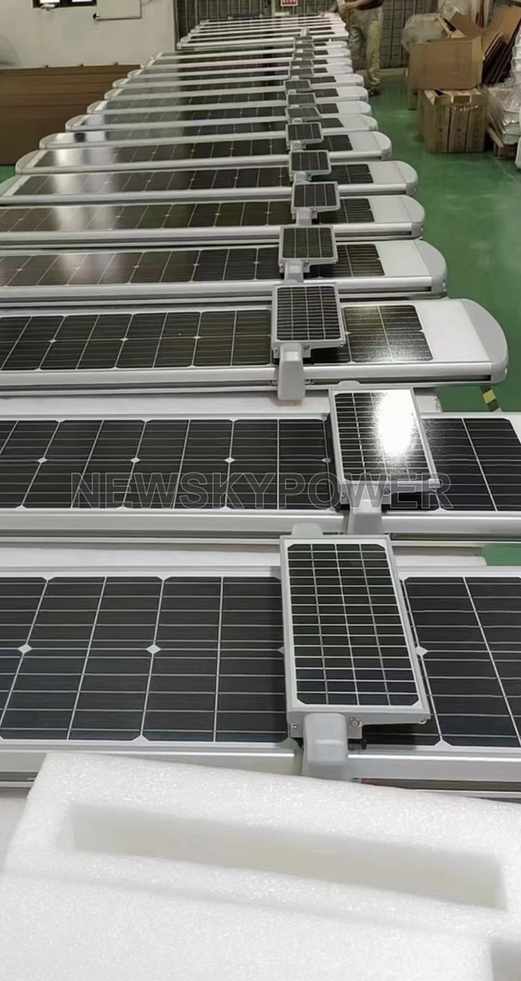
Cleaning one panel means another trip down the harvest road
Grid power stops near the main buildings. Cabling every pole would mean trenching along an active transport road. Solar lights avoid that construction, but their panels sit high above widely spaced positions. Cleaning one lamp is not just wiping glass. It means sending people, a vehicle and access equipment onto the harvest road, reaching the panel safely and moving on to the next pole.
On an unpaved link in a dry spell, passing fruit trucks can lift loose soil; deposits may return between visits. The crew needs room to stop without obstructing those trucks. After rain, a soft shoulder could make that safe stopping place harder to find, even when the panel still needs attention. The work is therefore a series of journeys, stops and high-reach tasks coordinated around transport, not a quick cleaning round. These conditions describe this scenario, not every oil palm estate.
If cleaning keeps being postponed, accumulated deposits can reduce the sunlight reaching the panel and narrow the system’s charging margin. That leaves a practical trade-off: frequent cleaning ties up people and vehicles, while neglecting the panels risks lost generation. The size of that loss depends on local deposits, sunlight and system configuration.
Less light reaching the cells can mean less energy to replace what the battery supplied the previous night. If charging capacity is tight, repeated soiling may leave less reserve for the next evening. The IEA PVPS review of PV soiling shows why the effect varies by site. Cloud cover and palm shade also reduce incoming sunlight, for reasons cleaning cannot fix.
Why the SC design fits the maintenance problem
NEWSKYPOWER's SC light combines solar road lighting with a separate cleaning unit at the panel edge. By day, the panel charges the battery; after dark, the battery powers the LED. The cleaning unit addresses suitable deposits on the exposed panel. On a long estate road, the aim is to reduce the routine need to send a crew to each elevated panel, especially where loose road dust repeatedly settles.
A panel-edge cleaning mechanism can address compatible surface deposits; it is not evidence of a dust sensor, remote monitoring or an IoT network. The buyer should distinguish the area the unit can reach from residue requiring inspection. Its operating energy also belongs in the system budget; the current configuration's cycle and electrical draw need confirming.
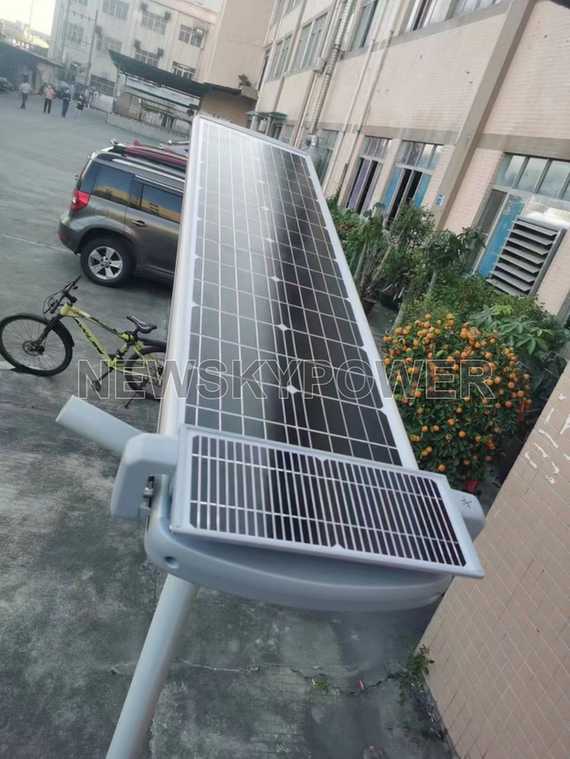
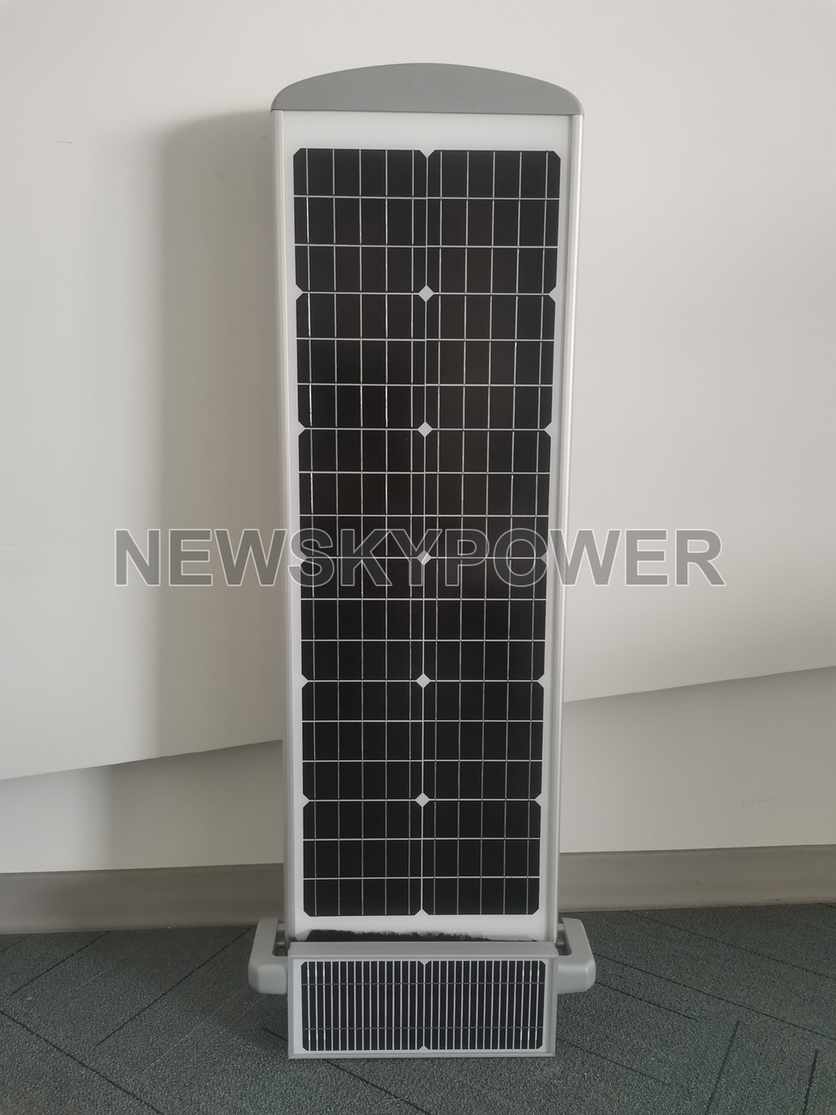
The benefit is conditional on what actually collects on the glass. Moisture or dew can make some dust cling more firmly; a cleaning mechanism should not be assumed to remove hardened crust, oily film or leaves. SC is therefore a way to reduce suitable day-to-day deposits, not a zero-maintenance promise. Nor can it bring sunlight through dense palm shade or replace the energy needed through a low-sun period. Those conditions still shape where a solar pole belongs.
The exposed straight section is a natural SC candidate: trucks pass, loose deposits recur and stopping a service vehicle can be inconvenient. Under dense palms, moving the panel into better sun matters more than cleaning shade from it. At the collection point, safe movement of people and vehicles makes lighting geometry the first decision. SC need not be specified at every pole.
One route, different jobs for the lights
For an oil palm estate road-lighting project, each section has a distinct task. Along the field-block link, the lamps form a readable line in the travel direction. At the bend, their positions should help a driver see where the road changes course. Around the collection point, road lighting supports movement in and out; concentrated loading work may need its own light arrangement. Near the entrance, the final lamps connect the estate route visually to the road beyond. This is the same journey, but each location has its own reason for being lit.
These tasks cannot be reduced to printed wattage. Road width, mounting height and pole spacing affect coverage and dark gaps; beam distribution affects glare. A brighter but badly placed lamp could still leave the bend difficult to read. For the chosen light head, an IES or LDT photometric file, if available, can support a layout calculation of road illuminance and uniformity. US Department of Energy guidance recommends examining photometric files and assessing how the proposed lighting serves the target area. A file alone does not prove this road meets a target; the estate's operating task and local requirements set that target.
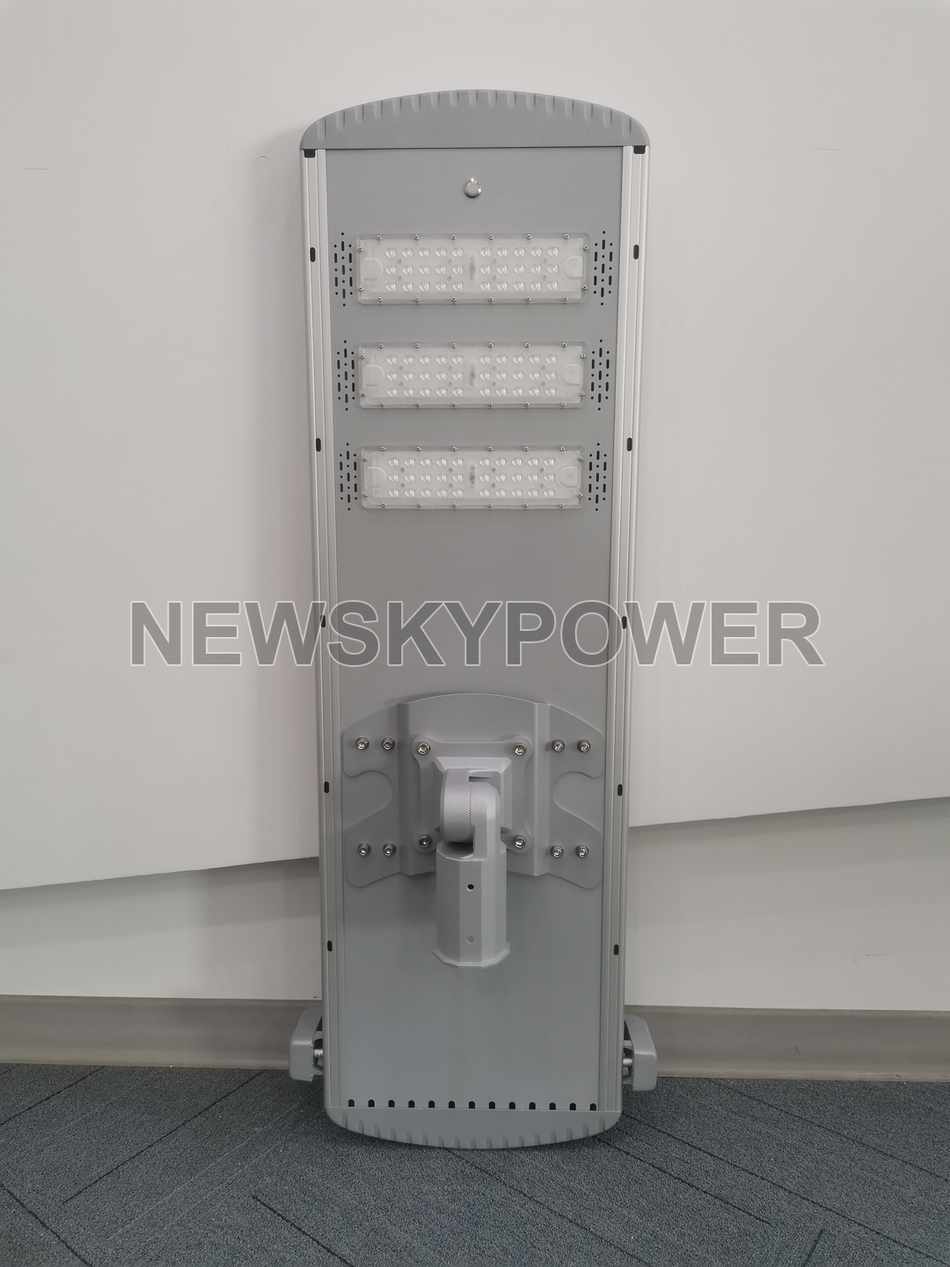
SC matters most where necessary poles are scattered, repeatedly exposed to suitable deposits and difficult to service. The estate could use it on those stretches and choose a simpler lamp elsewhere. NEWSKYPOWER's engineering solar street-light range offers that wider choice while keeping the route's purpose in view.
A lighting schedule the battery can actually support
Once the bend and collection point are on the plan, the next question is how long each lamp must work. Evening fruit transport at full brightness and a later dimmed period draw different amounts. LED power × hours at each setting gives the nightly lighting load; add the cleaning unit and controls before comparing batteries and panels. A panel's rated watts are not its daily energy yield under a palm canopy or during a rainy week.
Illustration only, not an SC specification: 30 W for four hours plus 15 W for six hours uses 30 × 4 + 15 × 6 = 210 Wh for the LED each night, before cleaning-unit and control loads. A hypothetical 24 V, 20 Ah battery stores 480 Wh nominally because Wh = V × Ah. If usable depth of discharge were 80% and delivered-energy efficiency 85%, the illustrative usable amount would be 480 × 0.8 × 0.85 ≈ 326 Wh, before extra loads. Two nights with no recharge would need at least 420 Wh for that LED schedule, so this example does not support two-night autonomy. Real capacity also changes with condition and temperature; none of these figures describes an offered SC model.
The panel must replace the energy spent overnight. One pole may face open sky while the next sits under palm fronds. Dust affects how much available light reaches the cells; shade and clouds affect how much light is available. The operating schedule, local solar resource, shadows and low-sun sequence therefore belong in one calculation. SC cannot replace a battery sized for the required hours or a panel placed where it can charge. NEWSKYPOWER’s SC self-cleaning solar street-light range provides catalogue configurations for a first comparison; confirm the current components and operating profile for the selected model before requesting a quotation.
What the estate gains from this approach
This approach joins two jobs: lighting the fruit-transport route and maintaining panels spread across it. Every routine cleaning visit calls for a crew, a vehicle, access equipment, a place to stop and time away from other work. By dealing with suitable recurring deposits at the panel, SC may reduce some of those visits. It does not remove the need for inspections or for a crew to handle deposits the mechanism cannot clear.
Maintenance crews still need access. A road passable to fruit trucks may not offer a safe stop for high-access work, especially at a wet shoulder or busy loading point. The cleaning unit needs inspection for obstruction or wear. Rainy-season access, battery condition and the lighting schedule remain part of the operation; self-cleaning does not replace them.
For an estate with evening vehicle movement, the straight road, bends and collection point need to form a legible route. SC fits the stretches that need light after dark and repeatedly accumulate panel deposits; simpler lamps can serve the rest.
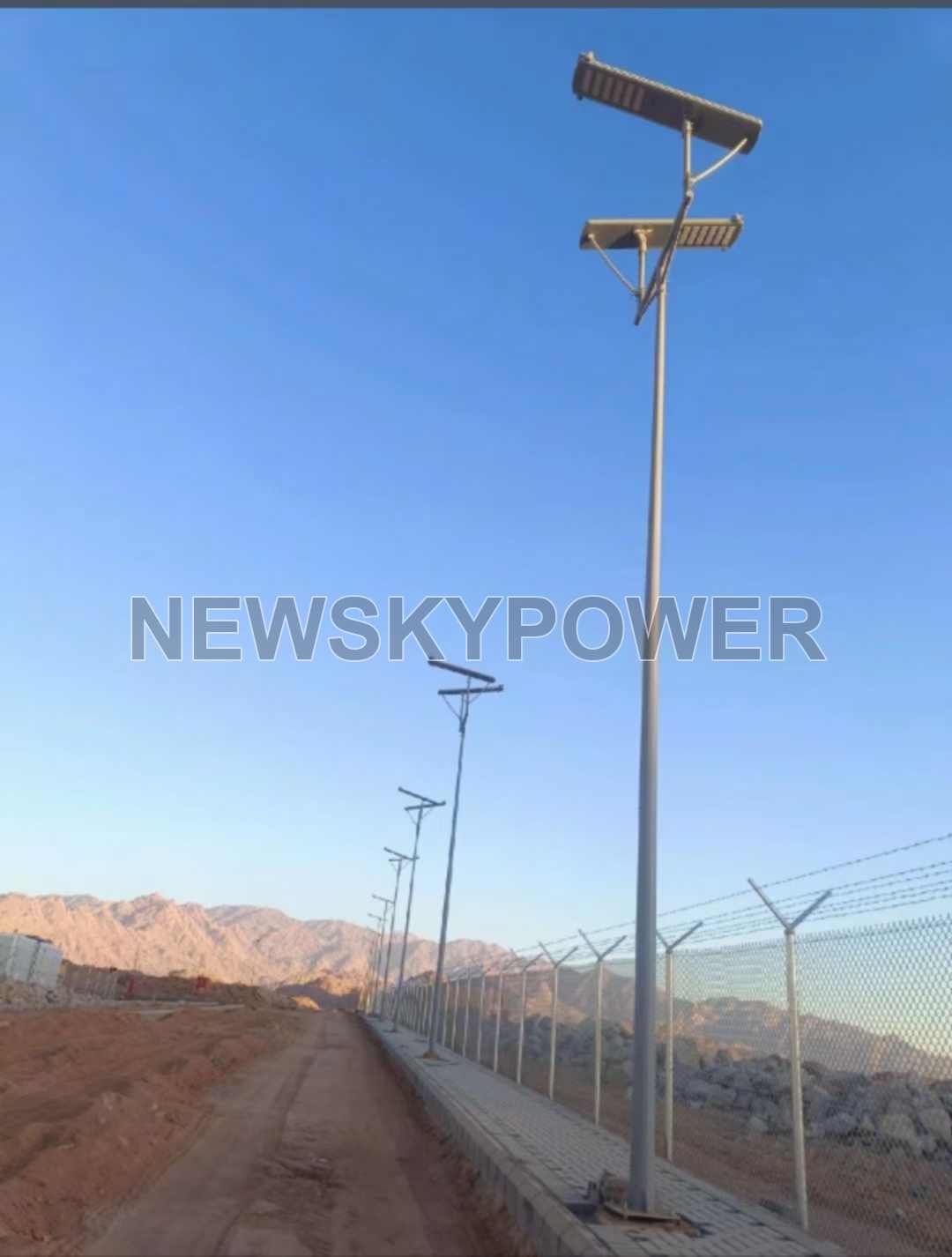
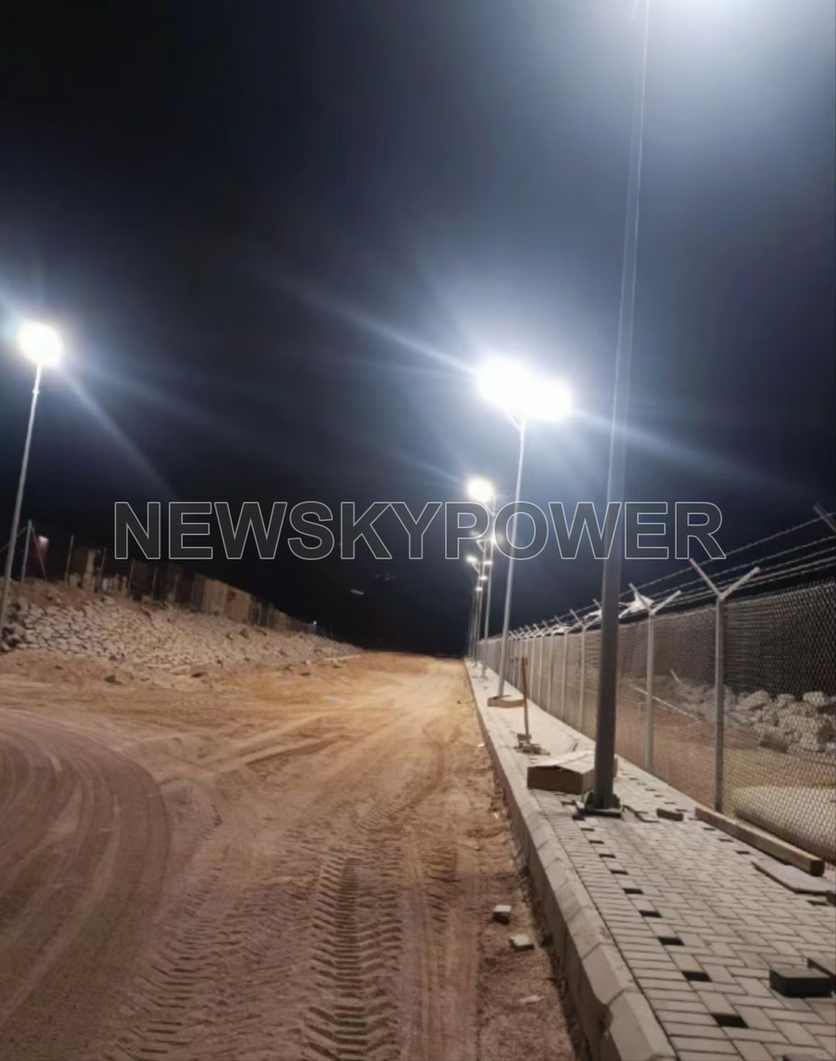
Road-installation photo references
These two photographs from the supplied files show a separate road installation by day and at night, illustrating the arrangement of poles along a route.
Buyer FAQs
Does every oil palm road need a self-cleaning street light?
No. It is most relevant where the road is used after dark, suitable deposits recur and servicing dispersed, elevated panels takes repeated trips. The need is weaker where a panel is shaded rather than dirty, or where staff can reach a pole easily during regular work. A quieter or easier-to-service section may call for a simpler lamp.
Will self-cleaning help where palms cast shade or cloudy weather lasts?
It may address suitable deposits on an exposed panel, but it cannot create sunlight or remove every kind of stuck-on material. Shaded positions and low-sun periods still need a suitable solar and battery configuration based on the required lighting hours. A cleaner panel does not by itself prove rainy-season autonomy.
Can an existing oil palm road-lighting project use this approach?
Yes, as a design option. The old road route may stay the same, while lamp positions, sunlight access and pole interfaces determine where an SC unit makes sense.
How often will plantation staff still need to clean the panels?
There is no single interval for every estate. Recurring road dust, rainfall and the type of deposits affect the workload. Inspect the panels and cleaning unit during planned maintenance rounds, and arrange manual cleaning where residue remains or the mechanism cannot clear it. Access may also depend on fruit-truck movements and whether a roadside stop is safe after rain. Self-cleaning may reduce suitable routine cleaning tasks, not replace inspection.
What information is needed for an oil palm road-lighting quotation?
Share the road layout, widths, existing pole heights and spacing, together with the required lighting hours and any proposed dimming schedule. Identify shaded sections, fruit-collection areas and places that are difficult to reach for cleaning. These details allow a comparison of lighting distribution, panel and battery options and the stretches where the SC cleaning feature is useful before preparing a quotation. A current photometric file can be checked if one is available for the proposed light head.
If your plantation has an evening transport route, share its road layout and the sections where panel cleaning is difficult. NEWSKYPOWER can discuss where the SC format fits and where another solar street light may be more appropriate.
More Industry Expertise Articles
Explore NEWSKYPOWER guides, comparisons and application insights in the Industry Expertise article archive.