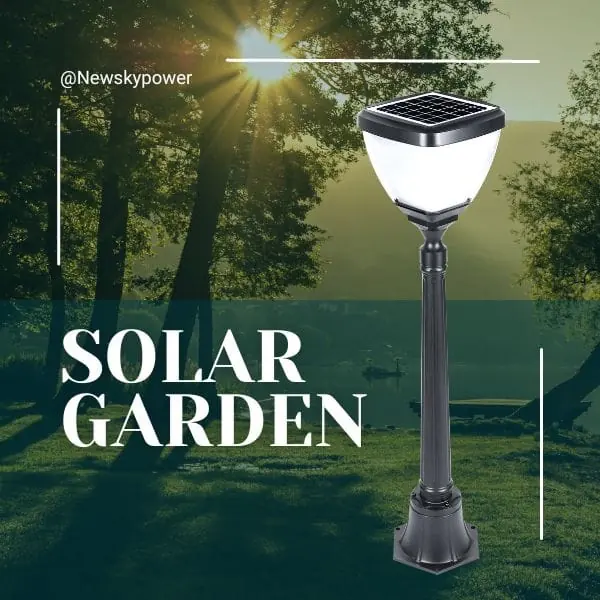


Commercial solar landscape light maintenance starts with four questions: which light, where is it, who is responsible and what happens next? A collection of cleaning reminders is not enough to manage a community or park with different models, operating conditions and service needs.
Build an asset register, distinguish routine observations from event-triggered checks, and connect each issue to an owner and a follow-up record. Use the manufacturer’s instructions, local conditions and actual service history to decide the schedule. There is no single weekly or monthly inspection interval appropriate to every installation.
This guide concerns management of multiple lighting assets. It does not provide internal repair procedures or replace a model-specific manual. The templates can be used without inventing installation dates, fault rates, spare quantities or test results.
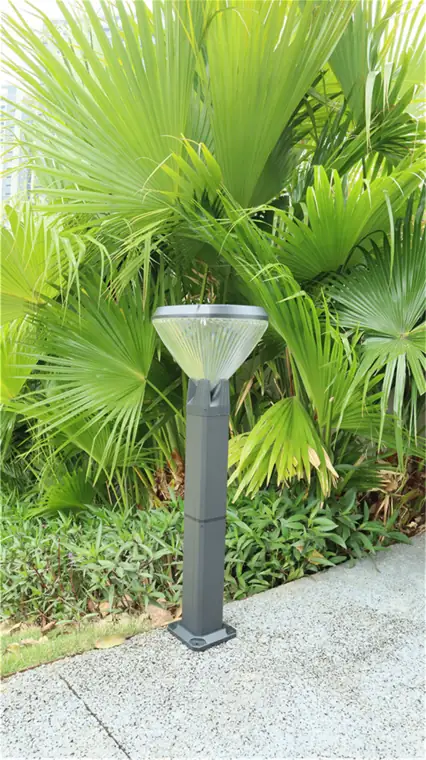
Create Fixture IDs and an Asset Register
Make every light identifiable
Assign a unique fixture ID and connect it to a position on the site plan. Choose identifiers that remain understandable when staff change or landscaping alters the appearance of the area. Avoid relying only on descriptions such as “the third light after the tree,” which may become ambiguous later.
Record the complete model and configuration, installation date if known, current documented mode and the relevant manual. Distinguish an asset ID from a product model: several lights can share a model, but each installed asset needs its own location and service history.
Record unknown information honestly
An inherited installation may have missing labels or incomplete records. Enter unknown information as unknown and assign a task to recover it. Do not infer an installation year from the age of the property or assume an undocumented setting matches a neighbouring fixture.
The solar bollard light category and solar courtyard light category can help distinguish general forms during an inventory. They cannot identify the exact installed version or establish that a particular replacement is compatible.
| Asset field | Entry required | Reason |
|---|---|---|
| Fixture ID and location | Unique ID plus plan reference | Connect observations to one asset |
| Model and configuration | Exact known version; otherwise unresolved | Avoid incorrect instructions or parts |
| Installation record | Date and evidence, or unknown | Preserve honest history |
| Operating arrangement | Confirmed mode and source | Interpret observations in context |
| Documents | Manual and revision | Define permitted checks |
| Maintenance owner | Named role and service contact | Make the next action accountable |
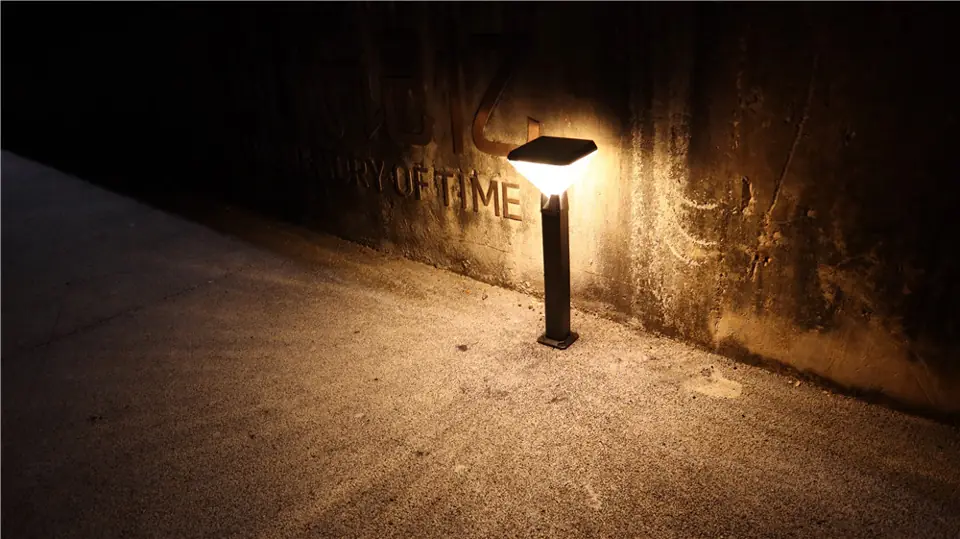
Separate Routine and Event-Triggered Checks
Build a schedule from actual requirements
Start with the manufacturer’s applicable instructions and the site’s management needs. Consider access, exposure, pedestrian use and the condition history. Record why a check is included and what finding should trigger follow-up. A schedule is easier to maintain when every line has a purpose rather than an arbitrary frequency.
The question “how often should commercial solar garden lights be inspected?” therefore needs a site-specific answer. A sheltered courtyard, a heavily planted route and an exposed waterfront position may require different attention. Their inspection arrangements should be decided and reviewed by the responsible team, not copied from a generic blog interval.
Define events that prompt a review
Possible triggers include reported damage, nearby construction, changes in planting, severe weather affecting the site or a repeated lighting complaint. Record the trigger and follow the site’s access and safety procedures before arranging any inspection. An event-triggered check is not automatically permission to dismantle equipment.
For a Southeast Asian site with changing vegetation and wet-season access, note which events affect the actual installation. For an island property, consider how service access and resupply are organised. In Australia, Europe or North America, use the relevant local seasonal conditions rather than assigning one schedule to an entire region.
Keep the check and its result distinct
| Check type | Trigger or basis | Record | Next decision |
|---|---|---|---|
| Routine external observation | Approved local schedule | Date, asset ID and observations | Continue, investigate or refer |
| Manufacturer-required action | Applicable instructions | Document and completion evidence | Confirm required follow-up |
| Event-triggered review | Named event affecting the area | Event, access conditions and findings | Assign appropriate personnel |
| Follow-up | Previous unresolved issue | Original reference and new evidence | Close or continue tracking |
Mark a missed or inaccessible check accurately. “Not inspected” is different from “no issue observed.” This distinction matters when a later decision depends on whether someone actually visited the asset under the relevant conditions.
Assign Cleaning, Landscaping and Service Responsibilities
Separate observation from intervention
An ordinary observer may be able to report visible dirt, new shade or a damaged exterior without operating or opening the fixture. Cleaning, vegetation work and technical repair have their own requirements. Define who is authorised and equipped for each task using the applicable instructions and site arrangements.
High-level work, electrical work, structural concerns and battery abnormalities should go to appropriately qualified personnel. Do not make a maintenance plan appear simple by assigning those tasks to ordinary grounds staff. A clear escalation route is part of a useful plan, not an admission that the equipment cannot be maintained.
Coordinate the teams sharing the same space
Plant growth, irrigation changes and landscaping equipment may affect lighting positions. Ask the landscape team to report relevant changes using the same asset and area IDs. The lighting team can then review the changed condition without assuming every issue requires a replacement fixture.
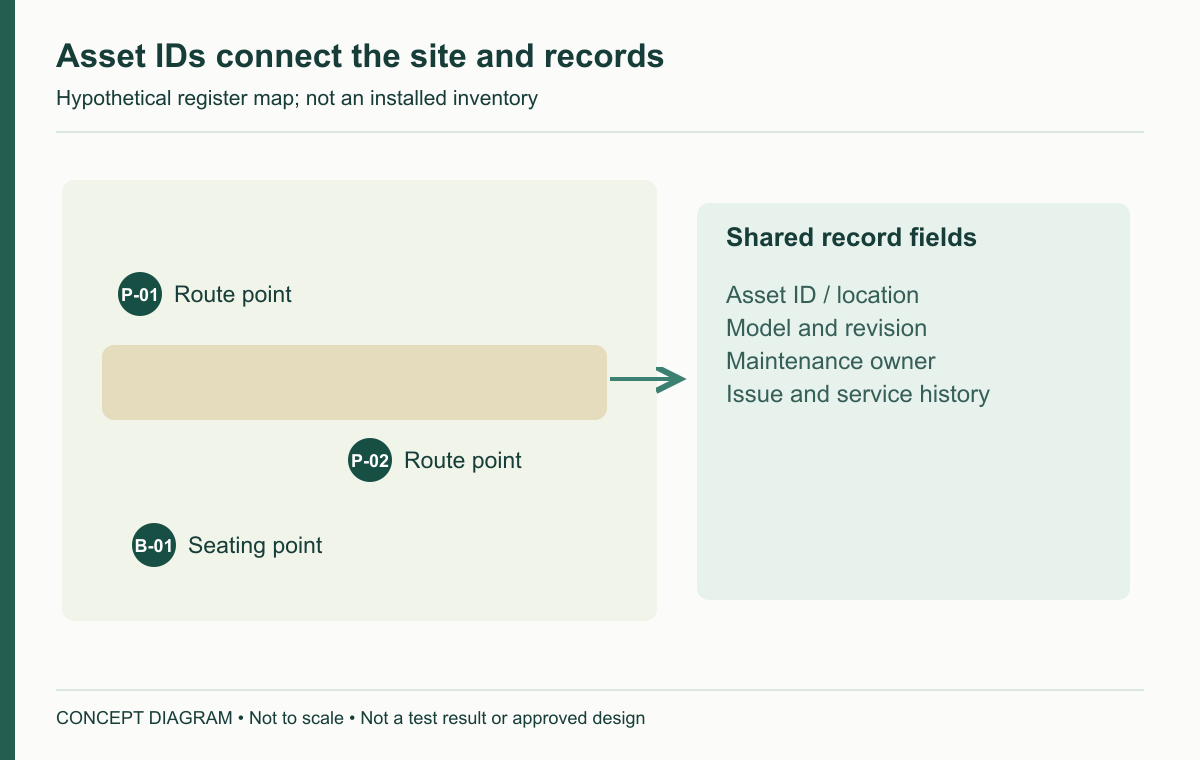
For example, a hypothetical asset P-01 may become partly obscured after a planting change. The observation record should identify the affected part and timing, while the responsible teams determine the permitted response. The example is not a recommendation to prune protected plants or reposition equipment without approval.
Define access and service arrangements
Record how the authorised service person gains access, where current documents are held and who can approve additional work. On a remote island or dispersed site, those details may be as important as having a spare part physically available. Do not promise a service response or delivery interval that has not been confirmed.
The manufacturer contact channel can be used to request the applicable manual and supported service route. Include the asset’s product identity and issue reference. A photograph without a model or context may not provide enough information for a meaningful response.
Record Lighting Issues and Escalation
Describe the symptom and its context
Record the fixture ID, time, observed behaviour, weather and relevant operating state. Include photographs when they can be taken safely and help identify the issue. Distinguish what was reported by another person from what the recorder observed directly.
Do not diagnose a failed component from one symptom. A light turning off earlier than expected might require several checks of the documented configuration and conditions; the management record should not jump straight to an unverified battery replacement. Detailed troubleshooting belongs in the appropriate model-specific process.
Recognise when ordinary observation must stop
Where swelling, leakage, unusual heat, damaged wiring or structural instability is suspected, follow the site’s safety procedures, avoid further interaction and escalate to the appropriate personnel. Do not touch, open, test-charge or continue operating suspect equipment simply to obtain a clearer diagnosis for the form.
The property or park operator should address any effect on public use through its established procedures. The article does not prescribe a universal temporary lighting or isolation method. It identifies the need for responsible action and records who is managing it.
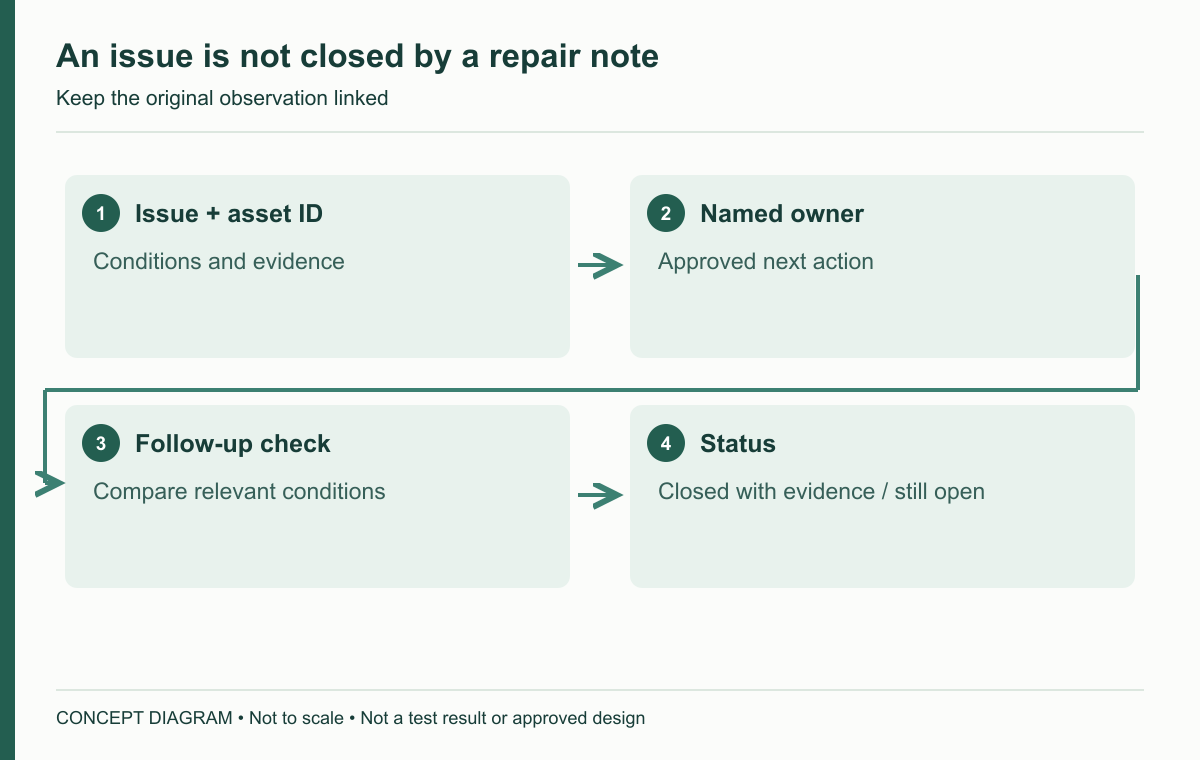
Use one issue record through to closure
| Issue field | Required entry |
|---|---|
| Reference and asset ID | Link the issue to the asset register |
| Trigger and observation | Event, date, time and descriptive symptom |
| Evidence | Photo or report reference and source |
| Responsible person | Owner of the next action |
| Permitted action | Approved scope and applicable instruction |
| Parts or configuration | Actual version used, if any |
| Recheck condition | What must be observed or verified afterwards |
| Result and status | Closed with evidence, or still requiring follow-up |
Manage Spares, Repairs and Configuration Versions
Identify parts by confirmed compatibility
Record the manufacturer’s part reference, supported model and revision, and any approved substitution information. Similar appearance or capacity does not prove compatibility. Do not assume different solar park lights or bollards share a battery, controller or diffuser because they belong to one visual range.
Store relevant written confirmation with the asset and service records. When a part changes, make the spare-part version relationship visible to the people receiving stock and authorising repairs. A box labelled “garden light spare” is not enough to prevent a later mismatch.
Record what was actually done
After authorised work, record the service person, approved action, parts used and required recheck. Do not replace the original issue description with a success statement; retain the sequence so that recurring problems can be recognised. “Part installed” is not necessarily the same as “issue closed.”
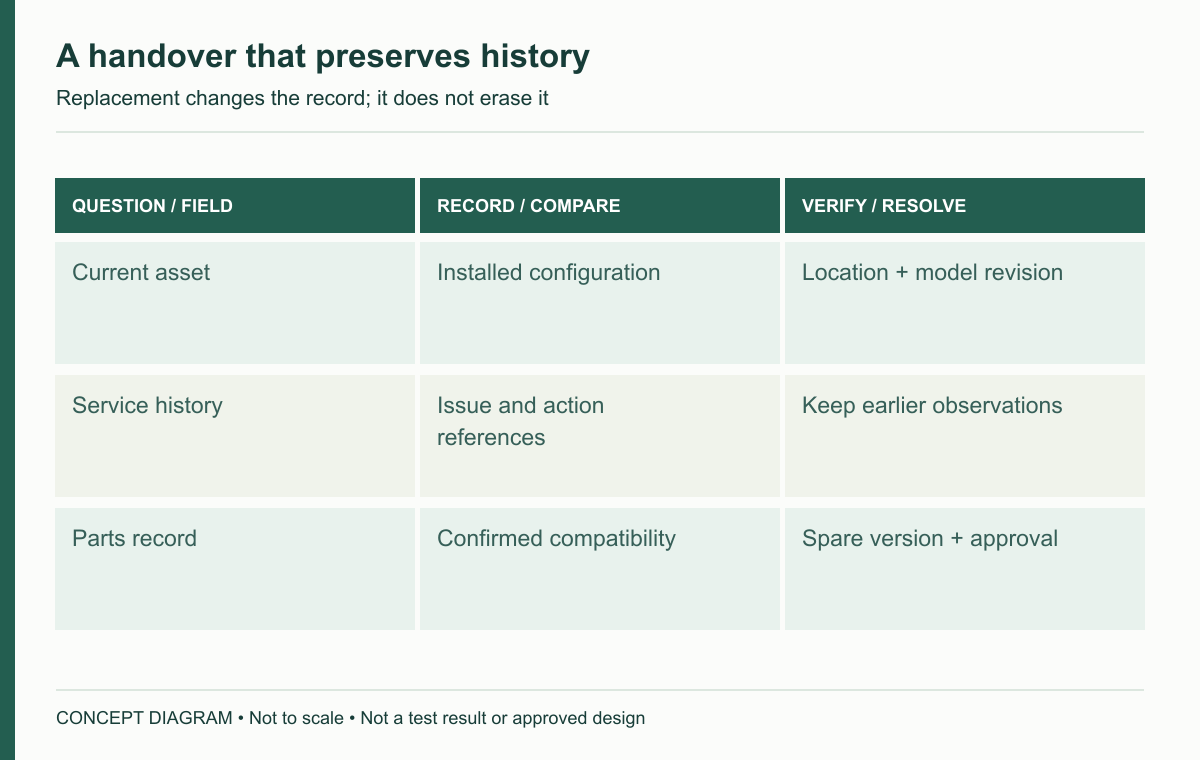
If the product is replaced, connect the new asset record to the retired one and update the location and configuration information. Avoid leaving the old manual as the only document linked to a new version. The maintenance history should explain the transition rather than erase it.
Ask for support information before setting stock levels
Spare quantities, replenishment periods and warranty treatment depend on the actual products and service arrangement. Request current information and record its source. Do not insert a universal spare percentage or a promised availability period merely to make the plan look complete.
For seasonal questions, the winter-use guide provides further selection context. It does not replace the installed model’s instructions or authorise changes to battery chemistry, controls or charging limits.
Refine the Schedule Using Service Records
Look for patterns with enough context
Review repeated issue locations, recorded dirt or shading changes, unsuccessful interventions and open follow-ups. Ask whether the check, responsibility or documentation needs to change. More visits are not automatically the answer; an unresolved configuration or communication problem may require a different action.
Do not calculate an improvement rate unless the underlying records support a defined comparison. An empty template cannot prove fewer faults or lower maintenance cost. Where records are incomplete, improve the information first and state the limits of any conclusions.
Keep the operating record usable
Use a manageable set of status terms and explain what closes an issue. An observation can be complete while the technical follow-up remains open. A service request can be sent while the actual repair is still pending. Avoid a single green status that hides these different stages.
When the site changes hands, transfer the asset map, current manuals, approved part relationships, unresolved issues and service contacts. A new maintenance owner should be able to trace a lamp from its position to its documented configuration without relying on the previous employee’s memory.
Frequently asked questions
How often should solar landscape lights be inspected? Set and review the schedule using the applicable instructions, exposure, operating needs and service records. Distinguish routine checks from events that call for an additional review.
Can different solar light models share spare parts? Only where the manufacturer has confirmed the relevant compatibility. Match exact part and product versions; similar appearance or an apparently matching rating is not enough.
How does a maintenance plan differ from troubleshooting? The plan manages assets, responsibilities, records and closure across a site. Troubleshooting investigates a particular symptom. The two should connect without turning every routine inspection into internal repair.
Begin with an accurate asset map and a named maintenance owner. Add only the checks, actions and service arrangements that can be supported and carried out, then use the follow-up record to make the next review better informed.
For an overview of fixture types, site conditions and selection priorities, see our garden and courtyard lighting guide.