

Solar flood lights for billboards work best when the sign surface, viewing positions, lighting hours, and panel location are planned together. Start with the words or graphics that people must read, then assess the lighting layout and energy supply. A high wattage label alone cannot tell you whether a sign will be legible or evenly illuminated.
For a small business sign, the challenge may be a bright reflection across the business name. For a larger billboard, it may be dark edges, obstructions, or insufficient charging during the season with the shortest useful daylight. Both require a site brief and a lighting trial, rather than a fixture count guessed from sign width.
Confirm That You Need External Sign Lighting
Lighting a Sign Surface Is Different from Powering an LED Display
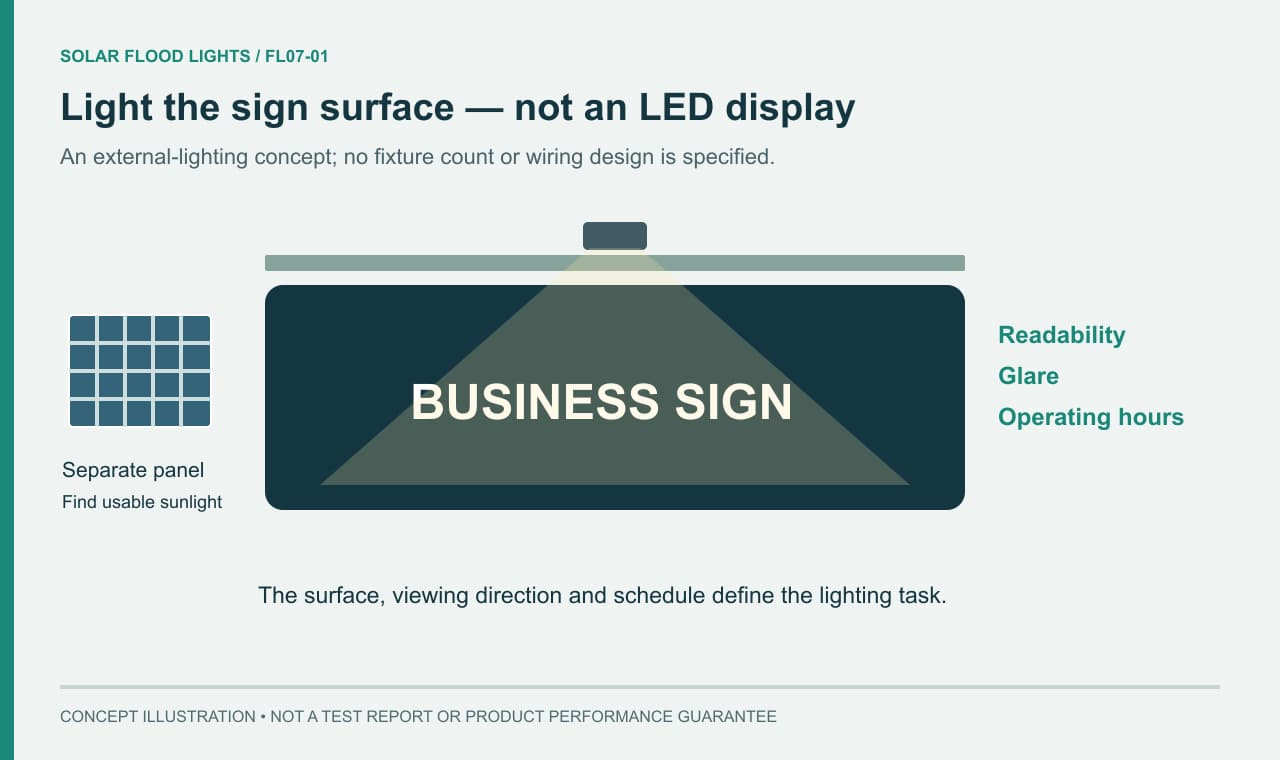
External solar sign lighting shines onto a printed panel, painted board, lettering, or another visible surface. The flood light supplies illumination; it does not supply operating power to the sign itself. An illuminated lightbox, electronic display, or LED message board has a separate electrical load that needs its own power assessment.
This distinction matters when requesting quotations. “Solar billboard lighting” could mean lamps aimed at a static billboard or a solar power system for a digital screen. Specify which you need. If the sign already produces light, investigate why it is difficult to see before adding external lamps: more light on its face may create reflections without improving the message.
Establish Viewing Directions, Display Hours, and Available Mounting Positions
List the main approaches to the sign: a pedestrian path, entrance driveway, opposite pavement, or other relevant viewpoint. Mark which face needs lighting, whether people read it straight on or at an angle, and what parts of the wording matter most. A double-sided sign needs assessment from both directions.
Then separate possible mounting points from convenient ones. A nearby wall may simplify fixing but force the light to strike at a shallow angle. A bracket above the sign may improve access to the face while casting shadows from raised lettering. Record candidate light and panel positions before selecting a product. Include access for future cleaning and adjustment, not just the initial installation.
What Sign Details Should You Measure Before Selecting Lights?
Dimensions, Materials, Reflectivity, and Text-to-Background Contrast
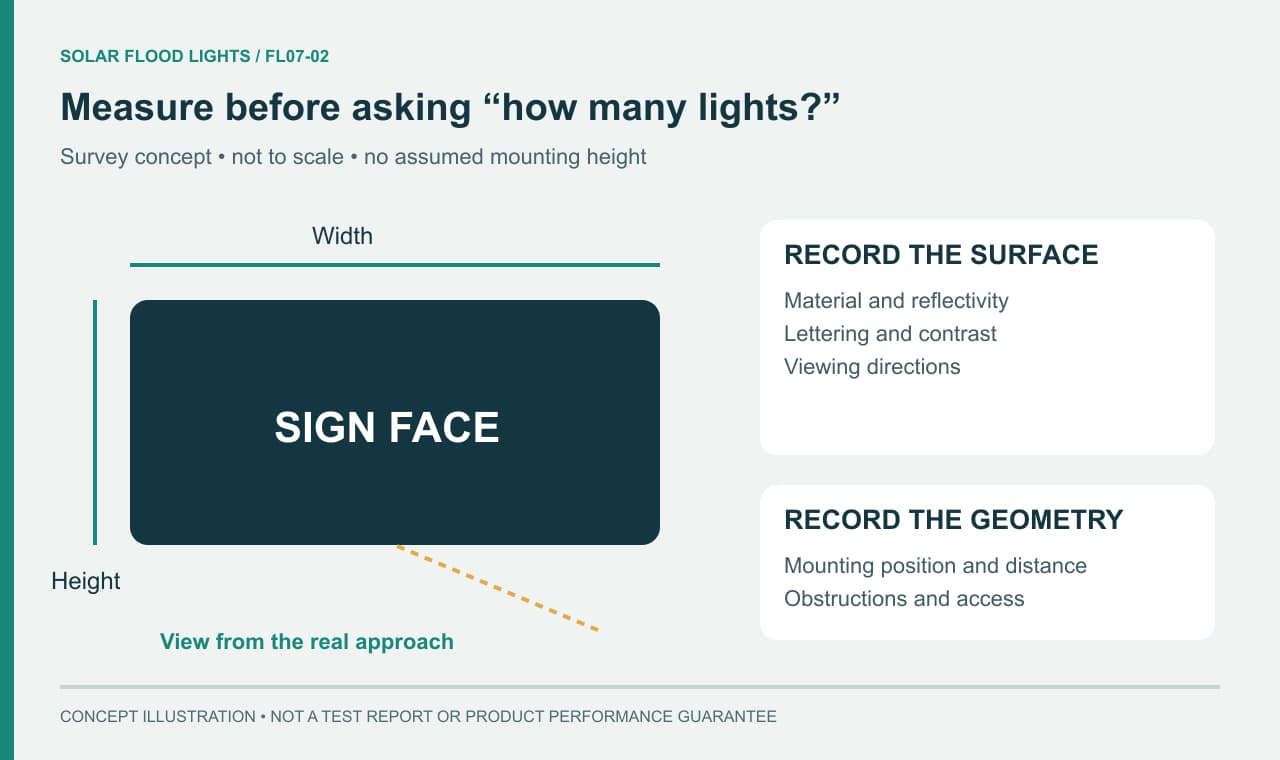
Measure the visible sign face, not only the overall frame. Note its width and height, the position of important text, any protruding frame, and the depth of raised letters. Take a close photograph of the finish and a wider photograph showing the surroundings. Describe whether the face is matte, glossy, metallic, glazed, textured, or made from several materials.
Different finishes respond differently to the same aiming position. A glossy face can produce a bright reflection in one viewing direction while looking acceptable from another. Dark graphics or low contrast lettering may remain difficult to read even when the surrounding area looks bright. Where lettering itself is too small or the contrast is poor, lighting alone cannot correct the design.
Viewing Distance, Ambient Light, and Nearby Roads
Provide photographs from the actual reading positions, with approximate distances and the direction of view. Include nearby shopfronts, existing lamps, trees, parked vehicles, and road approaches. These details help explain whether the sign must stand out against a bright background or remain comfortable in a relatively dark setting.
View the location after dark as well as during the day. Existing lighting may already cover part of the face, or a lamp may shine toward an approaching driver. Do not assess solar flood lights for business signs only from directly beneath the sign: that viewpoint can hide both glare and unreadable lettering.
How Can You Balance Coverage and Uniformity?
Coordinate Beam Distribution, Distance, Aiming, and Multiple Fixtures
The beam pattern, mounting distance, and angle work together. A broad beam positioned close to the sign may still miss the outer edges. Moving a light farther away may expand its footprint but also change the illumination reaching the face and the amount of spill beyond it. Tilting the lamp changes both where the beam lands and how evenly it covers the surface.
Request beam-distribution or relevant photometric information when available, together with the proposed mounting geometry. If that information is insufficient, arrange a sample trial. Treat any suggested layout as a proposal to check, not a performance result. Neither advertised watts nor total lumens specifies how much useful light reaches each part of this particular sign.
Several fixtures can help cover a wide face, but overlapping beams can also create bright bands. Ask the supplier to show aiming directions and overlap, then evaluate the complete arrangement. There is no reliable rule that every sign of a given width needs the same number of lamps. Fixture quantity follows the required coverage, acceptable variation, mounting constraints, and demonstrated performance.
Avoid Bright Centers, Lettering Shadows, and Strong Reflections
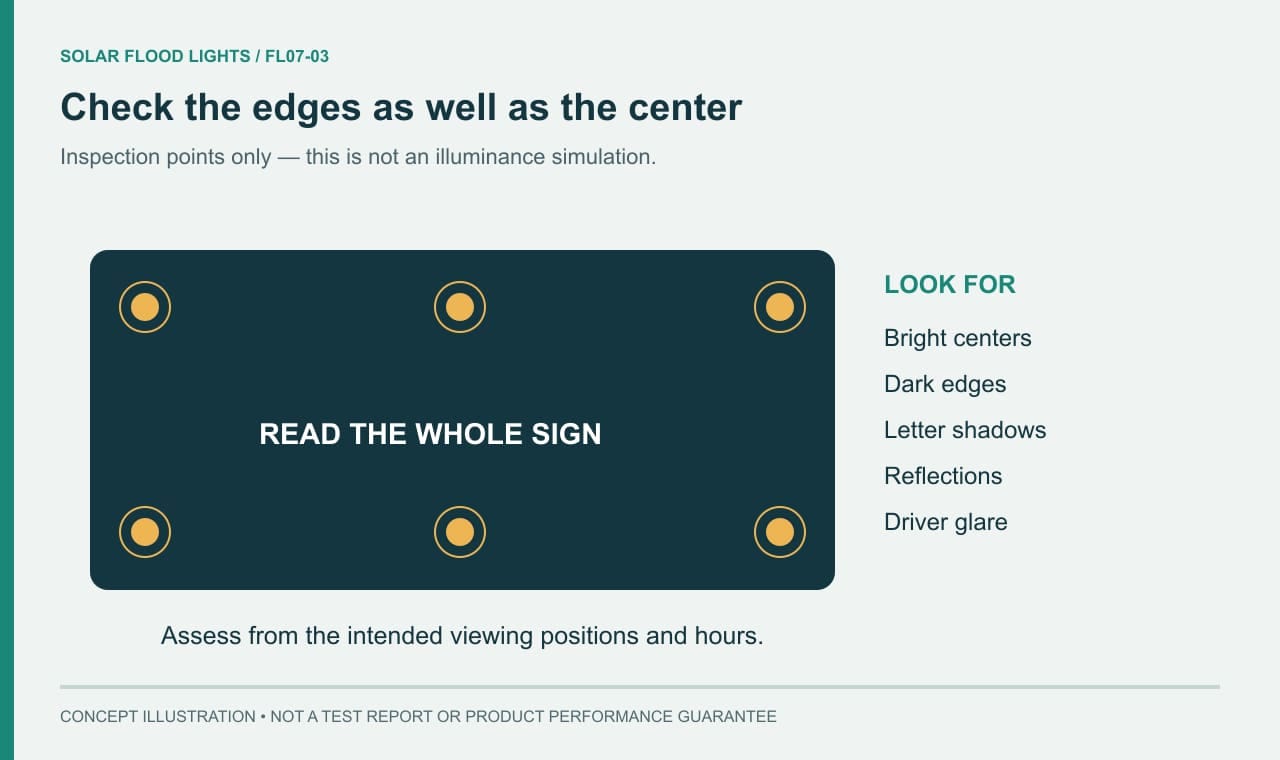
Inspect the face as a reading surface. Can you follow the business name without losing letters in a bright patch? Are the edges and contact details readable? Does a raised logo cast a shadow across another line? A visually striking center is not enough if the rest of the message disappears.
Change one layout variable at a time during the trial: aim, position, distance, or fixture arrangement. Recheck the main viewpoints after each adjustment. If reflections are the problem, increasing brightness may intensify them. If frame shadows are the problem, a different direction of illumination may be more useful. Choose an arrangement that keeps the whole message readable while limiting wasted light around the sign.
Match Lighting Hours to the Available Power Supply
Does the Sign Need Business-Hour Lighting or All-Night Visibility?
Write the required schedule in plain terms: illuminated from dusk until closing, until a fixed clock time, or through the night. Also state whether the sign must maintain a consistent appearance throughout that period. A system that remains on at reduced brightness may not meet a requirement for steady sign visibility.
For solar billboard lighting with timer control, distinguish a fixed duration after dusk from switching off at a set clock time. Those are different requirements because dusk changes through the year. Verify the selected controller's actual settings, whether they are retained, and what happens after a low-charge shutdown or restart. Do not assume a remote control provides every scheduling option.
Motion activation may suit occasional wayfinding, but it can leave an advertising sign dark until someone enters the detection area. If continuous visibility is the purpose, put it in the brief. The supplier then needs to assess the requested light level, hours, available battery energy, and expected charging conditions together.
Check Panel Placement, Building Shade, and Seasonal Conditions
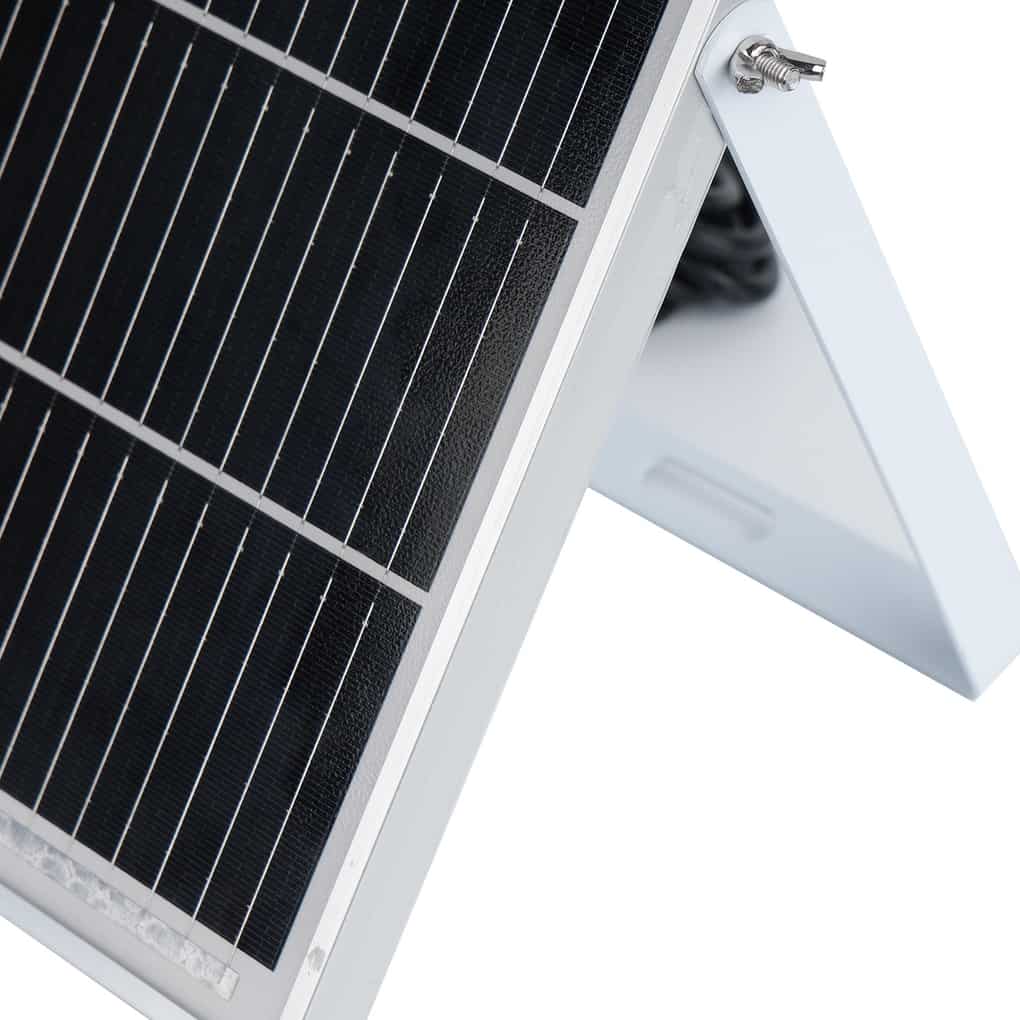
The panel needs a suitable charging position even when the sign faces away from useful sun. Survey the proposed panel location independently of the lamp location. Building edges, roof structures, trees, and the sign itself can create shadows that are easy to miss in a single midday photograph.
Record the site location and representative shading through the day; consider how the path of the sun changes by season. Check whether a proposed separate panel can be connected within the manufacturer's cable and installation limits. Include cable protection, drainage around mounting points, and practical cleaning access in the layout.
A panel hidden behind the sign may look tidy but receive poor sunlight. A roof position may offer better exposure while requiring additional access and mounting assessment. If usable sunlight and the required nighttime demand do not fit, reconsider the configuration, operating schedule, or power approach before ordering. A larger marketing wattage label does not solve a charging shortfall.
If the brief includes visibility during power cuts, separate the external lamp's supply from the sign's own electrical needs. A static sign illuminated by a standalone solar kit is a different task from keeping an electronic display running. Define the hours when the business name must remain readable, the permitted dimming, and the charging conditions during the local difficult season; do not assume that a mains outage changes the solar controller's normal mode.
Carry Out a Site Lighting Trial and Acceptance Check
Assess Readability, Brightness Variation, and Glare from Real Viewing Positions
Agree on acceptance conditions before the trial. Identify the required reading positions, the essential words and graphics, the lighting schedule, and any areas that should remain unlit. Use the actual sign material where possible; a white wall is not a reliable substitute for a glossy sign with raised letters.
Check the complete face after dark, then repeat near the end of the required operating period. Keep notes on mode, starting charge conditions, weather, and nearby lighting so changes can be interpreted. A successful short demonstration proves the immediate appearance under those conditions; it does not establish seasonal charging adequacy.
Use photographs to document dark corners, glare, and shadows, but remember that automatic exposure can make two different light levels look similar. For comparative photographs, keep camera position and exposure consistent where practical. If the project requires numerical illumination or uniformity targets, have the responsible lighting professional define the measurement grid, instruments, and acceptance values in advance.
Confirm Site Requirements and Verify Any Applicable Roadway, Permit, or Lighting Rules Separately
Ask the property owner and responsible installer to confirm permitted fixing points, access arrangements, sign structure suitability, and maintenance responsibilities. Brackets, panel supports, and the sign structure must be assessed for the actual site conditions. Do not assume that a light supplied with a bracket is suitable for any supporting surface.
Where the sign faces a road, neighboring property, or another sensitive area, check applicable signage, planning, roadway, and lighting requirements with the relevant authority or qualified local adviser. This includes any limits on operation or light spill that apply to the site. Keep those requirements in the acceptance brief rather than trying to infer them from a product description.
Prepare a Sign-Lighting Requirements Sheet for the Supplier
The most useful inquiry shows the supplier what the installation must achieve. Use the following sheet for one sign design and repeat it when faces, locations, or schedules differ.
| Project detail | Why it matters | Photos or measurements to supply |
|---|---|---|
| Sign face and key message | Defines the surface and content that must be readable | Face width and height; full artwork; important text positions |
| Finish and raised features | Helps identify reflections and shadows | Close images of surface, frame, lettering, and protrusions |
| Reading positions | Sets meaningful acceptance viewpoints | Approach photographs, approximate distances, and directions |
| Proposed lamp positions | Constrains beam coverage and aiming | Sketch with height, stand-off distance, and fixing surfaces |
| Panel positions and shading | Helps assess charging potential | Site location and time-labeled photographs of likely obstructions |
| Required lighting schedule | Sets nighttime demand and timer requirements | Start/stop requirement and whether dimming is acceptable |
| Access and surroundings | Affects installation, maintenance, glare, and spill | Wider site views, access restrictions, adjacent uses |
| Project quantities and variations | Prevents one layout being copied onto unlike signs | Number of signs/faces, size variants, and locations |
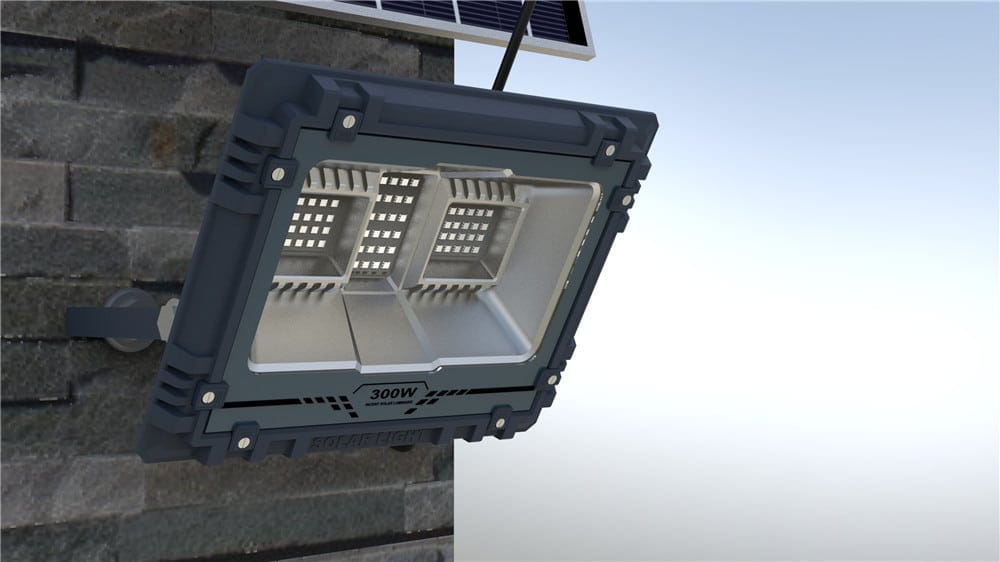
Use this brief when comparing the solar flood light range. Request a proposed layout and configuration with its assumptions, the documents supporting performance claims, and a trial plan. If the proposal does not address panel exposure, the full operating period, and the actual reading viewpoints, those gaps should be resolved before the order is finalized.
Frequently Asked Questions
How Many Flood Lights Does One Sign Need?
The answer depends on the sign's dimensions, material, fixture distribution, mounting geometry, and required readability. Ask for a layout and test it on the intended surface. Adding lamps can improve coverage, but an unsuitable arrangement may create new glare or bright overlap bands.
Can the Solar Panel Go Behind the Sign or on a Roof?
Either position needs a sunlight and installation assessment. Behind the sign, check that the structure does not shade the panel. On a roof, verify mounting, access, and the permitted cable route and length. Choose the position that supports charging and safe maintenance within the selected model's instructions.
Can the Lighting Switch Off Automatically After Business Hours?
Only if the selected model supports the required schedule. Confirm whether it uses a duration after dusk, a clock-based setting, or another control method. Request a demonstration of the exact shutdown behavior and setting retention before relying on it for business-hour lighting.
Can Solar Flood Lights Keep a Shop Sign Visible During Power Cuts?
A standalone solar flood light may illuminate a static sign without grid power if stored energy, charging, and the selected mode support the required hours. Check whether the sign remains readable at the late-night output level. The lamp does not automatically become an outage-triggered light, and it does not supply electricity to an LED display, shop equipment, or an internally powered sign.
Should Solar Sign Lights Be Mounted Above or Below the Sign?
Neither position is universally correct. Compare bracket availability, raised-letter shadows, surface reflections, light spill, and what viewers see from the main approaches. Test the proposed aiming on the actual sign face. If moving the lamp reduces one shadow but creates glare or misses the opposite edge, revise the layout rather than increasing brightness alone.
Can One Solar Lighting Layout Serve Both Faces of a Double-Sided Sign?
Assess each face separately. The viewing direction, mounting space, shading, and background light can differ between the two sides, so acceptable lighting on one face does not prove acceptable lighting on the other. Record the operating schedule and charging arrangement for all proposed fixtures, and verify both faces during the same night trial.