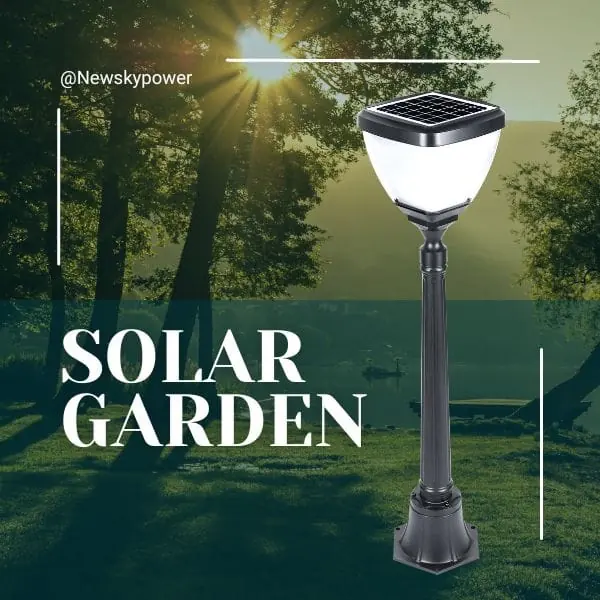


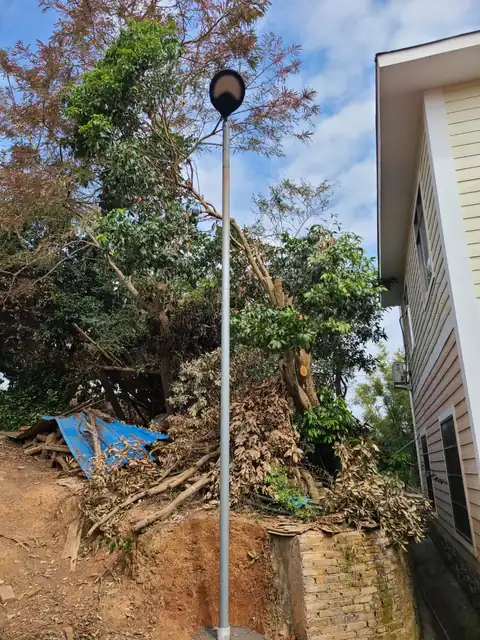
Solar garden lights may collect some energy in partial shade, but producing some electricity is not the same as collecting enough for the intended night duty. Observe the panel location across the day and relevant seasons, then compare that solar access with the required operating time and mode. “Natural light” alone is not a sufficient specification.
Distinguish shade, cloud cover and no light
Tree or building shade blocks direct solar access at particular times. Cloud cover changes incoming solar radiation over a wider area. A battery may keep a lamp operating temporarily even when its panel position is poor, so one successful night does not prove sustainable charging. Do not assign a universal percentage loss to “partial shade.”
Describe shade by source and time rather than by one label. Open sky with brief morning obstruction, dense tree cover through midday and a wall shadow that moves across the panel are different conditions. Dappled shade also changes as leaves and wind move. A useful record says when the panel is obstructed and by what; “bright area” or “partial shade” alone is too vague for energy sizing.
Inspect the panel location, not only the lit area
Check tree canopies, walls, roof overhangs and nearby structures. Also separate panel shade from nighttime light obstruction. In an integrated light, moving the panel usually means moving the luminaire; do not assume a separate panel can be added.
The best place to cast light is not always the best place to collect solar energy. Mark both on a plan:
| Site point | Night lighting task | Daytime panel access | Constraint to resolve |
|---|---|---|---|
| Entrance | Recognise gate and approach | Shaded by roof after midday | Move fixture, use supported separate panel, or evaluate another supply |
| Path bend | Show direction change | Open sky but future tree growth | Confirm seasonal canopy and service access |
| Seating edge | Low-level ambience | Good sun; panel may face sprinkler deposits | Include cleaning and positioning check |
These are decision examples, not claims that one product fits every row. Integrated and genuine separate-panel products must be checked against their own installation documents.
Record daily and seasonal changes
| Observation time | Panel sun/shade | Obstruction source | Photo ID | Expected seasonal change |
|---|---|---|---|---|
| Morning | ______ | ______ | ______ | ______ |
| Midday | ______ | ______ | ______ | ______ |
| Afternoon | ______ | ______ | ______ | ______ |
Record date, location and direction. Solar paths differ by latitude, hemisphere and season, so there is no globally correct “face south” rule or single charging window. Photos document the environment but do not measure solar radiation.
Take each photograph from a repeatable point and include the panel location in the frame. A morning, midday and afternoon set is more informative than one noon image. Repeat the observation when foliage or season changes materially. For commercial work, add a site plan reference so the supplier can connect every photograph with the correct proposed light ID.
Why summer success may disappear in winter shade
At many mid-latitude sites, the winter sun follows a lower path across the sky and daylight is shorter. A wall or tree that leaves the panel clear during summer may obstruct it for longer in winter. If the lamp is also expected to operate through a longer night, reduced charging opportunity and increased operating demand can occur together. Seasonal solar conditions vary by location; the northern and southern hemispheres do not share the same winter months.
Leaf loss can improve exposure under some deciduous trees, while evergreen foliage or a nearby building may continue to obstruct the panel. These effects can oppose one another. “Under trees” is therefore not a complete diagnosis: record the tree type where known, the direction of obstruction and the periods when the panel actually receives direct sunlight.
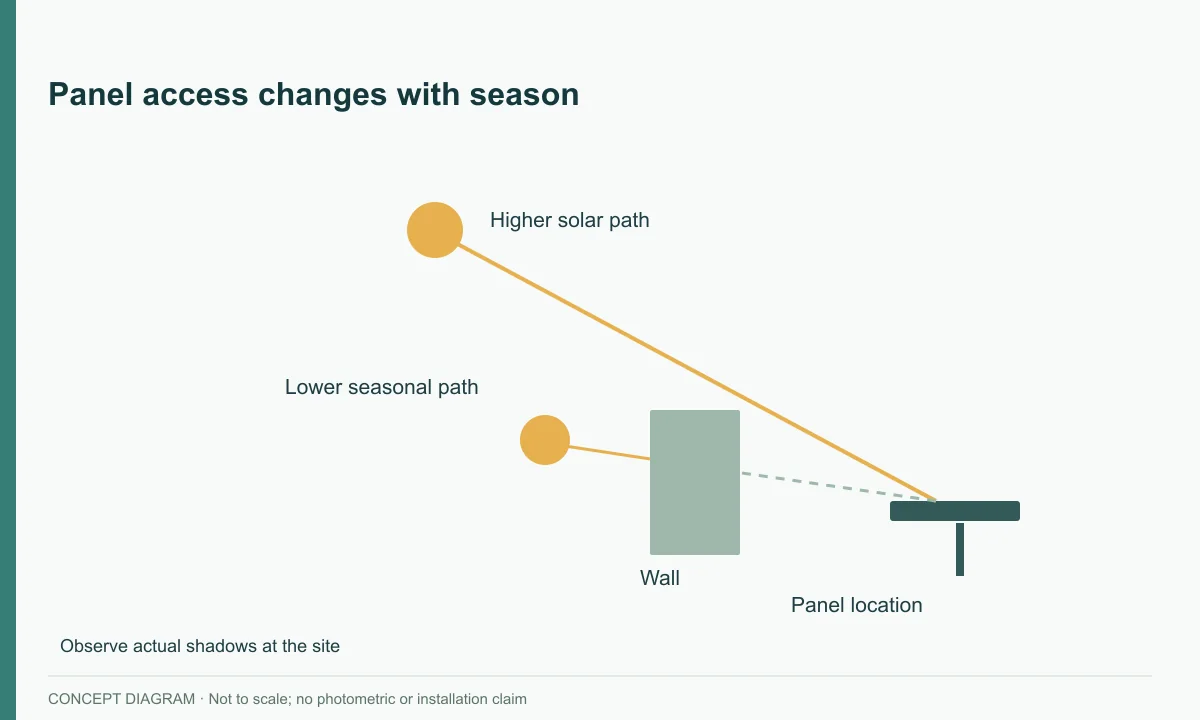
The U.S. Department of Energy’s solar-radiation explanation describes variation with season, location, landscape and weather. It supports checking the site over time, not assigning the same charging result to every place at a given latitude.
Match solar access to the lighting need
Short decorative use, route guidance and essential project lighting tolerate different uncertainty. A location that supports one small load may not support a higher-output or longer schedule. A larger battery cannot solve a persistent energy deficit unless the system can recharge it.
Define the consequence of a short runtime before accepting uncertainty. A decorative accent can be reduced or relocated with limited impact; an entrance, public route or required operating period may need a documented design basis and professional review. Do not use a successful decorative test as evidence for a more demanding duty at the same shaded site.
Compare practical adjustments
In order: consider a safer sunnier light position; manage only obstructions the owner is permitted to maintain; use manufacturer-supported orientation adjustment; select a model with a genuine separate-panel design; or evaluate an appropriate wired solution. Do not modify an integrated unit or extend internal cables without manufacturer approval.
Evaluate adjustments one at a time. Moving a light may improve panel exposure but weaken the intended distribution; pruning may be seasonal and subject to ownership or ecological restrictions; changing the panel angle may affect dirt accumulation or wind loading. Record the trade-off and obtain the appropriate approval instead of solving the solar problem while creating a mounting or lighting problem.
Compare separate-panel options without assuming compatibility
A separate solar panel can let the collector and luminaire occupy different locations when the product is designed for that arrangement. Ask for the permitted connection, cable length, mounting guidance and compatibility information. Those details determine whether the proposed route is supported; a spare panel of similar appearance is not evidence of compatibility.
Map both maintenance locations. The panel needs suitable exposure and access for inspection, while the luminaire needs a suitable position for its lighting task. A cable route may introduce protection, routing or service considerations that an integrated product did not have. Include these in the comparison rather than treating the separate panel as a free add-on.
The pathway-light range can help identify low-level fixture forms for the target area. Ask the supplier separately which actual models, if any, support the proposed panel arrangement; a category name alone does not answer that question.
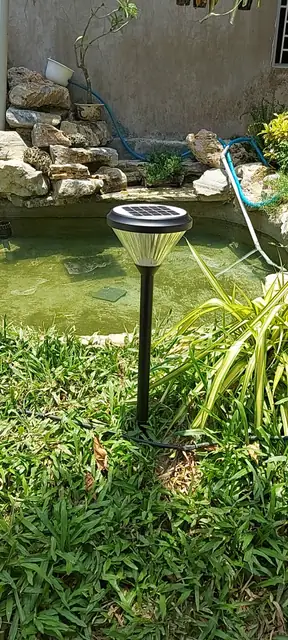
Example: complete a shade observation sheet
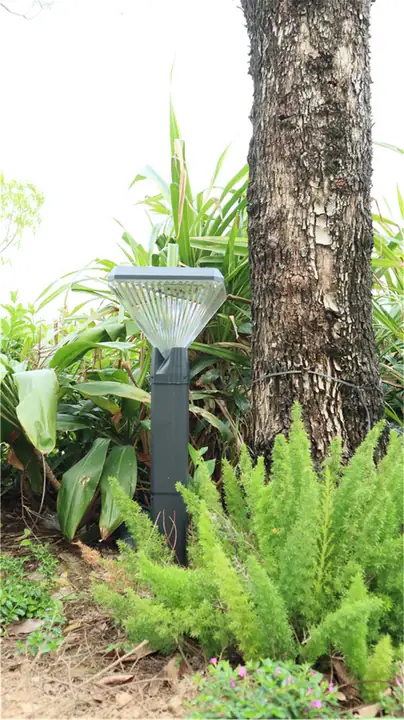
Imagine a light near a residential courtyard wall. This is a hypothetical observation exercise, not a measurement of the installation photograph. The owner has noticed shorter operation and wants to know where to place solar lights in this shaded garden.
| Observation point | Example note | What the note establishes | What it does not establish |
|---|---|---|---|
| Morning | Wall shadow crosses the panel | A specific obstruction at that time | Total daily charging energy |
| Midday | Panel receives direct sunlight | An available solar window | Full battery charge |
| Afternoon | Tree shadow covers part of the panel | A second obstruction source | A universal shade-loss percentage |
| Night | Lamp stops before the required period | The evening task was not completed | Which component caused the result |
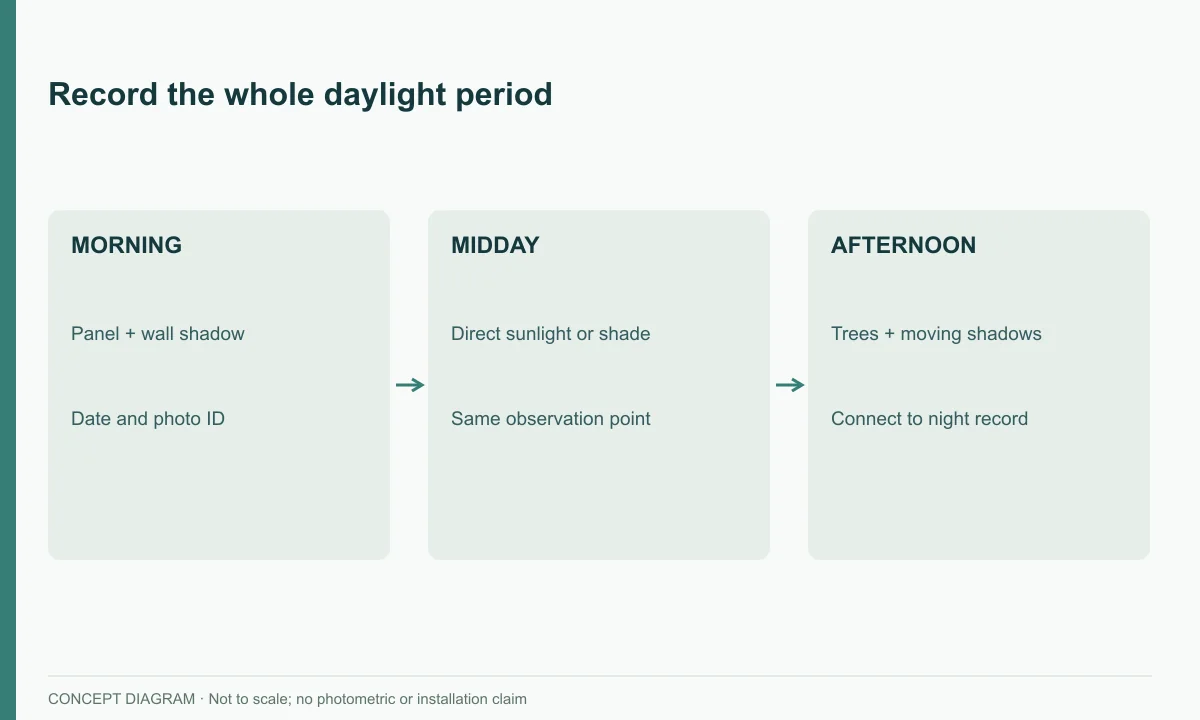
The sheet turns “it gets some sun” into information a supplier can review. Repeat at the same location and use the same photo references. If the season has changed, record that explicitly rather than comparing two photographs taken months apart as equivalent conditions.
Before moving the light, mark the nighttime target on the plan. A sunnier location may be outside the useful optical position. The first alternative is a permitted position that serves both requirements. If no integrated-light position does so, discuss a genuine separate-panel configuration or another supply approach instead of repeatedly moving the same light around without a defined target.
Verify with records
Compare the same model, mode and similar conditions before and after a change. Record runtime over several nights. Conclude with one of three actions: continue observing, send the data for a product/site review, or choose another power/layout approach.
Use a short decision rule: continue only when the observation covers the relevant season and operating duty; request review when information is incomplete but the location may still be workable; change the approach when persistent shade and required load cannot be reconciled with a supported configuration. Keep “unknown” as an allowed result until sufficient evidence is available.
Use the solar courtyard light range, the winter-use guide and the yard-light selection guide. Send time-stamped shade photos, location, model and required hours when requesting advice.
Decide when to change the location or the system
Agree the required operating period before testing. Continue with a candidate location when the recorded conditions and supported configuration meet the task. Request further review when seasonal evidence is missing or observations are inconsistent. Change the approach when the available solar access and required duty cannot be reconciled through a supported arrangement.
Send the observation sheet, plan, required hours and candidate model through the site-review enquiry contact. Clearly separate observations from estimates of winter conditions. That allows the response to focus on the remaining evidence instead of giving a generic answer about whether solar lights work in shade.
FAQ
Will lights always fail under trees? No, but actual panel input and the load must be evaluated.
Can diffuse daylight charge a light? It may contribute energy, but it does not guarantee a full charge or all-night operation.
Can I add a separate panel? Only if the exact product is designed and documented for it.