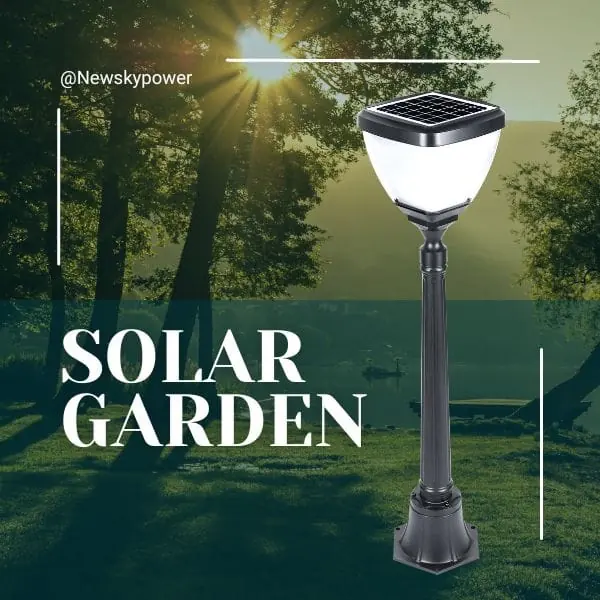


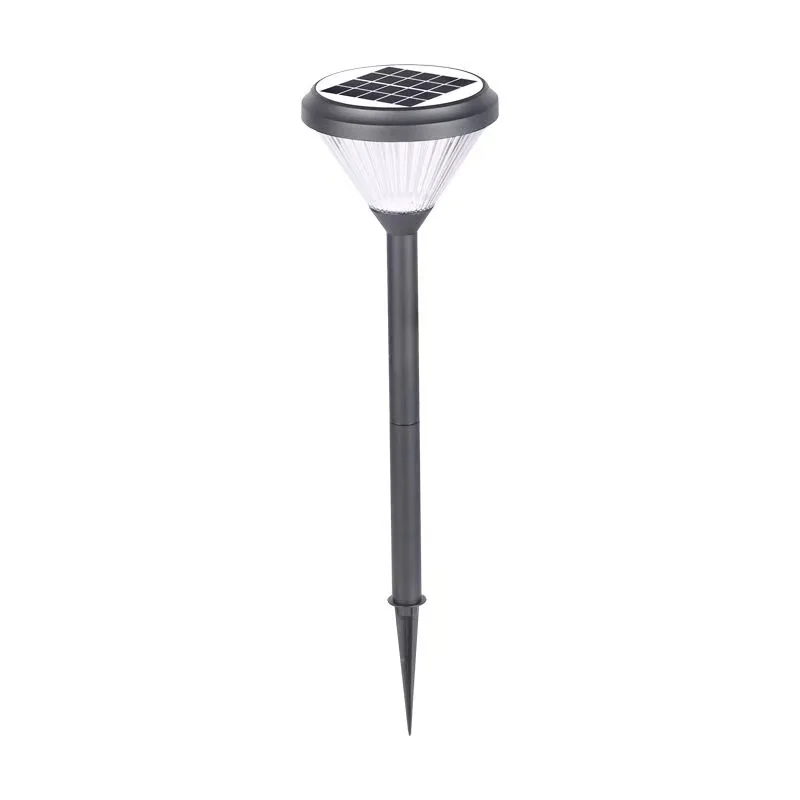
Solar pathway stake lights and fixed bollard lights can both mark a garden path, but they solve different site problems. Start with the ground: a stake needs suitable soil and a stable position, while a fixed-base light needs a sound mounting surface and an appropriate fixing method. Then consider whether the landscape will change, how people and maintenance equipment move through the area, and what light distribution the path needs. A fixed mounting method does not automatically make a light brighter.
Separate fixture type from lighting purpose
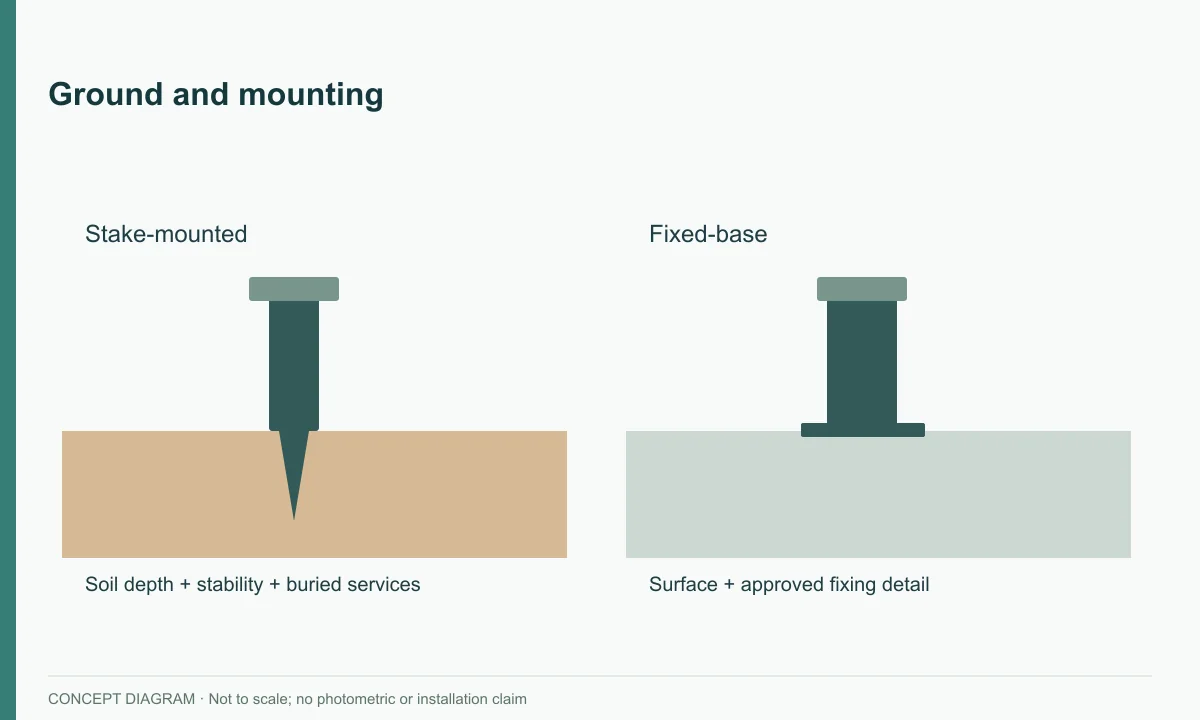
“Pathway light” describes an application; “bollard” describes a physical form. A low bollard can be used beside a path, while a stake-mounted fitting may provide orientation, decorative light or useful light on the walking surface. The practical comparison is therefore not pathway versus bollard as labels. It is a comparison between a relocatable ground spike and a fixed low-level body.
Before choosing either type, define the task. Do you only need to show the edge of a path, help people see the walking surface, identify a turn, or illuminate an entrance? The answer determines which optical data and nighttime checks matter.
Match the mounting method to the ground
Stake lights are most straightforward where there is real soil of sufficient depth and stability. A narrow planting strip beside paving may contain compacted fill, irrigation lines, roots or shallow construction layers, so appearance alone is not enough. Do not force a spike into unknown ground.
Fixed-base bollards suit hard surfaces or locations where a permanent position is required, but the base still needs a compatible, structurally suitable mounting surface. The selected model’s fixing details must be checked; a product photograph is not an installation drawing.
Compare relocation and permanent placement
A stake light is easier to move when planting beds change or a trial layout reveals a dark area. That flexibility does not remove the need to check stability, cable-free service access and the panel’s exposure after every move.
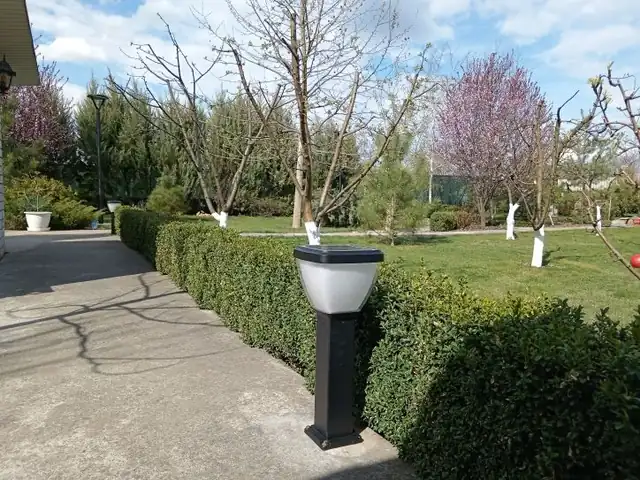
A fixed bollard is a better starting point where the light position is part of a permanent route, where casual movement would be disruptive, or where the site operator needs a clearly defined asset location. Moving it later may require making good the old mounting point and assessing a new one.
Consider a path with lawn on one side and paving on the other. A stake light may suit the lawn during a planting trial, while a fixed bollard may suit the paved entrance where the position is unlikely to move. This is a selection example, not a universal layout rule. Both sections still need their own solar-access, optical and maintenance checks.
Check planting, sightlines and light distribution
Plants grow. A small fitting that is clear in spring can be hidden later by leaves, while a taller fitting can produce glare if its luminous surface sits directly in a pedestrian’s line of sight. Check the panel and the light-emitting surface separately: foliage may shade the panel during the day or block the light at night.
Compare the actual luminaire data rather than judging by body height or mounting type. Useful information includes total light output under stated conditions, distribution data, mounting height, operating mode and any shielding. A larger body, more LEDs or a fixed base alone does not establish better path illumination.
Include mowing, irrigation, cleaning and service access
Place low lights outside routine mower and edging-tool paths where possible. Check how sprinklers, runoff, soil splash and leaf litter affect the panel, diffuser and base. A stake may be easy to lift for landscape work, but repeated disturbance can loosen the ground. A fixed bollard avoids a ground spike but may place fasteners and joints where dirt or standing water accumulates.
Neither category is maintenance-free. Cleaning methods, replacement access and materials depend on the exact model. Keep enough room for safe external inspection without asking a user to dismantle a sealed unit.
Work through a mixed-ground garden path
Consider this hypothetical residential garden: a paved walkway leads from a gate to a patio, a lawn edge runs beside its middle section, and the final corner is bordered by a planting bed that will be redesigned. The owner wants the route to be understandable after dark and wants to retain access for mowing. These are example inputs, not a measured installation or a recommendation for a particular lamp count.
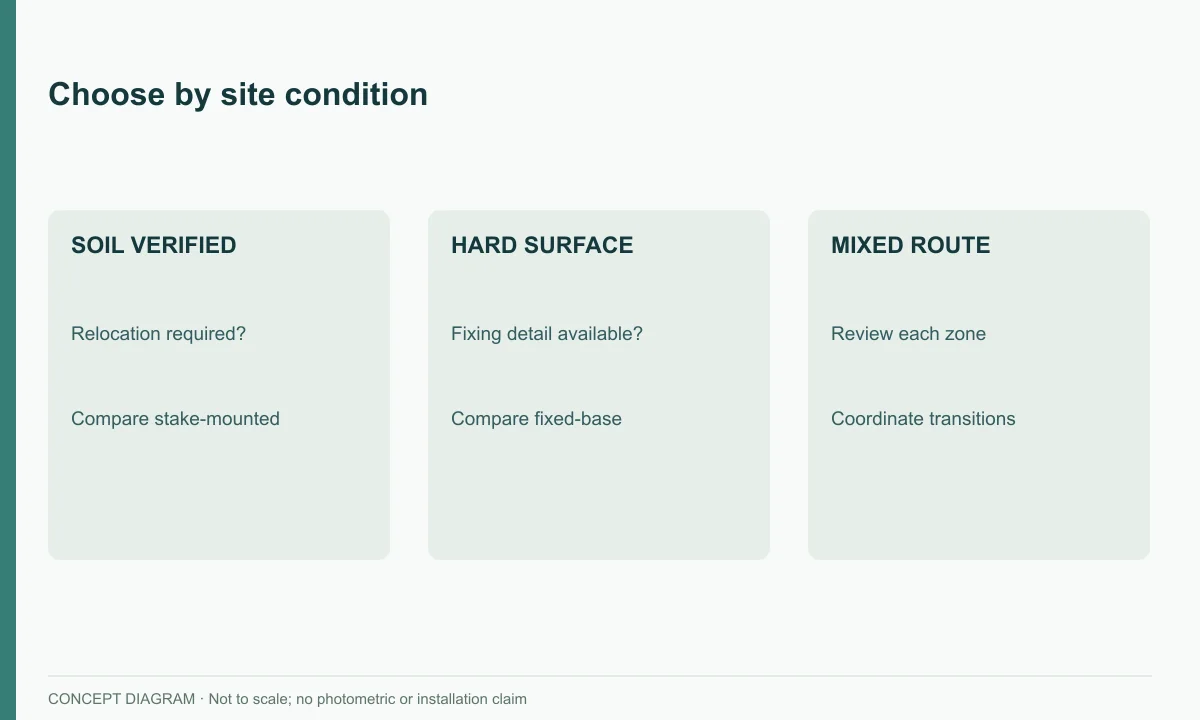
Divide the path into three zones before selecting products. At the gate, the permanent paved area makes a fixed-base option worth evaluating. Beside the lawn, a stake-mounted option may allow trial positioning, provided the soil and underground constraints are suitable. At the planting bed, postpone the final position until the mature planting envelope is marked. A visually matching family of lights is useful only if each installation form actually suits its zone.
Fill in the decision before asking for a model
| Zone | Known condition | First option to evaluate | Reason to change the choice |
|---|---|---|---|
| Gate | Permanent paving; no verified soil pocket | Fixed bollard with documented base | Surface or fixing cannot support the proposed arrangement |
| Lawn edge | Suitable soil assumed; mower route must stay open | Stake light outside the work route | Trial position is unstable or receives insufficient solar input |
| Planting corner | Landscape still changing | Relocatable trial position | Mature plants obstruct the panel or the intended light |
| Patio approach | Seen from seated and walking positions | Whichever form controls the view of the source | Source looks intrusive from normal viewing positions |
The table deliberately produces a shortlist rather than a finished design. For example, discovering a suitable soil pocket beside the gate could reopen the stake option. Discovering buried services along the lawn edge could remove it. The value of the table is that a changed decision has an identifiable reason.
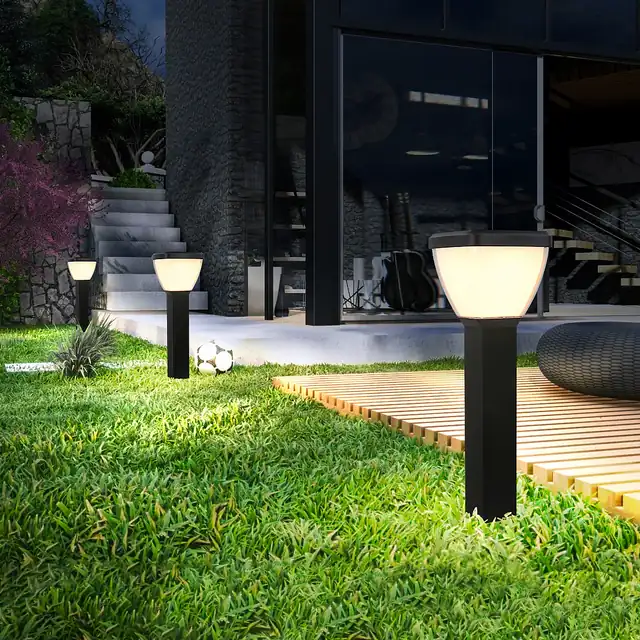
The garden-light application gallery can help you compare visible settings and fixture forms. Use photographs to discuss proportions and placement; ask for the selected model’s drawings and optical information before treating an attractive arrangement as suitable for your own path.
Check the transition between two fixture types
A mixed installation deserves particular attention where one type stops and another begins. Walk toward the transition, turn around and inspect it from the opposite direction. Look at the route edge, the next destination and the source itself. A neat line of identical housings is not a substitute for an understandable route, and slightly different housings need not be a problem if their appearance and lighting roles are coordinated.
Compare the proposed colour appearance under the same surrounding conditions. Check both the initial operating state and any later dimmed state supported by the selected models. If one type changes output while the other stays constant, the transition may look different later in the evening. Record this as an operating issue to resolve with the supplier rather than assuming matching colour labels guarantee matching appearance.
Keep the choice workable after landscaping changes
Before placing an order, mark the intended mature plant height and width on the site notes. Include shrubs that are currently small, seasonal flower growth and where leaves collect. These details affect two different paths: daylight reaching the panel and emitted light reaching the walking surface. Correcting one obstruction does not necessarily correct the other.
Agree who can move a stake light and how its location will be recorded. A movable fitting that gets returned to a different place after mowing can gradually change the lighting scheme. For fixed lights, keep the base area identifiable and accessible so new soil or mulch does not bury joints or reduce clearance.
Send this completed decision table with the photographs through the project enquiry contact. Ask for a shortlist that explains mounting form, applicable drawings and remaining site checks. That gives the discussion a useful endpoint: a product type selected for stated conditions, with the unresolved items visible.
Use a site checklist to make the choice
| Site condition | Start by evaluating | What still needs confirmation |
|---|---|---|
| Stable soil; planting layout may change | Stake-mounted pathway light | Spike depth, stability, panel exposure and light distribution |
| Paved route with a suitable permanent mounting zone | Fixed-base bollard | Base detail, mounting surface, fixings and optical data |
| Narrow soil strip beside paving | Either, after inspection | Actual soil depth, buried services, maintenance clearance |
| Mowers or frequent landscape work | Type least exposed to the work route | Asset protection and service procedure |
| Mixed ground conditions along one path | A zoned mix may be reasonable | Consistent light colour, visual rhythm, maintenance ownership |
Mixing both types can work when different sections of the path have different ground conditions. Treat it as one lighting scheme: compare colour appearance, glare, transitions and maintenance needs rather than alternating products for decoration alone.
Before requesting a quotation, prepare four items: photographs of both path edges, a note identifying soil and hard surfaces, the areas used by mowers or irrigation, and whether the planting plan is expected to change. Ask each supplier to identify the mounting form and included parts for the exact model. This prevents a category photograph from being mistaken for an approved fixing detail.
Frequently asked questions
Can solar stake lights be installed on paving?
Not by pushing a standard spike into a hard surface. Check whether the exact model has a manufacturer-approved base or accessory, or position the stake in a verified soil strip. Do not invent a universal conversion method.
Are fixed bollard lights always brighter?
No. Brightness and useful light on the path depend on the specific output, distribution, mounting position, mode and surroundings—not on whether the fitting is fixed.
Can I mix stake lights and bollards along one path?
Yes, if the sections have different site needs. Check colour consistency, sightlines, lighting transitions and maintenance responsibilities before finalising the layout.
If you are comparing these forms, start with the solar pathway light range and the solar bollard light range, then use the yard-light selection guide to place the decision in the wider landscape plan. Send a path plan, photographs of both edges and a note explaining whether future relocation is required to narrow the product type.