


Self-cleaning solar street lights can suit oil palm plantation roads with repeated panel deposits. They are worth considering when manual cleaning is difficult or requires repeated service trips. Solar energy powers the lights. A separate unit cleans the panel surface. The choice depends on the deposits, sunlight and lighting needs.
This case follows a fruit-transport route through an oil palm plantation. Trucks leave the field block and round a bend. They pass the collection point on their way to the estate entrance. NEWSKYPOWER uses this route to show how to choose a lighting system. An oil palm self-cleaning street light project can light the road and reduce manual cleaning trips.
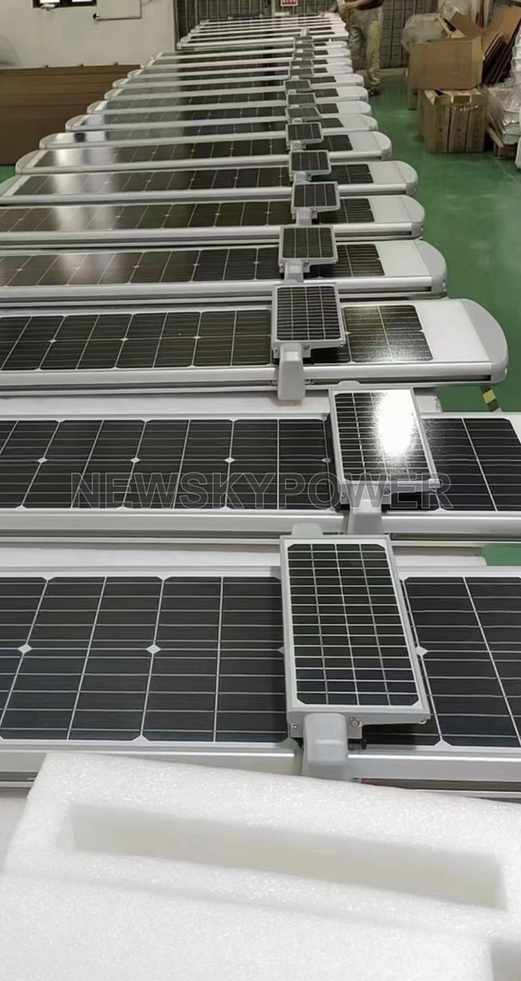
When self-cleaning lights make sense on oil palm roads
Start with the conditions at each proposed pole location. Dusty roads and shaded roads may both have charging problems. They need different solutions.
| Site condition | First check | Design response |
|---|---|---|
| Road dust returns often. Cleaning requires repeated trips. | Can the cleaning unit handle the actual deposits? | Consider self-cleaning. Compare its maintenance needs with manual cleaning. |
| Palm fronds keep the panel in shade. | Can the panel receive enough sunlight? | Improve panel placement and review the energy system. Cleaning cannot remove shade. |
| Damp deposits, crust, oily film or leaves | What can the unit remove? What remains? | Check whether the unit suits the deposits. Keep manual checks or cleaning where needed. |
| Bends, collection points and entrances | What must drivers, pedestrians and loading crews see? | Plan lamp positions, beam distribution and task lighting first. Then assess the cleaning feature. |
In this case, grid power reaches only the area around the main buildings. Extending cables would mean digging trenches along a busy transport road. Solar lighting avoids that cabling work. With conventional solar street lights on this road, the panels sit high on widely spaced poles. Cleaning them still needs people, a vehicle and access equipment. Passing fruit trucks may leave little room to stop. After rain, a soft shoulder can make safe access harder.
During dry weather, loose soil may settle on panels beside an unpaved road. It can return between maintenance visits. These deposits reduce the sunlight reaching the panel and can leave less energy for charging. The loss depends on local deposits, sunlight and the system. The IEA PVPS review of PV soiling discusses these differences between sites. Cleaning decisions therefore need to consider both energy and access.
How the SC lighting and cleaning functions fit together
NEWSKYPOWER’s SC self-cleaning solar street-light range has a separate cleaning unit at the panel edge. The panel charges the battery during the day. After dark, the battery powers the LED. The cleaning unit handles deposits that suit its design. It aims to reduce some routine cleaning work where panels are hard to reach.
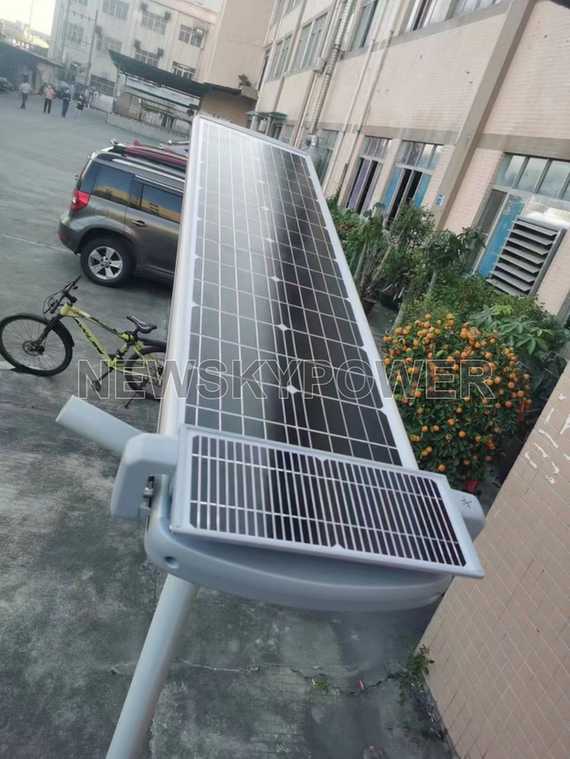
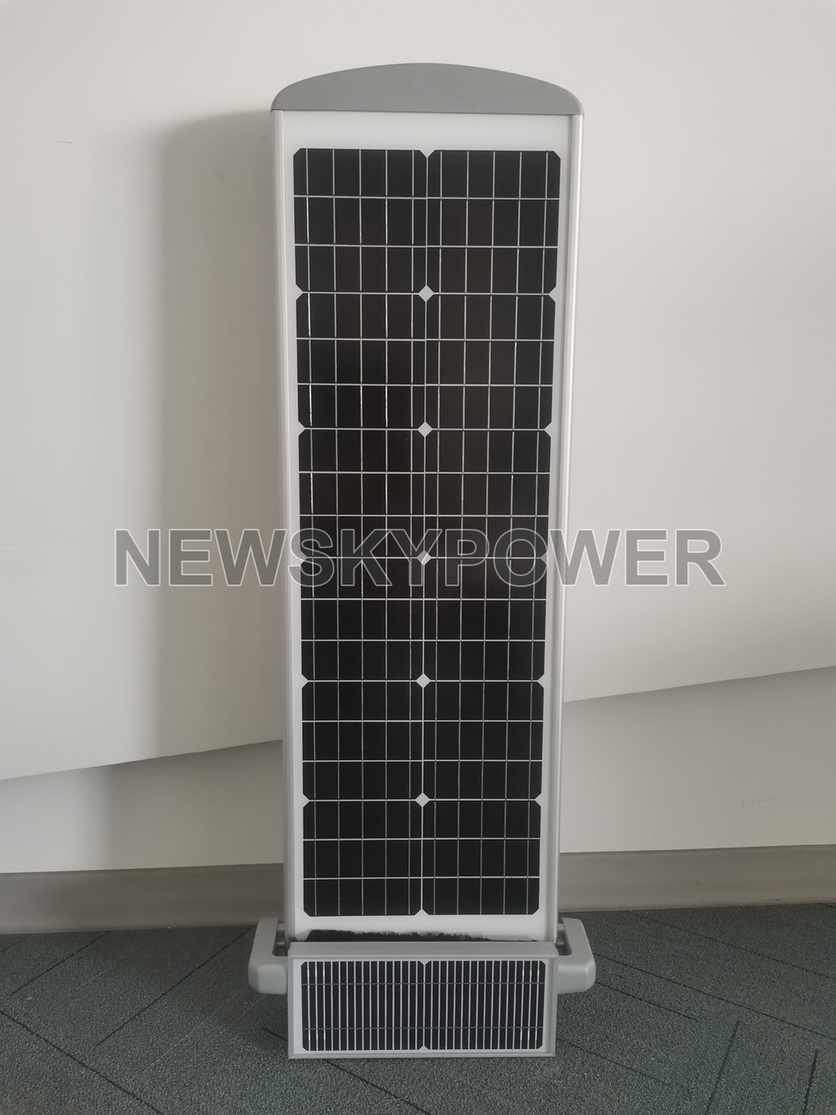
Some deposits can be cleared by the unit. Others still need attention. Moisture can make dust stick more firmly. Do not assume the unit removes hardened crust, oily film or leaves. A clean panel still needs enough sunlight. The panel and battery must also meet the lighting load.
Before choosing a system, ask for a working demonstration. The test deposits should be similar to those at the site. Review four points with the supplier:
- The area the unit reaches and the deposits it can handle.
- How cleaning starts, when it runs and how much energy it uses.
- How to inspect it, which wear parts can be replaced, and how to reach them.
- What to do if it becomes blocked or fails. Check any effect on the lighting.
Ask whether the quoted model uses a dust sensor to start cleaning. If you need remote monitoring, check whether this model can send data to an IoT platform.
The photographs show the SC structure. Use the demonstration and model documents to assess how it works. The linked product page lists catalogue options. Choose which options to discuss based on the road’s needs.
Choose lighting for each part of the route
At dusk, a fruit truck leaves the field block. It passes a bend between palms and reaches the collection point. Vehicles turn there, with people moving beside them. Farther on, traffic at the estate entrance joins the outside road. Each part of this route needs its own lighting plan.
| Route section | Lighting task | How to decide on SC |
|---|---|---|
| Field-block link and exposed straight road | Help drivers see the route ahead. | Consider SC where suitable deposits return often and service stops are difficult. |
| Bend between palms | Help drivers see the turn and the usable road area. | Set lamp positions and check sunlight first. Then assess deposits and maintenance access. |
| Fruit-collection or loading point | Help drivers and pedestrians see each other. Loading work may need separate task lighting. | Plan the lighting first. Then assess how much panel-cleaning work is needed. |
| Estate entrance | Help drivers see where the internal route meets the road beyond. | Check traffic movements, beam distribution and maintenance access. Then choose the cleaning option. |
Road width, mounting height and pole spacing affect coverage and dark gaps. Beam distribution affects glare. The wattage on a label cannot show whether a bend or loading area is well lit.
An IES or LDT photometric file describes how a light distributes its output. If available for the proposed light head, it can support layout calculations. These calculations assess road illuminance, or the light levels on the road. They also assess uniformity, or how evenly the light is spread. US Department of Energy guidance explains the value of this information for outdoor lighting. Check the layout against the estate’s tasks and the local requirements that apply.
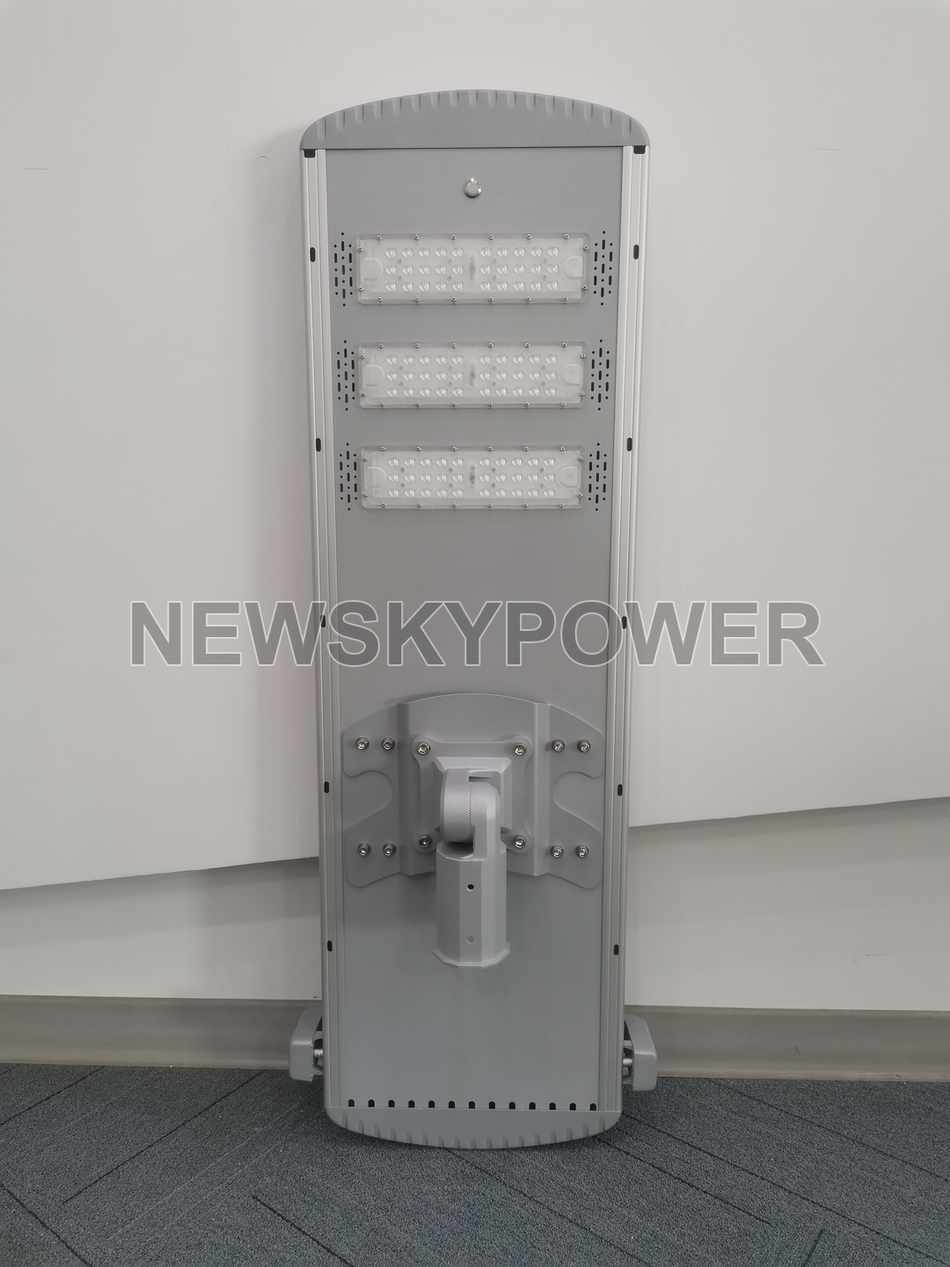
Not every pole needs the same cleaning feature. A conventional solar street light may suit a low-dust location with easy access. SC deserves closer review where scattered poles need repeated, difficult cleaning visits. NEWSKYPOWER’s engineering solar street-light range offers a wider set of options for these different sections.
Match the lighting schedule, panel and battery
First decide when the lights must run. Higher output uses more power. Total energy use also depends on how long each setting runs. Add the LED energy use at each setting. Then add the cleaning unit and controls.
Compare this demand with the battery’s usable energy. Also assess how much energy the panel can supply at the site. Its rated watts do not show daily energy production under palms or during a rainy week.
Calculation example only—not an SC specification. The loads and battery conditions below are assumptions. They are not measured results from an offered SC model.
| Item | Example calculation | Result |
|---|---|---|
| LED use during the first four hours | 30 W × 4 h | 120 Wh |
| LED use during the next six hours | 15 W × 6 h | 90 Wh |
| LED energy per night | 120 + 90 | 210 Wh |
| Hypothetical battery’s nominal energy | 24 V × 20 Ah | 480 Wh |
| Usable energy. Assumptions: 80% depth of discharge and 85% delivered-energy efficiency. | 480 × 0.80 × 0.85 | About 326 Wh |
| LED demand for two nights with no recharge | 210 × 2 | At least 420 Wh |
Depth of discharge means the share of stored energy used. The efficiency assumption allows for energy losses. Under these assumptions, about 326 Wh is available. The LED alone needs at least 420 Wh for two nights. This example therefore cannot support two nights without charging. Cleaning-unit and control loads must still be added. Actual battery capacity also changes with its condition and temperature.
The panel must replace the energy used overnight. One pole may face open sky. Another may sit under palm fronds. Dust blocks some of the light that reaches the panel. Shade and clouds reduce the light available in the first place.
Choose the system using the local sunlight, shadows, low-sun periods and required lighting hours. A larger battery alone cannot fix a location with too little sunlight for charging.
Compare maintenance needs and total costs
Compare conventional and self-cleaning options using the same pole quantity, lighting task and running hours. SC adds a cleaning unit that also needs maintenance. Its value depends on the manual work it can reduce. Compare those savings with the extra costs.
| Cost or workload | What to include in the comparison |
|---|---|
| Equipment and installation | Light head, panel, battery, controls and cleaning unit. Check whether poles, mounts, foundations, delivery and installation are included. |
| Manual cleaning | Crew time, vehicle trips, high-access equipment and safe stopping arrangements. Include disruption to fruit transport. |
| Cleaning-unit service | Inspections, clearing blockages, wear parts and repairs. Include the travel needed for this work. |
| Ongoing lighting-system maintenance | Panel condition, battery and electrical maintenance, mounting condition and safe access. Both options need this work. |
Ask suppliers to list what their prices include and exclude. Some quotes cover only the lamp. Others include poles, foundation parts, freight and installation. Make the scope match before comparing the totals.
List spare parts and warranty cover separately. The battery, lighting/control parts and cleaning unit may have different terms. Confirm delivery, sample arrangements and minimum order terms in the actual quote.
For maintenance, decide who can reach the unit and what tools they need. Identify replacement parts and the steps for dealing with faults. A fruit truck may pass along a road with no safe place for high-access work.
Routine checks should cover deposits, cleaning-unit movement, blockages and mounting condition. Keep normal electrical-system maintenance in the plan too. Use the supplied version’s service instructions and site observations to set that plan.
What to verify before a larger order
Start with the proposed system’s specifications, working demonstration and service instructions. A demonstration with similar deposits is more useful than a broad cleaning-efficiency claim. If a supplier offers an installation reference, check its model and site conditions. Also check which results it records.
A small site trial can test whether the maintenance benefit applies to the estate. Keep the lighting settings consistent. Record:
- Deposits before cleaning and residue afterwards. Take photographs from comparable positions.
- Manual cleaning visits, crew time and equipment time. Include work on the cleaning unit itself.
- Night-time lighting performance and charging data, where available. Record weather, shade and operating settings too.
Read these records together. Weather and shade can change charging. More energy does not automatically prove that cleaning caused the gain. Compare options using the observed maintenance work and actual quotes. Do not assume the same savings or payback period for every plantation.
Road-installation photo references
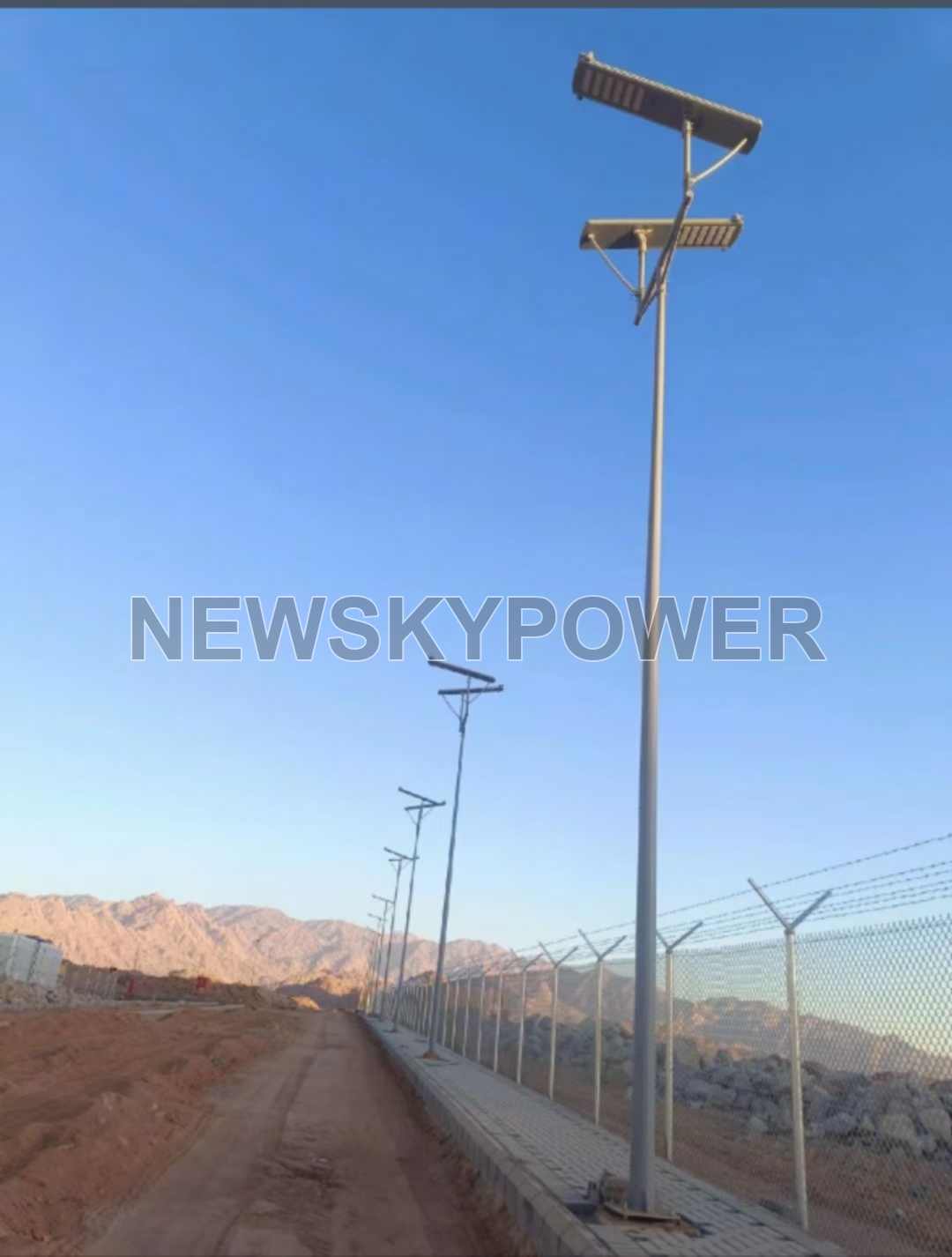
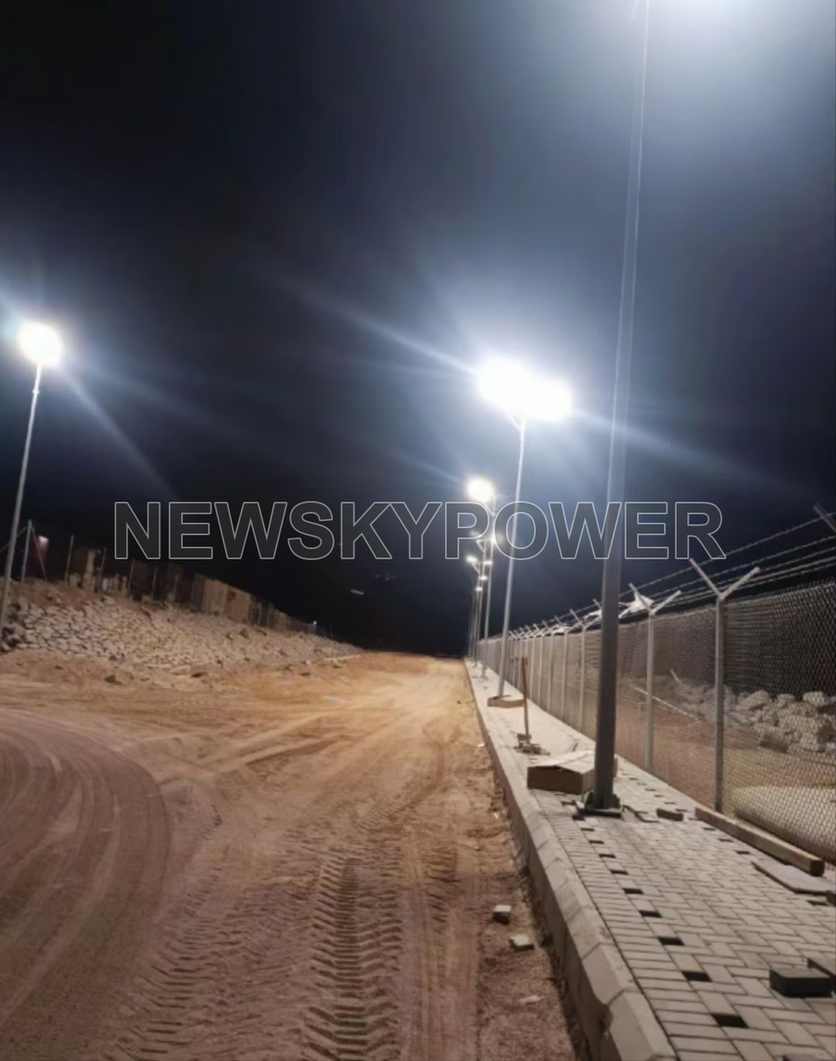
These photographs show a separate road installation by day and at night. They show how poles are arranged along a route. They do not show an oil palm plantation installation or a photometric test.
Buyer FAQs
Does every oil palm road need a self-cleaning street light?
No. Consider it where night-time lighting is needed and suitable deposits return often. Difficult access to high or scattered panels also makes it worth reviewing. A conventional solar street light may suit cleaner sites with easy access. Choose by road section instead of fitting SC to every pole.
Will self-cleaning help where palms cast shade or cloudy weather lasts?
Cleaning can remove deposits that suit the unit’s design. It cannot remove palm shade or create sunlight. Shaded positions need a better charging location or a different system layout. For low-sun periods, assess the panel, usable battery energy and lighting schedule together. A cleaner panel alone does not prove rainy-season running time.
Can an existing oil palm road-lighting project use this approach?
It may be an option during replacement or redesign. The road route can stay the same. Check pole condition, mounting connections, sunlight and the lighting layout against the proposed equipment. Do not assume an existing pole or lamp can accept SC without these checks.
How often will plantation staff still need to clean the panels?
There is no single interval for every estate. Early checks should record returning deposits, residue after cleaning and the unit’s condition. Use these records to adjust manual cleaning. Follow the supplied model’s service instructions. Plan for fruit-truck movements and safe roadside access after rain.
What information is needed for an oil palm road-lighting quotation?
Start with five items:
- Project location.
- Road width and a simple sketch.
- Photographs of deposits, shade and site conditions.
- Required lighting hours.
- Expected quantity or project stage.
These help start the discussion about suitable road sections and system options. The next round can cover existing pole heights, spacing and mounting connections. Also discuss how long the lights must run with little or no charging. Review local project requirements at this stage too. The supplier should provide or confirm the proposed light head’s photometric data.
Planning lighting for an oil palm transport road? Send these five starting items to NEWSKYPOWER. They help us discuss suitable SC locations and compare lighting options. A basic road sketch and site photographs can start the conversation. Detailed pole information can follow once the route and equipment options are clearer.
More Industry Expertise Articles
Explore NEWSKYPOWER guides, comparisons and application insights in the Industry Expertise article archive.