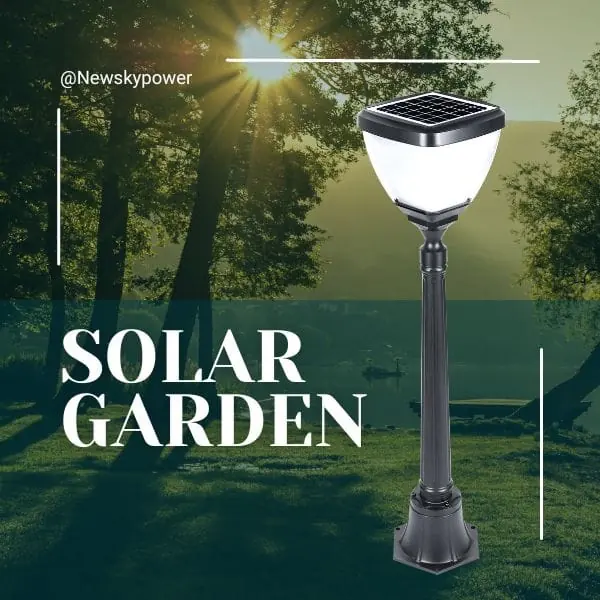


Choose between single-head and multihead solar pole lights by comparing the complete configuration and the space it serves. More heads change the fixture's shape and potential directions of light, but they do not automatically mean more useful illumination, a larger battery or independent control. Those details need to be stated for the exact assembly.
A single head may suit a simple visual composition. A double-head or triple-head arrangement may better match several directions or an architectural entrance. The decision becomes clearer when you separate three questions: where the heads face, what the whole system delivers, and how it is powered and maintained.
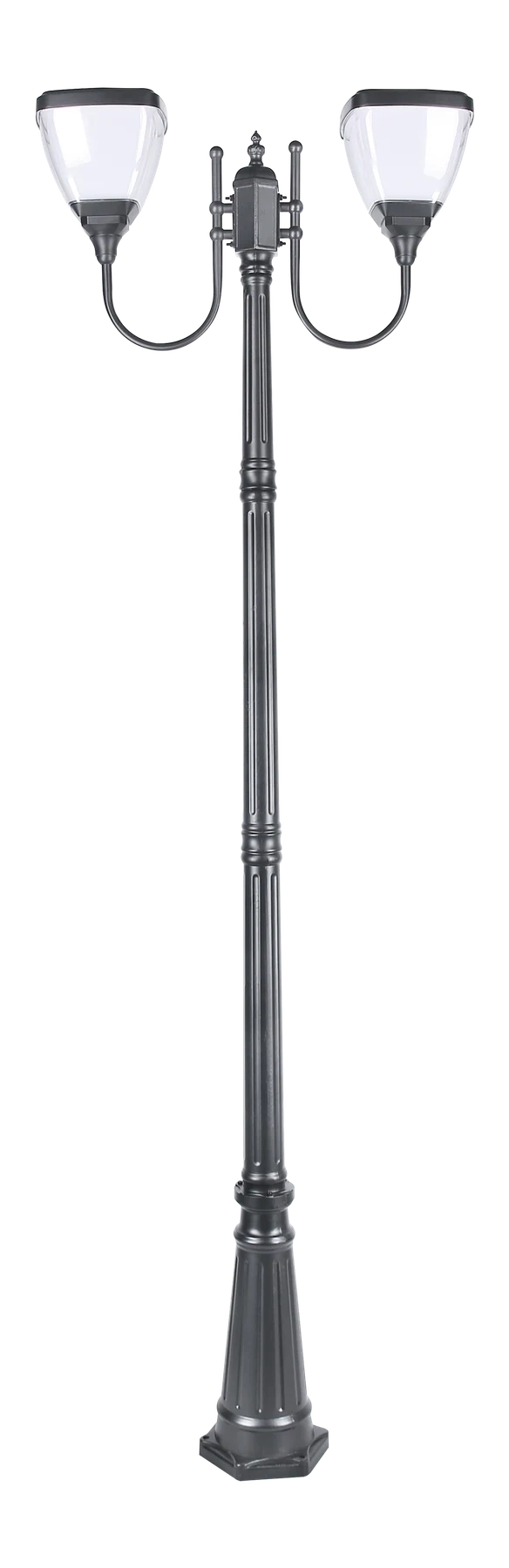
What Changes with Head Count
Count the supplied heads, then define the assembly
Begin with the parts included in the quotation: heads, arms, pole, solar collecting components, battery arrangement, controller and mounting accessories. A photograph of a complete pole is not proof that all those parts are included in the quoted price.
Use explicit names such as single-head, double-head or triple-head. “Multihead” is useful as a category, but it can hide differences in arm geometry and supplied components. Record the complete configuration code and drawing revision so that a later quotation does not quietly become a different assembly.
Head count changes the silhouette and the number of visible light sources. It may also change assembly and service requirements. The consequences depend on how the product is built, so do not assume that adding one head is simply attaching another identical accessory to the original pole.
Distinguish an architectural preference from a lighting result
Two arms can create symmetry at a gate or along a landscaped approach. That is a valid appearance objective. It is separate from proving that two heads illuminate twice the area or produce a particular level on the ground.
Start with the solar pole light range to compare forms, then request the matching drawing and specifications. A shortlist based on appearance should still pass a configuration and site review before ordering.
Match Head Orientation to the Space
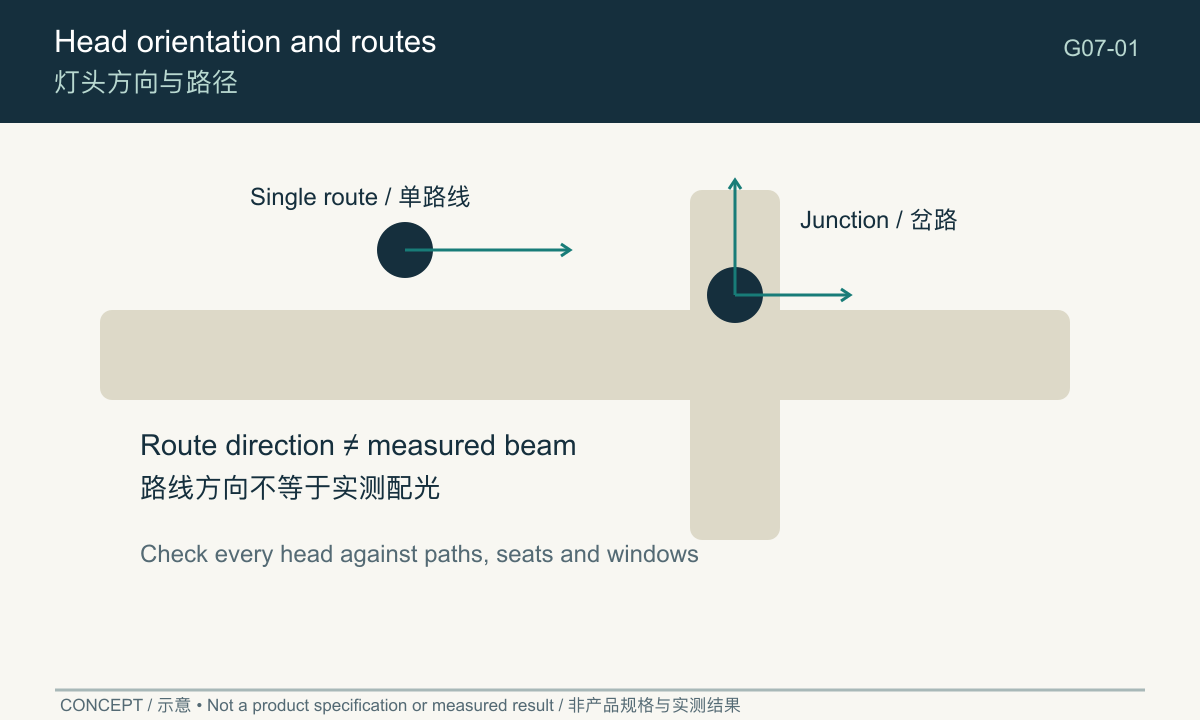
Look at the directions people move through the site. A straight route, a junction and an entrance with a turning area present different geometries. Draw the approach lines and important objects before deciding how many heads are appropriate.
Use a plan view, not just a front photograph
A front view can make two heads look well balanced while concealing how they relate to a side path or doorway. A plan view shows the arm orientation relative to the walking routes, walls and nearby windows.
Do not assume that a head's visible direction defines its light distribution. The optics may distribute light in a way that is not obvious from the housing. Ask for the relevant distribution information, or verify the effect with a suitable sample arrangement.
Consider what should remain unlit
A head facing a bedroom, a neighbour's window or dense foliage may add an unwanted visible source. Before adding heads, ask whether every direction serves an actual use. A simpler configuration can be preferable where a second direction has no clear purpose.
At a junction, a multihead arrangement is a candidate, not an automatic solution. It may still leave an awkward transition on one branch or create an intrusive source on another. Evaluate the route from both directions and include the views of people sitting nearby.
Keep decorative symmetry and functional visibility as separate lines in the decision record. That makes it possible to explain why a visually attractive version was retained, moved or rejected.
Separate Per-Head and Total Output
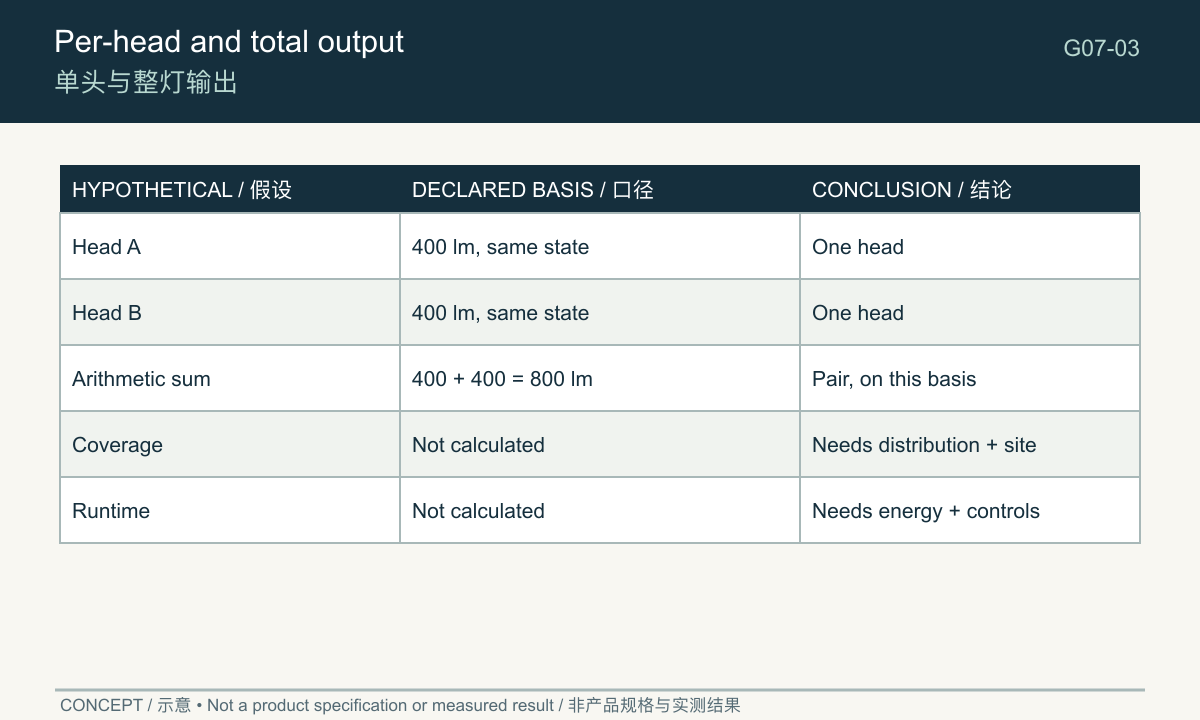
A lumen figure must identify the part it describes. “Per-head” means each stated head under defined conditions. “Total output” should identify the complete specified assembly. A quotation that simply lists a number beside a double-head photograph leaves an important ambiguity.
A numerical example with a limited conclusion
Suppose a hypothetical two-head assembly has a confirmed figure of 400 lm for each head in the same operating state. Adding the declared figures gives 800 lm for the pair on that basis. It does not prove twice the coverage, twice the illumination at a point, or twice the runtime of a single-head unit.
If the two heads have different optics or control states, keep their data separate. If the supplier already reports a complete-luminaire measurement, do not multiply it by the head count again.
Ask the same question about power
Electrical power can also be stated per head or for the complete assembly. Establish whether the figure refers to a component rating or actual demand in the selected mode. This matters when comparing batteries and panel arrangements later.
Keep output and electrical demand in different columns. A brighter mode may require a different amount of energy, but head count alone does not quantify the change. The most useful comparison connects each output state with its corresponding power and control conditions.
Where low-level lighting could serve part of the route instead, compare the intended role of solar bollard lights rather than treating every path as a pole-light application.
Check Panels, Batteries and Controls
A multihead light does not reveal its internal architecture from the outside. Some possible arrangements use shared components; others use separate head-level systems. The following diagram shows alternatives to ask about, not features assigned to a named model.
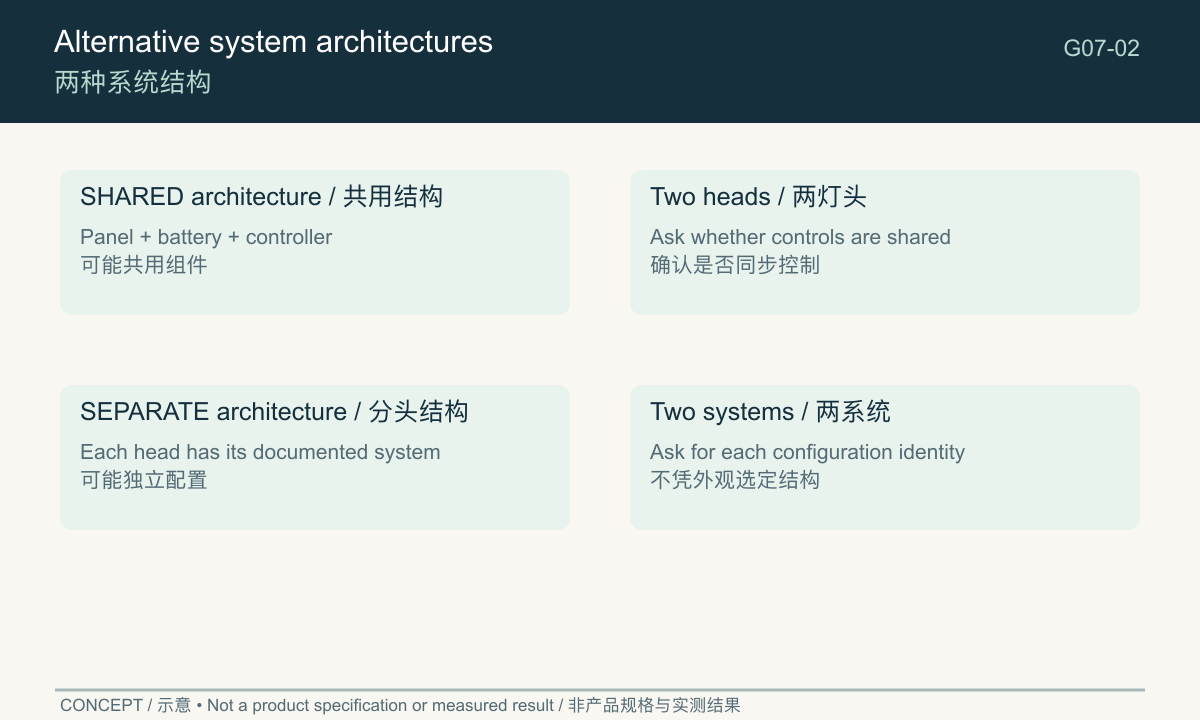
Does a multihead solar light need a larger battery?
It depends on the complete electrical demand, operating schedule, usable energy requirements and system design. Adding heads while keeping all other behaviour unchanged may increase demand, but a different configuration may also change output or control. Head count by itself does not supply the sizing calculation.
Ask whether battery capacity describes one pack, one head or the entire assembly. Record nominal voltage and capacity so that nominal Wh can be compared on the same basis. Do not add capacities across an unknown electrical arrangement and call the result a verified system rating.
The panel question is similar: identify how many panels are supplied, their rating basis and which loads they serve. A photograph showing one visible surface may not reveal all generating components.
How are multihead solar pole lights controlled?
Request a mode table for the complete configuration. Establish whether heads switch together, have separate settings, share a sensor or use independent triggers. Also ask whether changing one setting affects the whole assembly.
Confirm the behaviour after a trigger and any overnight changes. A supplier's description of “automatic lighting” does not answer whether two heads behave identically. Where settings are adjustable, obtain the exact instructions and identify who will record the selected mode at handover.
Compare Appearance, Supply and Maintenance
The practical comparison extends beyond the first evening. Consider how the assembly arrives, how its parts are identified and whether the owner can obtain approved service information later. More visible components do not necessarily make a fixture more repairable.
Compare the scope of supply
| Question | Single-head candidate | Multihead candidate |
|---|---|---|
| Complete identity | Model and dated drawing | Model, head count and dated drawing |
| Included structure | Head, pole and mounting items as quoted | Heads, arms, pole and mounting items as quoted |
| Output basis | State whether complete or component | State per-head and total basis |
| Power architecture | Identify panel, battery and controller | Identify shared or separate components |
| Controls | Mode and selected setting | Shared or independent behaviour |
| Service support | Approved parts and access procedure | Head identification, approved parts and access procedure |
| Site review | Route, views and mounting assessment | Same checks, including each arm direction |
Fill both columns with evidence, not assumptions. “Same as the single-head version” is only useful when the supplier identifies exactly which components and conditions are the same.
Think about future identification
Before accepting a revised head count, compare the new drawing with the earlier quotation line by line. A change from one head to two can affect the supplied arms, control arrangement and service references even if the family name stays unchanged. Ask the supplier to list the changed items explicitly. Keep the earlier drawing as superseded rather than leaving two apparently valid configurations in the installation folder.
Give each head a position reference on the handover drawing if individual service is supported. A note such as “head facing the side path” is easier to use than “the second lamp”, which changes with the observer's position.
Ask what happens if one component fails and whether approved replacement parts are supplied separately. Do not assume a multihead system will continue operating partially, or that a head from a similar-looking family can be substituted.
Pole, foundation and structural suitability require the applicable drawing and competent site assessment. The number of heads is not enough to specify foundations, wind suitability or fixing details.
Confirm the Complete Configuration
Make one comparison sheet the purchase reference
Bring together the appearance drawing, component list, output definitions, mode table and supplied mounting information. Record the sample reference and the decisions made during the site review.
For a hypothetical courtyard junction, the initial preference might be a symmetrical double-head light. The review could find that one approach is already adequately served by an entrance fixture, while the proposed second head faces a window. A single-head candidate or a different location then deserves testing. The purpose is to match the space, not to defend the original head count.
For another site, two relevant approach directions and a suitable visual composition may justify keeping the double-head candidate. It still needs confirmed output and controls. Neither conclusion can be reached reliably from a catalogue front view alone.
Close the unresolved questions before supply
Use three decisions: retain the configuration, revise it, or test a specific unresolved point. Give each open item an owner and the evidence needed. This is more effective than asking a supplier to “make it brighter” without identifying the deficient route or state.
For broader choices among pole, wall and low-level fixtures, consult the yard lighting selection guide. For the pole itself, send the chosen head count, plan orientation and complete configuration questions with the enquiry.
Frequently asked questions
Is a double-head solar pole light always better than a single-head light?
No. It can support a different layout or appearance, but useful illumination, comfort and control need their own comparison.
Can I add a third head later?
Only if the manufacturer supports that exact change and supplies the required compatibility and structural information. Do not treat spare-looking space on an arm as approval.
Can identical-looking heads operate differently?
Yes, different configurations or settings can produce different behaviour. Use the documented mode and component arrangement, then verify the selected sample.
For an overview of fixture types, site conditions and selection priorities, see our garden and courtyard lighting guide.