

Author
Michael Santos
Solar Lighting Project Buyer from the Philippines
Author Bio
Michael Santos has more than 10 years of experience in solar lighting project purchasing and international sourcing. He has worked with solar street light, solar garden light, and outdoor lighting projects in the Philippines and shares his experience in supplier selection, product evaluation, and avoiding common purchasing mistakes.
Introduction: The Mistake That Changed How I Choose Solar Light Supplie
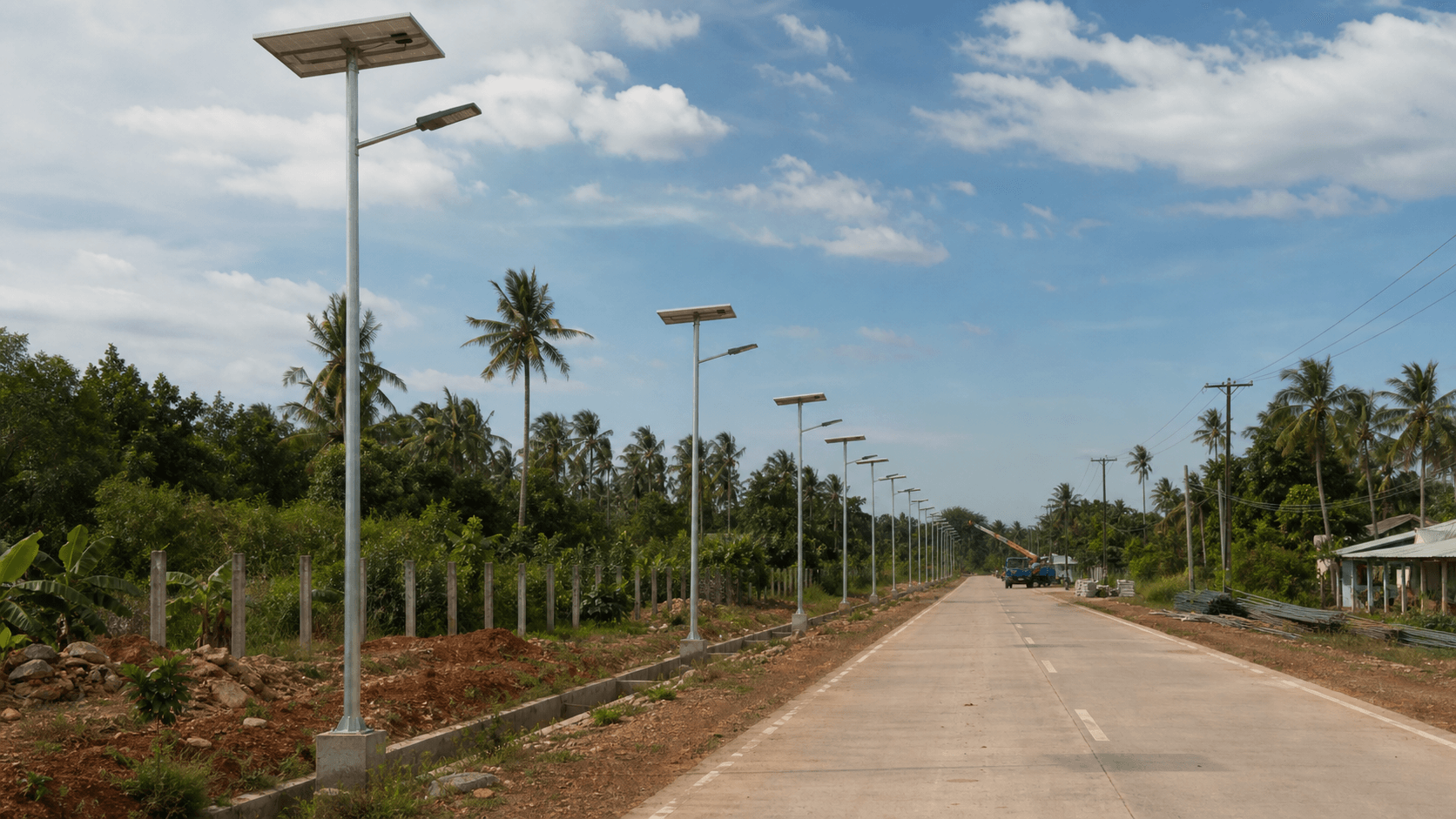 \nI still remember that morning very clearly. It was around 6:30 AM in the Philippines, and I was preparing for a busy working day when my phone suddenly rang. It was my project engineer calling from one of our solar street light installation sites. From his voice, I immediately knew something was wrong. He told me that several solar street lights had stopped working properly after only a few months of operation. A few minutes later, he sent me photos from the project location, and when I opened them, I became silent. Looking at those pictures, I already knew this was not going to be an easy problem to solve.
The project had taken months of preparation. We had discussed the technical requirements with the customer, confirmed the product specifications, arranged production with the factory, and carefully planned the installation schedule. Everyone expected the project to run smoothly. However, after the lights were installed, some units started showing problems. Some batteries could not provide enough power during the night, some lights became weaker after midnight, and some units completely stopped working after heavy rain.
The most stressful part was not only the product failure itself. The real pressure came from knowing who my customer would contact. They would not call the factory in China first. They would call me, because I was the person who selected the supplier, recommended the product, and promised that the solar street lights could meet their project requirements. At that moment, I felt very disappointed because I realized that my decision at the beginning had created problems for everyone involved.
For a road, parking area or municipal project, choosing a reliable solar street light manufacturer in China means verifying the proposed lighting and energy system—not merely checking a factory name, product photo or advertised wattage.
My Solar Lighting Purchasing Journey Started More Than 10 Years Ago
I am from the Philippines, and I have been involved in solar lighting projects for more than ten years. During this time, I have purchased different types of solar lighting products from China, including solar street lights, solar garden lights, solar flood lights, and customized solar lighting solutions for different applications. The projects I worked on were not all the same. Some were small projects with several hundred units, while others were much larger projects involving roads, communities, commercial areas, and public outdoor lighting systems.
When I first started purchasing solar lights from China, I thought the process was simple. I believed that if I could find a supplier with good specifications and a competitive price, then I had already made the right choice. Like many buyers, I spent a lot of time comparing quotations. I looked at the wattage, battery capacity, solar panel size, working hours, and unit price. If two suppliers offered similar specifications, I naturally preferred the one with the lower price.
After many years of experience, I now understand that choosing a solar light manufacturer in China is much more complicated than comparing numbers on a quotation sheet. A solar lighting project is not only about buying a product. It is about choosing a manufacturing partner who can support your project before, during, and after delivery.
Manufacturer, Trading Company or Sourcing Agent?
The supplier’s business model matters, but its label does not decide whether it is reliable. A manufacturer may control product design, assembly, testing and corrective action while purchasing specialist components from approved partners. A trading company may offer useful sourcing and export support. A sourcing agent may help a buyer compare several factories.
The important question is who takes responsibility for the complete solar street light system. Before placing an order, ask which company will:
- define the LED, solar-panel, battery and controller configuration;
- assemble and test the finished product;
- approve any change after sample confirmation;
- issue the invoice, packing list and warranty terms;
- investigate failures and supply replacement parts.
Verify the legal company name on quotations, bank details, certificates, reports and export documents. If several companies appear, ask the supplier to explain each company’s role in writing. A transparent trading company can be more dependable than a factory that cannot document its processes. The goal is traceable responsibility, not a label alone.
My Biggest Mistake Was Choosing the Cheapest Solar Light Supplier
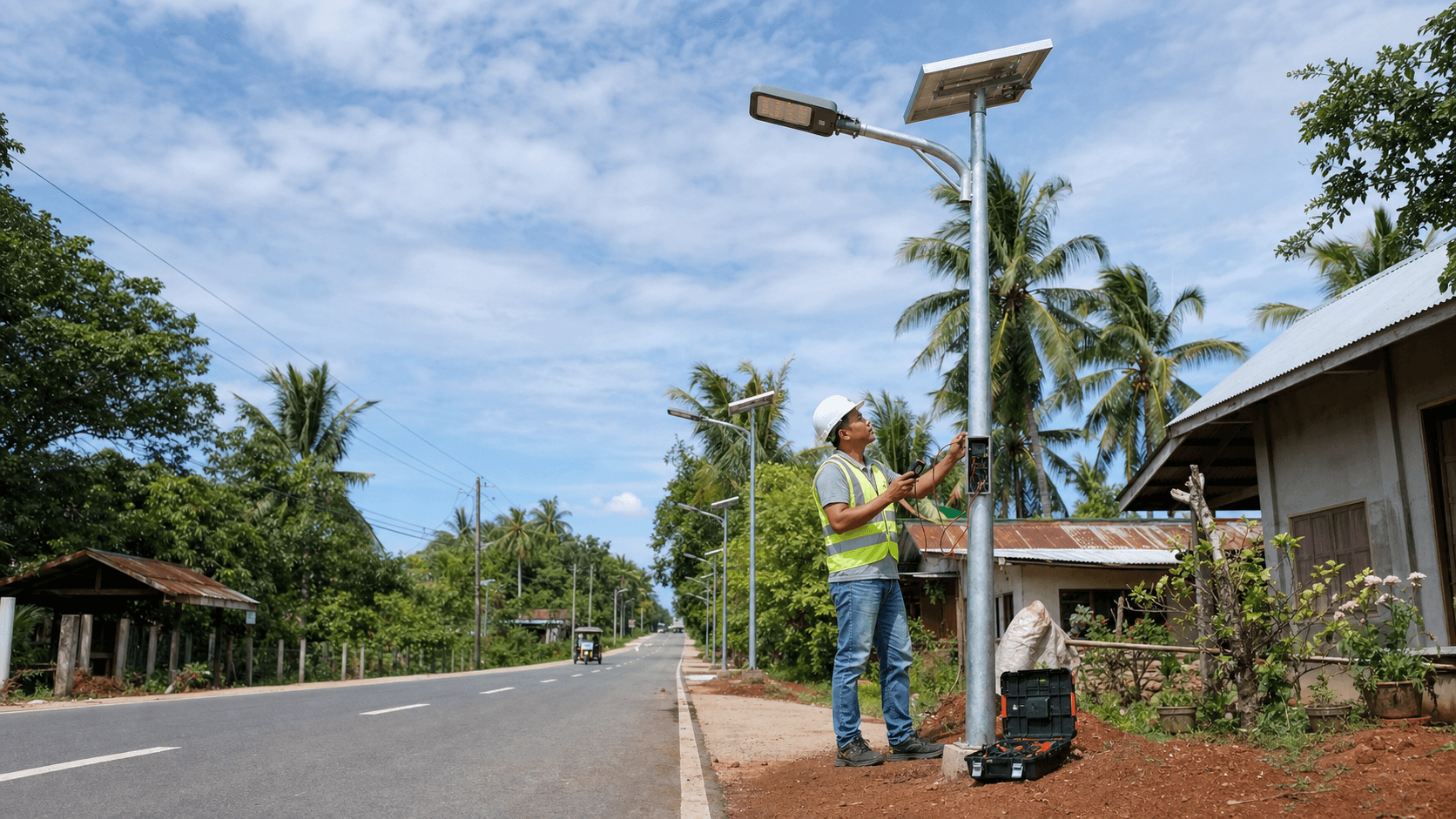
One of the biggest mistakes I made in my early years of purchasing was choosing a supplier mainly because of the lower price. At that time, I thought I was making a smart business decision. I believed I was helping my customers reduce costs while still providing a good product. The quotation looked attractive, the specifications looked similar to other suppliers, and the communication before the order was smooth.
The supplier told me they were a professional solar light manufacturer with many years of experience. They provided product pictures, specifications, and everything looked acceptable. Since the technical details appeared similar to other factories, I focused mainly on the price difference. I thought, “If the products have the same specifications, why should I pay more?”
Later, I learned that this was not the right way to evaluate a solar lighting supplier. Many important factors cannot be seen in a quotation. Two solar street lights may have the same wattage and similar battery capacity, but the actual performance can be completely different because of differences in battery quality, LED components, controller systems, waterproof design, and production processes.
The problem with low-quality products is that they usually do not show their problems immediately. When you receive the goods, everything may look perfect. The lights are new, the solar panels are clean, and the samples can pass a simple test. The real challenge begins after the products are installed outdoors and exposed to real weather conditions.
The Hidden Cost Behind Low-Quality Solar Street Lights
One lesson I learned from my own experience is that many buyers only calculate the purchase price and forget the costs that come after installation. When comparing solar light manufacturers, it is easy to see the difference in quotation prices because it is written clearly on paper. However, the costs caused by poor quality often appear months later, when the products are already installed at the project site.
Why Replacement Costs Escalate After Installation
For normal consumer products, replacing a failed item may not be difficult. But solar street lights used in engineering projects are completely different. Most solar street lights are installed on poles around 5 to 6 meters high. When a light stops working, you cannot simply remove it and replace it like a normal product. You need workers to go back to the site, technicians to check the problem, and sometimes you need to rent a lifting machine or bucket truck to safely remove and install the replacement unit.
These additional costs can quickly become much higher than the original price difference between two suppliers. You need to consider labor costs, equipment rental costs, transportation costs, project delays, and the time spent communicating with your customer. For a large project with many installed units, even a small failure rate can create a lot of unnecessary expenses.
I remember one project where several solar street lights needed replacement after installation. The product itself was not the biggest problem. The difficult part was organizing the entire repair process again. We needed to arrange workers, schedule transportation, rent lifting equipment because the lights were installed on high poles, and coordinate with the customer to find a suitable time for the replacement work. During that period, my customer kept asking when the problem could be solved. They did not care about the internal reasons between me and the factory. They only wanted the lighting system to work properly.
That experience changed the way I calculate cost. The real cost of a solar street light is not only the price you pay when placing the order. It also includes reliability, maintenance difficulty, replacement expenses, and the support you receive from your supplier after delivery.
A Reliable Solar Lighting Supplier Helps You Avoid Problems Before They Happen
After experiencing these problems, I completely changed my way of selecting suppliers. I no longer ask only, “What is your price?” Instead, I want to understand whether the supplier can provide stable quality and support my project when problems happen.
A reliable solar light manufacturer should not only focus on selling products. They should understand where the products will be installed, what kind of environment they will face, and what problems may happen after installation. A supplier who understands your project can help you choose the right product configuration before production begins.
For project buyers, the relationship with the supplier is not finished when the payment is completed or when the goods leave the factory. The real cooperation starts when the products are installed and used in the real world. This is why choosing the right solar lighting supplier is one of the most important decisions for any buyer.
Start With a Solar Street Light Project Brief
A professional solar street light supplier cannot recommend an accurate configuration from quantity and advertised watts alone. The buyer should first provide a project brief. It gives the technical team enough information to calculate the lighting load, available charging energy and installation constraints.
Include at least:
- country, city or project coordinates;
- application and road class;
- road width, pole height, pole spacing and installation layout;
- required illuminance or luminance, if specified;
- full-power hours and dimming schedule;
- required backup nights;
- seasonal shading, temperature, wind, dust, salt or heavy-rain conditions;
- order quantity and target delivery date;
- required certifications, reports and tender documents;
- preferred product architecture and maintenance method, if already defined.
For roadway work, ask whether the supplier can provide suitable IES or LDT photometric files and a DIALux calculation based on the actual road layout. The proposal should also state LED operating power, solar-panel watts, battery voltage, ampere-hours and watt-hours, controller logic and the assumptions used for autonomy. The guides to solar street light lumens and wattage and commercial solar street lights for road projects explain why these inputs matter.
How I Evaluate Whether a Solar Light Manufacturer in China Is Truly Reliable
After experiencing quality issues in previous projects, I completely changed the way I evaluate solar light suppliers. In the past, I paid more attention to visible things such as price, product appearance, delivery time, and whether the supplier could quickly provide a quotation. However, after dealing with real project problems, I realized that these factors only show the surface of a company. The more important question is whether the supplier has the ability to support the project after the order is placed.
For me, a reliable solar light manufacturer is not only a company that can produce solar lights according to a specification sheet. A professional manufacturer should understand how solar lighting systems work, why different materials are selected, how quality is controlled during production, and how to solve problems when products are installed in real outdoor environments. A supplier who understands these things can help buyers avoid many problems before they happen.
After working with different suppliers from China for many years, I learned that the difference between an ordinary supplier and a reliable manufacturing partner is not always shown in the quotation. Sometimes the price difference is very small, but the difference in responsibility, technical knowledge, and problem-solving ability can be very large.
Solar Light Factory Audit Checklist for Buyers
Before placing a project order, I would ask a solar light factory in China to explain how it supports product selection, testing and delivery, rather than simply provide a quotation. This checklist helps buyers compare a solar lighting supplier in China on practical evidence:
- Whether the sample configuration matches the quotation and project requirements.
- How the supplier checks the solar panel, battery, controller and lighting performance.
- What waterproof, ageing and final-inspection information is available before shipment.
- How export packaging, documents, replacement parts and after-sales support are handled.
For product context, buyers can compare configurations in our solar street light range and review the documented solar street light quality control process.
Evidence to Request From a Solar Street Light Factory
A factory tour is useful, but a project buyer needs evidence linked to the actual model and order. Request documents or records for the following checks:
| Area to verify | Useful evidence |
|---|---|
| Project design | Energy calculation, lighting layout, IES/LDT file and DIALux report when applicable |
| Product configuration | Approved specification sheet, bill of materials or controlled configuration record |
| Solar panel | Rated power information and incoming or sample test record |
| Battery | Chemistry, voltage, Ah, Wh, cell source and capacity-test method |
| Controller | Model, protection functions and written operating/dimming program |
| Lighting | Actual operating power, lumen or photometric evidence and optical-lens selection |
| Production quality | Incoming inspection, assembly checks, aging test and final inspection |
| Outdoor protection | Waterproof-test method, sealing details and cable-entry protection |
| Batch control | Serial or batch traceability and change approval after sample confirmation |
| Delivery | Packing specification, loading plan, export documents and spare-parts list |
| After-sales | Written warranty scope, exclusions, claim evidence and response procedure |
The Newskypower quality-control page provides product-process context. Buyers should still ask for evidence that matches the exact model and purchase order under review.
Supplier Evaluation Scorecard
Score each shortlisted supplier from 1 to 5 and attach evidence to every score. A weighted scorecard makes different quotations easier to compare.
| Evaluation item | Suggested weight | What to check |
|---|---|---|
| Technical design capability | 20% | Energy calculation, photometric support and clear configuration logic |
| Product and component verification | 15% | Traceable panel, battery, controller, LED and housing information |
| Quality control | 15% | Incoming, in-process, aging, waterproof and final inspection records |
| Relevant project experience | 10% | Projects with similar road, climate and operating requirements |
| Documentation and certifications | 10% | Correct legal name, model coverage, validity and destination-market fit |
| Delivery and export support | 10% | Realistic lead time, packaging, loading and document control |
| Warranty and corrective action | 10% | Written scope, diagnosis process, replacement support and batch response |
| Communication and change control | 5% | Clear answers and written approval before configuration changes |
| Price transparency | 5% | Clear inclusions, exclusions, optional items and payment terms |
Price remains important, but it should be compared after the technical scope is aligned. Otherwise, the lowest quotation may simply contain a smaller panel, less usable battery energy, a different operating program or fewer services.
Red Flags When Comparing Suppliers
- The quotation focuses on advertised watts but omits actual operating power or lumens.
- The supplier refuses to state battery voltage, ampere-hours and watt-hours.
- Certificates or test reports do not match the legal company or quoted model.
- No suitable IES/LDT file is available for a roadway project.
- The supplier promises the same backup time in every climate without showing assumptions.
- Warranty coverage and the claim process are not written.
- Component brands or capacities can change after sample approval without buyer authorization.
- Factory or project photos cannot be connected to verifiable products, dates or records.
A Beautiful Factory Does Not Always Mean a Strong Manufacturer
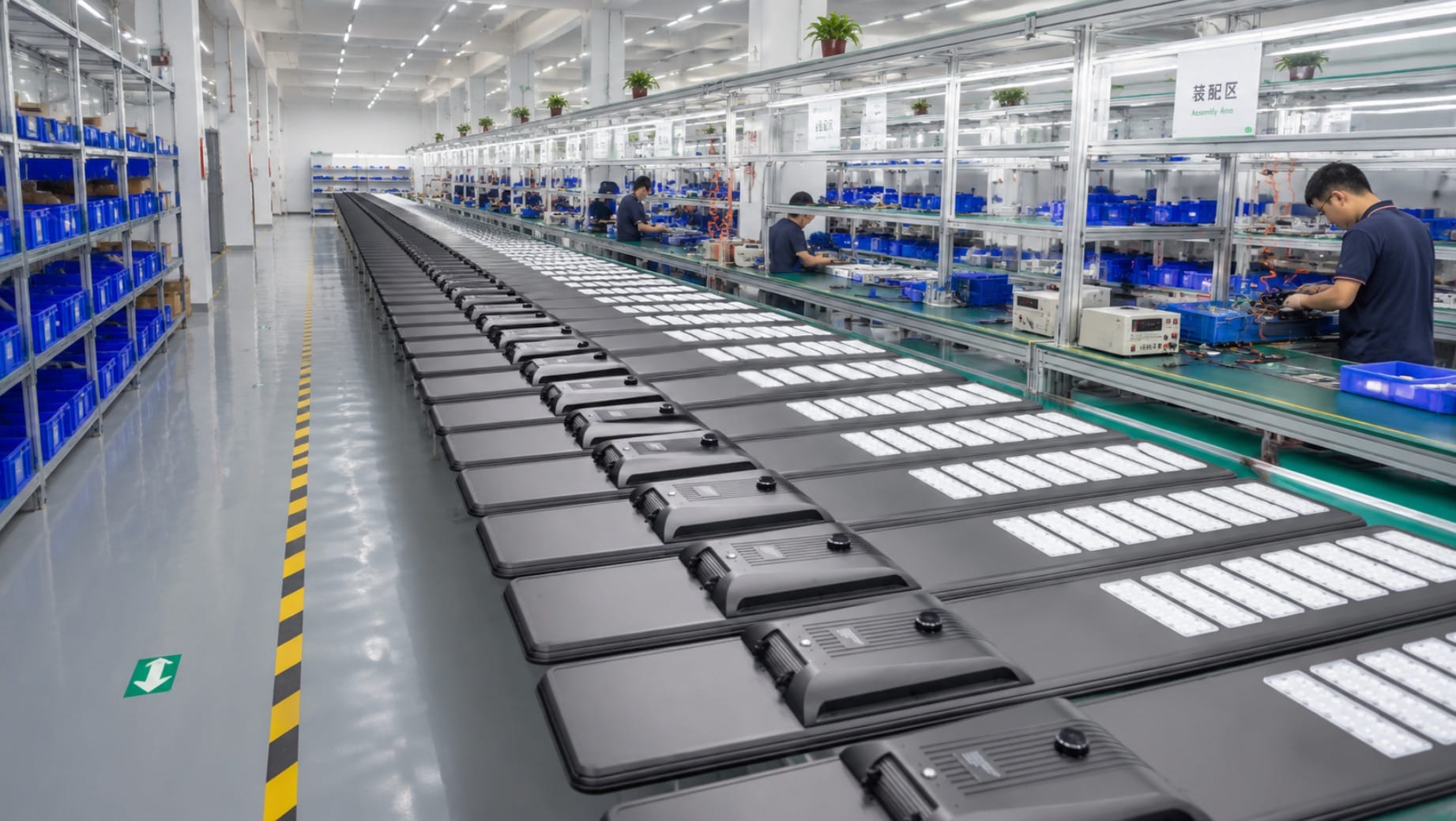
When buyers search for a solar light manufacturer in China, many companies will show professional factory photos and videos. They may show large production buildings, modern equipment, clean workshops, warehouses full of products, and employees working on production lines. These images can certainly create a good first impression, and a professional production environment is important.
However, after more than ten years of purchasing experience, I have learned that a beautiful factory does not always mean a strong manufacturer. The appearance of the factory is only one part of the evaluation. The more important thing is understanding how the company works when problems happen.
A factory can have a large building and advanced machines, but if they cannot quickly identify the reason behind a product issue or provide a practical solution, it creates serious problems for project buyers. In engineering projects, problems cannot simply wait for several weeks while suppliers discuss internally. The customer is waiting, the installation schedule is affected, and the project cost continues to increase.
I once worked with a supplier that looked very professional before cooperation. Their showroom was impressive, their website looked complete, and their sales team responded quickly. At the beginning, I had a very good feeling about the company. However, when one project had a technical problem, I discovered that their actual support ability was not as strong as their presentation.
When I asked:“Why did this problem happen?”They needed to ask different departments before giving an answer.When I asked:“What is the best solution?”They could not provide a clear action plan immediately.
This experience taught me that a reliable solar lighting supplier needs more than production capability. They also need technical experience, engineering understanding, and the ability to take responsibility when customers need help.
A Real Solar Light Manufacturer Should Understand Their Products
After several years of purchasing solar lights, I started changing the questions I asked suppliers before cooperation. In the past, I mainly asked about price and delivery time. Later, I realized that technical communication before an order is one of the best ways to judge whether a company truly understands its products.
A real manufacturer should not only know what components are used in their products. They should understand why those components are selected and how each part affects the final performance. This is especially important for solar lighting because the products are installed outdoors and need to operate under different weather conditions for many years.
Questions That Reveal Technical Understanding
Before working with a new supplier, I usually ask questions like:
“Why did you choose this battery solution?”
“How do you ensure waterproof performance?”
“How do you test the lighting performance before shipment?”
“What improvements have you made based on customer feedback?”
The answers to these questions can tell me a lot about the company. A professional manufacturer can explain the reasons behind their design choices because these topics are part of their daily production experience. A supplier that only sells standard products may only repeat information from a catalog without truly understanding the application.
For example, when discussing LiFePO4 batteries, an inexperienced salesperson may simply say that it is a better battery. However, a manufacturer with real solar lighting experience should be able to explain why LiFePO4 batteries are suitable for outdoor applications, especially in areas with high temperatures and long working hours.
They should understand that battery selection affects the entire system, including lighting time at night, product lifespan, safety performance, and long-term stability. For a buyer who is responsible for engineering projects, this type of technical understanding is much more valuable than a simple answer saying that a product has “good quality.”
Why Product Specifications Can Sometimes Be Misleading
One important lesson I learned from purchasing solar lights is that specifications are necessary, but they are not everything. When buyers search for a solar light supplier, it is natural to compare numbers because numbers are easy to understand. We compare LED wattage, solar panel power, battery capacity, lighting time, and price. However, after years of working on real projects, I realized that the numbers on a quotation sheet cannot always represent the actual performance of the product.
Two solar street lights may have almost the same specifications, but their performance after installation can be completely different. The reason is that many important details are hidden behind the specifications. The quality of the LED chips, the actual performance of the battery cells, the stability of the controller, the heat dissipation design, and the waterproof structure all influence how the product performs in the real environment.
I experienced this situation many times. A supplier would provide a quotation showing a 100W solar street light with similar parameters to another supplier. At first glance, both products looked the same. However, after installation, one product could continue working normally for years, while another product started having problems after a short period of time.
This is why I believe experienced buyers should not only ask, “What are the specifications?” They should also ask, “Why is this product designed this way?” A professional manufacturer should be able to explain the reasons behind the design instead of only providing a specification sheet.
Battery Quality Determines the Real Performance of Solar Lights
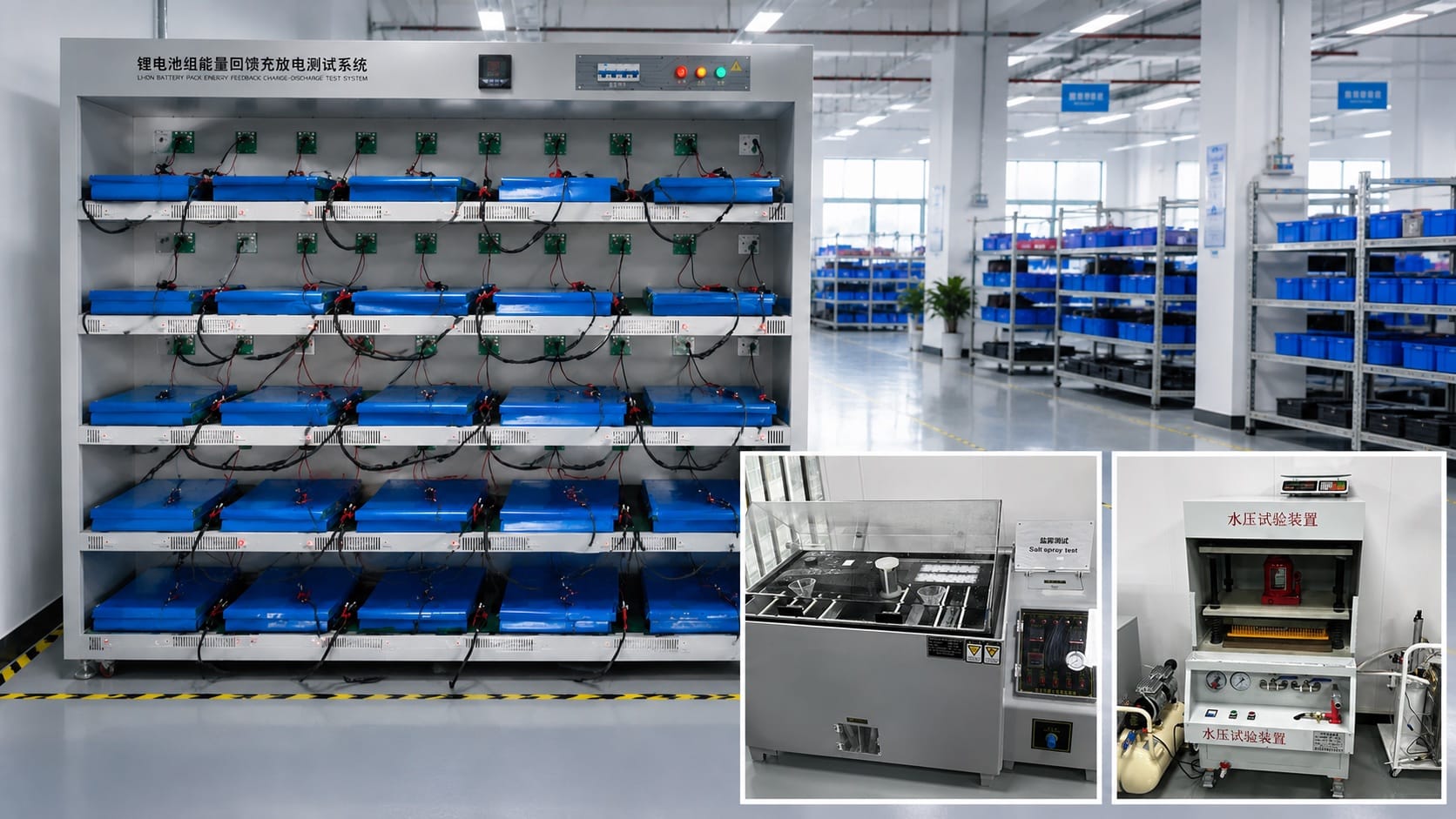
Among all components in a solar lighting system, I believe the battery is one of the most important parts. The solar panel collects energy during the day, the battery stores that energy, and the LED light uses that stored power during the night. Although the working principle sounds simple, the quality of the battery directly affects the reliability of the entire system.
Why Battery Capacity Alone Is Not Enough
In my early purchasing experience, I also made the mistake of focusing too much on the battery capacity number. If the specification showed a larger battery capacity, I thought the product should naturally have better performance. However, real projects taught me that the number written on the specification sheet is only one part of the story.
I once worked on a project where the supplier promised that the battery capacity was enough for the required working hours. Before shipment, the samples worked well, and there were no obvious problems. However, after the products were installed, my customer reported that some lights could not maintain normal lighting throughout the night.
At that time, I felt very frustrated because the problem appeared after installation. Solving the issue became much more difficult compared with identifying it before shipment. After checking carefully, we found that the actual battery performance was not as stable as we expected.
Since then, I have paid much more attention to battery selection. I do not only check the capacity. I also consider the battery type, charging and discharging performance, cycle life, safety, and whether it is suitable for the local environment.
For countries like the Philippines, this is especially important. Our climate includes strong sunlight, high temperatures, high humidity, and heavy rain during certain seasons. A battery that performs well in a cooler environment may not always provide the same reliability in a tropical climate. A professional solar lighting supplier should understand these differences and recommend the right configuration according to the actual application.
Waterproof Design Is More Than an IP Rating
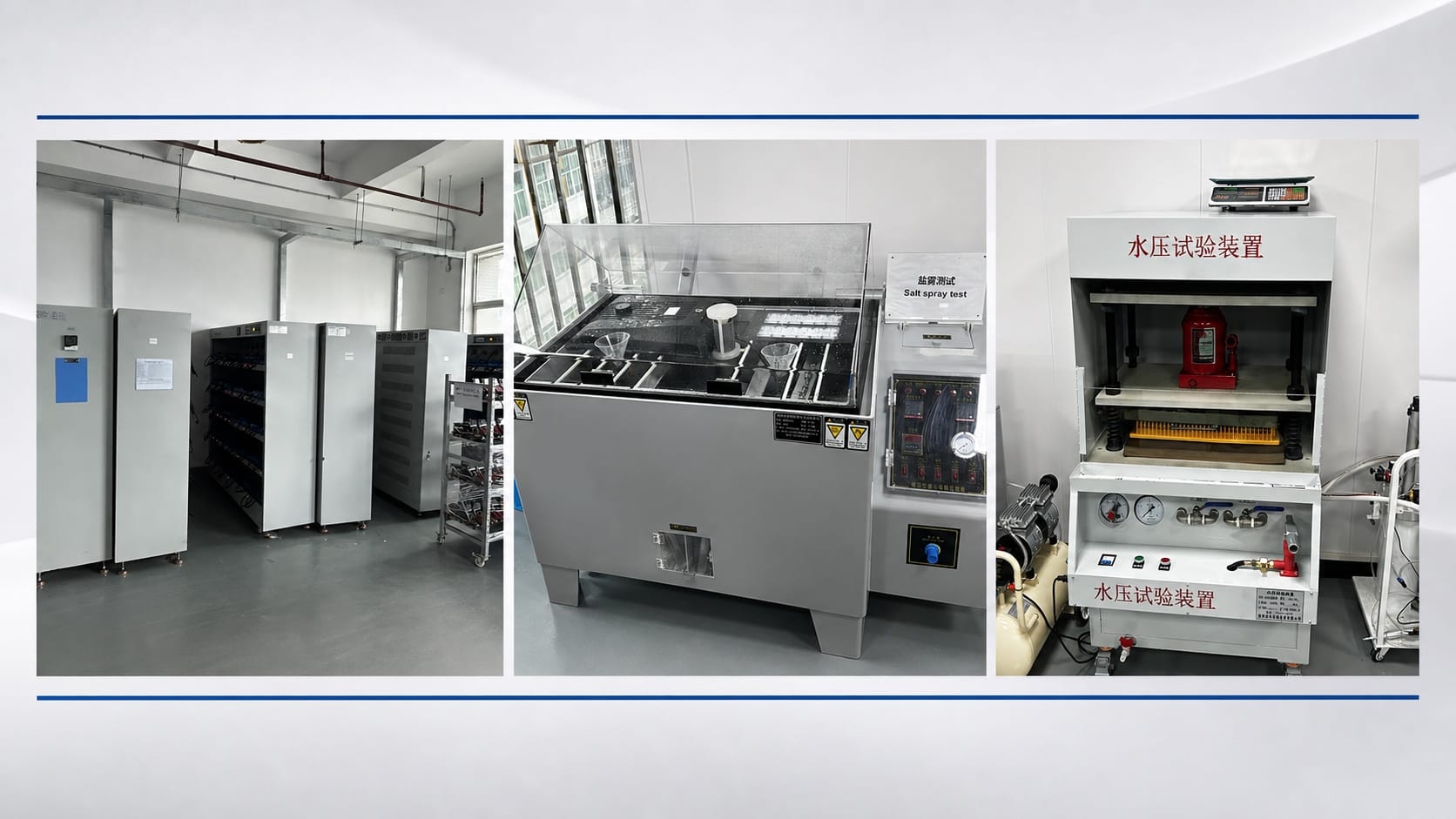
Many buyers see IP65 or IP66 on a product page and believe that the higher number automatically means there will be no waterproof problems. I used to have the same understanding. However, after dealing with outdoor lighting projects, I learned that waterproof performance depends on much more than a number printed on a specification sheet.
Solar street lights are installed outdoors and need to work for many years under difficult conditions. They face heavy rain, storms, dust, humidity, and temperature changes. If the housing structure or sealing design is not done properly, water can slowly enter the product and damage internal components.
These consequences can include controller failure, battery damage, LED problems, and a much shorter product lifespan. Unfortunately, such problems usually do not appear immediately. A light may work normally during the first few months, then fail after the rainy season or prolonged outdoor exposure.
I remember one project where everything looked fine after installation. The customer was satisfied, and the lighting performance was normal. However, after the rainy season started, several units began to fail. When we checked the products, we found moisture inside the housing. The problem was not the LED chips. The real problem was the sealing structure and manufacturing details.
After that experience, I stopped judging waterproof performance only by the IP rating. I started paying more attention to the housing design, sealing materials, waterproof testing process, and overall production quality. A reliable manufacturer should not only tell buyers that a product is IP66. They should be able to explain how they achieve reliable waterproof performance.
Why I Prefer Aluminum Housing for Engineering Solar Lights
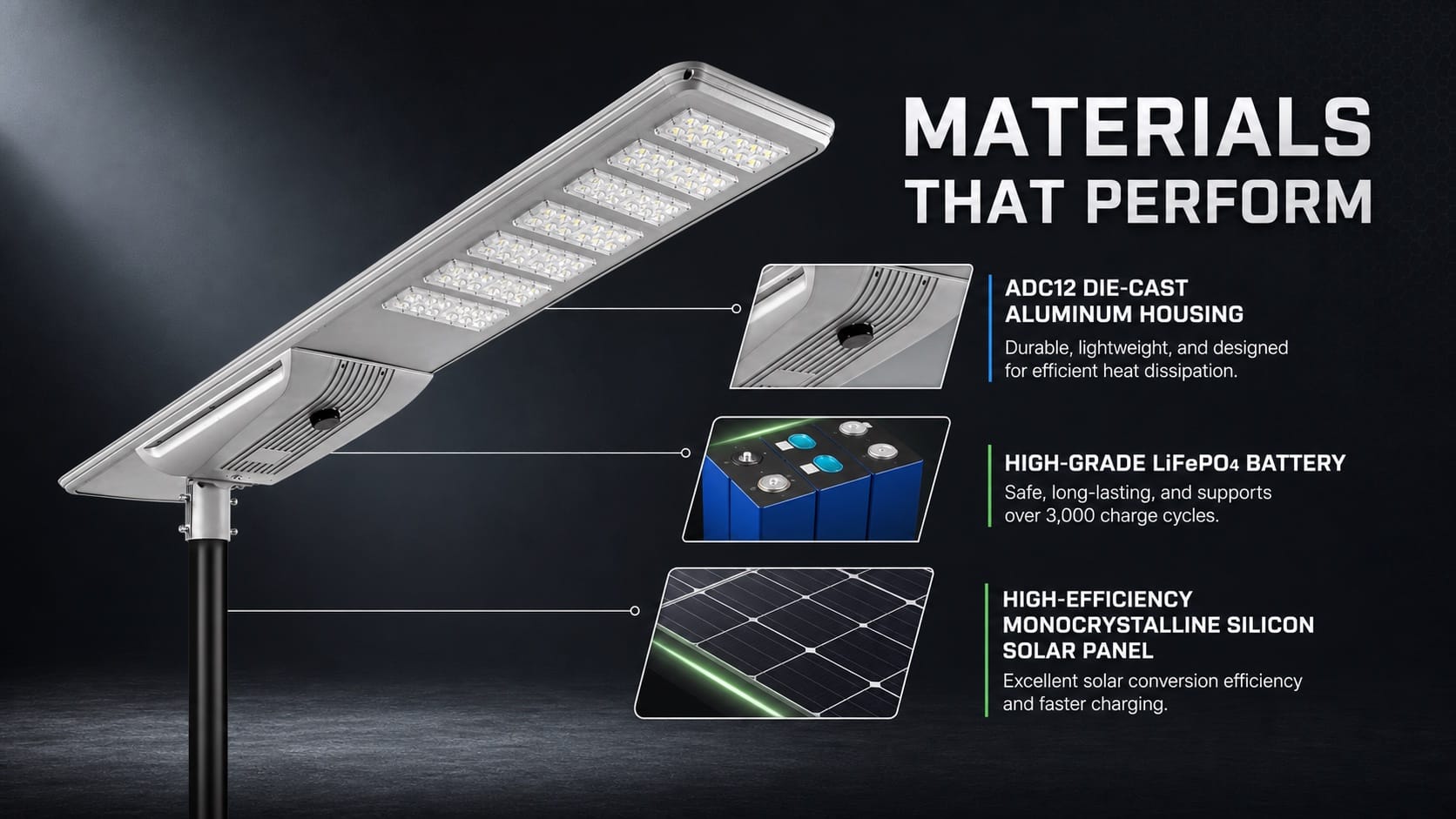
For small decorative solar lights, plastic housing can sometimes be acceptable because the application environment is usually different. However, for solar street lights and engineering projects, I personally prefer aluminum housing because these products need stronger durability and better heat management.
Solar lights operate outdoors every day, and LED components generate heat during operation. If the heat cannot be released properly, it can affect LED lifespan, electronic component stability, and overall product performance. Aluminum housing provides better heat dissipation and stronger protection compared with many ordinary plastic structures.
For engineering projects, long-term reliability is always more important than the initial purchase price. When hundreds or thousands of solar street lights are installed, every maintenance action creates additional costs. You need workers, transportation, equipment, and time to solve the problem. These costs can become very significant over the lifetime of the project.
This is why my purchasing decision has changed over the years. I no longer only ask, “How cheap is this product?” I ask, “How reliable will this product be after it is installed in a real outdoor environment?”
A slightly higher investment in product quality at the beginning can often save much more cost and trouble in the future.
Why OEM Capability Matters for Solar Light Brands and Distributors
After many years of purchasing solar lights, I noticed an important change in the market. More and more buyers are no longer satisfied with buying standard products and selling them directly. They want to build their own brands, create unique product lines, and provide something different from their competitors.
This is why OEM capability has become an important factor when I choose a solar light manufacturer in China.In the past, many buyers focused mainly on price and delivery time. However, the market has become more competitive. If every supplier provides the same product with the same appearance and the same functions, the only difference left is price. Competing only through lower prices is difficult to maintain for long-term business growth.
How OEM Capability Creates Market Differentiation
For distributors and private-label buyers, an OEM solar light manufacturer should explain which customization requests it can support and which details need additional engineering review.
A manufacturer with strong OEM capability can help customers create products that better match their target market. This may include product appearance changes, customized packaging, logo printing, function adjustments, and even new product development based on market needs.
I remember working with a European customer who wanted to develop their own solar garden light product line. They had already checked many suppliers, but they found that most products in the market looked almost the same. The design, packaging, and functions were very similar, which made it difficult for them to create a clear difference from competitors.
When they discussed this with some suppliers, the answer they received was simple:“This is our standard product. We cannot change it.”
For a brand owner, this type of response is limiting because the customer is not only buying a product. They are trying to build a business around that product.A professional manufacturer should be willing to discuss questions such as:
“What market are you selling to?”
“Who are you targeting?”
“Which functions are important for your market?”
“What changes can make this product more suitable?”
This type of communication shows that the supplier is thinking beyond production. They are thinking about the customer’s business.
After-Sales Service Shows the Real Quality of a Supplier
Before placing an order, many buyers spend a lot of time comparing prices. They compare product costs, shipping costs, and payment terms. These factors are important, but after years of project experience, I believe after-sales service is one of the strongest indicators of a supplier’s real quality.
No matter how experienced a manufacturer is, it is impossible to guarantee that every single product will never have any issue. During international trade and outdoor installation projects, problems can sometimes happen because of transportation, installation conditions, weather changes, or individual component failure.
The important question is not whether a problem will ever happen.The important question is:How will the supplier respond when a problem happens?
I have worked with different types of suppliers. Some suppliers immediately tried to avoid responsibility when problems appeared. They would explain why the issue was caused by installation, weather, or customer usage. They spent more time explaining than solving.
For project buyers, this creates a very difficult situation because customers do not want explanations. They want solutions.
A responsible supplier should have a different attitude. They should be willing to check the problem, analyze the reason, communicate clearly, and provide a practical solution.
This is the kind of supplier relationship I value because long-term business is built on trust.
A supplier who supports you when problems happen is much more valuable than a supplier who only provides a low price before the order.
Why Export Experience Is Important When Choosing a Solar Light Supplier
Some buyers think that once products are finished in the factory, international shipping is only the responsibility of the logistics company. However, from my experience, export experience is also an important part of choosing a supplier.
International shipments involve many details that can affect the final result, including packaging design, container loading, export documents, delivery schedules, and communication with different countries.
When importing solar street lights from China, buyers should evaluate these details before placing an order, because delivery performance can affect the final project schedule.
A supplier who has experience exporting solar lights understands that the product must not only be produced correctly. It must also arrive safely at the customer’s location.
I once experienced a situation where the product quality itself was acceptable, but the packaging was not suitable enough for long-distance transportation. During shipping, some products were damaged.
The factory eventually helped solve the problem, but the process created additional work:
First, we had to communicate with the customer.
Replacement products then had to be arranged.
Finally, we adjusted the project schedule.
This experience reminded me that a successful order does not end when production is completed. A professional supplier should think about the entire process, from manufacturing to final delivery.
Why I Choose NEWSKYPOWER as My Solar Lighting Partner
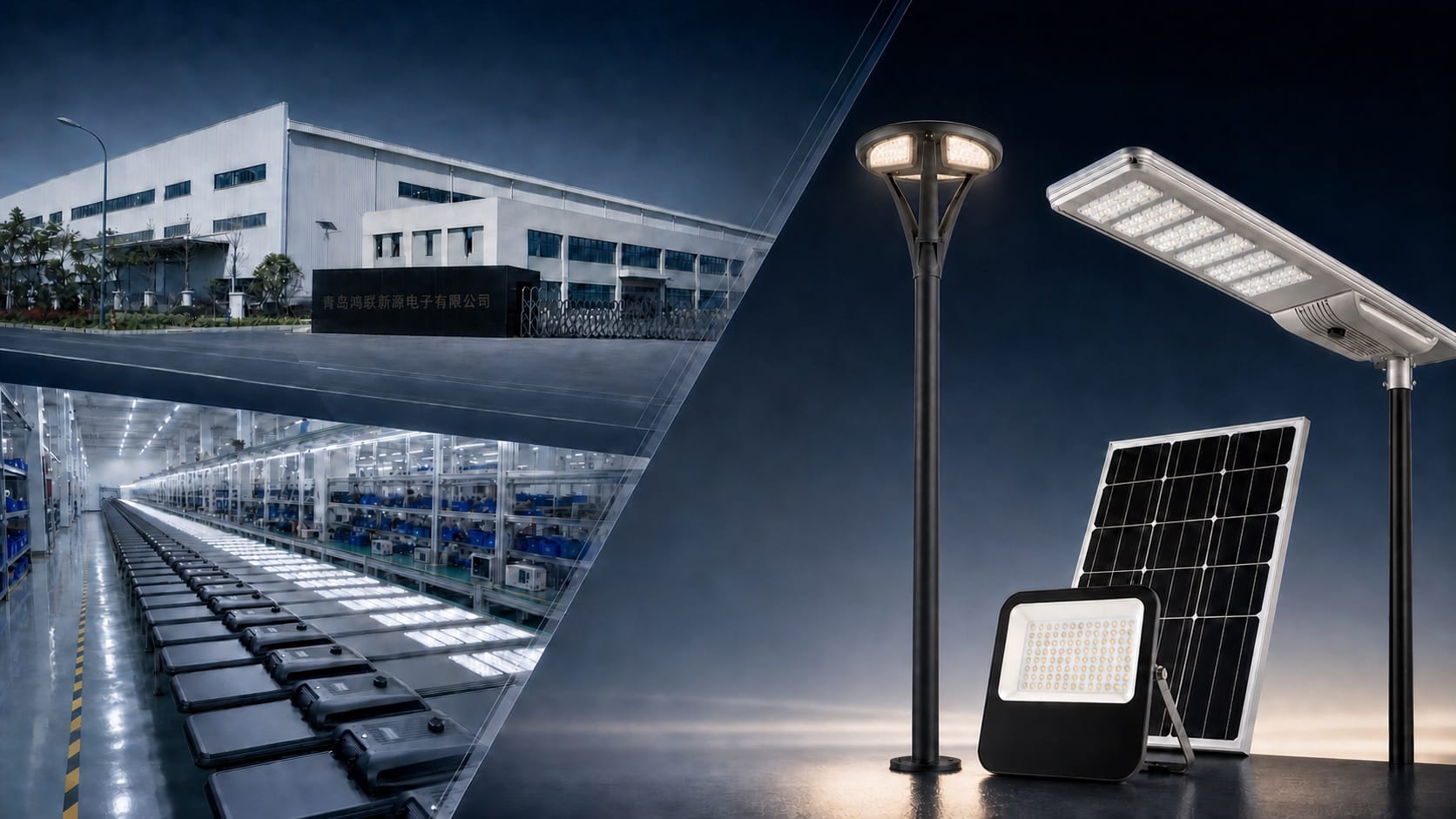
After working with different solar light suppliers from China for many years, I became much more careful when choosing long-term partners. I no longer look only at whether a company can provide a competitive quotation. I want to know whether they truly understand solar lighting projects and whether they can support customers after cooperation begins.
This is one of the reasons I chose to work with NEWSKYPOWER.
What impressed me was not only their product range, but also their understanding of project requirements. During communication, they focused on important questions such as where the products would be installed, what environmental conditions they would face, what lighting performance was needed, and which configuration would be suitable for the application.
For me, this kind of communication is very important because a successful solar lighting project depends on more than just sending products from the factory. The right product configuration, reliable quality, and continuous support all influence the final result.
NEWSKYPOWER provides different solar lighting solutions, including solar street lights, solar garden lights, solar flood lights, solar decorative lights, and customized solar lighting products for different applications.
Their experience in manufacturing, product development, quality control, and OEM service allows them to support different types of customers, including importers, wholesalers, distributors, engineering companies, and brand owners.
For buyers who are looking for a long-term solar lighting supplier, I believe the most important thing is finding a manufacturer that understands your business goals and can grow together with you.
My Advice to Solar Light Buyers Who Want to Import From China
If you are purchasing solar lights from China for the first time, my advice is simple: do not only ask about price.Price is easy to compare, but the real value of a supplier is much deeper.
Before making a decision, I recommend asking:How does the factory control product quality?What materials and components are used?How does the supplier handle problems after delivery?Does the manufacturer understand your market and application?Can they provide customization support if your business grows?
These questions can help you avoid many problems in the future.
I learned these lessons from my own experience. I have experienced the pressure of choosing the wrong supplier, dealing with customer complaints, and solving problems that could have been avoided from the beginning.
A reliable supplier may not always be the cheapest option, but they can help you save much more time, money, and stress in the long run.
Questions to Ask Before Requesting a Final Quote
Send the same questions to every shortlisted solar street light manufacturer in China. Consistent questions make the replies easier to compare.
- Which product architecture and configuration do you recommend for our site, and why?
- What is the LED’s actual operating power and verified lumen output?
- What are the solar panel’s rated watts and the battery’s voltage, Ah and Wh?
- What nighttime dimming program is included in the quotation?
- Which solar-resource and backup-night assumptions did you use for sizing?
- Can you provide the correct IES/LDT file and a DIALux report for our road layout?
- Which components do you manufacture, assemble, test or source?
- How do you test batteries, solar panels, waterproofing and finished lights?
- How will you keep the mass-production configuration consistent with the approved sample?
- Which certificates and reports apply to this exact company and model?
- What do the warranty and after-sales process cover, and what evidence is required for a claim?
- What are the production lead time, packing method, export documents and recommended spare parts?
Before asking for a final quotation, send the project location, application, quantity, pole height, road width, pole spacing, lighting hours, backup-night target and required delivery date. This information allows the supplier to prepare a project-specific proposal instead of a generic price list.
For an example of a real road application, review the South Korea mountain-road solar street light project. The Newskypower factory shipment update also provides useful production and export context.
Frequently Asked Questions
Factory Verification and Project Procurement FAQs
Final Thoughts From My Solar Project Experience
After more than ten years working with solar lighting projects, I have learned that choosing a supplier is not only about buying products.
It is about choosing a partner who can support you when challenges happen.The wrong supplier may help you save some money at the beginning, but later you may pay much more through repairs, replacements, delays, and unhappy customers.The right solar light manufacturer can help you complete projects smoothly, protect your reputation, and build a long-term business relationship.
Today, when I evaluate a supplier, I no longer ask:“Who gives me the lowest price?”I ask:“Who can help me deliver a successful project?”That is what I believe a reliable solar lighting partner should be.