

Yes, solar street lights can charge in cloudy weather and operate during rain, but the panel normally collects less energy than it does in clear direct sun. Whether a light continues through the night depends mainly on energy stored before the bad weather, usable battery capacity, actual LED load, the dimming program and how the system was sized for the project location. An IP rating describes resistance to water or dust under stated tests; it does not prove charging performance or a specific number of backup nights.
What Happens to a Solar Panel on Cloudy Days?
Clouds reduce direct irradiance, while diffuse light can still reach the panel. The result varies by cloud density, season, location, temperature, shade and panel orientation. Use local monthly or hourly solar-resource data rather than a generic “sun hours” assumption; NREL provides irradiance and meteorological data tools for this purpose. Newskypower also discusses seasonal effects in How to Use Solar Lights in Winter.
How Energy Moves From Day to Night
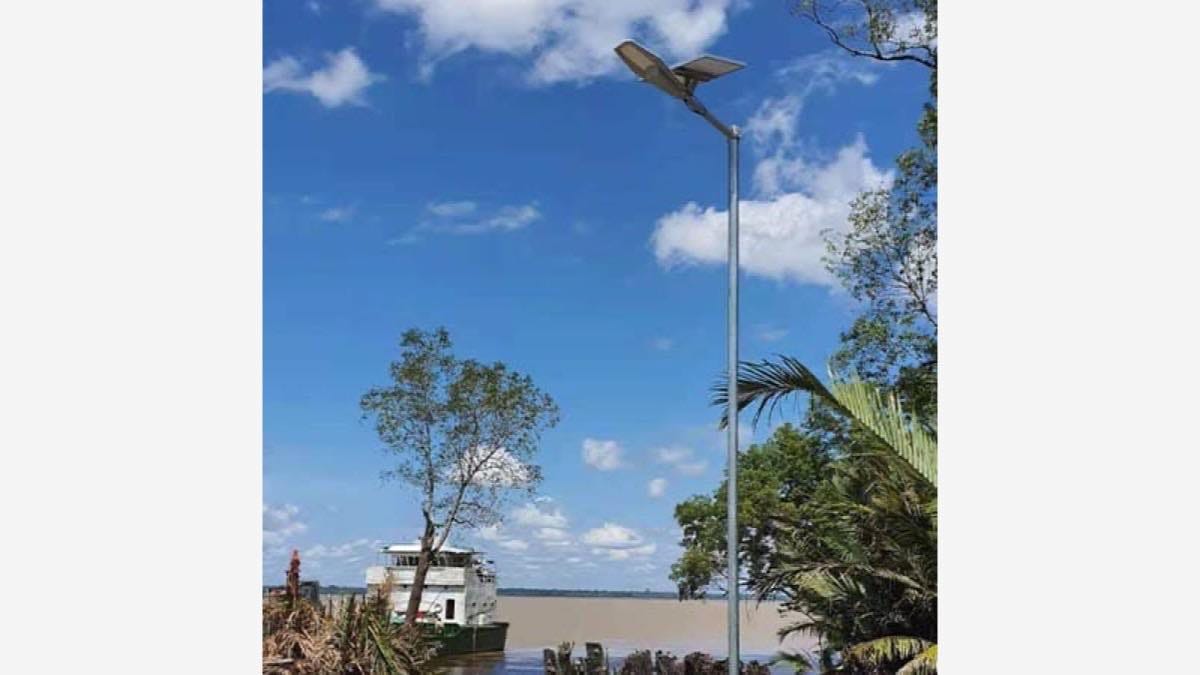
The panel produces power, the controller manages charging, the battery stores energy, and the controller later supplies the LED according to a schedule. Low-voltage protection may reduce output or switch the light off to protect the battery. Buyers comparing the solar street light range should therefore compare the whole energy chain, not the panel or battery alone.
What Are Autonomy Days?
Autonomy means the period a system can serve its programmed load without enough new solar input. It does not automatically mean several full-brightness calendar nights. A claim is meaningful only when it identifies the starting state of charge, usable battery energy, hourly light level, weather assumption and protection limits.
| Input | Question to document |
|---|---|
| Solar resource | Which location, month and data source were used? |
| Battery | What are voltage, Ah, Wh and usable depth of discharge? |
| LED load | What is actual input power at each programmed level? |
| Controls | When does the light dim or boost on motion? |
| Backup target | Does it mean full output, reduced output or minimum safety mode? |
Autonomy and recovery should be reviewed together. A battery may carry the light through a short low-sun period, yet an undersized panel may need several favorable days to restore the intended state of charge. If another cloudy period arrives before recovery, performance can ratchet downward. The design should therefore examine both energy used during poor weather and energy available to recharge afterward.
Temperature also changes the practical result. Battery charge and discharge limits, controller protection and LED demand may behave differently in heat or cold. Use the battery manufacturer’s permitted operating range and the project’s enclosure conditions rather than assuming nameplate capacity remains fully usable at every temperature.
Five Factors That Determine Rainy-Day Backup
- Local seasonal irradiation and consecutive low-sun patterns
- Panel size, tilt, orientation, cleanliness and shade
- Usable battery watt-hours, temperature and condition
- Actual LED and accessory load
- Dimming, motion-sensor and automatic power-management schedule
The battery life guide explains why repeated deep discharge and unsuitable conditions matter.
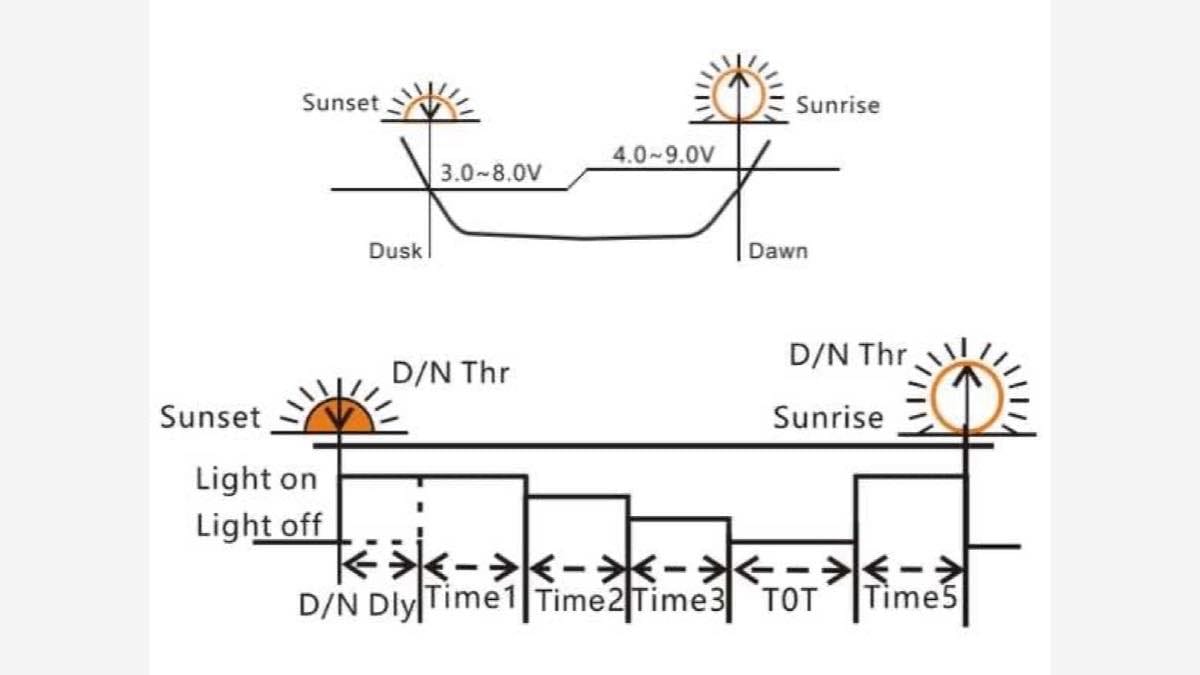
How Dimming Extends Runtime
A common strategy is higher output after dusk, reduced output during low-traffic hours and temporary boost after motion. This lowers nightly Wh demand, but the design must still meet the owner’s lighting and safety requirements. Motion-only operation is not appropriate for every road or pedestrian area. The lighting target should be established through the lumens and wattage selection process.
Configuring for Low-Sunlight Regions
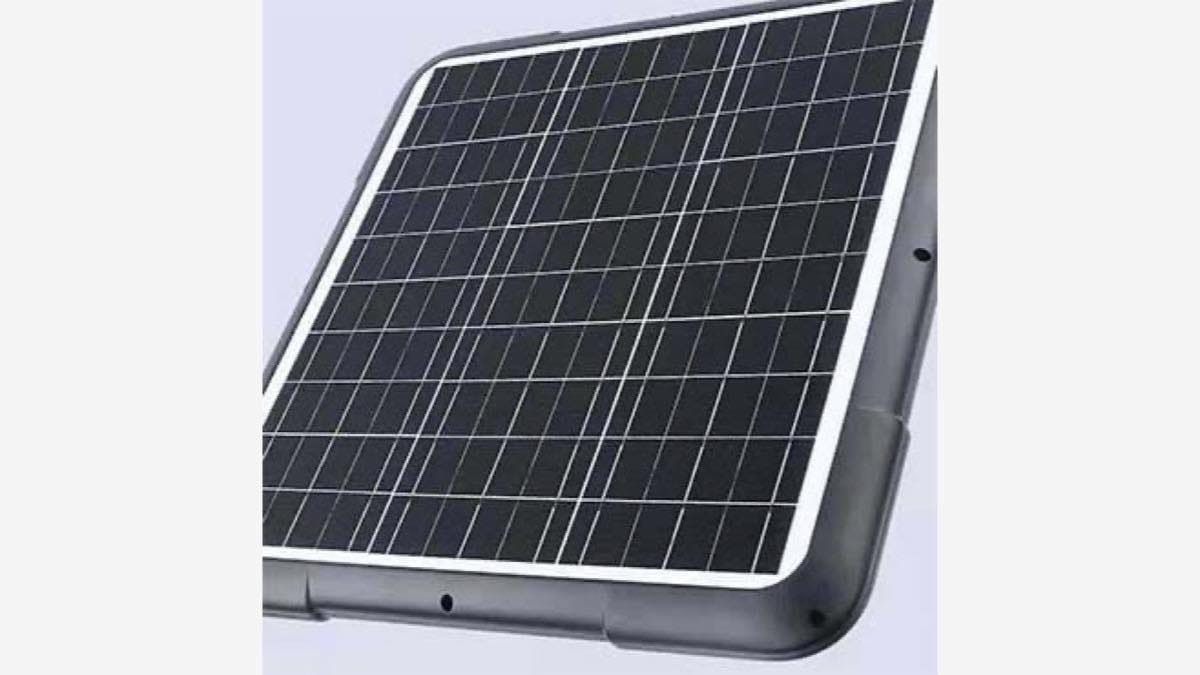
Use location-specific data, improve panel orientation, remove shade, consider a larger panel or usable battery capacity, select efficient LEDs and optics, and adopt a realistic dimming profile. An all-in-two or split solar street light may offer more panel-area or orientation flexibility, but architecture alone does not guarantee autonomy.
Start with the weakest design period that the owner expects the system to serve, not the annual average alone. Review the horizon for mountains, trees and buildings; an unobstructed panel can still lose morning or afternoon collection if the local horizon is high. Confirm whether snow, dust, salt or leaf fall will require planned inspection.
Then document the operating priorities. A project may choose to preserve a lower base level through several poor days, reserve higher output for the early evening, or use sensor boost where traffic patterns permit. These are service decisions as well as energy decisions, so the owner should approve them before the controller program is frozen.
A simple project energy balance
For each hourly period, multiply actual LED and accessory power by operating time. Add realistic system losses to obtain nightly demand. Compare that demand with usable battery Wh and the location-specific energy the panel can collect during the design period. The calculation should show starting charge, minimum permitted state of charge, autonomy mode and expected recovery—not only a final panel or battery size.
Why oversizing one component may not solve the problem
A larger battery without enough charging energy can remain partly discharged. A larger panel cannot compensate for severe shade or an incompatible controller. A very low LED load may save energy but fail the lighting objective. Reliable design balances generation, storage, load, controls, optics and maintenance rather than maximizing one component.
Signs a System Is Undersized
- It repeatedly switches off before dawn after cloudy days.
- Brightness remains in protection or low-power mode.
- Seasonal failures recur at roughly the same time each year.
- Batteries frequently reach low-voltage protection.
- Cleaning and removing shade do not restore expected runtime.
These symptoms can also indicate aging or faults, so use the maintenance and troubleshooting guide before replacing parts. Long-term component context is available in the solar street light lifespan guide.
Compare several poles before diagnosing. If only one unit performs poorly, inspect its shade, panel, wiring, controller and battery. If many units change at the same time, compare weather and shared programming. Logged controller data, measurements and dated nighttime photographs are more useful than a single daytime observation.
Commissioning for the Rainy Season
At handover, record the controller program and initial battery/charging condition. Confirm that the panel is clean and unshaded, and test each programmed light level. During the first representative low-sun period, sample switch-on time, pre-dawn condition and any protection events. A pilot should cover the difficult season where project risk justifies it; a few clear days cannot validate an autonomy claim.
Keep acceptance language precise. Instead of writing “works for three rainy days,” define the assumed starting charge, weather dataset, load schedule and minimum output. This protects both the buyer and supplier from interpreting the same phrase differently.
Review results again after landscaping, construction or controller changes. New tree cover, a taller building or a revised overnight schedule can invalidate the original assumptions even when every component remains functional.
Questions Buyers Should Ask Suppliers
- Which irradiance data and design month were used?
- Is battery capacity stated in both Ah and Wh?
- What usable depth of discharge and temperature assumptions apply?
- What is the hour-by-hour lighting program?
- Does the backup claim use full, dimmed or mixed output?
- Is there a project-specific energy balance and recovery calculation?
The calculation should be supplied in a reviewable form rather than only as a marketing conclusion. It should identify the data source, design period, panel orientation, battery voltage and Wh, usable limits, controller efficiency, LED program and accessory demand. Request separate results for the normal night and stated low-sun mode. If the supplier changes a panel, battery, controller or dimming program after approval, require an updated energy balance. These records also provide a maintenance baseline when seasonal runtime later changes.
Frequently Asked Questions
Do solar street lights charge in clouds or rain?
They can receive diffuse light, but charging is commonly lower and highly weather-dependent.
How many rainy days can they support?
Only a calculation tied to location, battery Wh, LED schedule and starting charge can support that answer.
Can they stay on all night?
Yes, if the stored energy and programmed load support the required hours under the design conditions.
Does IP66 prove rainy-day backup?
No. It concerns enclosure protection under specified testing, not energy autonomy.
Which architecture is best for weak sun?
The one that can accommodate the required panel, battery, orientation, controls and maintenance plan for the site.
Request an Energy Configuration Review
Provide the location, lighting hours, hourly brightness profile, pole height, backup-night target and site-shading information. Newskypower can then discuss an energy configuration with disclosed assumptions.