

Project Overview
Project Location: Haiti
Application: Tennis Club Lighting Project
Product Model: NZ-150W Solar Street Light
Installation Height: 8 Meters
From Customer Inquiry to Final Solution
The customer wanted players to continue their activities after sunset. That requirement gives this Haiti tennis club solar lighting project a more useful starting point than lamp wattage alone: the installation had to serve evening activity, with the lighting arrangement and energy supply considered together.
For another club considering off-grid solar lighting, first define what will take place on the court and for how long. Recreational play, coaching and competition can lead to different lighting requirements. The court surface, surrounding playing space, player sightlines and operating schedule all influence the proposed layout. A model name or a total lumen figure cannot settle those decisions.
Understanding the Customer’s Real Challenge
The original project account describes the additional cable installation and electrical work associated with a wired alternative. For a similar site, establish whether a suitable power supply already exists and how it could reach the lighting points. Solar lighting can avoid a new grid-supply connection at each independently powered light, while pole foundations, fixing, lifting and safe installation remain part of the work.
There is also a timing problem to solve. The hours when players need light must fit the controller program and the available stored energy. A light that stays on at reduced output after play ends has a different energy requirement from one expected to maintain the playing level throughout the night. Agree that schedule before comparing panel and battery configurations.
Maintenance access matters at height. The project account records an 8-meter installation height. For a comparable installation, plan how technicians will inspect the equipment, access the battery and approved replaceable parts, and work without obstructing club activities. Include access equipment and servicing arrangements in the project plan rather than considering them only after a fault.
How We Selected the Right Solar Lighting Solution
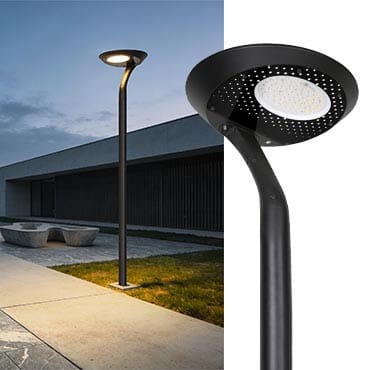
After understanding the project requirements, we recommended our NZ-150W solar street light to the customer.
The existing project description lists a 24,000 lm output, SMD5050 LEDs, a double-sided MONO solar panel, a LiFePO4 battery and an MPPT controller. These describe the selected system; they do not demonstrate a particular sports-lighting standard or a guaranteed number of operating nights. For another court, the optical arrangement and energy budget must be checked against the actual use.
Check lighting distribution and operating energy together
| Decision | Information to request | Why it matters |
|---|---|---|
| Evening activity | Recreational, training or competition use; the applicable lighting criteria | Defines the task rather than treating all tennis-club uses as identical. |
| Court layout | Court and surrounding playing-space dimensions, pole positions, mounting height and luminaire orientation | Provides the geometry for a lighting calculation. |
| Light distribution | The exact luminaire's IES/LDT file and a calculation for the proposed arrangement | Allows assessment of illuminance, uniformity, glare and spill light; total lumens alone do not. |
| Operating profile | Opening hours, playing period, output steps and any post-closing lighting | Establishes the nightly energy demand. |
| Solar and storage sizing | Panel rating, shade conditions, seasonal solar resource, battery voltage and capacity, allowable use and controller limits | Supports a configuration-specific energy balance and reduced-sunlight assessment. |
Battery capacity should be compared in watt-hours with the nominal voltage stated. Usable energy is less than nominal energy once the operating limits and system losses are considered. Any proposed autonomy period therefore needs a defined lighting schedule and starting battery condition; it should not be inferred from the model number or a night photograph.
Installation Experience and Project Result
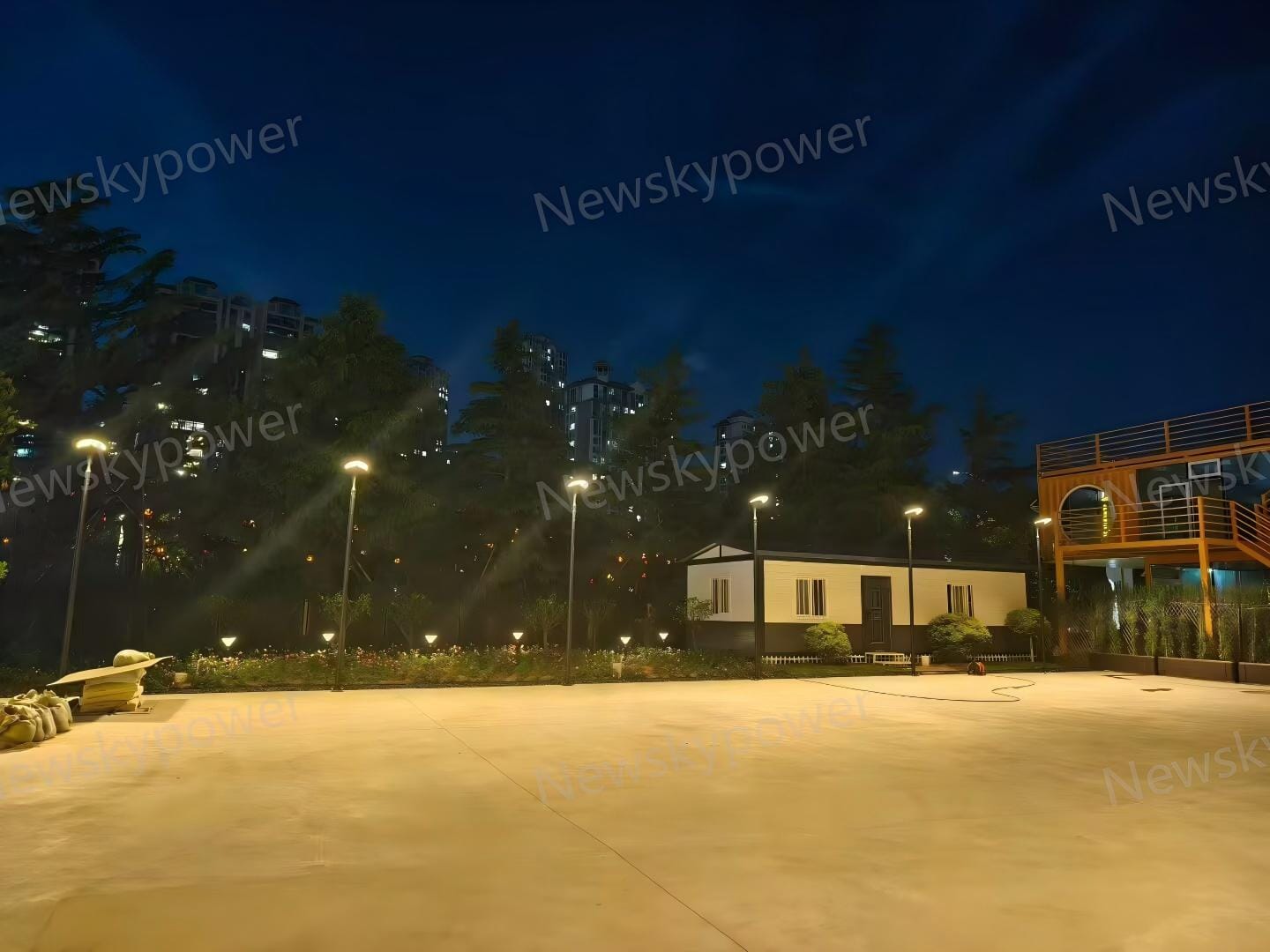
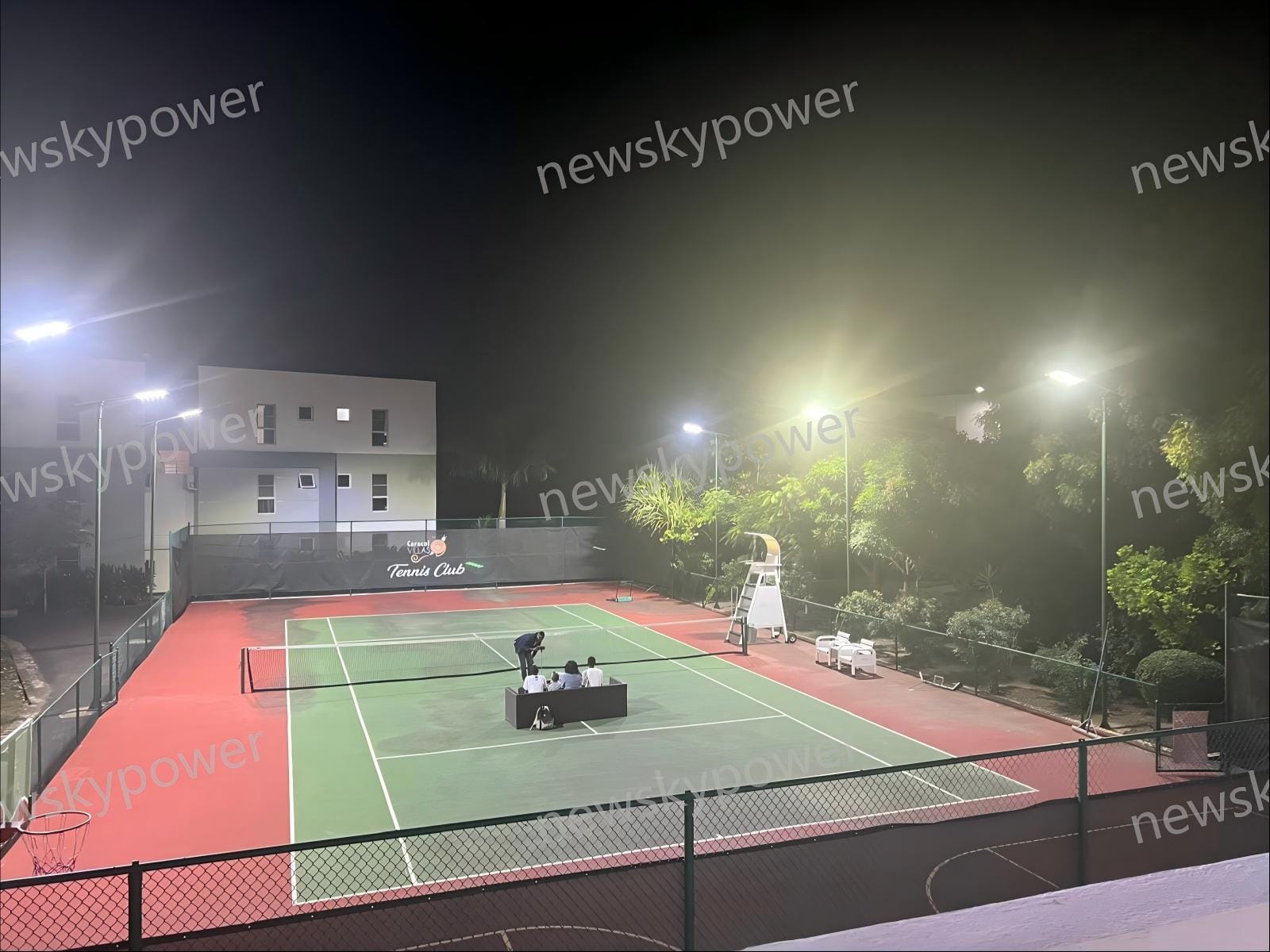
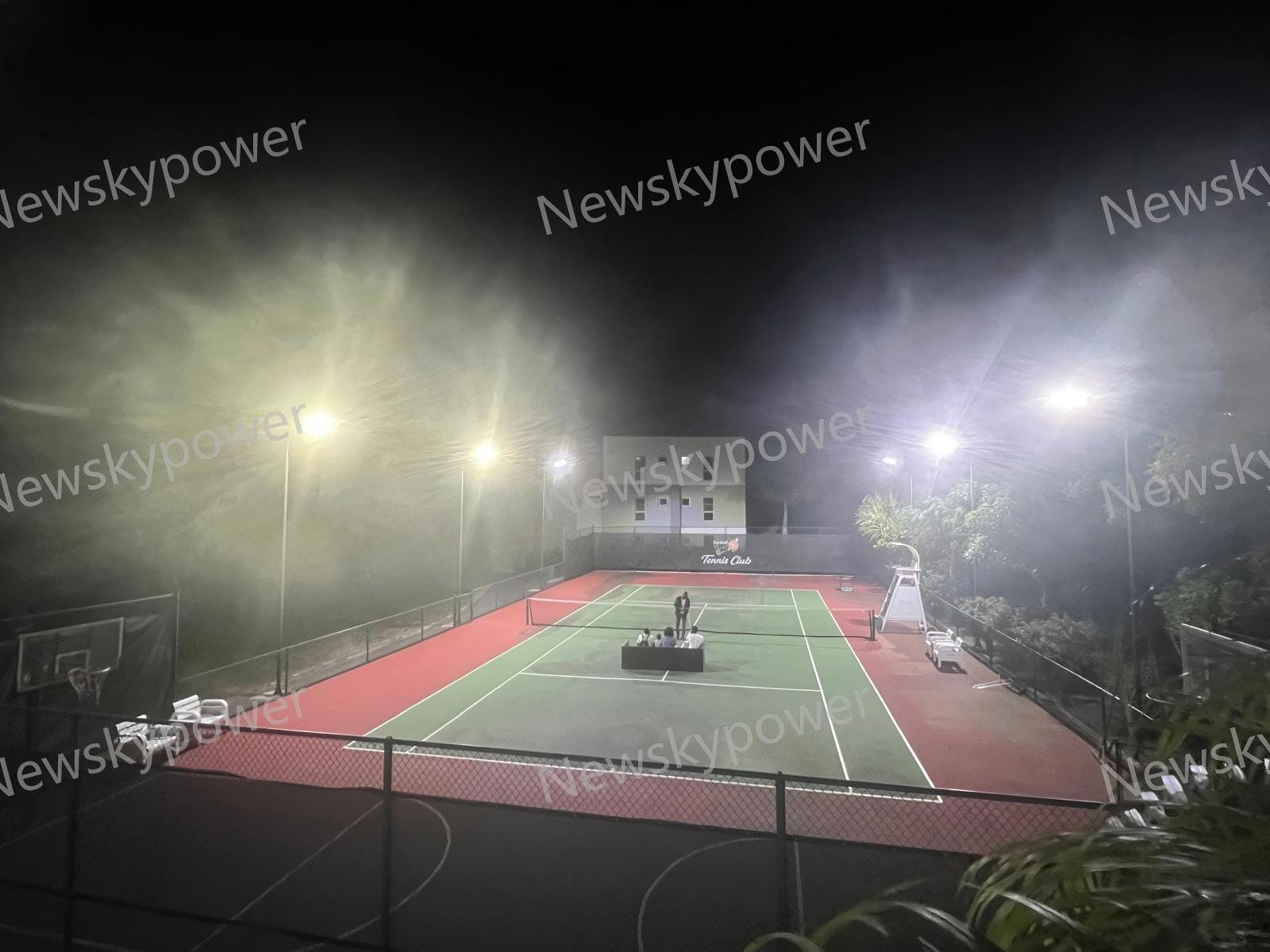
After confirming the solution, the customer installed the NZ-150W solar street lights around the tennis court. The lights were installed on 8-meter poles according to the customer’s site requirements.
The project account reports that players could continue their activities at night. The installation photographs show the arrangement used in this case, but they do not replace a court lighting survey or provide a measured runtime. The example should be read as a tennis-club application, with any claimed sports-performance level assessed separately.
When adapting the arrangement to another club, commissioning should check luminaire orientation, the required control schedule and operation during the agreed use period. Where the project specifies lighting criteria, verify them with the agreed measurement method rather than judging only from the apparent brightness of photographs.
What We Learned From This Project
For a club owner, the decision is whether the proposed arrangement supports the intended evening use within the site's installation and maintenance constraints. Supply-cable requirements, light distribution, the operating program and access for servicing need to be evaluated together. Independent solar supply does not remove those design tasks.
To discuss solar lighting for a tennis club, send the court dimensions, activity level, proposed pole locations and heights, daily operating times, nearby obstructions and existing electricity provision. Include any required lighting specification. NEWSKYPOWER can then discuss the configuration and the photometric and energy checks needed for a project-specific proposal. The solar street light range is a starting point for product comparison; it is not a substitute for assessing the court layout.
Project Specifications
The following details are retained from the existing project account. The 24,000 lm value is a listed product output, not a measured court illuminance, and the 8-meter height describes this case rather than a universal mounting recommendation.
| Item | Details |
|---|---|
| Country | Haiti |
| Application | Tennis Club Lighting |
| Product Model | NZ-150W Solar Street Light |
| Installation Height | 8 Meters |
| LED Output | 24,000 lm, as listed in the project account |
| Solar Panel | Double-sided MONO Solar Panel |
| Battery | LiFePO4 Lithium Battery |
| Controller | MPPT Solar Controller |