

This solar garden light project in Australia involved a residential community with pedestrian walkways, internal access routes and landscaped areas. For this type of site, selection should consider the luminaire’s form, documented configuration and installation range.
The SCL-009PLUS solar garden light was selected for the case. This article explains the known project context, the product information supported by the current specification, what the available images can show, and which questions still need project-specific verification.
1. Project Background
Residential-community lighting needs to serve several visual and practical purposes. A pathway should be easy to follow, entrances and route changes should be visible, and the luminaires should relate well to nearby buildings and landscape areas.
At the same time, an integrated solar light can reduce the need to route a grid-supply cable to each luminaire. That can be relevant where underground electrical work would affect completed surfaces or landscape areas. It does not eliminate all site work: poles, foundations, fixing, transport, layout and maintenance access still need to be planned.
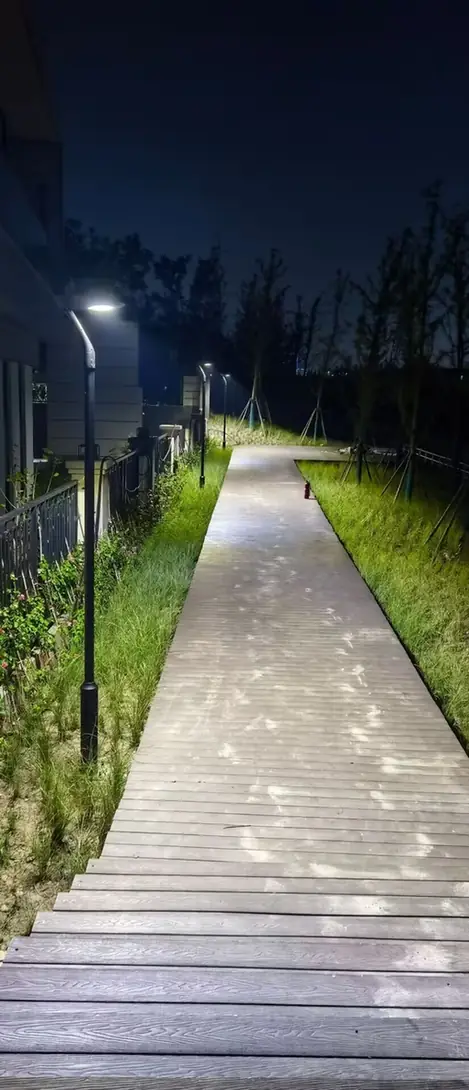
This residential-community project in Australia used SCL-009PLUS solar garden lights.
2. Known Conditions and Selection Priorities
The application includes residential walkways, small internal routes and landscape areas. These are different from both simple decorative marking and high-speed road lighting. The appropriate result depends on actual light output, distribution, glare, mounting arrangement and the surface that needs to be illuminated.
The selection priorities for this kind of site include:
- a pole-top form suitable for the intended landscape character;
- an integrated solar energy system at each lighting point;
- documented panel, battery and LED configuration;
- light-color options for different design preferences;
- a mounting range relevant to walkway and courtyard applications;
- a structure intended for outdoor use;
- access for future inspection and maintenance.
No product category should be rejected only because it looks decorative or has a particular wattage. Likewise, a higher-power fixture is not automatically excessive. The correct comparison is based on the lighting task, distribution, operating program, site conditions and total installation scope.
3. Why SCL-009PLUS Was Considered
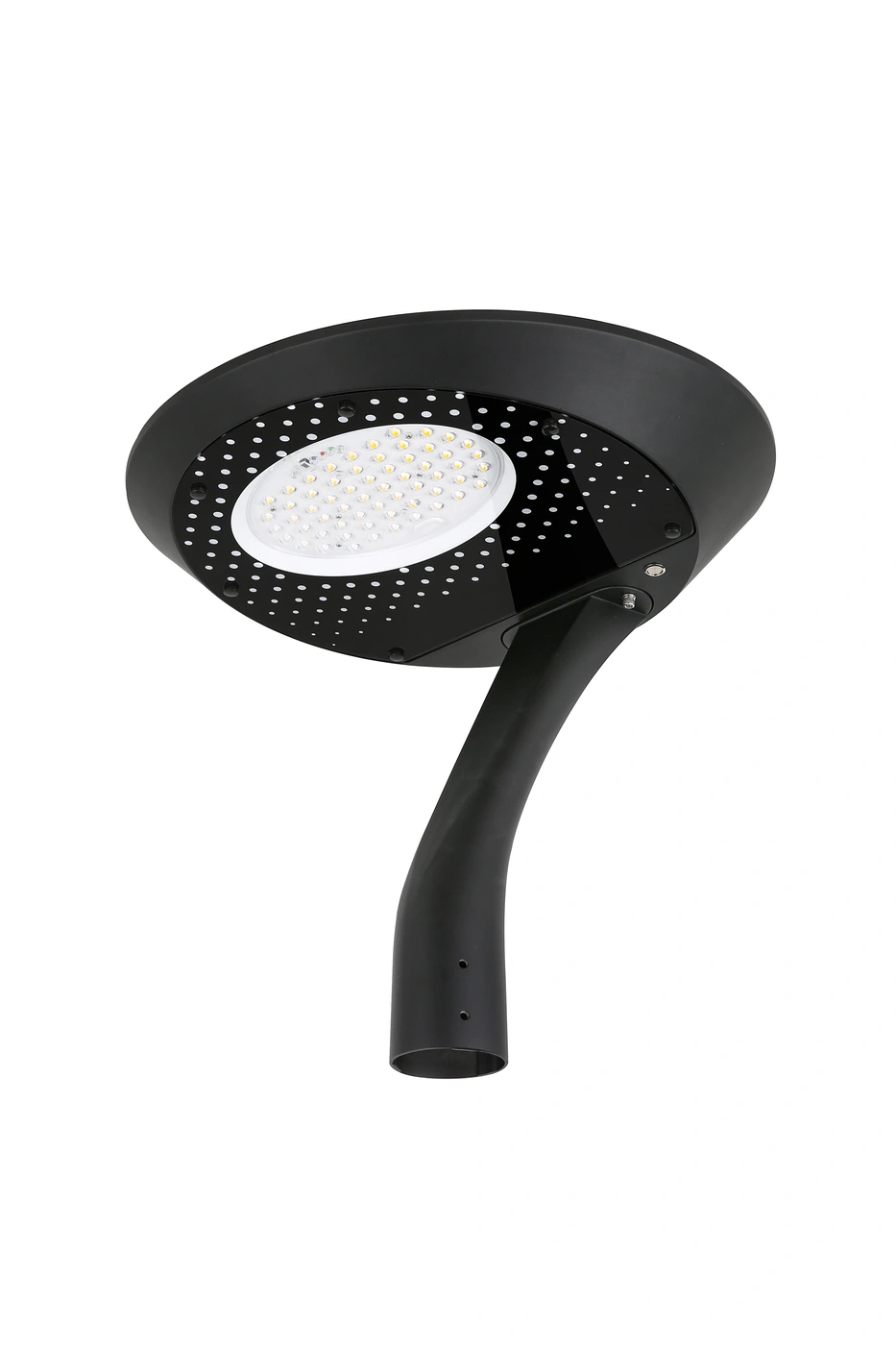
SCL-009PLUS combines the solar panel, rechargeable battery, LED system and housing in a pole-top solar garden light. The curved black body gives the fixture a distinct landscape form, while the integrated arrangement can reduce supply-cable routing between lighting points.
The current SCL-009PLUS specification lists both 3000K and 6500K color-temperature options. These options support different visual intentions, but color temperature does not determine brightness or visibility by itself. Warm light may create a softer residential appearance; a cooler appearance may suit a different design preference. The final choice should also consider output, optical distribution, glare, surface reflectance and the overall layout.
The model is therefore relevant to the case because its documented configuration and form match the general project type. The specification alone does not prove that the panel will collect sufficient energy in every season or that one lighting program will meet every night requirement. Local solar resource, shade, temperature and operating mode still affect the result.
4. SCL-009PLUS Configuration Summary
The following values come from the current product specification. They are nominal product information, not measurements from the Australian site.
| Item | Documented SCL-009PLUS information | How to interpret it |
|---|---|---|
| Solar panel | 5V / 33W monocrystalline panel | A component rating; not proof of daily energy collected at the site |
| Battery | 3.2V / 48Ah LiFePO4 | 153.6Wh nominal energy by V x Ah; usable energy and runtime require operating conditions |
| LED | 60 pieces of 5054 LED | Component information; not a substitute for site illuminance data |
| Materials | Black die-cast aluminum body, tempered glass and PC optical lens | Construction description; not a complete durability test report |
| Ingress protection | Nominal IP65 | Ingress-protection information; not a guarantee against every weather or installation condition |
| Color temperature | 3000K or 6500K options | Product options; the project’s installed color must be confirmed separately |
| Installation range | Manufacturer-recommended 3-5m | A selection reference; not a statement of the measured project pole height |
Battery nominal energy is not the same as nighttime usable energy. Runtime depends on the controller, usable state-of-charge range, system losses, temperature, LED load and the programmed output. Panel and battery ratings alone do not determine runtime under the site’s weather and operating conditions.
5. What the Installation and Night Images Show
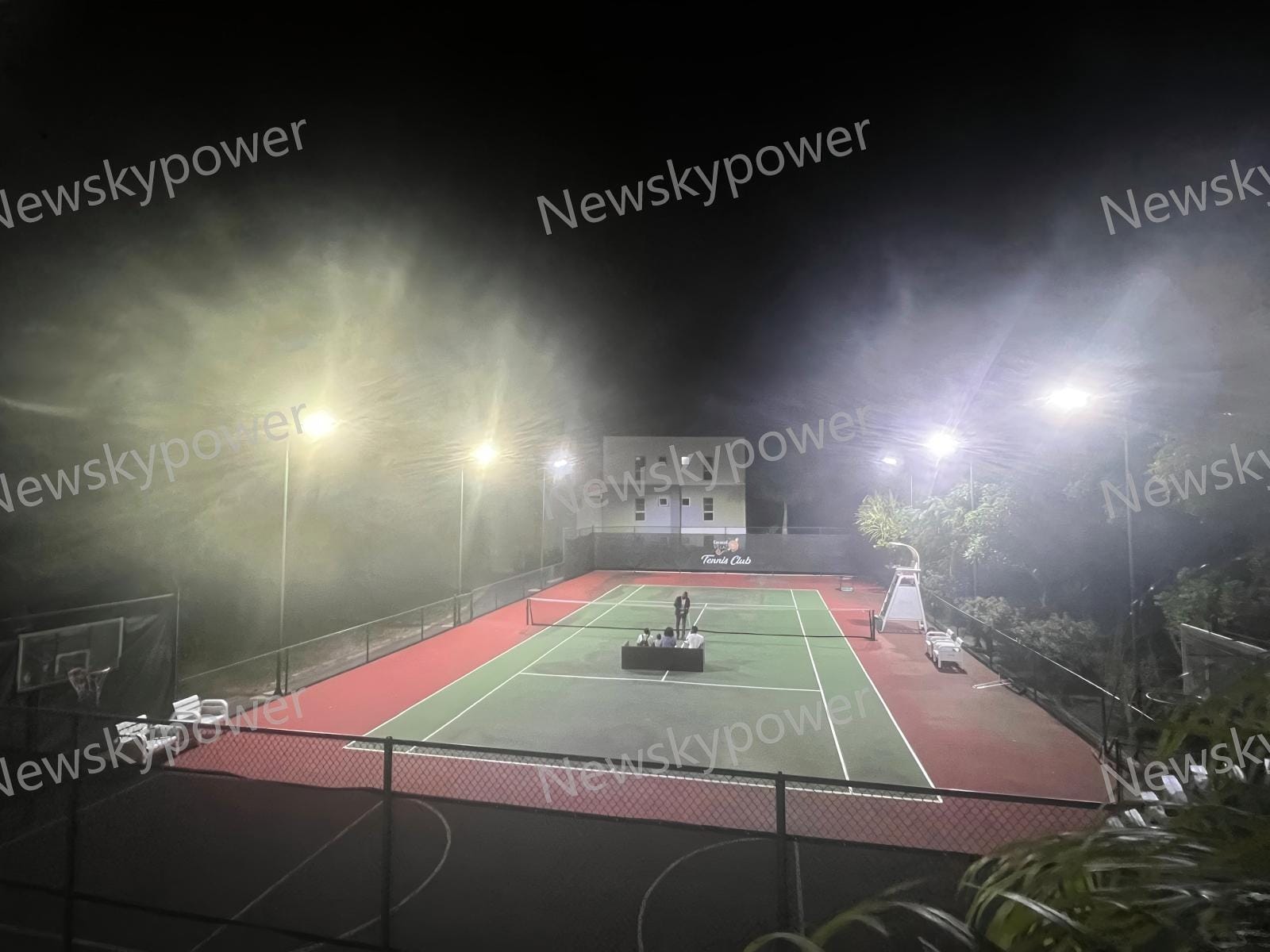
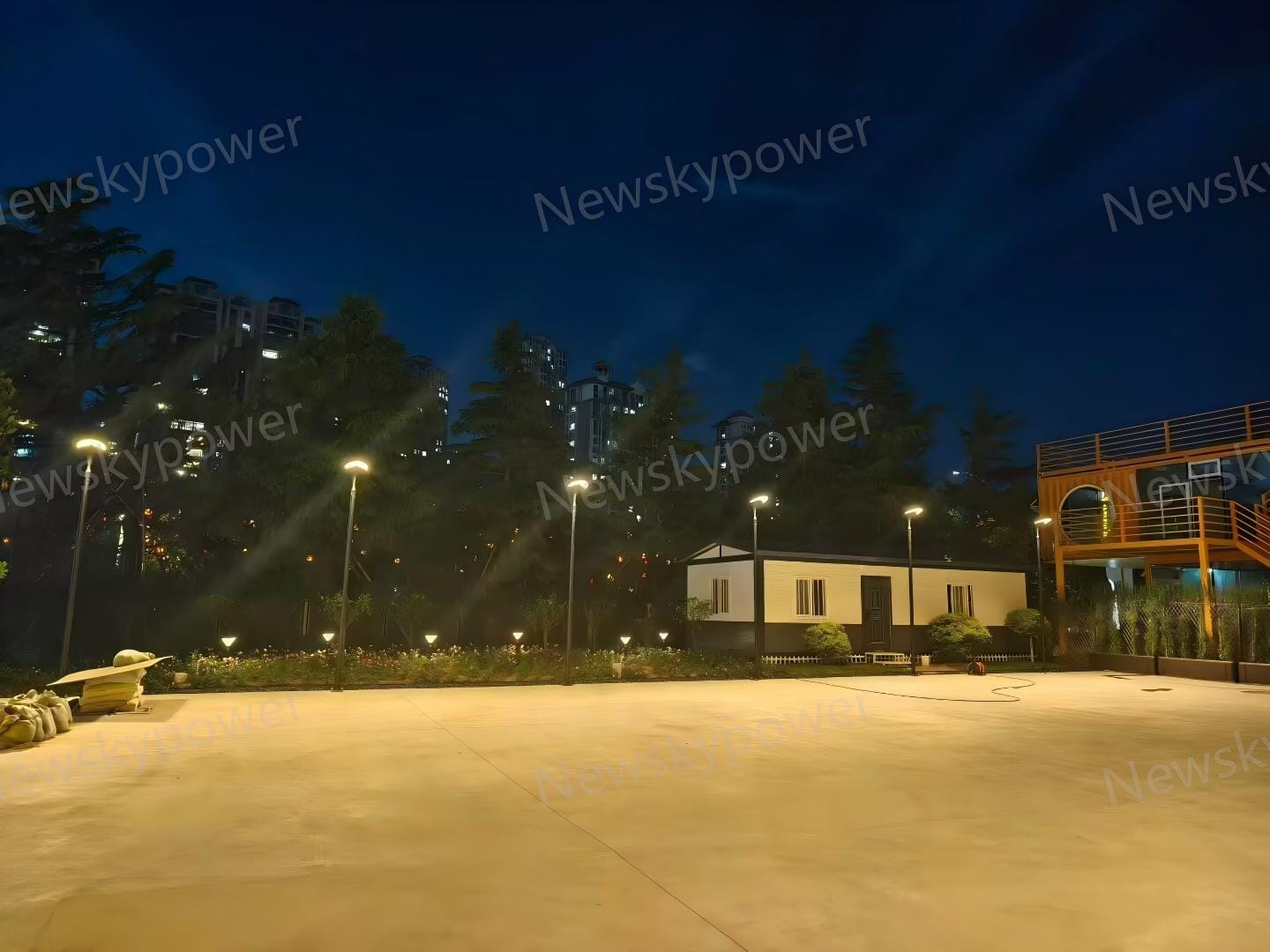
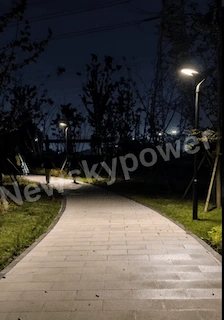
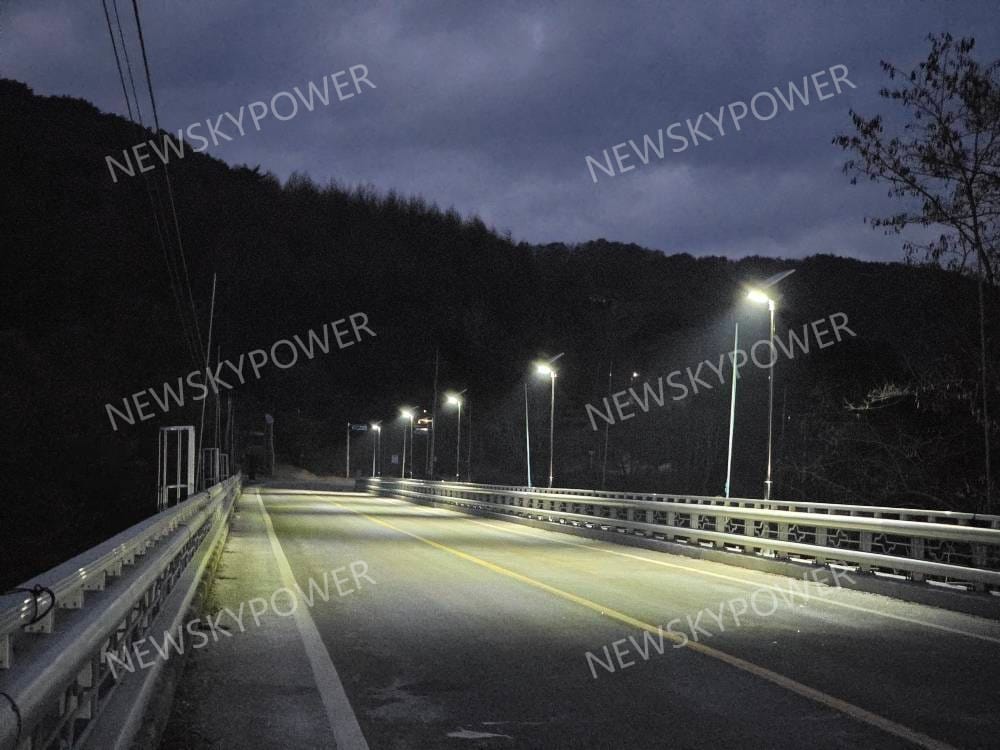
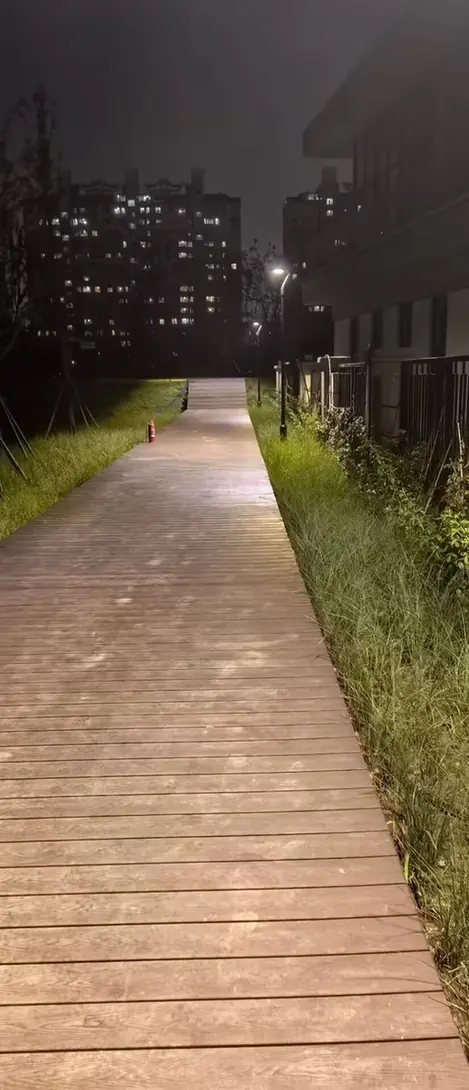
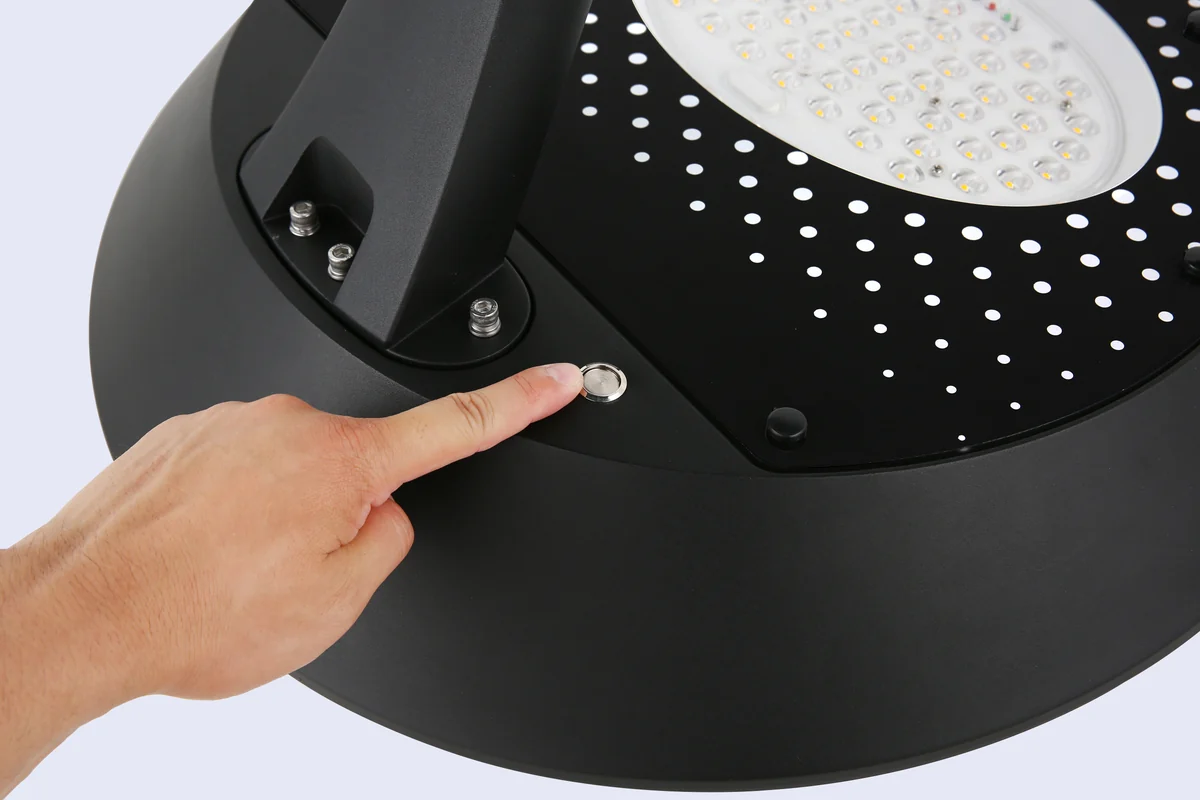
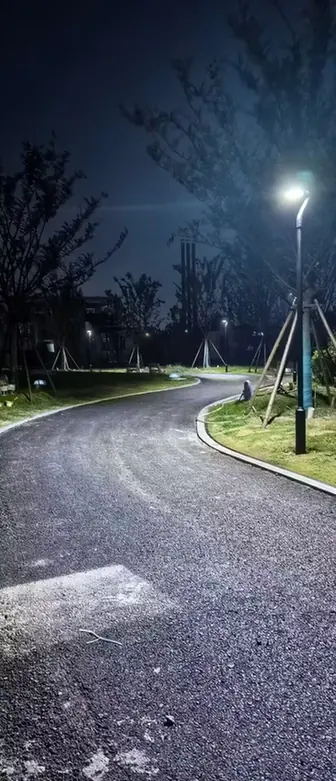
The images associated with this case show the luminaire’s pole-top appearance and illuminated outdoor scenes. They help readers understand scale, form, light color and how multiple fixtures may relate visually to a walkway or building edge.
Images do not measure illuminance, uniformity, glare or operating time. A bright area in a photograph may be affected by camera exposure, nearby light sources and surface reflectance. Therefore, the photos should not be used alone to claim that a lighting standard was met, that pedestrian safety improved, or that the lights maintained the same output throughout the night.
The integrated solar arrangement can reduce the need for underground supply cabling to each light. Any statement about actual labor hours, construction savings or installation speed would require project records and a defined wired alternative.
6. Guidance for Similar Residential Projects
For a similar residential community solar lighting case study, begin with the project rather than a model number. Send the supplier:
- the project city or coordinates and the design season;
- a site plan, pathway widths and the surfaces that need light;
- proposed pole positions, seasonal shade and nearby buildings or trees;
- required operating time and whether scheduled output reduction is acceptable;
- target illuminance, uniformity or other project criteria where applicable;
- preferred visual appearance and color temperature;
- pole, interface, foundation and wind-related requirements;
- environmental conditions and maintenance access;
- the required evidence, warranty scope and spare-part expectations.
These inputs allow the panel, battery, optical system, program and layout to be checked together. They also make it easier to distinguish a suitable product configuration from a general catalogue recommendation.
For a broader comparison of mounting types and product categories, read How to Choose Solar Garden and Courtyard Lights.
7. Project Summary
- Project type: residential community solar lighting case
- Location stated in the existing case: Australia
- Applications: pedestrian walkways, internal access routes and landscape areas
- Selected model: SCL-009PLUS solar garden light
- Product information source: SCL-009PLUS product specification.
This Australian solar garden light project is useful as a selection example: a residential application was matched with a pole-top integrated model whose documented configuration is relevant to the setting. The case should be read as a product-selection reference, not as a universal performance guarantee for every site.