

This SCL-008 solar courtyard light project focuses on a park pathway and landscaped pedestrian setting. The case is useful for showing how an integrated pole-top solar light can be considered for a route where appearance, independent energy and practical maintenance all matter.
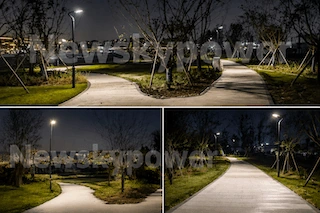
1. The Park Pathway Scene
Park and landscape pathways need a different approach from high-speed roads or purely decorative planting areas. People move at walking speed, route edges and changes in direction matter, and the luminaire is part of the daytime landscape as well as the nighttime scene.
The existing case identifies the application as a park, garden and landscape walkway used by pedestrians. For this type of site, product selection should consider:
- the surface and width of the path;
- the points where people enter, turn or encounter a change in level;
- nearby trees, buildings and seasonal shade;
- the intended operating time and acceptable output program;
- light distribution and glare at pedestrian eye level;
- pole, foundation and fixing conditions;
- safe access for inspection and cleaning.
These are selection considerations for the project type.
2. Why an Integrated Pole-Top Light Was Relevant
An integrated solar courtyard light combines its solar-energy components and luminaire at each lighting point. This can reduce the need to route a grid-supply cable along a path, which may be helpful in a landscaped area.
It does not mean the installation has no site impact. A pole-top system may still require transport, a suitable pole, a foundation, anchors or other fixings, safe assembly and later maintenance access. The correct foundation and structural design depend on local ground, wind, pole and regulatory conditions.
The selected model for this case is SCL-008 solar courtyard light.
3. Documented SCL-008 Product Information
The current SCL-008 product documents support the following nominal information. These are model specifications, not measurements from the park pathway.
| Item | Documented SCL-008 information | How to interpret it |
|---|---|---|
| Structure | Integrated solar pole-top design | Can reduce supply-cable routing; pole, foundation and fixing are still required as applicable |
| Solar panel | 25W / 5V; the reviewed factory specification identifies a monocrystalline panel | Component rating; not the energy collected each day at this site |
| Battery | 3.2V / 36Ah LiFePO4 | 115.2Wh nominal energy by V x Ah; usable energy and runtime depend on system conditions |
| LED | 2835 SMD | LED type; not proof of pathway illuminance or uniformity |
| Materials | Die-cast aluminum and PC | Construction description; not a complete corrosion, impact or lifetime test |
| Ingress protection | Nominal IP65 | Ingress-protection information; not proof of freeze resistance or every outdoor condition |
| Installation range | Manufacturer-recommended 3-5m in the reviewed factory specification | A model-selection reference; not the verified height of this project |
Runtime and low-temperature charging suitability depend on the supplied configuration, operating program, site conditions, and documented battery and controller limits.
Warm-white versions are available. Confirm the color-temperature options for the version being ordered.
4. Installation Conditions to Check
For a solar park pathway lighting project, the luminaire cannot be evaluated separately from its location. Before using SCL-008 or a comparable model, confirm:
- Solar access: review the local sun path and shade from trees, buildings and the luminaire structure.
- Lighting task: define the target surface, operating period, output level and any illuminance or uniformity requirement.
- Layout: use product photometric data and a site plan to assess pole positions and spacing.
- Mechanical interface: confirm the current pole-top interface drawing and tolerances for the supplied version.
- Structure: design the pole and foundation for local site and wind conditions.
- Operating limits: check battery and luminaire charging, discharging and storage conditions separately where relevant.
- Maintenance: provide safe access for the panel, luminaire, fixing points and approved replaceable parts.
Confirm the current pole-top assembly drawing, fit dimensions and tolerances before procurement.
5. What Can Be Observed From Images
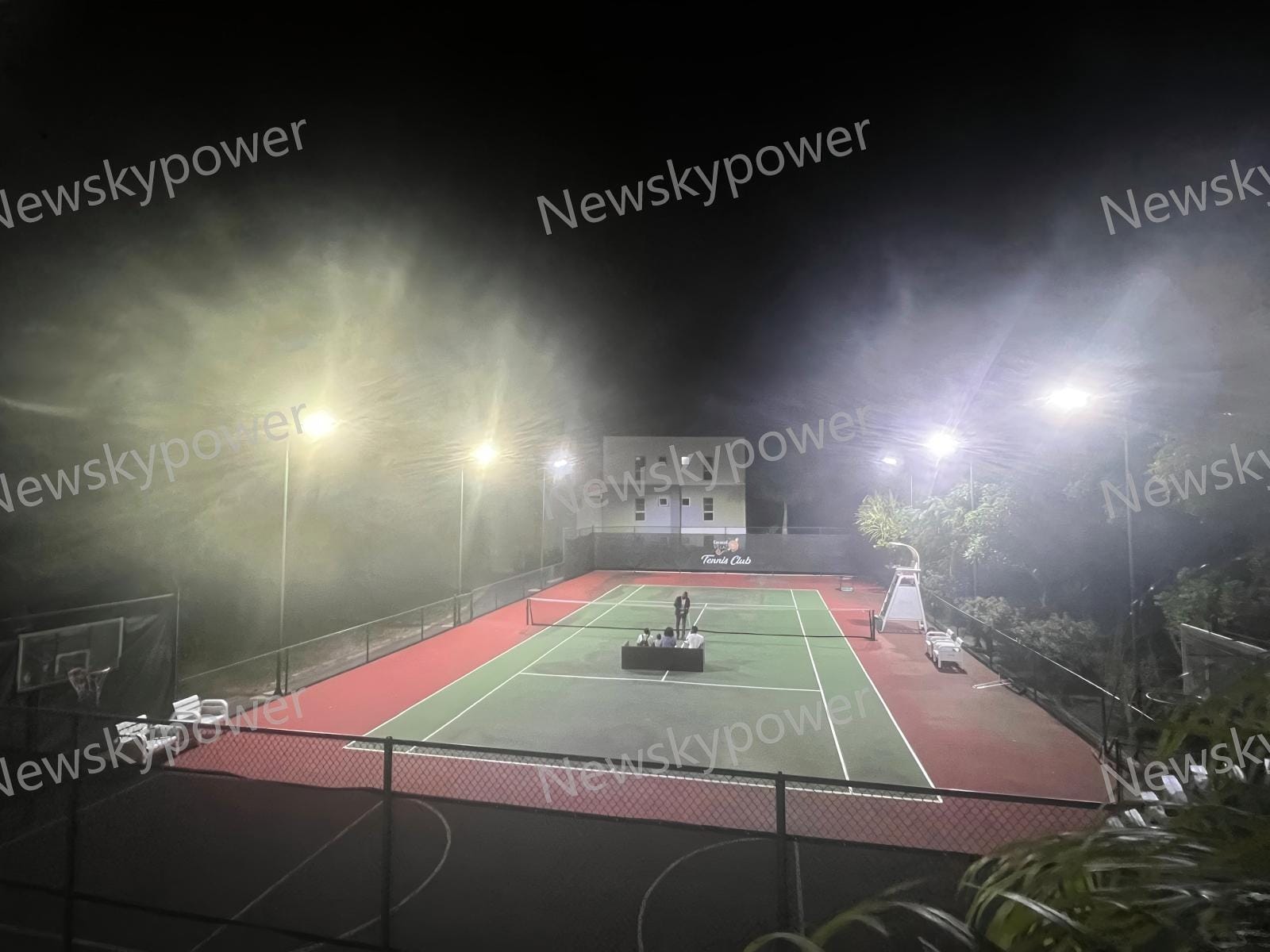
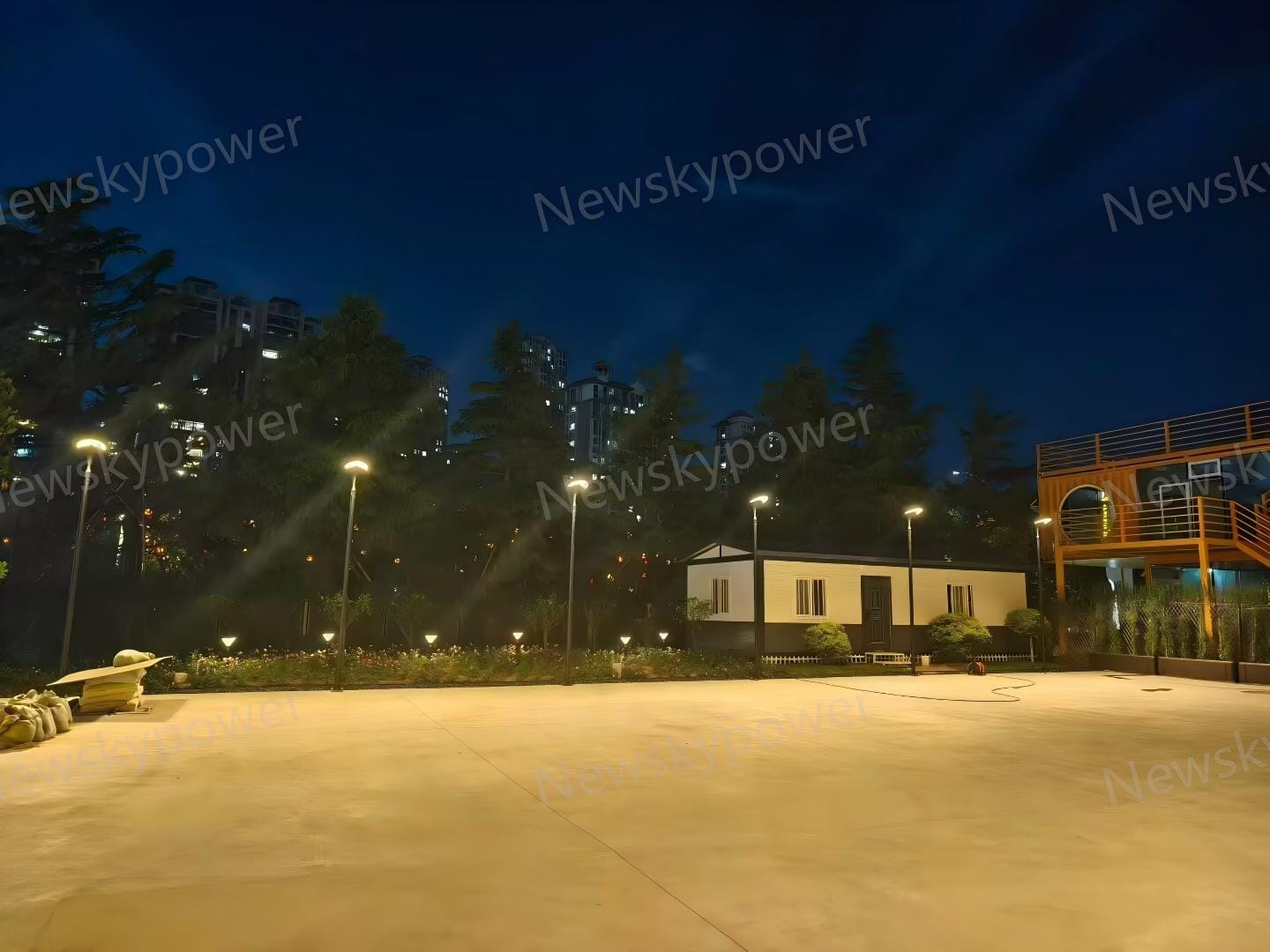
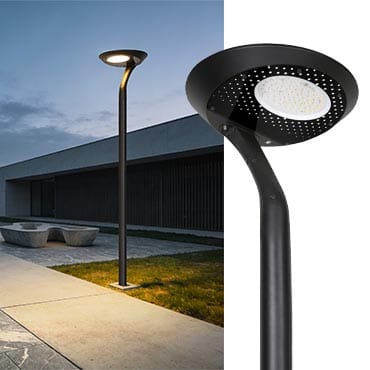
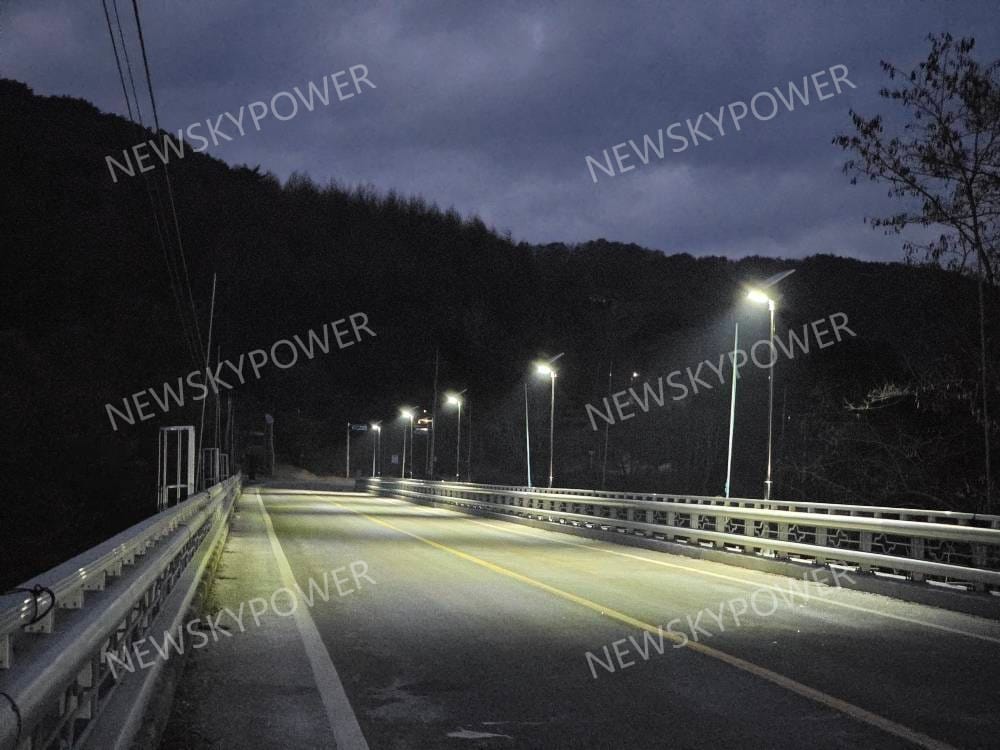
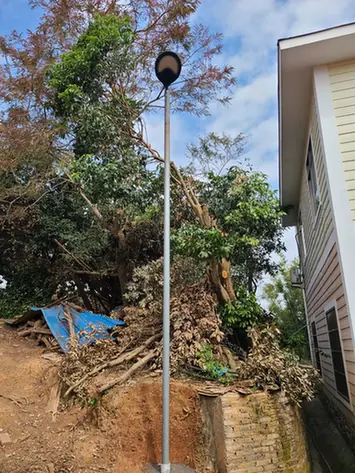
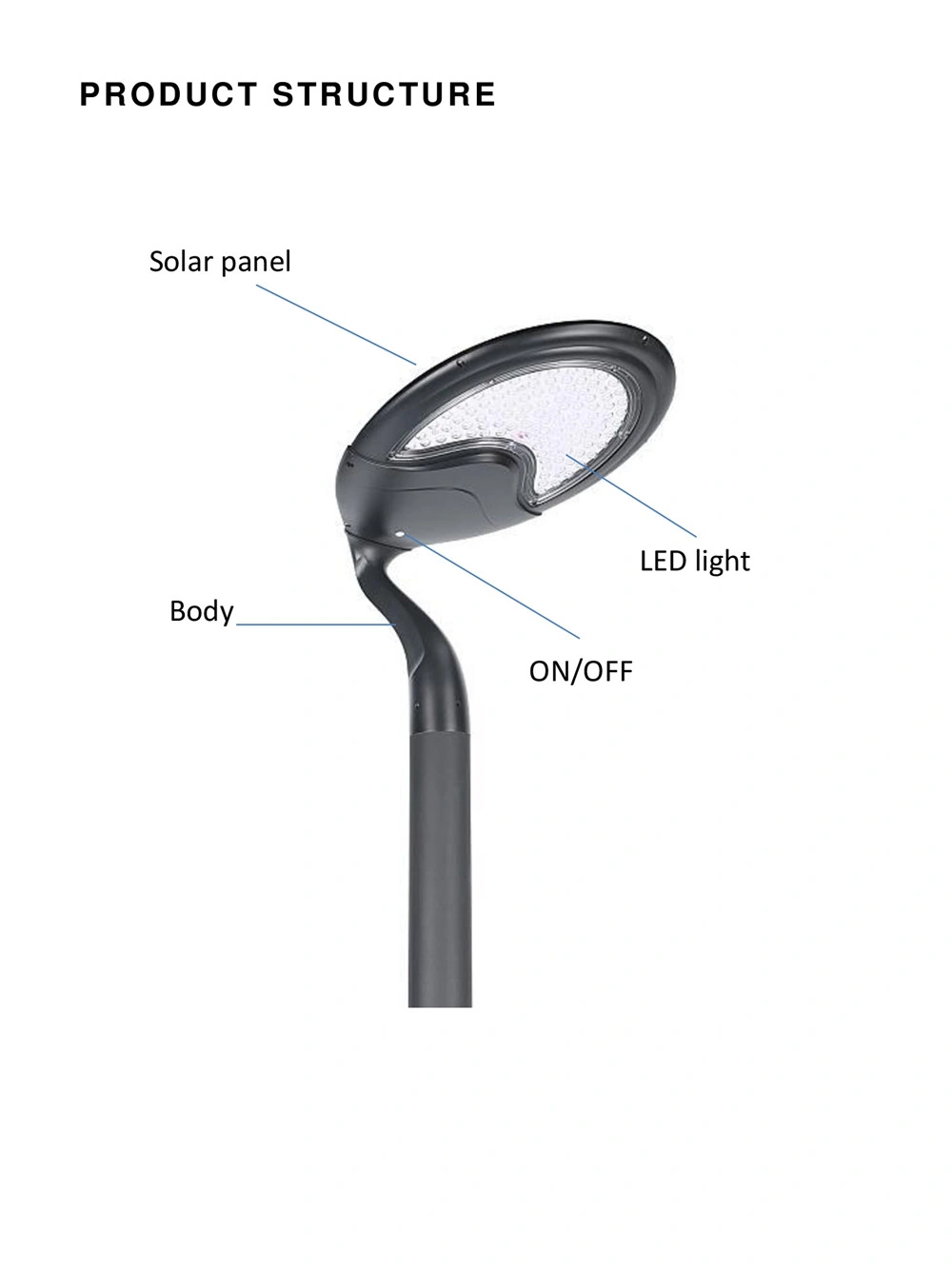
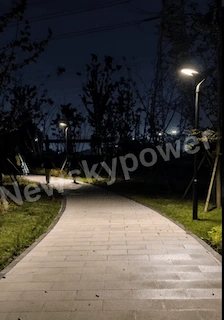
Product structure images can show the position of the solar panel, LED area, body and switch. Daytime installation images can show the general pole-top form and surrounding trees or buildings. Night images can show that a luminaire is emitting light and help readers understand its appearance in a landscape.
Those images do not prove that they belong to this exact customer project unless their origin is confirmed. They also do not measure illuminance, uniformity, operating duration, low-temperature behavior or long-term reliability. Camera exposure and nearby light sources can change how bright a scene appears.
6. Information Needed for a Similar Project
A buyer seeking a solar courtyard lighting case study as a design reference should provide enough information for a site-specific recommendation:
- project location and design season;
- site plan, pathway widths and landscape features;
- daytime and winter shade photographs;
- required hours of light and acceptable output changes;
- any target illuminance, uniformity or glare criteria;
- proposed pole position and structural conditions;
- preferred appearance and light color;
- environmental exposure and maintenance access;
- quantity, delivery requirements and required project documents.
This information supports a more reliable comparison of the panel, battery, LED load, optics, operating program and installation. It also avoids selecting a model only by wattage or purchase price.
For a general product-selection framework, read How to Choose Solar Garden and Courtyard Lights. Buyers evaluating a supplier can also use the separate guide on how to choose a reliable solar light manufacturer in China.
7. Case Summary
- Case type: park pathway and landscape pedestrian lighting
- Selected model: SCL-008 solar courtyard light
- Product basis: integrated pole-top design with documented panel, battery, LED, material and nominal IP information
- Potential project advantage: reduced need for grid-supply cable routing along the path
- Still required: suitable pole, foundation, fixing, layout, solar assessment and maintenance planning
It shows why an integrated pole-top model may be relevant to a pedestrian landscape, while keeping the final lighting and energy result dependent on verified site inputs.