


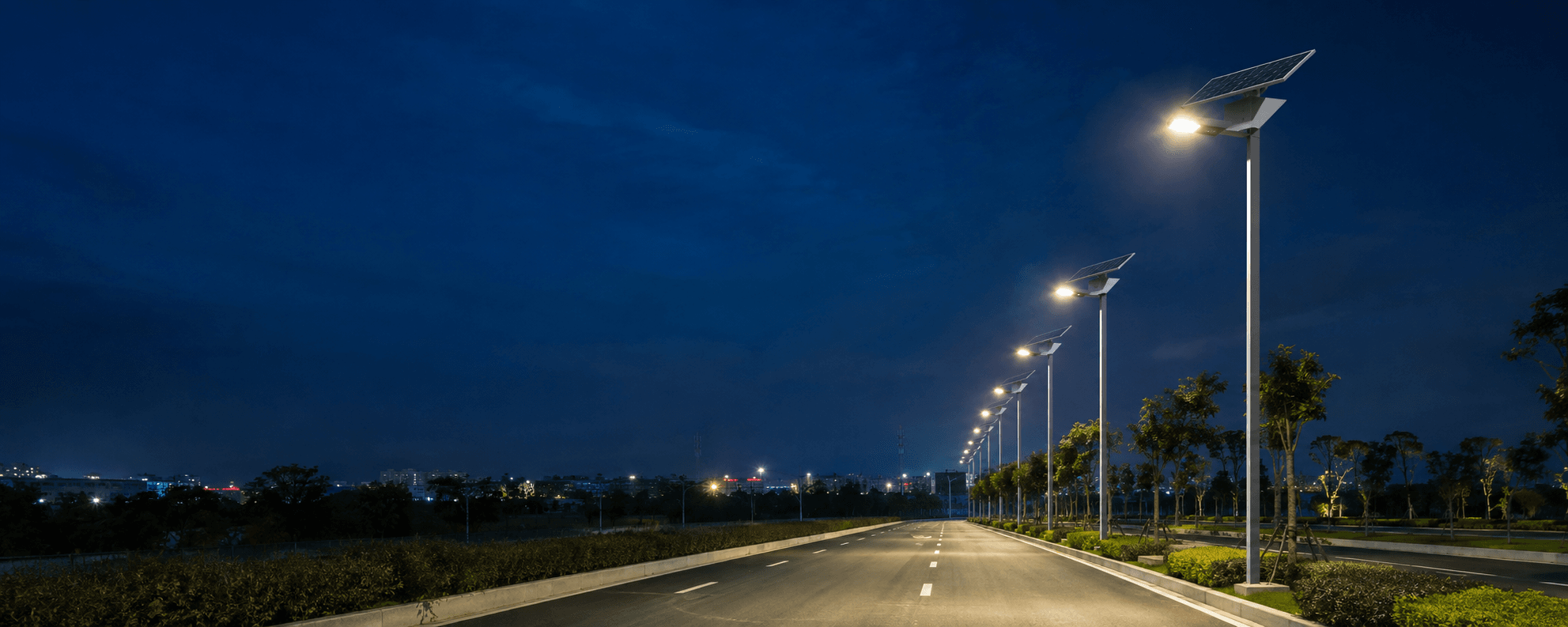
How to Choose the Best Solar Street Light
The best solar street light is the one engineered for your site. Road width, pole height, spacing, required lighting hours, local sunshine, rainy-season conditions, and maintenance access all affect the right system configuration.
Instead of comparing wattage labels alone, professional buyers evaluate the complete system: LED performance, solar-panel sizing, LiFePO4 battery capacity, controller strategy, optical distribution, housing protection, installation method, and after-sales support. Share your project details with Newskypower and our team will help narrow the options before you request a quotation.

- Model: LKX-60/80/100/120/130W
- MONO Solar panel
- LiFePO4 lithium battery
- Die-casting aluminum housing
- MPPT Controller
- Motion Sensor
- Supports Horizontal & Vertical Installation
- All-New External Controller
- Slide-out Battery Box

- Model: LKH-30/40/60/80/100/120W
- MONO Solar panel
- LiFePO4 lithium battery
- Die-casting aluminum housing
- MPPT Controller
- Motion Sensor
- Supports Horizontal & Vertical Installation

- Model: NZ-80/ 100/ 120/150/200W
- MONO Solar panel
- LiFePO4 lithium battery
- Die-casting aluminum housing
- MPPT Controller
- Dual-sided charging

- Model: NT-30/40/60/80/100/120/150W
- MONO Solar panel
- LiFePO4 lithium battery
- Die-casting aluminum housing
- MPPT Controller
- Supports Horizontal & Vertical Installation
- Dual-sided charging

- Model: SSP-40/60/80/100/120W
- MONO Solar panel
- LiFePO4 lithium battery
- Die-casting aluminum housing
- Motion sensor
- Supports Horizontal & Vertical Installation
- Economy Model

- Model: NF-30/40/60/80W
- MONO Solar panel
- LiFePO4 lithium battery
- Die-casting aluminum housing
- MPPT Controller
- Motion sensor is optional
- Semi-integrated design

- Model: NE-100/200/300
- MONO Solar panel
- LiFePO4 lithium battery
- Die-cast aluminum body
What Defines the Best Solar Street Light?

All-in-one design, no wiring required, installation requires only a few screws.

Compare the actual LED, solar panel, LiFePO4 battery, controller, optics, and housing configuration instead of relying on a wattage label alone.

IP65 waterproof level or above, no rusting, suitable for all kinds of outdoor use.

High capacity LiFePO4 lithium battery, circulation time >2000times.
Best Solar Street Light for Commercial and Municipal Projects
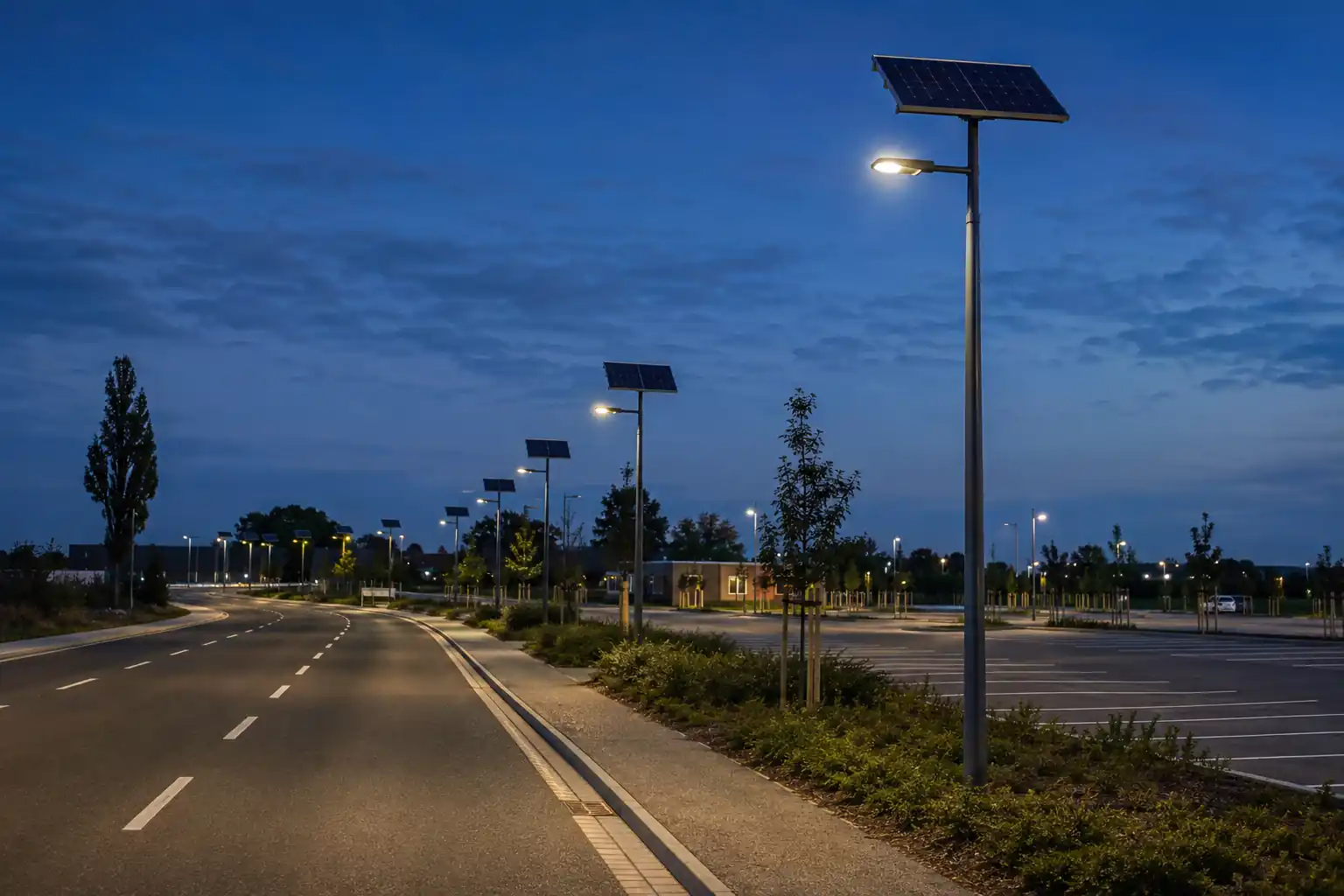
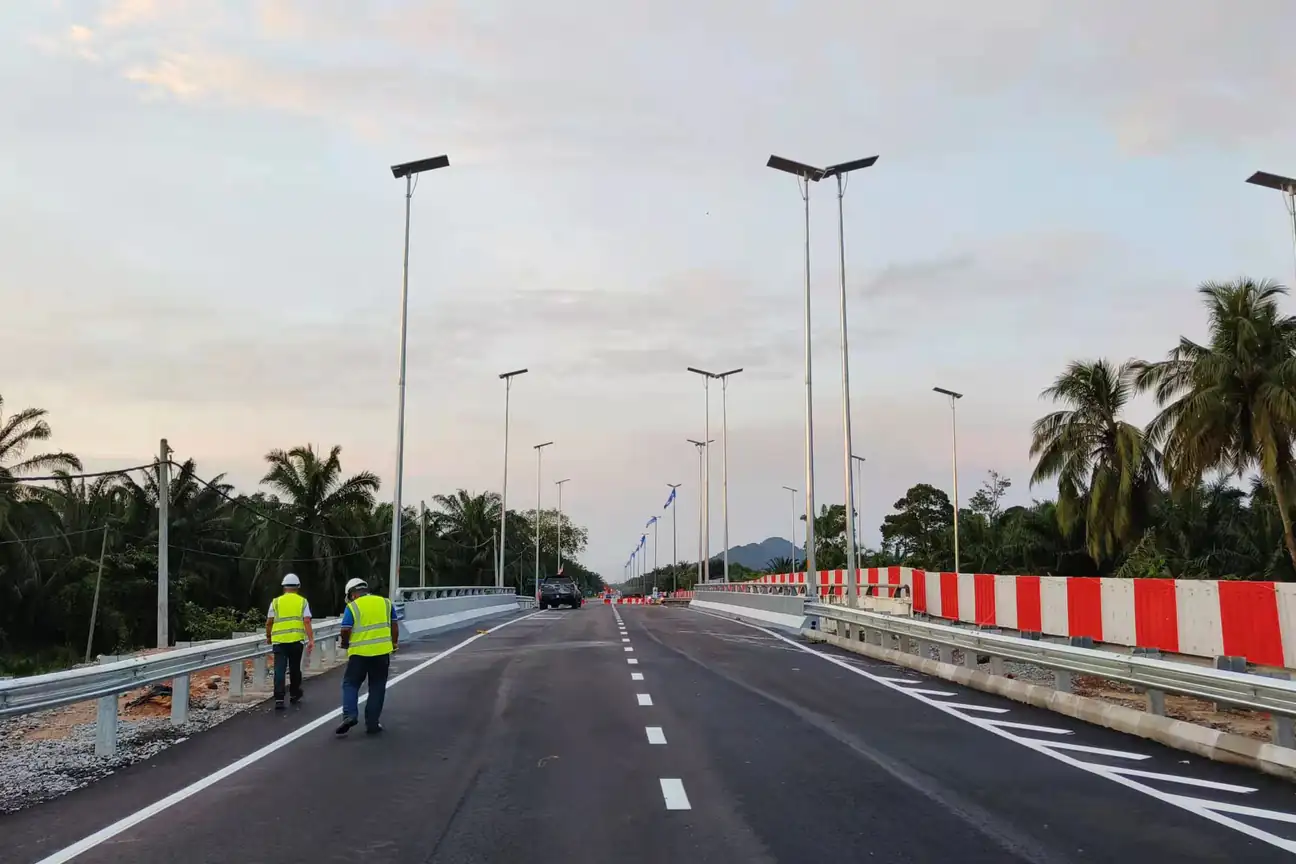
The best solar street light for commercial use is not defined by the highest wattage on a product label. It is the system that delivers the required illumination across the road, parking lot, industrial site, or public space while matching local solar conditions and the operating schedule. For project selection, compare photometric performance, pole height and spacing, solar-panel sizing, battery autonomy, control strategy, installation conditions, and maintenance access as one complete system.
Best All-in-One Solar Street Light for Faster Installation
An integrated design combines the LED module, solar panel, battery, and controller in a compact unit, reducing cabling and simplifying installation. The best all-in-one solar street light is a practical choice for many roads, parking areas, campuses, and commercial sites when the panel can receive sufficient sunlight at the required mounting angle. For locations with shading, unusual pole layouts, or separate maintenance requirements, a split system may be the better engineering choice.
Best Solar Street Light with a LiFePO4 Battery
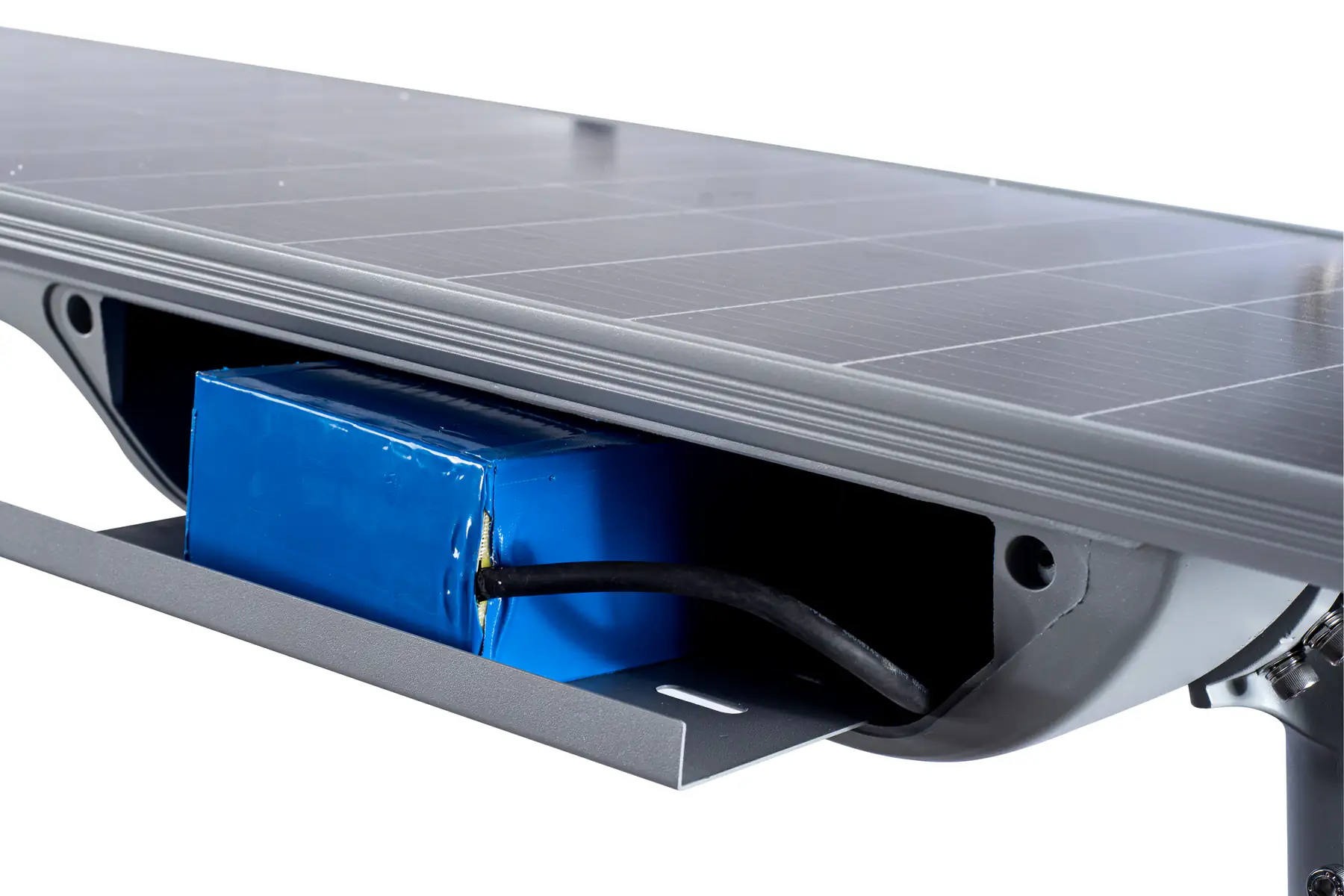
Battery quality directly affects nightly runtime, rainy-day backup, and long-term maintenance. A well-designed solar street light with a LiFePO4 battery combines appropriately sized storage with a compatible solar panel, battery-management protection, and a controller matched to the lighting schedule. Buyers should verify usable battery capacity, cell consistency, enclosure protection, charging strategy, and replacement access instead of judging the system by battery type alone.
Best Solar Street Light with Motion Sensor and Smart Control
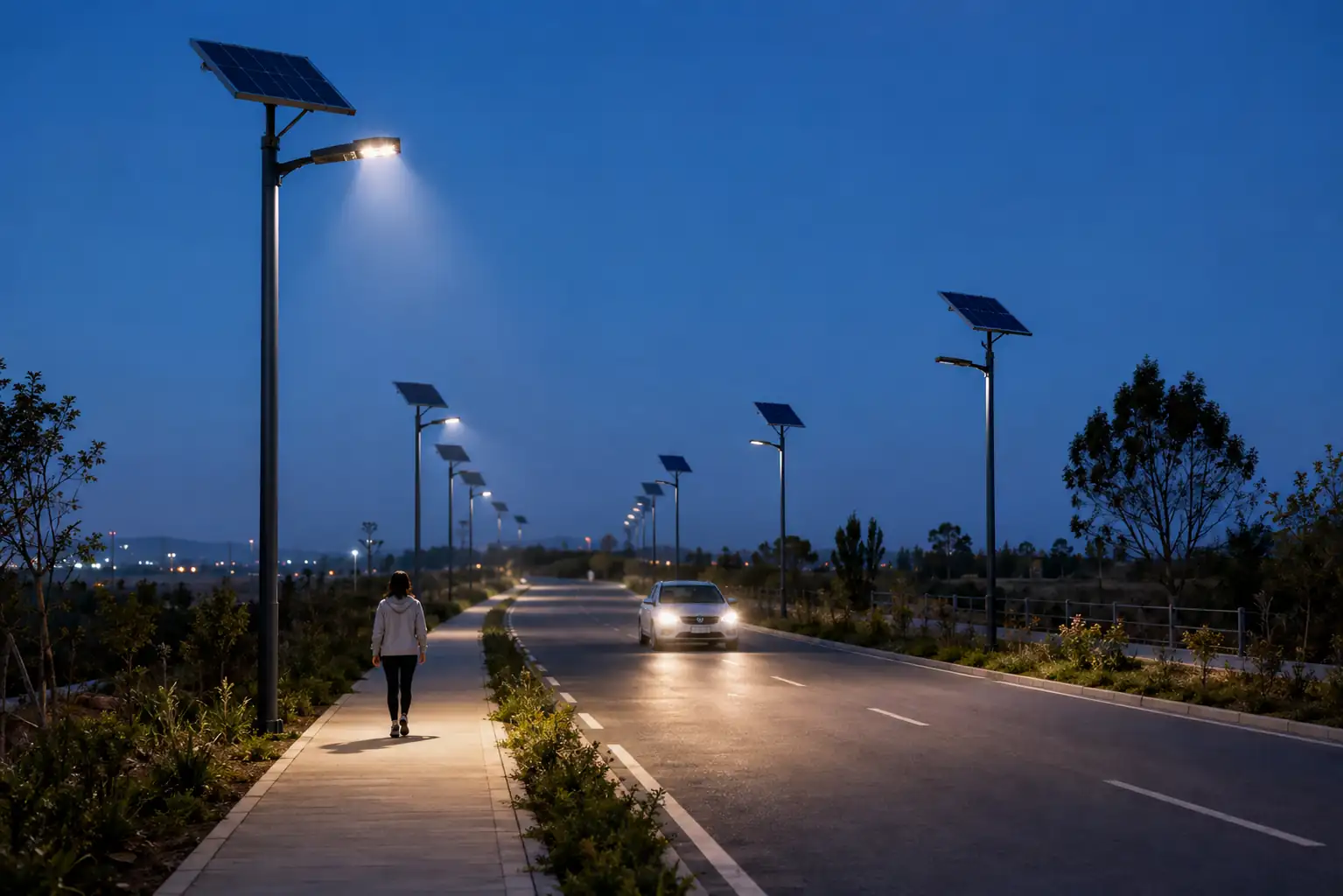
Intelligent control helps balance useful illumination with available solar energy. A solar street light with motion sensor capability can raise output when people or vehicles are detected and reduce output during low-traffic periods. Dusk-to-dawn operation, scheduled dimming, and project-specific control profiles can extend practical runtime, but the settings should always be planned around safety requirements, traffic patterns, and the expected hours of operation.
All In One Solar Street Light Projects


The best commercial solar street light is engineered for the site rather than selected by advertised wattage alone. It should meet the required illumination and uniformity while matching road width, pole height, spacing, local sunshine, operating hours, rainy-season conditions, and maintenance expectations.
Start with the application data: site drawings or dimensions, target lighting level, pole height and spacing, operating schedule, local solar conditions, and required backup for low-sun days. A supplier can then recommend the LED optics, solar-panel capacity, battery size, controller profile, and installation layout. A lighting simulation is useful for larger road and parking-lot projects.
Neither format is best for every project. All-in-one solar street lights reduce cabling and can simplify installation, while split systems allow more flexibility in solar-panel orientation, component sizing, and maintenance access. The right choice depends on sunlight exposure, mounting conditions, system power requirements, and the project maintenance plan.
The best all-in-one solar street light reduces separate cabling and combines core components in one housing, which can simplify installation and maintenance. Traditional split solar street lights provide more flexibility for panel orientation and component sizing, while grid-powered LED street lights depend on trenching and electricity access. The right system depends on solar exposure, project scale, maintenance access, and lifecycle cost.
Compare the complete proposal: project data used for sizing, photometric results, LED and optical configuration, solar-panel capacity, usable battery capacity, controller strategy, enclosure protection, quality-control process, replacement-part availability, warranty terms, and after-sales response. Verifiable system details are more useful than wattage claims alone.
Related Product


Best Solar Street Light FAQs
The operating schedule should follow the site requirement, whether that means full-night lighting, timed dimming, or motion-responsive output. The solar panel, battery, and controller must then be sized together for that schedule and the local climate. Runtime should be confirmed from a project calculation rather than from a wattage label.
Yes. A properly sized system can continue operating through periods of low solar input by using energy stored in the battery. The required rainy-day autonomy varies by location and project, so it should be calculated from local solar data, the lighting schedule, and the acceptable dimming strategy.
LiFePO4 batteries are widely used because they offer a strong balance of cycle life, safety, and operating performance. However, the best result also depends on usable capacity, cell quality, battery-management protection, temperature conditions, enclosure design, and compatibility with the charging system.
Motion-sensor control is useful on sites with variable traffic, such as parking areas, residential roads, campuses, pathways, and service roads. The light can increase output when activity is detected and dim during quiet periods, helping manage stored energy while maintaining project-specific safety requirements.