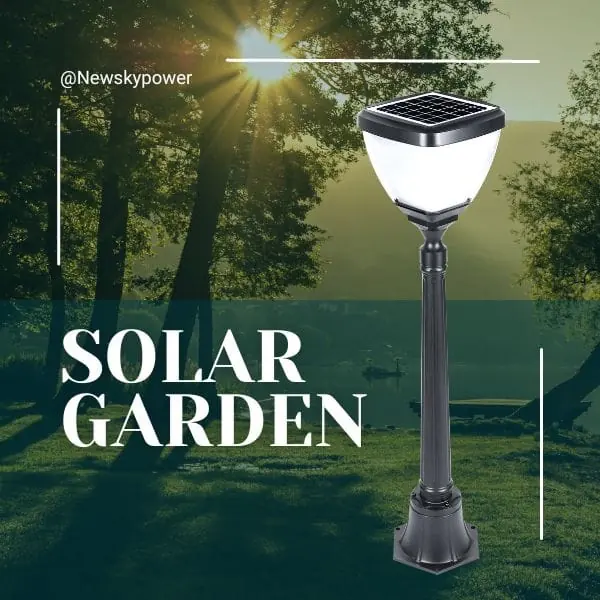


Commercial solar parking lot lights must be selected from ground-level coverage, not maximum advertised lumens or a generic “coverage area.” The number and type of lights depend on the site plan, parking rows, drive lanes, entrances, pedestrian routes, pole height and position, optical distribution, maintained illuminance and uniformity, glare/spill limits, operating schedule, security needs and local solar resource. A photometric layout should establish the lighting system; an energy calculation should then establish the panel, battery and controls.
Where Commercial Solar Parking Lot Lights Are Used
Offices, retail sites, schools, churches, clinics, warehouses, industrial parks, apartment communities, storage yards and gated entrances may benefit—especially where trenching is disruptive or expansion is phased. Product options are available in Newskypower’s commercial solar street light range.
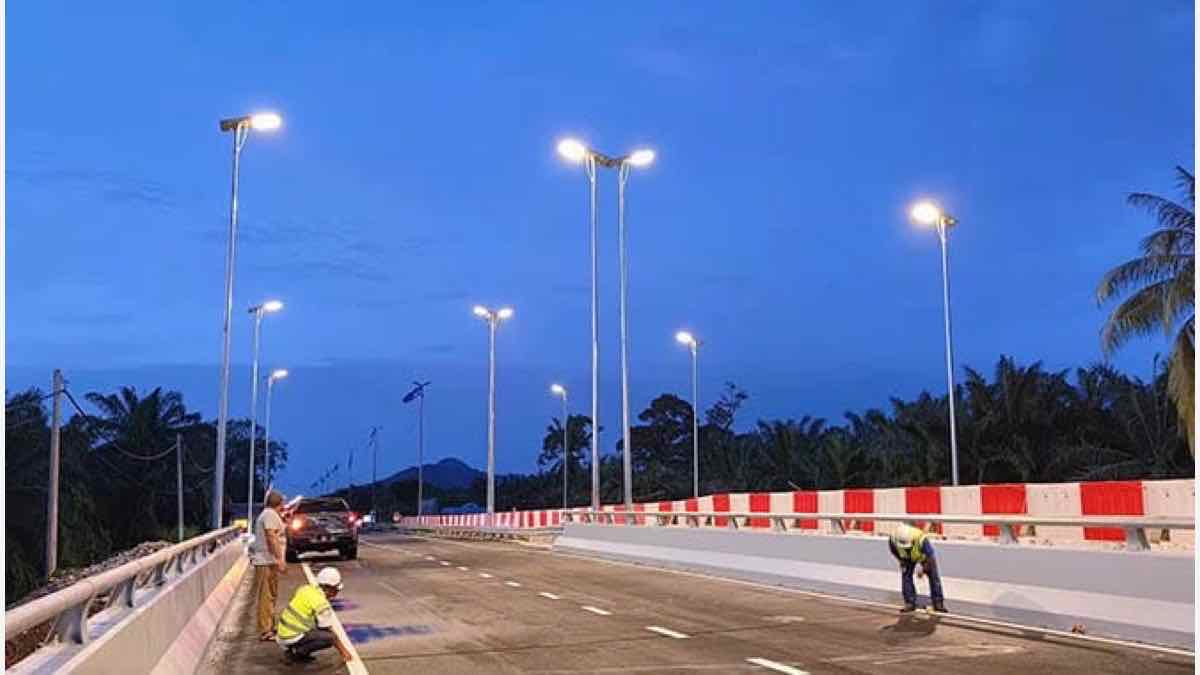
Information Needed Before Designing the Layout
Obtain a scaled plan with dimensions, parking rows, drive aisles, walkways, entrances, buildings, landscaping, boundaries, existing/proposed pole locations and underground constraints. Record mounting-height limits, operating hours, after-hours activity, cameras, local solar conditions and owner requirements.
Mark surfaces and vertical elements that affect the model: walls, canopies, trees, loading equipment, fences and neighboring residential property. Record whether poles can be placed within islands, only at the perimeter or on existing foundations. Aerial imagery is useful for orientation, but a current survey is needed where dimensions, utilities or new construction matter.
Divide the site into operating zones. Main entrances, accessible parking, pedestrian paths, loading areas and low-use storage rows may need different schedules or criteria. Define which zones remain active after closing and which cameras need usable illumination. This prevents one uniform operating mode from wasting energy or leaving priority areas underlit.
Parking Lot Lighting Objectives
The design should support vehicle and pedestrian visibility, entries and exits, reduced dark spots, camera observation where required, controlled glare and spill, and a suitable after-hours mode. More light is not automatically better: excessive brightness next to dark surroundings can create visual discomfort and off-site impacts.
Uniformity affects adaptation as people move between bright and dark zones. Review transitions at entrances, walkways and property boundaries, not only the average value across the entire lot. Vertical visibility may matter for faces, vehicles, signs and cameras even when the horizontal pavement result looks acceptable.
Agree how the result will be maintained. Initial illuminance from a new clean luminaire is not the same as maintained performance after dirt and component aging. The report should identify calculation assumptions so the owner understands what the acceptance values represent.
Pole Height, Spacing and Coverage
Lower poles create more concentrated coverage and may require more units. Higher poles can increase reach but may reduce ground illuminance and increase wind/loading considerations. Perimeter poles reduce conflicts within parking rows but need optics that project light inward; internal poles may improve uniformity but need collision protection. Use the installation guide to coordinate pole and foundation inputs.
No fixed spacing rule can replace the actual layout. Follow the lumens and wattage guide and verify IES/LDT files in DIALux or equivalent software.
Compare more than one layout. A few high poles may reduce foundations but increase pole-top weight, wind area and lifting requirements. More lower poles may improve local control yet create additional collision points and maintenance locations. Evaluate quantity, optics, structure, access and lifecycle cost together.
Avoid locating panels where parked trucks, trees, buildings or signs create predictable shade. A pole that is ideal for light distribution may be poor for solar collection, so the design may need a separated panel, adjusted pole position or different architecture. Show this trade-off on the site plan.
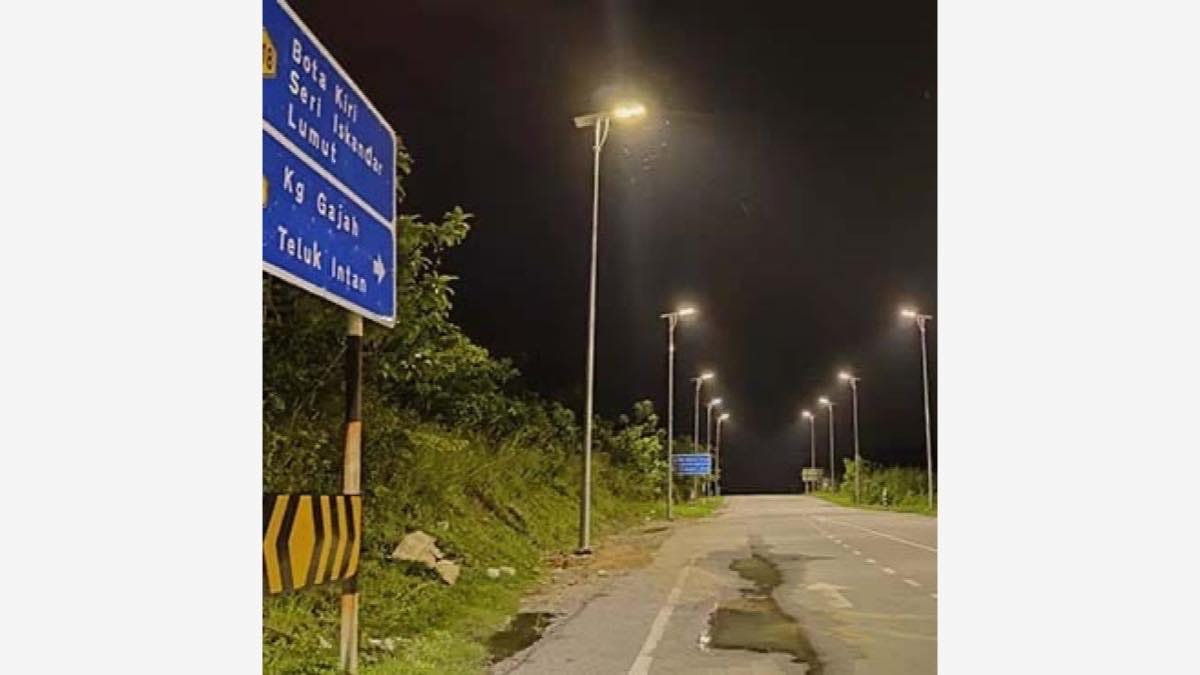
Lumens, Optics and Ground-Level Illuminance
Total lumens do not show where light lands. Depending on the site, roadway-style Type II/III distributions or broader area distributions may be considered, subject to the actual product file and applicable design practice. Review average and minimum illuminance, uniformity, glare, spill at boundaries and dark areas between vehicles or rows.
Use the exact mounting tilt, orientation and photometric file. A supplier coverage diagram without calculation points, height, surface and maintained assumptions is not sufficient for project approval. Check whether the proposed optic sends excessive light beyond the lot or creates a bright area near the pole with weak coverage at the center of a drive aisle.
Where multiple luminaires overlap, review the combined result and failure tolerance. If one light stops, does a critical pedestrian route become completely dark? The owner may choose a layout with some overlap at priority areas while accepting wider spacing in low-risk zones.
Solar Panel and Battery Sizing
Convert full-output and dimmed hours into nightly Wh. Add legitimate camera/accessory loads, controller and system losses, then use local seasonal solar data to size generation, usable battery capacity, autonomy and recovery. Review the cloudy-day guide before accepting a backup claim.
Parking use may change by weekday, season or tenant. Select a conservative but realistic schedule and state whether holidays, overnight staff or events require extended output. If future accessories may be added, either reserve documented energy capacity or require a new calculation; an unused connector is not proof that the system can carry another load.
Review panel access for cleaning and service, and verify that orientation does not conflict with the luminaire aim. In northern or southern extremes, the weakest-season resource may dominate. Battery temperature inside its actual enclosure should be considered rather than using ambient temperature alone.
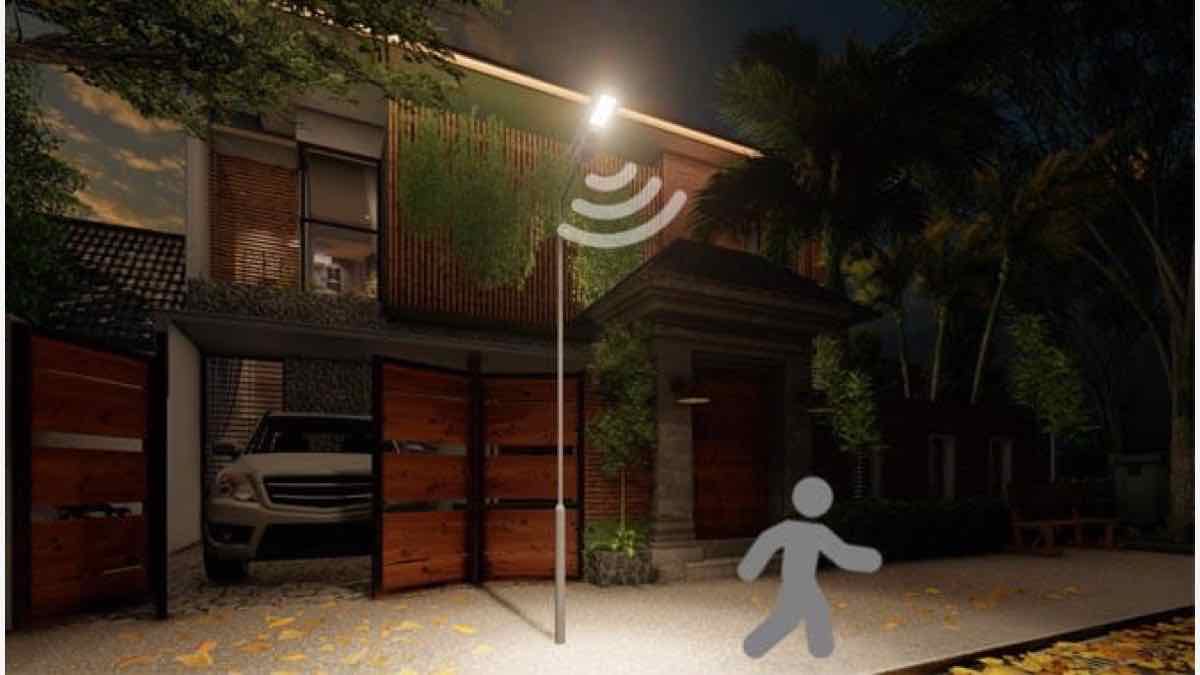
Motion Sensors, Controls and Security
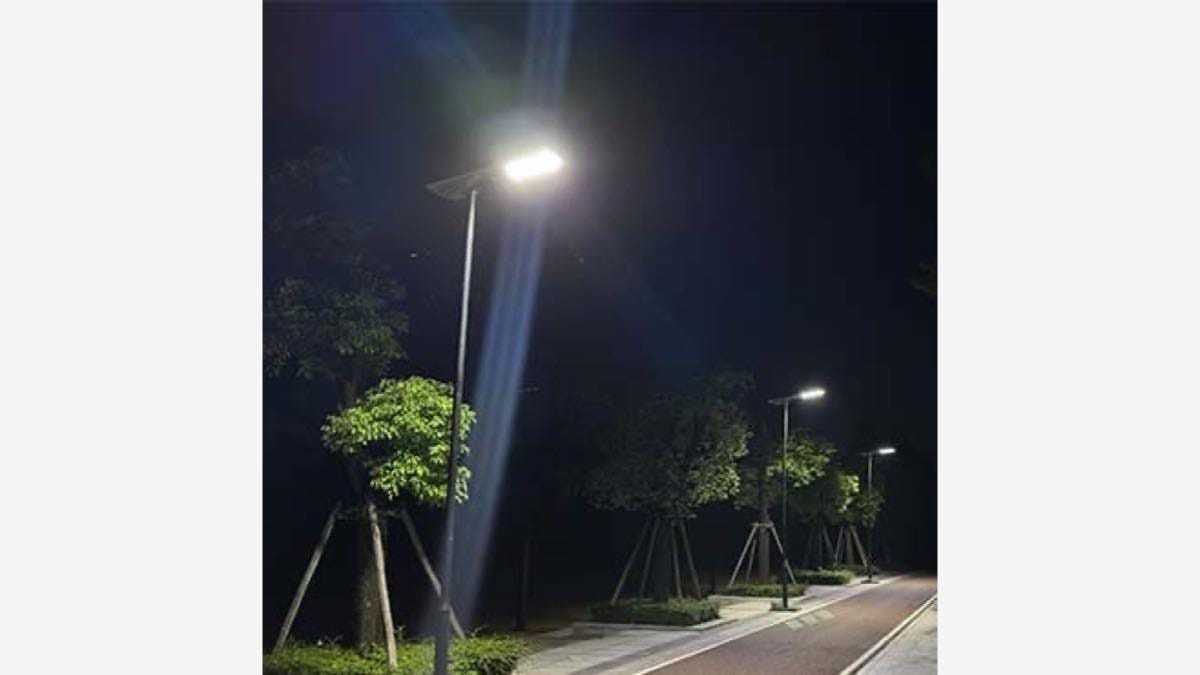
Scheduled dimming or sensor boost can save energy while keeping a base level where needed. Motion-only darkness may be unsuitable for continuous pedestrian routes or camera scenes. Newskypower’s solar parking lot lights with motion sensor show available product context.
If cameras are required, calculate their continuous load, network/recording method, field of view and low-light requirement separately. A solar street light with CCTV camera combines functions, but camera integration does not eliminate privacy, data or energy planning.
Write the control sequence in plain language and by hour. Define base output, boost output, detection duration, sensitivity and what happens after consecutive low-charge days. Test interactions between adjacent sensors so drivers and pedestrians do not experience erratic pools of light. Remote controls should be managed to prevent unauthorized setting changes.
Camera design also needs mounting stability, network coverage, data retention, cybersecurity and local privacy approval. Lighting should support the camera’s verified requirements without producing glare or overexposure. Treat surveillance as a separate subsystem with its own acceptance test.
All-in-One vs Split Systems
| Factor | All-in-one | Split/all-in-two |
|---|---|---|
| Installation | Fewer major field components | More mounting and cabling |
| Panel orientation | Tied more closely to luminaire body | Usually more flexible |
| Capacity | Limited by integrated geometry | Easier to customize |
| Service | Module-specific access | Component-level access may be easier |
| Wind/appearance | Compact, but panel remains exposed | Separate elements require coordinated structure |
Pole, Foundation and Installation
Check wind exposure, soil, drainage, anchor cage, existing-pole capacity, vehicle impact risk, service access and underground utilities. Existing poles require structural and mounting approval. Foundations cannot be selected from height alone.
Coordinate foundations with parking operations and accessibility. Islands may contain irrigation, roots or drainage; perimeter locations may be close to slopes or property lines. Provide temporary traffic control and protect fresh foundations during construction. Bollards or curbs used for collision protection must not block accessible routes or maintenance access.
Commission in daylight and darkness. Confirm panel charge, controller program and sensor response before lifting where possible; afterward verify pole alignment, aiming, connectors and fasteners. At night, compare the installed condition with the approved photometric layout and document any field changes.
Requesting a Photometric Layout
| Buyer provides | Layout should show |
|---|---|
| Scaled site plan and boundaries | Pole coordinates, height and aiming |
| Required operating zones | Illuminance grid and dark areas |
| Owner’s maintained criteria | Average/minimum values and uniformity |
| Camera and pedestrian areas | Vertical/critical-area assumptions where relevant |
| Proposed product | Exact IES/LDT file and dimming assumptions |
Cost and Project Planning
Include fixtures, poles, foundations, lifting, commissioning, avoided or retained grid connection, maintenance, battery assumptions and phased expansion. Use the solar-vs-grid lifecycle cost guide with local prices. The Germany commercial parking project is useful context, not a universal result.
Compare a complete installed solar option with a complete grid alternative. Include trenching and pavement repair only where truly avoided, and include existing-pole structural work if required. Separate mandatory base lighting from optional cameras, communications or decorative modes so the buyer can see their capital and energy effects.
For phased projects, design the final pole pattern before installing the first stage. Otherwise, early poles may conflict with future coverage or create duplicated foundations. Record unit rates and configuration revisions so later phases remain technically comparable.
Procurement and Acceptance Checklist
- ☐ Scaled site plan, boundaries and operating zones are confirmed.
- ☐ Maintained lighting, uniformity, glare and spill criteria are identified.
- ☐ The report uses the quoted model and exact IES/LDT file.
- ☐ Pole, foundation, collision and maintenance access are coordinated.
- ☐ Local solar, shade, nightly Wh, autonomy and recovery are calculated.
- ☐ Sensor and camera modes are written by hour and separately tested.
- ☐ Installation, nighttime measurements, documents and training are included.
- ☐ Lifecycle costs and future phases use consistent assumptions.
Use the completed checklist as an RFQ and commissioning attachment. Any deviation in pole position, optic, control program or accessory load should trigger review of both the photometric and energy calculations before final acceptance.
Frequently Asked Questions
How many lumens are needed?
The answer requires site dimensions, pole layout, optic and target maintained illuminance.
What pole height is best?
Select height with coverage, glare, spacing, structural load, maintenance access and local limits.
How many lights are needed?
Run a photometric layout using the proposed luminaire file and all site obstructions.
Can solar lights support cameras?
Yes, when the camera, communications and recording loads are included in energy and security design.
Are motion sensors necessary?
No. Choose constant, scheduled-dim or sensor-boost operation from activity and safety needs.
Upload a Parking Lot Plan
Provide the scaled plan, dimensions, pole locations/height, operating hours, maintained-lighting requirements, camera needs, location and quantity. Newskypower can use these inputs to discuss a photometric and solar-energy proposal.