


Solar street lights can cost more per luminaire because they include a panel, battery and controller, yet they may avoid trenching, cabling, grid connection and recurring electricity costs. Grid-powered LED street lights may be more economical where reliable electrical infrastructure and suitable poles already exist. A fair solar street light vs traditional street light decision therefore compares equivalent lighting performance over the same analysis period and includes equipment, civil work, energy, maintenance, replacement, risk and end-of-period costs.
What Systems Are Being Compared?
Define whether the solar option includes poles, foundations and autonomous storage, and whether the grid option includes trenching, cable, switchgear, metering, transformer work and utility connection. A hybrid design is a third option where resilience or high continuous demand justifies it. The Ultimate Guide to Solar Street Lights explains the main off-grid components.
The functional boundary must also be equal. Compare the same road length, useful lighting hours, maintained illuminance, uniformity and service level. If the grid option operates at full output all night while the solar option dims, the financial comparison must explain that difference. Likewise, do not compare a complete solar system with a grid quotation that excludes the utility connection or civil restoration.
Establish ownership boundaries. A municipality may own the poles but pay a utility tariff for energy and network service; a private parking owner may pay directly for trenching and repairs. Taxes, grants and incentives can be shown as separate scenarios, but they should not hide the underlying project cost.
Upfront Equipment and Installation Cost
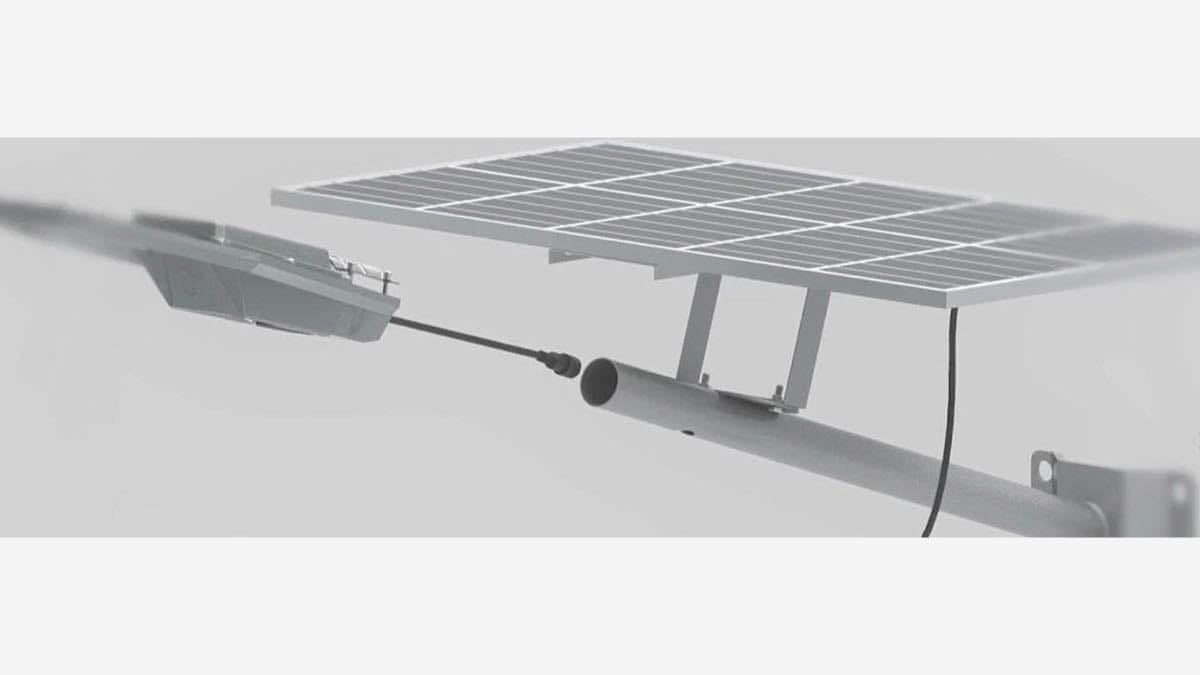
Solar equipment includes the luminaire, panel, battery, controller, pole/brackets and protection. Grid equipment may use a simpler luminaire but add distribution components. Installation differs most below ground: solar systems often need individual foundations and lifting, while grid systems may require trenching, duct, cable, restoration, permits and connection. The installation guide helps define solar-side work.
Site surveys are needed for both choices. Solar design needs shade, solar-resource, wind and soil inputs. Grid design needs utility capacity, route, existing-service condition and underground-utility investigation. Include mobilization, traffic control, testing, as-built drawings and commissioning on both sides. A low equipment quotation may become expensive if it transfers these tasks to the owner.
For grid work, separate trench length from road length: crossings, service points and routing around obstacles can change the total. For solar work, separate fixture quantity from foundation and pole quantity if existing structures may be reused. Apply local labor and material rates rather than importing a cost per pole from another country.
Operating Costs Over Time
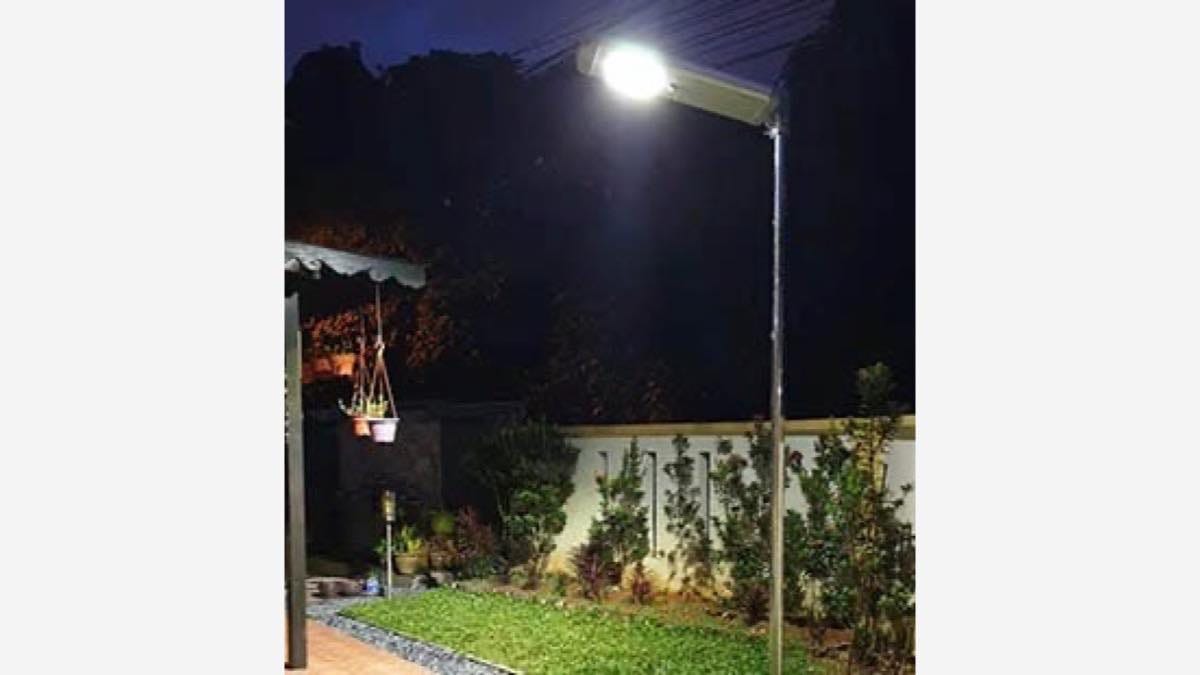
Grid lighting consumes purchased electricity and needs electrical-network maintenance. Solar lighting has no normal grid-energy bill, but still needs inspection, cleaning where required, and eventual component service. Battery replacement assumptions must be tied to chemistry, temperature, cycling and operating profile—not a universal interval. Rainy-day design also affects cost; review the autonomy guide.
Model preventive and corrective maintenance separately. Preventive work includes inspection, cleaning where conditions justify it, fastener or enclosure checks and records. Corrective work includes failed drivers, controllers, batteries, cables, damage and emergency response. Access equipment, traffic management and travel time can dominate a small part cost, especially on remote roads.
Grid energy should use the applicable tariff structure, not only a headline cents-per-kWh value. Include fixed charges or service fees where relevant and document escalation assumptions. Solar energy has no purchased fuel, but an oversized or poorly placed system still carries capital and service costs.

A Replaceable Lifecycle Cost Model
| Input | Solar option | Grid option |
|---|---|---|
| Initial equipment | Lamp + PV + battery + controller + pole | Lamp + pole + grid equipment |
| Civil/electrical work | Foundations, erection, commissioning | Foundations + trench/cable/restoration/connection |
| Annual operation | Inspection and scheduled service | Electricity + inspection + network service |
| Major replacements | Battery/controller/driver as assumed | Driver/luminaire/cable repairs as assumed |
| Risk/other | Shade, theft, low-sun recovery | Tariffs, outages, cable faults |
| End of period | Removal, residual value or disposal | Removal, residual value or disposal |
For each option calculate present-value costs using the same project quantity, analysis period, discount convention and local currency. DOE/FEMP life-cycle guidance includes initial, energy, maintenance, replacement and disposal costs; it also shows why assumptions and discount factors must be explicit. Do not publish a universal saving percentage.
Use sensitivity analysis because several inputs are uncertain. Recalculate when trenching cost, electricity price, battery service assumption, discount rate and analysis period move within defensible ranges. If the preferred option changes after a small adjustment, the decision is sensitive and deserves better quotations or a pilot. Present a base case plus high/low scenarios rather than one precise-looking total.
Avoid counting benefits twice. For example, reduced outage exposure may appear as a qualitative resilience benefit or as a quantified avoided-loss assumption, but not both without explanation. Treat residual value consistently: if solar panels, poles or grid assets retain value at the analysis end, apply the same accounting principle to each option.

Scenario-by-Scenario Comparison
- Remote road without grid: avoided grid extension often strengthens the solar case.
- Existing urban road: available wiring and poles may strengthen the grid case.
- Parking expansion: solar may support phased construction; compare it with the existing electrical capacity using the parking lot guide.
- Temporary or phased site: independent units can reduce early infrastructure commitment.
- Unreliable grid: solar can add independence, provided local solar and storage are designed correctly.
Performance and Risk Beyond Cost
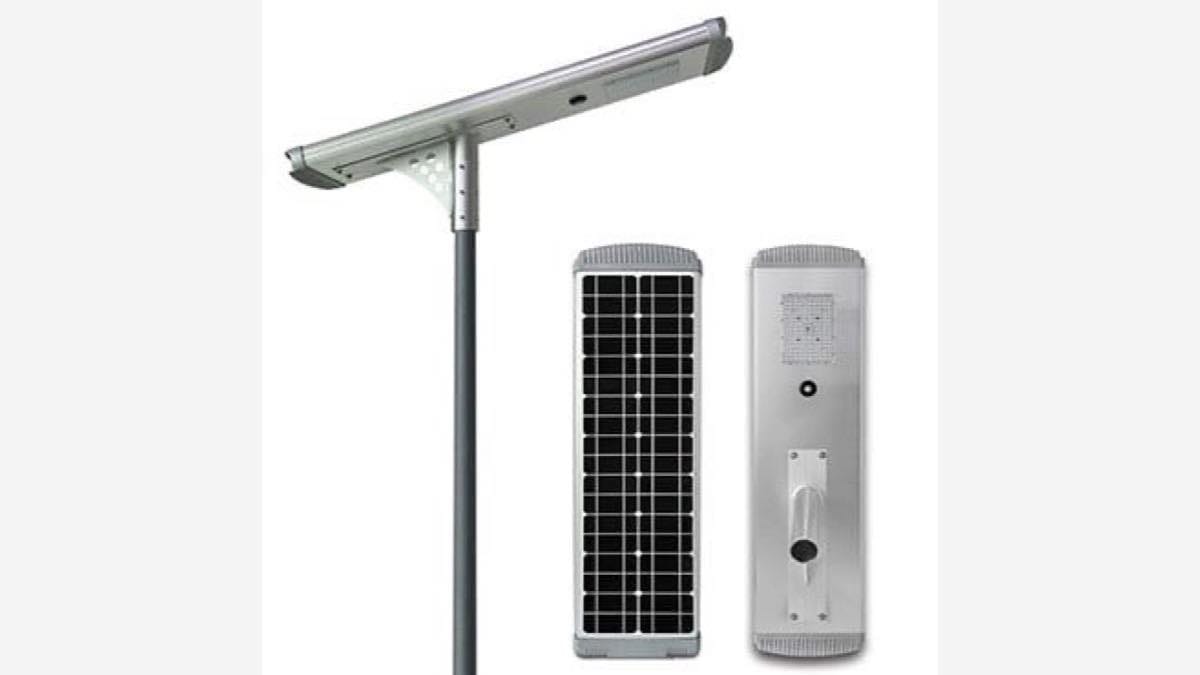
Compare maintained illuminance, uniformity, glare, outage resilience, seasonal solar resource, shade, maintenance skills, spare parts, vandalism, future expansion and relocation. The commercial solar street light range and municipal options are product references; they do not replace a financial or lighting study.
Risk allocation belongs in the procurement documents. State who confirms solar data, photometrics, soil, foundations and grid capacity; who repairs accidental damage; what performance is warranted; and what evidence is required for acceptance. A cheaper offer with undefined responsibilities can create a larger owner contingency.
Resilience should be described precisely. Grid lighting can be backed by reliable utility infrastructure or standby power; solar units operate independently but can be affected by consecutive low-sun periods or local component faults. Distributed independence reduces a single cable fault’s reach, while it also creates more batteries and controllers to inspect.
When Each Option Makes Sense
Solar is often worth detailed study where the grid is distant, trenching/restoration is disruptive, terrain is difficult, installation is phased or independent operation is valuable. Grid lighting may be better where infrastructure already exists, the site is heavily shaded, continuous high load is mandatory, or local grid maintenance is simpler than distributed battery service.
Some projects benefit from a mixed solution. Grid lighting may serve continuously busy intersections or covered areas, while solar serves remote extensions, temporary access roads or isolated parking zones. Compare the mixed layout with the two pure alternatives; it can reduce trenching without forcing every location into the same architecture.
How to Prepare Comparable Supplier Quotations
Give bidders one data sheet that defines quantity, locations, pole assumptions, lighting criteria, operating profile, analysis period and inclusions. Require each bidder to list exclusions, replacement assumptions and unit rates for likely service items. Ask solar suppliers for energy and photometric calculations; ask grid contractors for cable route, connection and restoration scope.
Normalize the returned bids before ranking them. Add owner-supplied work, taxes or logistics consistently, correct different currencies and dates, and separate mandatory scope from options. Technical compliance should be checked before life-cycle cost; the lowest-cost system is not a valid alternative if it fails the required lighting service.
Example Comparison Workflow Without Invented Prices
Begin with a quantity schedule and one comparable installed unit for each option. Add project-specific civil and electrical quantities: foundations, trench length, road crossings, cable, restoration, connection and commissioning. Create annual rows for electricity, inspection and planned maintenance, then place major replacements only in years supported by stated assumptions. Apply the selected discount method and show nominal and present-value totals clearly.
Run at least three cases. The base case uses the most defensible quotations and owner assumptions. A solar-risk case can shorten the battery-service assumption or add difficult access; a grid-risk case can increase trenching or tariff assumptions. The purpose is not to make either technology win, but to reveal which variables control the decision.
Document non-monetized considerations beside the table. Outage independence, construction disruption, relocation, visual impact, shade risk and local maintenance capability may affect approval. The final recommendation should state both the preferred financial result and the conditions that could reverse it.
Before approving the model, reconcile it with actual quotations and the technical schedule. Verify quantities, currency date, taxes, freight, installation responsibilities and warranties. Keep the assumptions with the procurement record so later reviewers can update electricity prices, maintenance history or replacement timing without rebuilding the comparison. After installation, compare actual costs with the forecast and use the evidence to improve later phases rather than presenting the original estimate as a permanent fact.
Retain every quotation revision and the date of each assumption.
Decision Checklist
- ☐ Equivalent lighting targets and hours are defined.
- ☐ Grid distance, capacity, permits and restoration are priced.
- ☐ Solar resource and shade are documented.
- ☐ Battery usable energy and replacement assumptions are disclosed.
- ☐ Electricity price and escalation source are recorded.
- ☐ Preventive and corrective maintenance are included.
- ☐ Discount period and residual/disposal costs match.
- ☐ Resilience, theft and expansion risks are compared.
Project examples can be reviewed in the solar street light case library, but a case from another location is not a cost guarantee.
Frequently Asked Questions
Are solar street lights cheaper?
They can be where grid extension or restoration is expensive; existing-grid sites may favor grid LEDs.
Do solar street lights have electricity costs?
Normally no purchased grid electricity, but inspection, maintenance and replacement costs remain.
How often is the battery replaced?
Use a project assumption based on chemistry, climate, cycling and warranty evidence.
What is needed for a comparison?
Quantity, road length, grid distance, tariffs, civil costs, operating hours, lighting criteria, location and analysis period.
Request a Project Cost Comparison
Submit those inputs and Newskypower can help structure a project-specific solar option for comparison with the owner’s grid estimate.