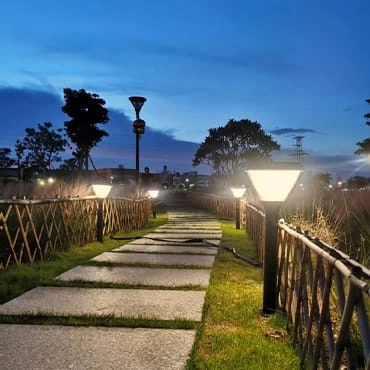


When Solar Street Lighting Fits the Project
Solar street lights can be useful where grid extension, trenching or purchased electricity creates a practical constraint. They still need adequate solar exposure, a lighting design, suitable energy storage and a maintenance plan. An off-grid system is not automatically the lowest-cost or most reliable option at every site.
This solar street lights guide explains how to choose solar street lights from project conditions: define the lighting task, check the energy balance, compare component layouts and confirm the supply scope. It also points to focused design, installation and procurement guides without treating a product label as a complete specification.
Start with the project location and operating requirements before comparing the solar street light range.


What Is a Solar Street Light and How Does It Work?
What Is a Solar Street Light?
Solar street lights are outdoor lighting systems designed to operate without a continuous grid connection, using photovoltaic energy stored in a battery. Common applications include roads, parks, rural areas and public spaces where grid extension is difficult or expensive. In suitable projects, a stand-alone system can reduce trenching, cabling and purchased grid electricity during normal operation. Its life-cycle emissions and total ownership cost still depend on manufacturing, transport, installation, maintenance, component replacement, site conditions and local infrastructure costs.
Daily Operating Cycle
For a typical dusk-to-dawn lighting program, the main cycle is daytime generation and charging followed by nighttime illumination. Controllers and optional accessories can also draw power during the day.
- Daytime (Power Generation + Storage, No Illumination)
When sunlight is abundant, solar photovoltaic panels absorb sunlight and convert solar energy into direct current (DC).
The controller regulates the charging process according to the battery type, system voltage and configured protection limits.
The battery stores the collected energy while the controller and battery-management system, where fitted, monitor voltage, current and protection limits. When the configured charge limit is reached, the system reduces or stops charging according to its control strategy.
A light sensor or programmed schedule keeps the luminaire off during daylight.
- Nighttime (Discharge + Lighting, Auto Start/Stop)
As light dims at dusk (illuminance falls below a set threshold), the controller detects this and automatically activates discharge mode.
The battery supplies the stored energy, and the LED driver provides regulated current to the light source.
A programmed lighting profile can use different output levels during the night. Where a compatible motion sensor is installed, the luminaire can raise output when movement is detected and return to a lower level afterward. The actual energy reduction depends on the programmed power levels, timing and traffic pattern.
At dawn, the lighting program normally switches the luminaire off. Solar charging resumes when sufficient input is available; the battery may still supply controls or accessories. Cloud cover reduces solar input but does not by itself prescribe when the lamp switches on.
- Additional feature:
Solar street lights can be equipped with compatible microwave or infrared motion sensors when the project requires demand-based lighting. Sensor type, detection area, delay time and fallback brightness should be confirmed for the installation.
Types of Solar Street Lights
Describe the component layout first. The same words can be used differently by manufacturers, so request a component diagram rather than identifying the architecture from a product name alone.
1. All-in-One Solar Street Light
The panel, LED, battery and controller form one compact unit or closely coupled assembly. Fewer separately mounted parts can simplify assembly, but the available panel orientation, storage space and service access depend on the design.

The NK solar street light product page is a starting point for confirming an offered configuration, not a substitute for the project calculation.
2. All-in-Two / Semi-Integrated Solar Street Light
The panel is mounted separately, while the LED, battery and controller are grouped in the lamp assembly. A separate-panel design can allow the panel and luminaire to face different directions within the approved bracket and structural limits. More panel area does not by itself mean higher conversion efficiency.
3. Split Solar Street Light
The luminaire, panel and battery system are arranged as separate components. The battery position varies by product and site design. Seeing a separate panel is not enough to distinguish a split system from an all-in-two system, and neither arrangement guarantees better charging in shade.
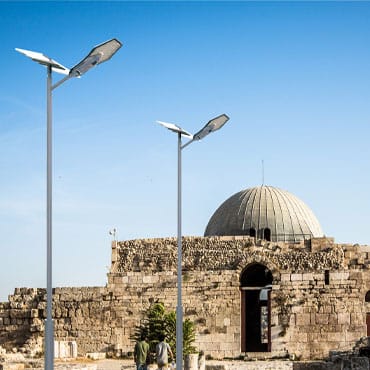
Commercial and municipal describe applications and procurement requirements, not a fourth structural category. Use the full comparison to compare all-in-one, all-in-two and split systems.
Key Components of a Solar Street Light
Solar street lights consist of five core components:
Solar Panel
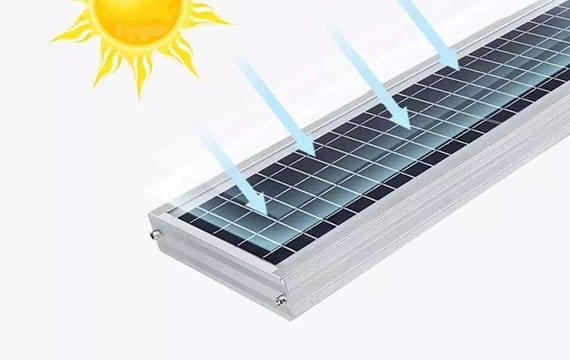
Module efficiency and rated output vary by cell technology, module construction and test conditions. For a project, panel capacity, orientation and tilt should be selected from the daily energy requirement, the site solar resource, shading and structural constraints. A separately mounted panel can provide more freedom to select its orientation, but it still needs adequate unshaded solar exposure.
Battery Storage
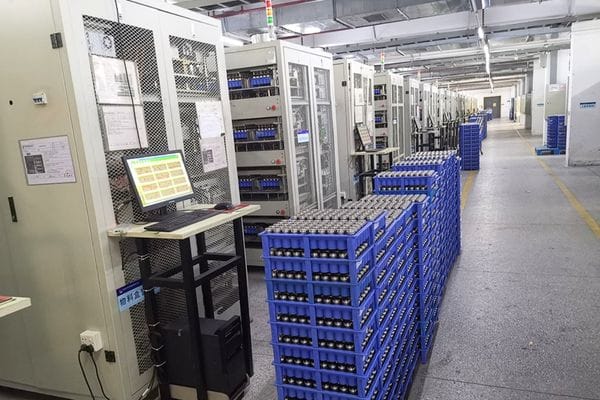
Lithium iron phosphate batteries are commonly used to store daytime solar energy for nighttime lighting. Cycle life and service life depend on cell grade, depth of discharge, temperature, charge and discharge rate, BMS settings and the capacity-retention endpoint used for the test. The number of low-solar nights a system can support must be calculated from the usable battery energy and the programmed lighting load. Battery location and service access should be selected with environmental sealing, thermal conditions, security and maintenance in mind.
Charge Controller and LED Driver
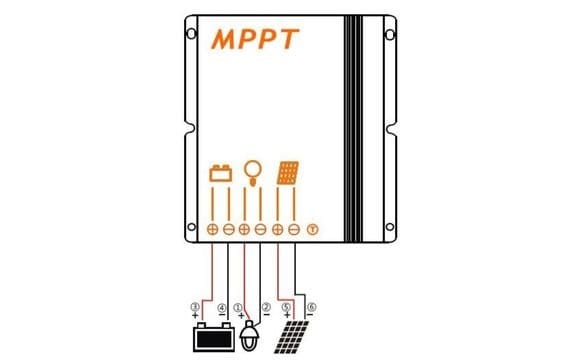
The charge controller manages energy from the solar panel, applies the configured battery charging profile and coordinates protection functions with the BMS where applicable. The LED driver regulates current to the light source. Depending on the design, the controller may also manage dusk-to-dawn switching, timed dimming and motion-sensor input. Buyers should confirm the controller type, protection functions, efficiency definition and whether the driver and controller can be replaced.
LED Light Source
LED performance should be evaluated using luminaire input power, delivered lumens, optical distribution, color characteristics, thermal design and lumen-maintenance data. Service life depends on LED junction temperature, drive current, driver quality, sealing and the lumen-maintenance endpoint; a single year figure should not be used without the relevant test conditions.
Housing and Serviceability
Die-cast aluminum can support heat dissipation and structural durability when the alloy, wall thickness, coating, seals and assembly are suitable for the environment. Buyers should also check corrosion protection, drainage or venting design, fasteners, cable entries and whether the battery, controller and LED module can be serviced without replacing the complete luminaire.
How to Choose the Right Solar Street Light
Selecting the right solar street light follows a three-step logic: define the scenario → verify configuration → choose structure. This approach prevents both overpaying for unnecessary features and settling for inadequate performance.
Define the Core Scenario First
The application identifies the questions the design must answer. It does not determine the structure, wattage, pole height or backup period by itself.
Site and Application
| Site | Conditions to collect | Design implications to check |
|---|---|---|
| Main roads and rural highways | Road geometry, traffic, junctions, lighting criteria and maintenance access | Photometric layout, energy profile, structural design and service method |
| Residential areas, courtyards and alleys | Pedestrian routes, windows, mounting positions and operating hours | Distribution, glare and spill control, placement and lighting schedule |
| Squares and landscaped spaces | Walking routes, gathering areas and desired visual appearance | Area coverage, sightlines, colour requirements and controls |
| Remote or off-grid sites | Seasonal sunlight, delivery access, repair resources and required autonomy | Energy balance, recovery charging, logistics and spare parts |
| Temporary installations | Duration, relocation method, site access and safe support | Approved mounting, stability, commissioning and relocation procedure |
Remote location alone does not establish a fixed number of rainy-day operating nights. Agree the lighting service requirement first and verify it against the proposed complete system.
Installation Environment
Areas with ample sunlight: Select module technology and capacity from the nightly load, site solar-resource data, shading and project cost requirements.
Areas with limited seasonal sunlight or frequent rain: Use the design month solar resource and required lighting schedule to calculate panel and usable battery energy; also check recovery charging after low-solar periods.
Cold regions: Verify the battery pack’s charging and discharging temperature limits separately, plus low-temperature charge protection and any heating requirements.
Hot regions: Check cell and controller temperature limits, enclosure heat management, solar-module temperature coefficient and the effect of sustained heat on battery life.
Lighting Schedule
Continuous overnight lighting: Define the required output and duration, then calculate the daily load, solar generation and usable storage needed to support it.
Time-segmented lighting: Confirm the power level and duration of each stage and whether the resulting lighting service meets the project requirement.
Low-traffic areas (e.g., rural paths): Consider a light-sensing and motion-activated profile. Runtime and energy reduction depend on the configured power levels, timing and traffic pattern.
Verify Energy and Lighting Performance
Check the solar panel, battery and luminaire together, using one declared energy-measurement boundary and the applicable project lighting criteria.
Solar Panel Sizing
Start with the daily energy demand, not a fixed multiple of LED wattage. Count daytime auxiliary loads as well if controls, communications or a camera remain active.
Daily load (Wh/day) = the sum of each operating power (W) × its daily operating time (h/day), including the controls and accessories within the declared measurement boundary.
Preliminary panel power (W) = daily load (Wh/day) ÷ [design-month peak sun hours (h/day) × system efficiency appropriate to the load boundary]. Do not count the same loss twice.
Final sizing should use the project location’s least favorable design period and account for shading, soiling, temperature, ageing margin and the required time to recover after low-solar days. Module technology alone does not replace the energy calculation.
Battery Selection and Usable Energy
LiFePO4 can be suitable for solar street lights when the complete battery pack, BMS and enclosure meet the project conditions. Verify cycle-life test conditions, depth of discharge, charge and discharge rates, capacity-retention endpoint, warranty terms and charging/discharging temperature limits separately.
Preliminary nominal battery energy (Wh) = daily load (Wh/day) × target no-charge days ÷ [usable depth of discharge × discharge-side efficiency]. If the load was already measured at the battery output, adjust the efficiency treatment to avoid double counting.
Battery capacity (Ah) = required nominal battery energy (Wh) ÷ nominal battery voltage (V).
Cloudy-day operation is a system result, not a battery specification alone. Confirm the lighting profile, starting state of charge, temperature, low-voltage protection and expected solar contribution during the stated autonomy period. Read the cloudy-day autonomy guide for the difference between stored energy, reduced solar input and recovery charging.
LED Luminaire and Optical Performance
Compare luminaire input power, delivered lumens, efficacy, optical distribution, CCT, color quality, thermal design and driver specifications.
Ask for photometric data that matches the offered luminaire. Where lifetime is claimed, check the referenced lumen-maintenance data, drive conditions and thermal assumptions.
Pole Height and Lighting Layout
Pole height is one input to a lighting layout, not a conversion table for LED watts.
| Design input | What it helps establish |
|---|---|
| Road width, pole position and spacing | Which surfaces must receive useful light |
| Mounting height, tilt and optical distribution | How the proposed luminaire distributes light across those surfaces |
| Illuminance or luminance, uniformity and glare criteria | Whether the layout meets the agreed lighting service |
| Actual input power and operating schedule | The daily energy demand to support that layout |
| Wind conditions, equipment area and ground information | The bracket, pole and foundation review |
Use matched photometric data and the lumens and wattage guide before turning a proposed height into a purchasing specification.
Additional Requirements:
Landscape applications may add RGB color lighting
Select roadway CCT according to the project requirements. Glare depends on the luminaire optics, mounting geometry, brightness and shielding; CCT alone does not make a luminaire glare-free.
Selecting Luminaire Structure
Select the architecture after checking the site, energy requirement and service plan. An integrated assembly can reduce separate items to handle; a separate panel can help where the preferred panel direction differs from the light direction; a split layout can support independent placement of more components. Each option must fit its bracket, wind-load and maintenance constraints.
“Modular” describes how assemblies or components are arranged and serviced. It is not a universal quality tier, and an integrated product is not limited to low-budget projects. Ask which components are replaceable, what access is required and which spare parts are available.
Motion Sensors and Camera Options
Motion sensing changes lighting output according to a supported program; it does not provide video recording or automatically add network management. A camera-equipped system may also have daytime or continuous camera and communication loads. Confirm those functions and operating hours separately when comparing the solar street light with CCTV camera range.
Solar Street Light Price and Cost Breakdown
The price of a solar street light depends on:
Solar panel size and efficiency
Battery type and capacity
LED lumen output
Housing material and protection level
Smart functions and certifications
A lower upfront price does not always mean lower total cost when maintenance and lifespan are considered.
For an infrastructure-level comparison, read solar vs grid-powered lighting costs. It compares installation and lifecycle cost boundaries; it is not a price list for individual solar-light models. Confirm whether a quotation includes the pole, foundation, freight, installation, commissioning and future replacement parts.
Applications of Solar Street Lighting Projects
The application helps identify the design information to collect, rather than prescribing one lamp type for every site.
- Municipal and highway projects: Start with the road class, geometry, lighting criteria and structural conditions. Use the commercial road-lighting design guide for the project brief.
- Rural roads, villages and remote sites: Check local transport, sunlight, repair access and spare parts as well as the required lighting service. The rural and remote road lighting guide develops these site-specific questions; rural does not mean low requirement.
- Parking lots, schools and industrial areas: Map traffic, walking routes, entrances and boundaries before deciding pole positions. The parking lot lighting design guide addresses lighting coverage, not camera performance.
- Parks, farms and community spaces: Confirm which paths and work areas need light, when they are used and which neighbouring areas should remain dark.
Before installation, collect the approved layout, component instructions and site information described in the installation and commissioning guide.
Common Problems and Troubleshooting Steps
A symptom does not point to one cause by itself. Start with the operating record, configuration and site conditions before replacing components.
| Symptom | Check first | Possible causes | Recommended next step |
|---|---|---|---|
| The light does not operate through the full night | Nightly power schedule, usable battery energy and controller records | Load exceeds usable energy, charging is insufficient, or the control strategy is unsuitable | Compare nightly demand with available solar energy. Have qualified personnel inspect the battery, wiring and settings. |
| Brightness is lower than expected | Luminaire input power, photometric data, mounting height, spacing and field measurements | Optical distribution, output limits or project geometry does not match the target area | Confirm the exact luminaire model and run a lighting simulation using the project layout. |
| The light stops during several low-solar days | Design-month peak sun hours, state-of-charge history, autonomy target and low-voltage settings | The system lacks low-solar margin or cannot recover enough energy after discharge | Recalculate the energy balance for the design month and adjust the panel, battery or operating schedule if required. |
| Moisture is visible inside the fixture or enclosure | Seals, vents, cable entries, assembly records and site photos | Damaged seals, incorrect assembly, condensation or pressure equalization issues | Isolate power and have qualified personnel investigate the ingress path before replacing or resealing parts. |
For a fuller diagnostic sequence, use the maintenance and troubleshooting guide. Component ageing is a separate planning issue; review the component lifespan guide alongside model-specific service and warranty information.
How to Choose a Reliable Solar Street Light Manufacturer
A trustworthy manufacturer should provide:
Real performance data and test reports
Clear battery and panel specifications
Long-term warranty and technical support
Experience in OEM & ODM projects
Project Information Buyers Should Provide
Project location and the design month or local solar-resource data
Road or area width, layout and intended lighting coverage
Target pole height, spacing and estimated quantity
Target illuminance, luminance or uniformity, plus any local standard that applies
Nightly operating hours, dimming schedule and motion-sensor requirements
Required low-solar autonomy in nights
Temperature range, wind zone, corrosion exposure and flooding risk
Documents to Request from the Manufacturer
A matched-system datasheet or bill-of-materials summary
Battery energy in Wh and Ah, including voltage and test conditions
Solar-panel rated power and the sizing basis used for the project
Controller and LED-driver protection functions and operating limits
Photometric files and a lighting simulation for the proposed layout
Relevant test reports, warranty terms and the replacement-parts process
As a professional solar street light manufacturer, NEWSKYPOWER can review these inputs and discuss a preliminary system configuration for commercial and municipal projects.
Choose the complete system from the project requirements: lighting layout, daily energy demand, seasonal sunlight, usable storage, structural conditions and service access. Compare quotations using the same operating profile and supply boundary.
Request a Preliminary Solar Street Light Configuration Review
Review NEWSKYPOWER solar street light solutions and send the project brief listed above for a preliminary configuration discussion. Final selection should follow confirmed site data, photometric calculations and technical review.