

A modular light pole can be a practical choice when long packages complicate freight, storage or delivery to the installation site. A one-piece pole can be preferable when suitable local stock, straightforward vehicle access and an established installation method are already available. The cheaper pole on a quotation is not necessarily the cheaper installed solution.
To compare them fairly, match the actual assembled height, lamp and bracket loads, finish, foundation requirements and delivery scope. Then compare transport, site work and future servicing. This guide uses NEWSKYPOWER SP sectional steel light poles to show the questions and documents that make those costs comparable, without assuming a fixed saving for every project.
1. What are you comparing: sectional poles or complete lighting systems?
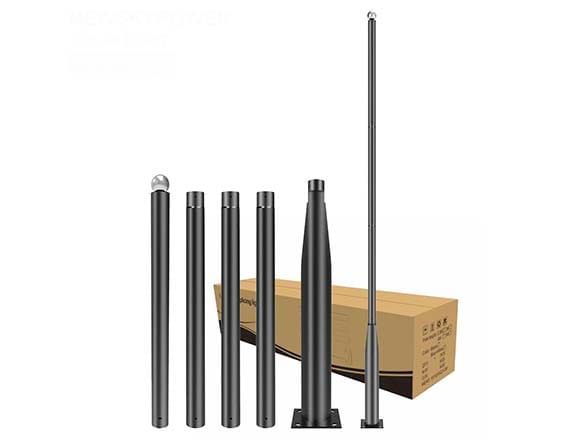
Here, modular light poles means steel shafts supplied in sections and joined on site. They may also be described as sectional or split light poles. The word does not mean that cameras, communications equipment or charging facilities can be added without checking the complete structure.
A one-piece light pole has a continuous shaft delivered at its manufactured length. Both designs still need a suitable lamp connection, base arrangement and site-specific installation plan. Neither description alone establishes a wind rating or foundation design.
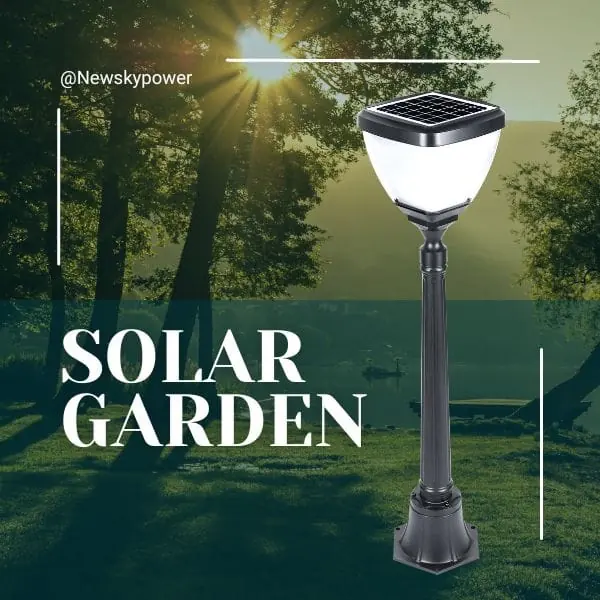
If you are comparing a pole-only offer with a complete solar lighting package, separate the lamp, solar panel, battery and brackets first. The solar light pole range is a useful starting point for discussing the supporting pole rather than treating every price as a complete lighting system.
2. Match the specification before comparing the price
Start with finished dimensions, not just the model label. For example, the standard SP-5M specification gives a completion height of 4.65 m, while the full-height SP-5MF version gives 5.00 m. Similarly, SP-6M is 5.72 m and SP-6MF is 6.00 m. These are different versions, not interchangeable descriptions of the same finished pole.
A lower quotation for a shorter assembled pole is not a valid saving if the project requires a particular mounting height. Ask for a dimensioned drawing and identify the height reference used, including whether a bracket changes the lamp position.
Use the same comparison basis for both offers:
| Item | What both quotations should state |
|---|---|
| Height | Actual assembled pole height and intended lamp mounting position |
| Mounted equipment | Lamp, arm, panel and other attachments, with weights and dimensions |
| Steel shaft | Material, diameters, wall thickness and joint arrangement where applicable |
| Surface protection | Specified galvanizing and coating system, rather than “outdoor finish” alone |
| Base connection | Base plate, anchor arrangement and interface dimensions |
| Delivery | Quantity, destination, delivery term, packing and included accessories |
The SP split pole specifications help identify a candidate model. Confirm the exact version in the quotation and drawing. A stated load weight does not replace an assessment of wind acting on the lamp, panel, arms and pole.
3. Light pole shipping: compare the packed consignment
Shorter packed sections change the handling problem. Instead of moving a full-length shaft through each stage, the buyer receives shorter cartons for onward transport and storage. Whether that reduces the final freight bill depends on the route, shipment size, charging method and handling requirements.
The standard SP parameter sheet provides the following examples:
| Standard version | Completion height | Listed carton dimensions | Calculated outside carton volume |
|---|---|---|---|
| SP-5M | 4.65 m | 1,020 × 240 × 230 mm | About 0.0563 m³ |
| SP-6M | 5.72 m | 1,520 × 240 × 230 mm | About 0.0839 m³ |
Volume is calculated by multiplying the three outside dimensions in metres. These figures describe the listed standard versions, not the SP-5MF or SP-6MF full-height packages. Confirm their own packing lists if full height is required.
Carton volume is not container loading capacity. Pallets, stacking limits, protection, mixed cargo, weight distribution and unused spaces can change the loading plan. Nor should a freight quotation for one carton simply be multiplied to predict the price of a larger consignment.
Ask the forwarder to price the sectional and one-piece options for the same destination and shipment quantity. Provide gross weights and complete packing details, not just the assembled height. Include the port-to-site journey: the long-haul freight difference may be less important than the final delivery vehicle or unloading access.
Receiving and storage deserve a separate cost line
Check where the shipment will be unloaded, whether covered storage is available and how sets will be distributed to different installation points. A short carton is useful only if its sections, fasteners and accessories stay identifiable as a complete set.
Inspect package condition before installation. Bent tube ends or damage at a joint can turn a low purchase price into sorting, replacement delivery and lost site time. Keep carton labels and photographs associated with the model and quantity received.

4. Light pole installation cost includes more than assembling the shaft
Sectional construction moves part of the work to the site. On the bolted SP version, the assembly instructions show sections being inserted, screw holes aligned and connections fastened. This is a defined assembly operation that should appear in the contractor’s estimate, not disappear behind the phrase “easy installation.”
The product family also includes a separate bolt-free joint version. Specify which version is being quoted and obtain its matching instructions. Do not apply the bolted assembly method to a different connection or assume all sectional poles use the same joint.
| Site cost | Question for the installer |
|---|---|
| Foundation and anchors | Is a new foundation needed, and who provides its design and construction? |
| Shaft assembly | Which joint version, tools and checks are required? |
| Raising and access | What lifting or access equipment does the agreed method require? |
| Lamp and wiring | Are bracket fitting, cable routing and electrical connections included? |
| Inspection | Who checks alignment, connections, finish damage and completion records? |
A modular design does not automatically remove the need for lifting equipment or reduce the number of workers. Those decisions depend on the assembled weight, height, attachments, access and installation method. Request an estimate based on the actual kit rather than a general promise of faster work.
Keep foundation costs comparable. A paved surface is not, by itself, a designed supporting foundation. For an existing base, check its condition, dimensions and anchor interface before treating reuse as a saving. Excavation, concrete work, curing and local approval can matter more than the difference in shaft assembly time.
5. Packing quality and fit can affect the cost after delivery
A sectional pole depends on its interfaces arriving in usable condition. NEWSKYPOWER’s SP production process includes work on the mating ends, removal of internal burrs at the joint and trial fitting during packing. Its packing process describes corner protection, foam supports and separately packed anchor components where supplied.
For buyers, the useful question is how these details will be checked for the ordered version. Ask for a sample set or inspection record showing joint fit, the base connection and the packing arrangement. Confirm whether the quotation includes the anchor, screws, tools and any lamp adapter; do not assume every optional item is standard.
Compare coating specifications as carefully as shaft dimensions. A different surface treatment may change the purchase price and maintenance plan. Record the specified treatment on the order rather than relying on the colour of a photograph.

6. Replacement sections can help, but only if compatibility is controlled
Replacing a section may be possible when the damaged part is separately available and the remaining assembly is suitable for continued use. It is not a promise that any damaged pole can be repaired by swapping one tube.
Before ordering spares, establish the model, version, section position, joint dimensions and connection details. Ask whether replacement supply is available for that specification and how parts will be identified. A matching outside diameter alone does not prove compatibility.
After an impact or visible deformation, assess the base, anchors and adjacent connections as well as the damaged section. Reusing distorted parts can undermine the proposed repair. Compare replacement freight, inspection, access and downtime, rather than counting only the price of a spare tube.
7. When is a one-piece light pole the better option?
Consider a one-piece pole seriously when an approved local model is available, the delivery route accepts its length and the contractor already has a suitable installation method. It may also suit an owner who wants fewer shaft joints to inspect or a project whose drawings specify a particular continuous-shaft construction.
Sectional steel light poles merit closer comparison when package length, restricted delivery access or distribution from a warehouse creates a clear purchasing problem. Their value should be demonstrated through the actual consignment and site plan, not through a claim that one structure always costs less.
For either design, structural suitability comes first. Shipping convenience cannot compensate for an unsuitable mounting height, lamp connection or project loading requirement.
8. Request two quotations you can actually compare
Prepare one specification sheet and send the same requirements for both options. Include:
- Required assembled height and a dimensioned lamp or bracket drawing.
- Attachment weights and dimensions, including any separate solar panel.
- Installation location and the project’s structural design requirements.
- Required finish, colour and base arrangement.
- Quantity, delivery destination, access restrictions and delivery term.
- Included accessories, spare-part requirements and inspection documents.
Use this cost structure: pole and accessories + packing and transport + foundations and site installation + inspection and planned servicing. Keep assumptions visible. If one offer excludes anchors or final delivery, add the missing scope before deciding which is less expensive.
For the setting itself, review applications of modular light poles. For distributed sites, read the regional project considerations for modular poles.
Send your specification and destination to NEWSKYPOWER’s light pole manufacturing team to discuss the SP version, packing list and quotation scope. This gives your procurement and installation teams a concrete basis for comparison.
For the complete selection process, see our modular light pole buying guide covering height, joints and delivery checks.
FAQ
1. Are modular light poles always cheaper than one-piece poles?
No. Compare the same assembled height, attachments, finish and delivery scope. Sectional packing may help with freight or access, while local one-piece stock and an established installation method may be economical for another project.
2. What is the difference between modular and sectional light poles?
In this guide, both describe a steel pole assembled from shorter shaft sections. Confirm the actual connection design. “Modular” can describe other products too, including poles with separate functional modules.
3. Does a 5 m model always finish at 5 m?
No. Standard SP-5M has a stated completion height of 4.65 m; SP-5MF is the full-height 5.00 m version. Specify the finished height and model version together.
4. What affects light pole shipping cost?
Packed dimensions, gross weight, quantity, packing method, route, delivery term and final-site access all matter. Ask for a quotation using the complete packing list, including separately packed accessories.
5. Can I use carton volume to calculate container quantity?
Not by simple division alone. A loading plan must also consider stacking, pallets, protection, cargo weight and usable space. Carton volume is an input, not a confirmed loading quantity.
6. Can sectional poles be installed without a crane?
That depends on the assembled pole, attachments and site method. Ask the installer to assess the particular kit and access conditions; sectional delivery is not a universal no-crane guarantee.
7. Are anchors and lamp brackets included in every kit?
Do not assume so. List the base anchors, fasteners, lamp adapters and brackets individually in the quotation. Optional accessories and the ordered joint version can change the supplied parts.
8. Can I replace only one damaged section?
Possibly, after confirming replacement availability, joint compatibility and the condition of the remaining pole and base. An impact can affect more than the visibly damaged tube.
9. Is load weight enough to choose a pole for a solar light?
No. The lamp, panel and arms also present surfaces to the wind. Their dimensions, arrangement, pole structure and foundation need to be considered for the installation location.
10. What should I send for a meaningful cost comparison?
Send the required assembled height, attachment drawings and weights, location, finish, base arrangement, quantity and delivery destination. Request an itemized packing and accessory list so both offers cover the same scope.