


A modular light pole should be selected by its assembled height, joint design, fixture interface and delivery requirements. A short carton is useful only when the complete pole fits the lighting layout and can be assembled, fixed and maintained as specified. This guide takes contractors, distributors and project buyers through those decisions using NEWSKYPOWER’s documented SP sectional steel pole versions as practical examples.
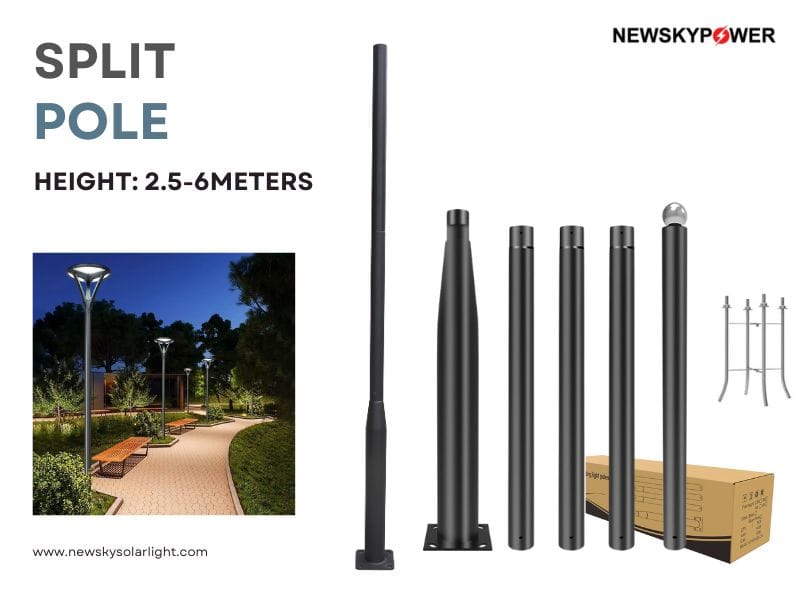
Product overview. The 2.5–6 m labels are model height designations; use the version table below for completion heights.
What is a modular or sectional light pole?
In this guide, a modular light pole means a steel pole supplied in sections and assembled on site. It may also be described as a sectional or split-type light pole. The sections form the pole body; the luminaire, arm, solar panel, battery and foundation hardware belong to the order only when the bill of materials includes them.
This distinction matters because “modular” can also describe a smart pole with communication or charging modules. SP sectional construction does not by itself provide those functions. Similarly, a sectional pole is not a telescopic mast: choosing its components during procurement is different from raising or lowering an installed pole.
The split-type light pole range is the starting point for standard models. Use the guide below to narrow the requirement before comparing a particular model or requesting a project configuration.
Start with the lighting task and the supply scope
Record the site type, path or road width, proposed fixture position and required lighting coverage. The mounting height should follow the lighting design. A garden path, residential entrance and access road can require different light distributions even when their poles look similar.
For a solar lighting project, identify where the panel, battery and luminaire will sit. A side-mounted panel or extended bracket changes the geometry as well as the weight. Review pole bodies for solar lighting with the actual equipment arrangement in mind.
Separate fixed requirements from preferences. The required mounting height, fixture connection and project design conditions are fixed inputs. Color, delivery grouping and a preferred carton length may allow alternatives. Also state whether the inquiry covers poles only or a complete lighting package. A photograph showing a lamp or anchor is not a substitute for a list of included components.
Check nominal height against assembled height
A model name containing “5M” does not necessarily mean that the assembled pole is exactly 5 m high. NEWSKYPOWER’s ordinary SP and full-height MF specification sheets show the following distinction:
Swipe the table horizontally to compare all five columns.
| Height designation | Ordinary SP model | Completion height | Full-height model | Completion height |
|---|---|---|---|---|
| 2.5 m | SP-2.5M | 2.23 m | SP-2.5MF | 2.5 m |
| 3 m | SP-3M | 2.82 m | SP-3MF | 3 m |
| 3.5 m | SP-3.5M | 3.23 m | SP-3.5MF | 3.5 m |
| 4 m | SP-4M | 3.73 m | SP-4MF | 4 m |
| 5 m | SP-5M | 4.65 m | SP-5MF | 5 m |
| 6 m | SP-6M | 5.72 m | SP-6MF | 6 m |
These are documented product versions; confirm the version offered in your quotation. If the project needs a finished 5 m pole, write that requirement explicitly rather than ordering by “5M” alone. Also distinguish the completed pole height from the luminaire mounting height, which depends on the bracket and fixture arrangement.
For example, the ordinary SP-5M parameter table lists four 1 m upper sections and a 1 m bottom section, but gives a completion height of 4.65 m. Adding the unassembled section lengths does not establish the final height. The assembled drawing, including the joints, is the controlling reference.
Use the SP split pole details to identify the family, then request the matching drawing revision, section list and packing specification. Do not mix parts from different height or joint versions because their outside appearance is similar.
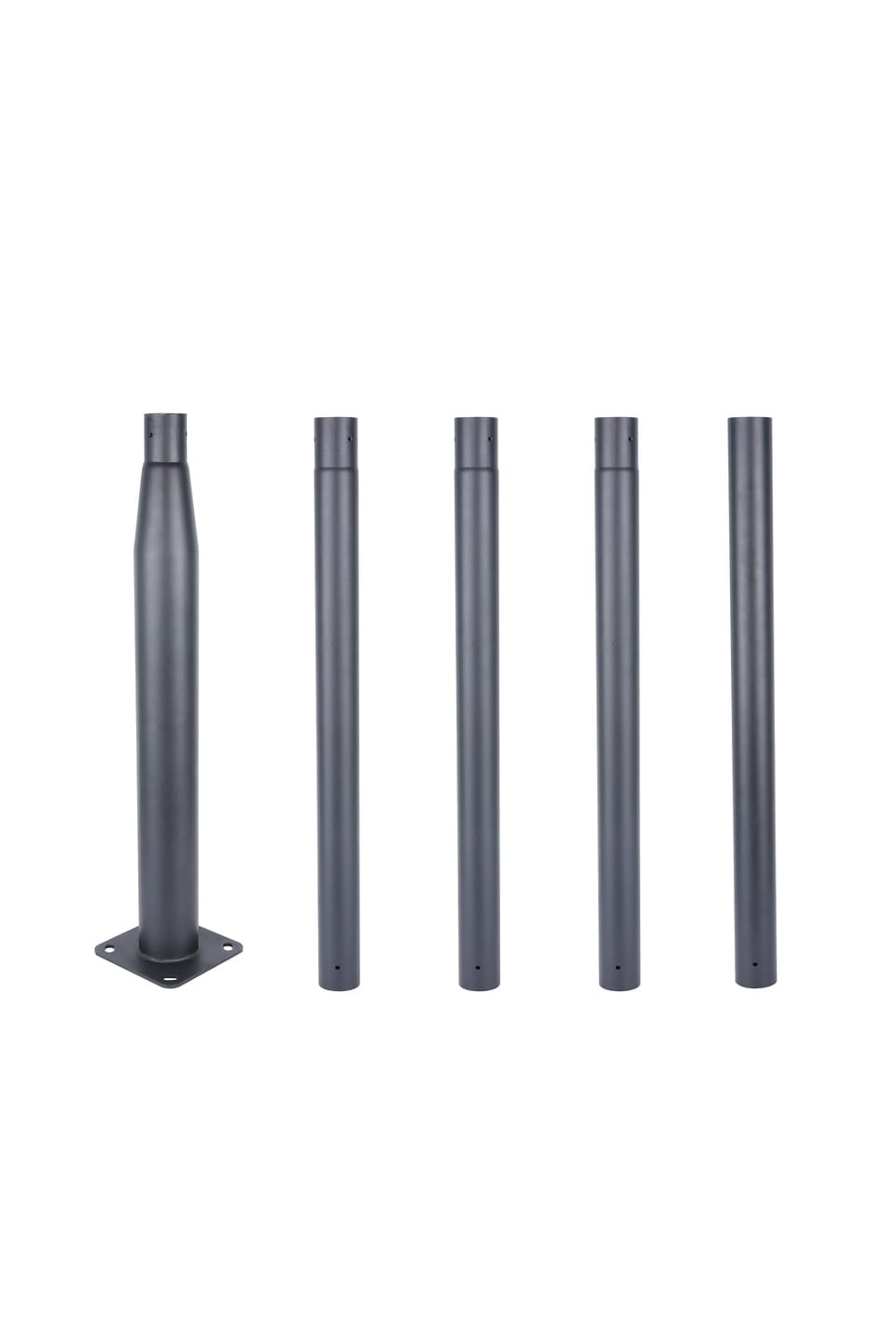
Unassembled sections. This photograph illustrates components, not the completed height or a dimensioned assembly drawing.
Seven checks before requesting a quotation
Keep this checklist beside the drawing. It converts a general request into a specification that suppliers can compare consistently.
| Check | Information to establish | Procurement decision |
|---|---|---|
| 1. Height and sections | Completed height, mounting height, model suffix, section count and joint positions | Does the offered version meet the lighting layout? |
| 2. Fixture interface | Mounting dimensions, arm orientation, equipment weight, projected area and cable route | Can the actual fixture and accessories be accommodated? |
| 3. Structural basis | Site wind and exposure inputs, equipment geometry, applicable requirements and review responsibility | What project-specific verification is needed? |
| 4. Material and finish | Steel specification, wall thickness, galvanizing route, coating and color | Are the offers equivalent for the intended environment? |
| 5. Base and foundation | Base-plate drawing, hole pattern, anchors, foundation condition and design responsibility | Does the fixing arrangement match the site? |
| 6. Assembly | Joint version, fasteners, instructions and inspection points | Can the delivery team assemble the specified set correctly? |
| 7. Delivery and service | Carton sizes, gross weights, included parts, documents and replacement process | Can the order reach the site and be checked on receipt? |
The source specifications identify Q235 steel. They do not make steel grade or wall thickness a universal project rating. In particular, a listed 10 kg maximum load figure is not a wind-resistance rating. Equipment projected area, mounting offset, height, connections and foundation conditions still need to be considered together.
A useful supplier drawing should trace the assembly from the fixture through the sections and joints to the base. Check its revision against the quotation and packing list. When the height, bracket or joint changes, ask for an updated drawing rather than carrying an old file into the order.
Understand the connection before planning assembly
Identify the joint version
The English instructions for the bolted SP version describe inserting the sections, aligning the holes and fixing them with bolts. An interference-fit or knock-in version needs its own instructions; it should not be assembled by assuming that the bolted sequence applies.
Ask for a close-up of the actual connection, the correct section order and the hardware list. Request the specified assembly requirements for that version, including any required tightening or seating checks. A generic assembly photograph cannot establish an appropriate torque or insertion depth.
Before erection, inspect the joint surfaces, hole alignment, supplied hardware and cable path. Keep model sets identified during unpacking. If a section is distorted or the connection does not fit as instructed, stop and resolve the mismatch rather than drilling new holes or forcing the parts together.
Confirm the foundation interface separately
A pole base and an anchor arrangement must fit the approved foundation design. Asphalt surfacing alone should not be treated as the structural foundation for a pole. For an existing base, provide dimensions, anchor positions and available construction information so the responsible project professional can assess reuse.
For a new installation, agree who designs the foundation, supplies the anchors and verifies readiness before erection. Select handling equipment and the installation crew for the complete assembly and site conditions. Sectional delivery does not establish that every pole can be erected without lifting equipment.
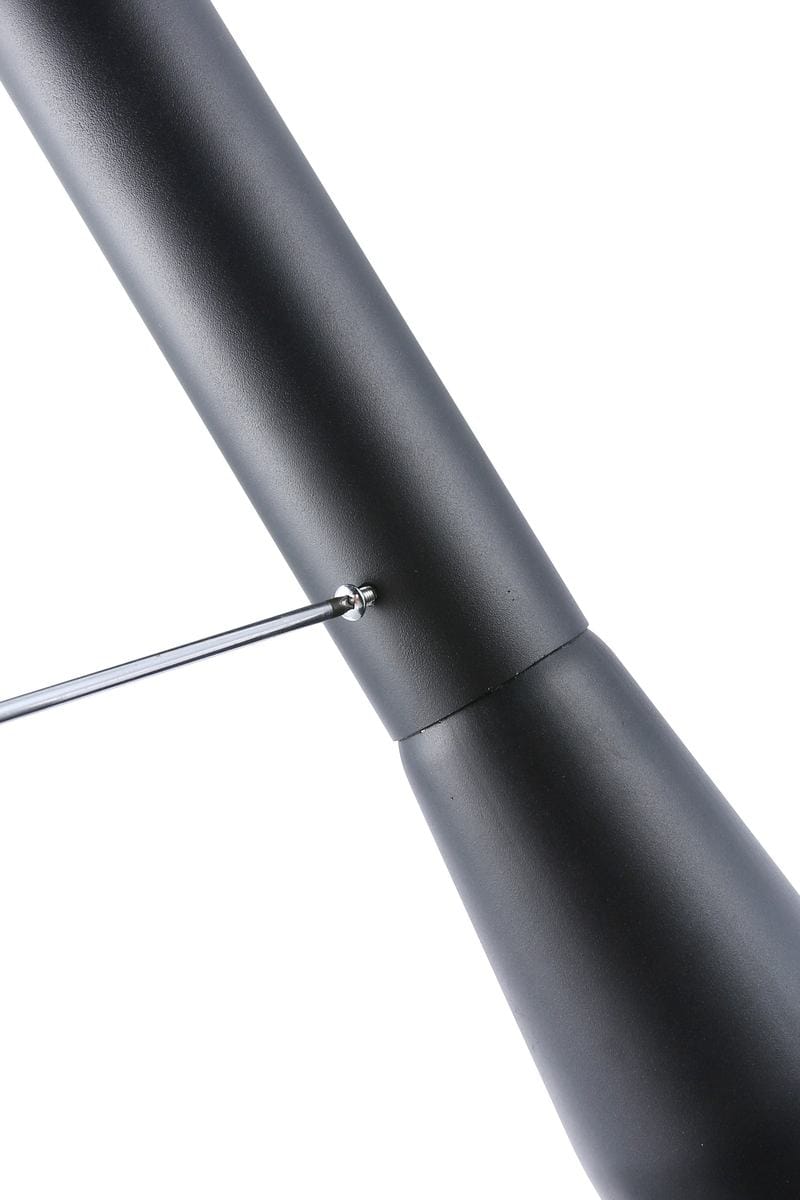
Bolted connection detail; follow the instructions for the supplied version.
Ask for manufacturing evidence that affects fit and finish
NEWSKYPOWER’s documented SP production sequence includes cutting the tube sections, flange welding, tube-end forming, internal burr removal, surface finishing, finished-part inspection and trial fitting before packing. These operations are relevant because the order must arrive as a set that connects correctly, not merely as several painted tubes.
For a first order, request an identified sample or inspection record showing the supplied joint version, section fit, coating condition and base details. Agree which checks will be recorded for the bulk order. A sample can expose a wrong interface or an unclear assembly instruction; it does not replace project structural approval.
Be equally precise about corrosion protection. The ordinary specification describes a cold-galvanized version, while the parameter table also lists a hot-dip galvanized option. Ask the supplier to state the actual galvanizing and coating process in the quotation. Do not compare two prices as equivalent if their finishes differ. For coastal or other demanding environments, provide the exposure requirements and request a suitable finish proposal and supporting documentation.
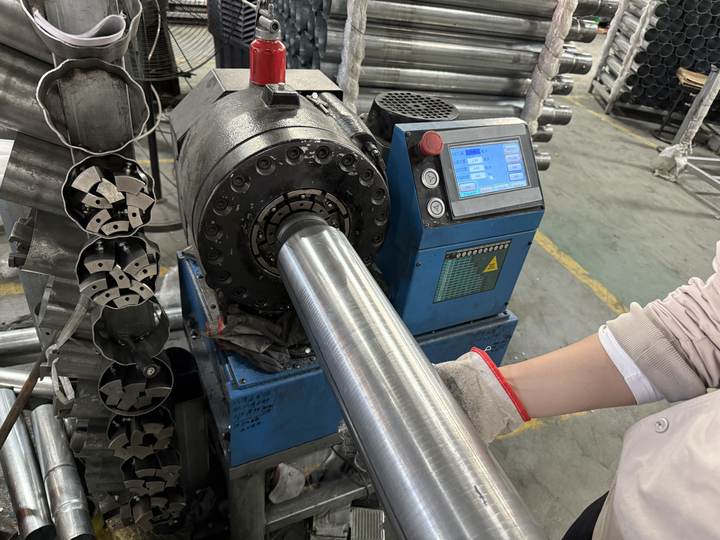
Tube-end forming in the documented production sequence.
Compare packing and project cost on the same basis
The ordinary SP parameter table provides a useful starting point for delivery planning:
| Documented ordinary SP versions | Listed carton dimensions |
|---|---|
| SP-2.5M, SP-3M, SP-3.5M, SP-4M and SP-5M | 1020 × 240 × 230 mm |
| SP-6M | 1520 × 240 × 230 mm |
Confirm the final packing list for the selected thickness, accessories and order. These dimensions should not be copied onto an MF or custom version without verification. Also ask how many cartons make up one complete supplied set, especially when anchors or accessories are packed separately.
Shorter packages can make storage and delivery easier, but they do not guarantee lower project cost. Compare sectional and one-piece offers at the same completed height, equipment arrangement and design requirements. Include freight, local delivery, unloading, assembly labor, fixing scope and inspection rather than comparing the pole price alone.
A practical first-order check is to follow one complete set from carton labels to assembly. Confirm that the parts list identifies the sections, connectors and accessories, and that the receiving team can distinguish different versions. Record damaged packaging before opening it and keep mismatched parts separate. This is particularly useful when an order is divided among several sites.
For the detailed comparison, use our discussion of modular and one-piece pole selection and cost. For remote delivery planning, read the solar lighting pole specification and delivery checks.
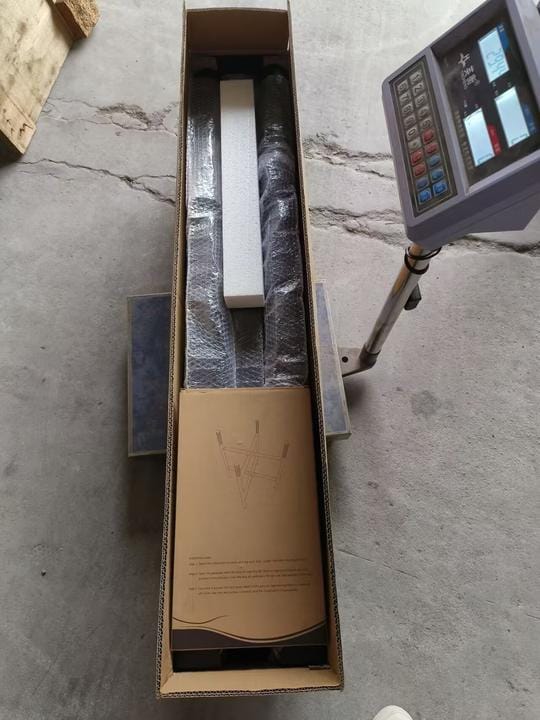
Packing example from a knock-in version. Confirm dimensions and included accessories for the actual order.
Choose the next page by the decision you need to make
A general guide should help you reach the right specification, not require you to read every article before making contact.
- Still assessing the site: review modular light pole applications and site checks. For specific application ranges, see garden and pathway poles or residential light poles.
- Comparing standard models: use the height and version checks above, then compare the model drawing with your lighting layout.
- Buying a project configuration: prepare the following brief so NEWSKYPOWER can identify the proposed version, included components and questions requiring further review.
A quotation brief you can copy
Project and destination: country, site type and delivery location.
Quantity: total poles and delivery groups.
Height: required completed pole height and fixture mounting height.
Model: ordinary SP, MF full-height or a requested alternative.
Equipment: fixture model/drawing, mounting interface, weight and projected area; panel and battery arrangement when applicable.
Site and foundation: exposure information, applicable project requirements, existing or new base, and available drawings.
Finish: galvanizing/coating requirement and color.
Delivery: maximum package length, vehicle access, unloading constraints and requested shipment window.
Included items: brackets, anchors, fasteners, tools, spare parts and required documents.
Send the brief through the NEWSKYPOWER project and wholesale light pole inquiry page. If some details are not yet available, identify them as open items. Ask for an offer that states its assumptions, exclusions, drawing revision and packing method. This makes the response useful for comparison without confusing a preliminary quotation with an approved installation design.
Explore other buying guides
If the project also includes lighting fixtures or other solar products, these guides address those separate purchasing decisions:
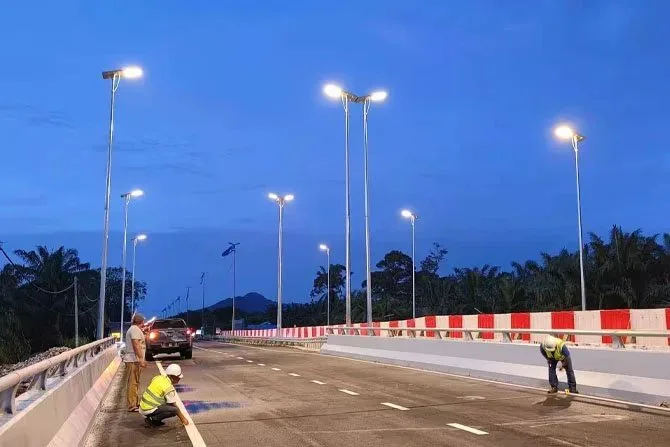

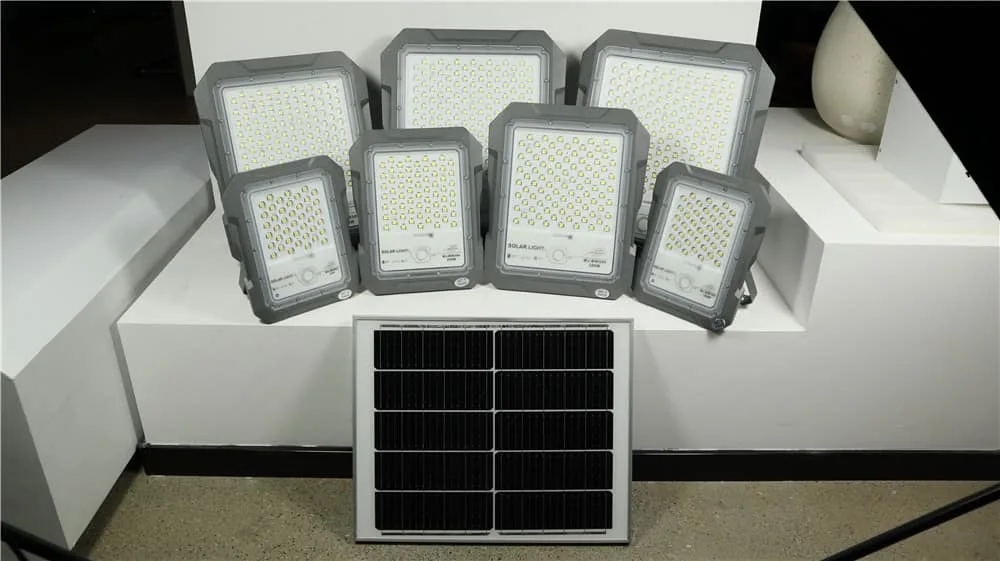

Scroll horizontally or swipe to browse all five guides.
Frequently asked questions
1. Is a modular light pole a complete solar street light?
No. This guide concerns the sectional pole body. The luminaire, panel, battery, bracket and fixing hardware are included only when specified in the quotation and bill of materials. Confirm the scope before comparing prices.
2. What is the difference between SP-5M and SP-5MF?
The ordinary SP specification lists SP-5M at a completion height of 4.65 m. The full-height specification lists SP-5MF at 5 m. State the required finished height and confirm the offered drawing and version before ordering.
3. Can I calculate finished height by adding section lengths?
Use the assembled drawing instead. Section connections affect the completed geometry. In the ordinary SP-5M example, the listed unassembled section lengths total 5 m, while the documented completion height is 4.65 m.
4. Does the listed 10 kg load establish wind resistance?
No. Weight alone does not describe wind loading or the complete structural arrangement. Provide the fixture and panel geometry, mounting positions and site conditions for the necessary pole, connection and foundation review.
5. Are all SP poles hot-dip galvanized?
Do not assume that they are. The ordinary specification describes a cold-galvanized version, and the parameter table lists cold or hot-dip galvanized options. Ask for the precise process and coating requirements to be written into the order.
6. Can I add a solar panel or a longer arm later?
Request a review of the revised arrangement first. Additional equipment or a longer offset changes the loading and connection requirements. The original pole selection does not automatically cover a later modification.
7. Can the same assembly instructions cover every joint type?
No. The bolted SP instructions call for section insertion, hole alignment and bolt fixing. A different connection version requires its own instructions. Keep the model, section list, hardware and assembly document matched.
8. Are the published carton sizes valid for full-height versions?
The 1020 mm and 1520 mm carton lengths in this guide come from the ordinary SP parameter table. Request the actual dimensions, weights and carton count for MF versions, custom parts and accessory packages.
9. Which documents should accompany a bulk order?
Agree on the approved drawing and revision, bill of materials, finish description, model-specific assembly instructions and packing list. Establish any project engineering documents and inspection records required by the purchaser before placing the order.
10. What should I do if a delivered section is damaged or does not fit?
Identify the order, model, carton and affected part, then photograph the damage or mismatch. Keep the part out of assembly and ask for the correct replacement or written resolution. Do not modify a structural joint to make an unverified part fit.