

Choose a solar flood light by defining what must be visible, when it must be visible, and where the panel can collect sunlight. Then compare lighting performance, operating modes, and the evidence behind runtime claims. A large wattage label cannot answer those questions, and a light that suits a lightly used entrance may be unsuitable for a busy work area.
This solar flood light buying guide takes you from a site description to a useful supplier brief. The aim is to select a configuration that delivers the required service, including the less obvious demands of late-night use, shaded mounting positions, and changing seasons.
Is a Solar Flood Light Suitable for Your Site?
Are You Lighting an Entrance, Path, Parking Area, or Sign?
Start with the activity. An entrance needs light where people approach, operate a lock, and cross a threshold. A driveway may need visibility along the approach and at a turning point. A parking area needs an assessment of vehicle movements and pedestrian routes. A sign needs readable lettering on a vertical surface. These tasks place light in different locations, even when the overall site dimensions look similar.
Identify the consequence of insufficient light. Occasional convenience lighting allows different choices from lighting required throughout a working shift. If a location has mandatory emergency, workplace, or roadway lighting requirements, have those requirements assessed separately before treating a standalone solar unit as the primary supply.
Divide an irregular site into tasks instead of assuming one bright fixture should cover everything. An entrance beneath a canopy and a driveway beyond it may need different aiming directions or mounting locations. This early sketch often reveals a more useful solution than moving immediately to a larger model.
Is Usable Sunlight Available, and Is Grid Power Already Accessible?
A solar flood light is worth evaluating when a suitable panel location exists and extending a power cable would be inconvenient or costly. However, a sunny patch on the ground does not prove that the intended panel position has sufficient exposure. Look at the proposed panel position, nearby trees, roof edges, and neighboring buildings.
When grid power is already available, compare the complete installation and ownership requirements. A wired option may be easier to supply with predictable operating hours; a solar option introduces panel siting, energy storage, and future component maintenance. Obtain actual installation quotations instead of assuming that either option is always cheaper.
Keep access in the comparison. A panel that can only be reached with special equipment may create recurring cleaning and inspection costs. A convenient solar installation should have both a workable sunlight position and a practical maintenance plan.
Define the Lighting Task Before Comparing Wattage Labels
What Needs to Be Visible, From Where, and for How Long?
Write one sentence that describes the required result. For example: “Visitors should be able to see the gate latch and the walking route from the driveway to the entrance during the evening.” This is more useful than “We need a powerful outdoor light,” because it identifies the target, viewing direction, and operating period.
Measure the relevant area and note obstacles. Include mounting height, the distance from the fixture to the target, and whether the target is horizontal, vertical, or both. For a driveway, include bends, parked vehicles, and the direction from which drivers approach. A fixture behind a tall vehicle may leave the walking route in shadow even if the center of the drive looks bright.
Separate essential coverage from optional spill light. Illuminating a neighbor’s window does not improve your entrance, and lighting an unused corner can consume energy without serving the task. Mark the required area on a photograph or simple plan before asking for a recommendation.
Check Lumens, Beam Distribution, and Installation Conditions
Lumens describe light output; measured electrical watts describe power input. The U.S. Department of Energy also encourages buyers to compare light output in lumens when judging brightness. For a flood light, you must additionally assess where that output goes. See the DOE explanation of lumens.
A narrow distribution can concentrate light on a smaller target, while a broader distribution can spread it across a wider area with less intensity at individual points. Mounting height and aiming affect the result. Ask for model-specific lighting data or a trial under your intended conditions, rather than a coverage promise derived only from a product’s wattage name.
If brightness is the main comparison, use the brightness-related solar flood light collection to identify candidates, then request comparable lumen and distribution data. A collection title does not establish which product will produce the best result at your site.
Choose the Lighting Schedule and Operating Mode Together
All-Night Lighting, Business-Hour Lighting, or Motion-Triggered Brightness?
Translate the operating period into a schedule. A shop entrance might need its main illumination until closing, while a residential gate may need a low background level with extra light during arrivals. A working yard with continuous activity has a different demand from a seldom-used side entrance.
For timed operation, check whether the timer counts from dusk, from activation, or from another reference. “Four hours” is incomplete without a start point. If you need a fixed closing time throughout the year, ask whether the selected controller can provide that behavior as sunset changes.
For motion operation, confirm whether the light is off or dim before detection, what triggers the boost, and how long the brighter state lasts. Also check whether repeated movement extends that state. Frequent traffic may keep the light boosted for much of the evening, changing the energy demand from the quieter scenario used in a demonstration.
All-Night Illumination Does Not Necessarily Mean Constant Brightness
A light may remain on until dawn by reducing output during the night. That can be a useful design when late-night activity is limited, but it may not meet a requirement for unchanged task lighting. Ask for an output schedule showing the initial stage, later stages, and behavior when stored energy is low.
Judge the late-night setting against the actual task. Being able to see that a lamp is glowing is different from being able to recognize a step or read a sign. When continuous illumination matters, include a check near the end of the required operating period in the sample assessment.
Specify acceptable changes in output before comparing models. Otherwise, two suppliers may both promise “all night” while describing substantially different levels of service.
Check Panel Placement Against Nighttime Energy Demand
Do the Panel and Light Need Separate Mounting Positions?
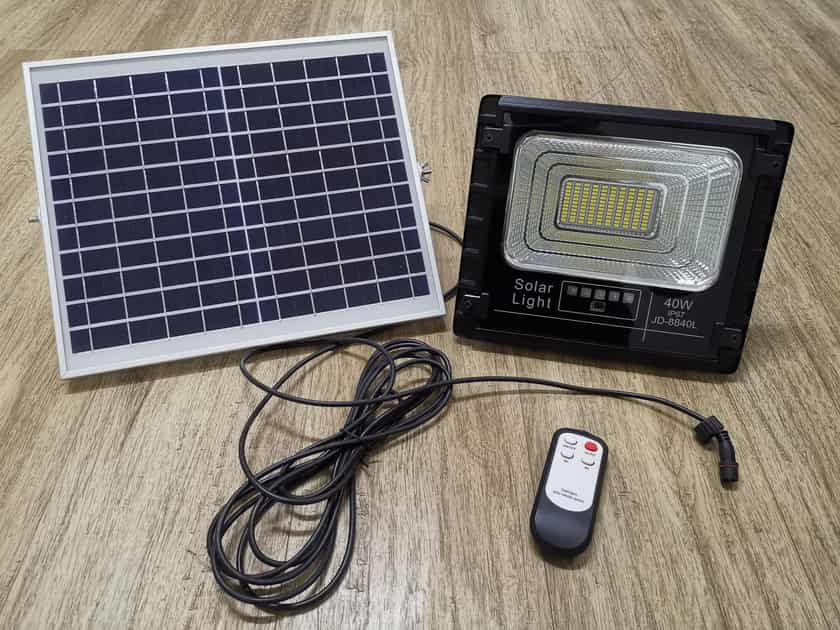
A separate-panel arrangement can let the lamp illuminate a sheltered entrance while the panel sits in a sunnier location. It is useful only if the connecting route is feasible. Record the actual cable route around edges and obstacles, rather than only the straight-line distance between the two units.
Check the supplied cable, approved extensions, connectors, mounting arrangements, and any restrictions in the exact model’s instructions. A longer route is not automatically acceptable because a connector physically fits. The installer also needs a way to support and protect the cable and retain the specified weather protection at connections.
Assess both components together before purchase. An excellent lamp location with no viable panel position is an incomplete design; a sunny panel location with no acceptable cable route may be equally unsuitable.
Will Shade, Seasonal Changes, or Extended Low Sunlight Affect the Plan?
Photograph the panel location at different times of day and consider the season in which the light will be most needed. Trees, roof lines, and neighboring structures can affect exposure differently as the sun’s path changes. A clear summer afternoon is not sufficient evidence for winter operation.
At this screening stage, ask whether the panel has a credible opportunity to replace the energy the intended schedule consumes. A larger battery can provide additional stored energy, but it does not create energy that the panel never collects. Longer nights and several low-sunlight days deserve specific discussion with the supplier.
If the location is strongly shaded, reconsider panel placement, operating hours, or the power supply. Resolve that constraint before paying for a higher output label.
Follow the Product Route That Matches Your Requirements
General Area Lighting, Motion-Activated Lighting, Sign Lighting, or Camera-Equipped Lighting?
Use your requirement to choose a product route. For general area lighting, verify distribution and the scheduled output across the area. For intermittent access, verify detection behavior and the background state. For signs, verify how the beam reaches the sign face and whether lettering remains readable from the intended approach.
Start with the solar flood light product range once those requirements are clear. Compare suitable configurations within the range, rather than choosing a model merely because it has the largest number in its name.
| Application | Lighting objective | Checks to make | Next decision |
|---|---|---|---|
| Entrance or driveway | See the approach, threshold, and turning points | Shadows, aiming, motion coverage, late-night output | Continuous light or background light with motion boost? |
| Small parking or activity area | See movement across the required area | Edge visibility, glare, mounting geometry, operating schedule | Can a tested layout cover the task without intrusive spill? |
| Sign or noticeboard | Read the full face from normal viewing positions | Beam distribution, reflections, obstructions, closing time | Where should fixtures aim, and when should they switch off? |
| Light with camera | Illuminate a useful scene and support monitoring | Camera view, network, recording mode, shared power demand | Does the exact version provide every required function? |
When Should You Check Separate-Panel Options or Network Requirements?
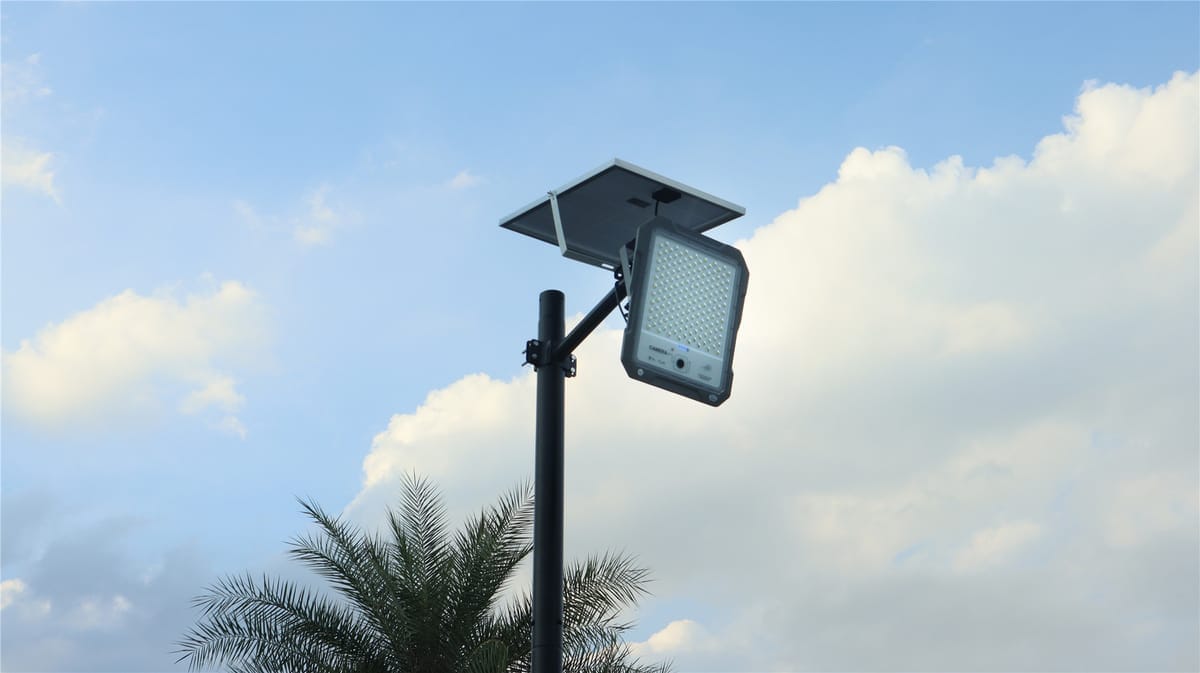
Check separate-panel options early when the best lamp position is shaded. Provide a photograph showing both proposed mounting points and the connecting route. The supplier can then assess a real arrangement instead of recommending from area dimensions alone.
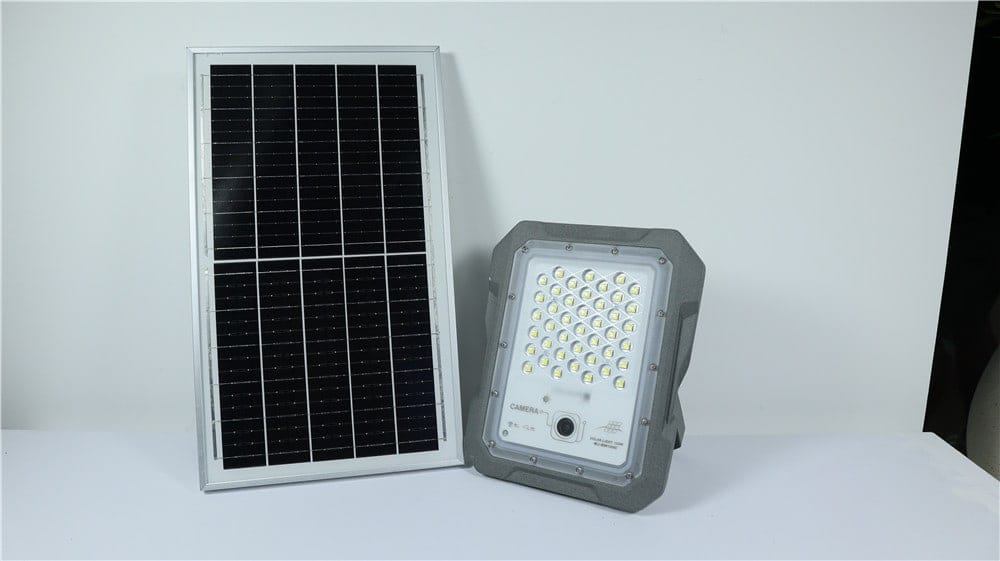
If monitoring is required, review the camera-equipped solar flood light options as a distinct route. Camera view and lighting coverage may differ, and network availability must be assessed at the installation point. Do not assume that a light with a camera automatically provides continuous recording, cellular connectivity, or subscription-free remote functions.
Confirm required camera functions in writing for the selected version. Lighting that works through the night does not, by itself, establish recording endurance or daytime monitoring capability.
Prepare a Site Requirements Checklist Before Requesting a Recommendation
Send a compact brief with a marked photograph or plan. Include the location, application, target dimensions, viewing directions, available mounting positions, and desired operating hours. Describe shade at the proposed panel location, the practical cable route, and any access limitations.
Add the preferred mode and what must remain visible during the least bright operating stage. State whether grid power is available and whether camera functions are essential. If several sites differ, provide separate briefs rather than assuming one configuration will serve them all.
Ask the supplier to respond with the proposed version, its lighting and runtime evidence, installation assumptions, included accessories, and any unresolved site constraints. This gives you a basis for evaluating the recommendation and planning a sample trial.
For a project in Southeast Asia or Africa, include the actual country, town, and site conditions in this brief rather than specifying a product only by region. Describe any power-cut lighting requirement, wet-season charging concern, dust or coastal exposure, and access to local servicing where relevant. A shop entrance, compound gate, and farm work area may need different schedules and maintenance arrangements even within the same town.
Explore More Solar Flood Light Guides
Use these focused guides to compare the lighting result, operating schedule, installation constraints, and purchasing evidence for your project. Each article answers one decision that this buying guide introduces.
Brightness, runtime and operating modes
- Solar flood light lumens, watts and coverage — compare useful light on the target area rather than a wattage label.
- Battery capacity, dimming and all-night runtime — check the output schedule and late-night lighting requirement.
- Dusk-to-dawn, motion-sensor and timer modes — match control behavior to traffic and operating hours.
- Solar flood lights in the rainy season — assess panel exposure, heat and low-sunlight conditions.
Application and installation
- Choosing flood lights for signs and billboards — plan beam direction and readability on a vertical surface.
- Solar flood lights with cameras — check Wi-Fi, recording functions and shared power demand.
- Installing a flood light with a separate panel — review mounting height, panel placement and cable routing.
Procurement and after-sales checks
- Buying solar flood lights in bulk — compare quotations, samples and warranty terms before ordering.
- Troubleshooting a dim or non-working solar flood light — check symptoms and maintenance steps before replacing parts.
Frequently Asked Questions
Are Solar Flood Lights Worth Buying?
They are worth evaluating when the panel can collect useful energy and the available configuration matches the required lighting schedule. Compare installation, maintenance access, and component replacement with the alternatives. A difficult power-cable route can favor solar, but persistent panel shade can undermine that advantage.
Can Solar Flood Lights Provide Lighting During Power Cuts?
A standalone solar flood light can operate without grid power when its battery has sufficient usable energy and its control mode calls for lighting. It does not automatically switch on merely because the grid fails; daylight sensing, timers, and motion settings still apply. Check the required outage hours and visibility, and do not assume that a general outdoor product meets a regulated emergency-lighting requirement.
Is a High-Powered Model Always the Right Choice for My Site?
No. A wattage label does not establish useful coverage, glare control, or nighttime output. Choose the distribution, operating mode, and supported energy configuration that meet the task. Request evidence under the intended mounting conditions before treating a larger label as an improvement.
What Should I Check When Choosing Solar Flood Lights for Home Security?
Choose solar flood lights for home security by checking the area that must be visible, the required operating hours, and whether motion-triggered output or background lighting is needed. Confirm panel exposure and test the approach routes after dark. Lighting is one part of a security arrangement: useful illumination does not establish camera coverage, reliable recording, or a guaranteed deterrent effect.
Should I Choose an Integrated Solar Flood Light or a Separate-Panel Model?
A separate-panel solar flood light is worth considering when the best lamp position is shaded or points away from useful sunlight. An integrated design needs a location that suits both lighting and charging, within its adjustment limits. Compare the approved mounting options, cable route where applicable, and maintenance access; neither arrangement is automatically better at every site.
What Maintenance Should I Plan for Outdoor Solar Flood Lights?
Plan access to inspect the panel, mounting hardware, enclosure, and visible cables using the product’s maintenance instructions. Record changes in nighttime performance and check for new shading or debris before assuming that a component has failed. Cleaning methods, inspection intervals, and battery service depend on the product and exposure; do not open a sealed unit or improvise a replacement battery.