

For a buyer lighting a landscaped site, the challenge is to connect a narrow walking route, a sloping access road and a building approach into a usable nighttime route. Choosing one fixture type for every area can leave a mismatch between the light distribution and the surface people need to see. Buying a higher-wattage light alone does not resolve that layout question.
This solar pathway lighting project provides a photographed example of two fixture types in one site: SLL-008/60 solar bollard lights along the walking route, and NF30W and NF60W solar street lights within the supplied model group. The photographs provide a useful starting point for buyers facing similar site conditions.
Three buyer problems this installation helps explain
A narrow path and a wider approach need different coverage. A buyer needs people to see the walking surface and route edges, while also addressing the separate area near a building or access road. Specifying the same fitting everywhere can produce a proposal that looks consistent but has not addressed those different tasks. The bollard-and-street-light arrangement shown here is a way to structure that comparison; coverage at each zone and their connections still needs checking.
The convenient mounting point may not be the useful lighting or charging point. Sloping ground, hedges and buildings complicate where the light needs to fall, where people see the source, and where a solar panel receives sunlight. For a similar site, inspect those constraints before ordering. The NF series' separate panel and lamp body allow their directions to be considered separately, but cannot compensate for inadequate sunlight at a proposed location.
A model and wattage are not enough to approve a purchase. A buyer comparing NF30W and NF60W still needs a layout, the required nightly schedule and a panel-and-battery configuration appropriate to that demand. Otherwise, the quotation leaves key coverage and operating questions unanswered. A site sketch, photometric calculation and energy assessment provide a firmer basis for selection than a night photograph alone.
Two fixture types across one landscaped site
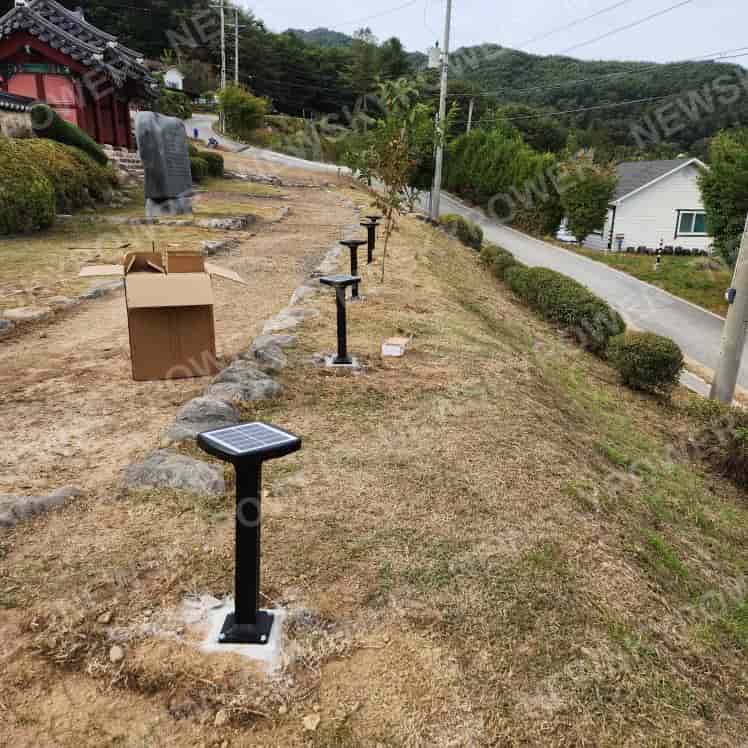
The daytime photographs show stone edging, grass, trimmed hedges and changes in ground level. Low lights stand beside the walking route, while taller lights occupy separate positions near the building and paved access areas. These surroundings matter: the space people walk through, the area a luminaire needs to illuminate and the space available for installation are not always the same.
| Area visible in the photographs | Lighting task to assess on a similar site | Design check before choosing a layout |
|---|---|---|
| Walking route with low lights along its edges | Make the walking surface and route edges discernible | Path width, light distribution, clear walking space and proposed spacing |
| Landscaped slope beside a hedge | Address the intended circulation area without lighting unnecessary surroundings | Changes in level, planting growth, viewing directions and access for maintenance |
| Building approach and adjacent paved road | Illuminate the approach and relevant changes of direction or level | Required coverage, mounting height, drainage, glare and solar exposure |
This approach keeps the product comparison tied to a task. A light that suits a path edge still needs a separate assessment before it is used to serve a wider approach area.
Low bollards follow the walking route
The daytime close view shows square panel-topped bollards installed beside the stone edge. The SLL-008 solar bollard light range includes the SLL-008/60 version identified in the project material. Its low form makes the position of each fitting part of the landscape arrangement, as well as a lighting decision.
For a similar route, leave room for people to pass and for grass or planting to be maintained. Check the light reaching the walking surface between fittings, rather than selecting spacing from the appearance of a neat row. On sloping ground, a person's view towards the light also changes as they approach from above or below. A proposed layout should therefore consider shielding and viewing direction alongside the required illumination.
Solar street lights serve separate access areas
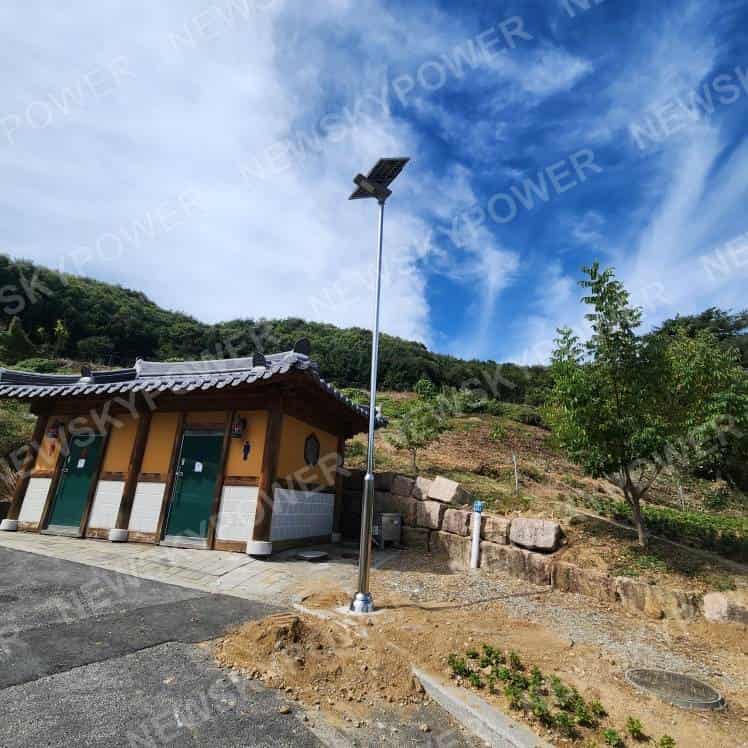
A taller light stands beside the hedge, and another photographed position is beside a building and paved approach. These views show why a site-wide enquiry should identify the surrounding areas as well as the main path. A contractor may need to assess an entrance, a connection between routes or a wider paved area separately.
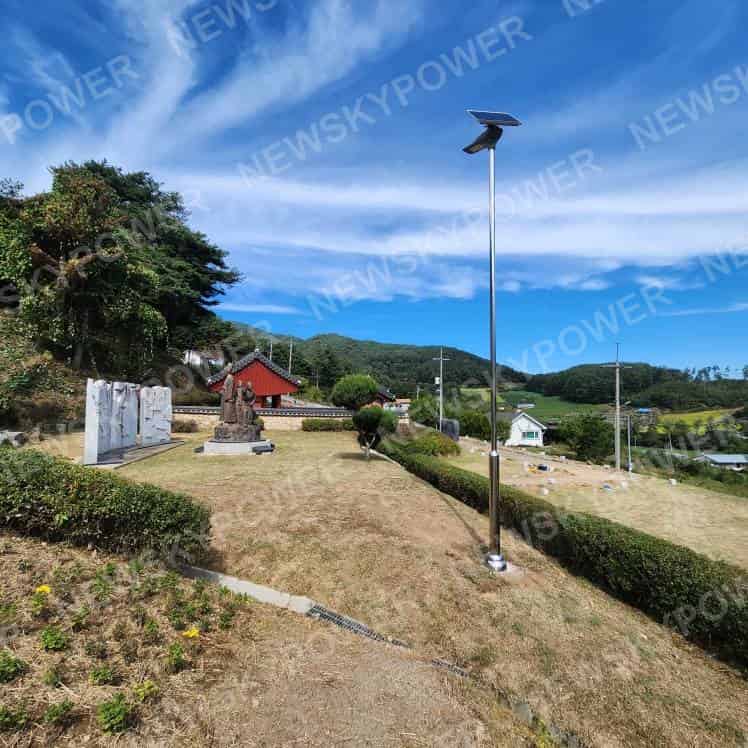
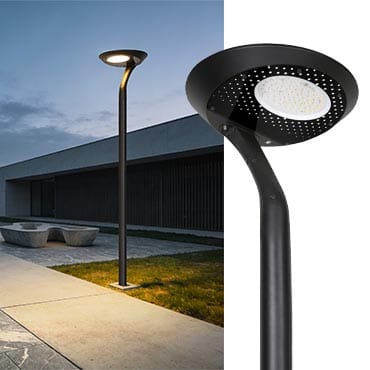
The NF semi-integrated solar street light range separates the solar panel from the lamp body. This allows panel orientation and the direction of the light to be considered separately. It remains necessary to check nearby trees, roofs and seasonal shading at the proposed mounting point. The series structure does not make a shaded position suitable by itself.
NF30W and NF60W are the two NF models supplied in the project information. Choosing between them for another site requires the target area, mounting geometry and operating schedule. Wattage alone does not specify where light falls. A lighting calculation using the proposed luminaire's photometric file can help assess the layout before pole positions are fixed.
What the night views add
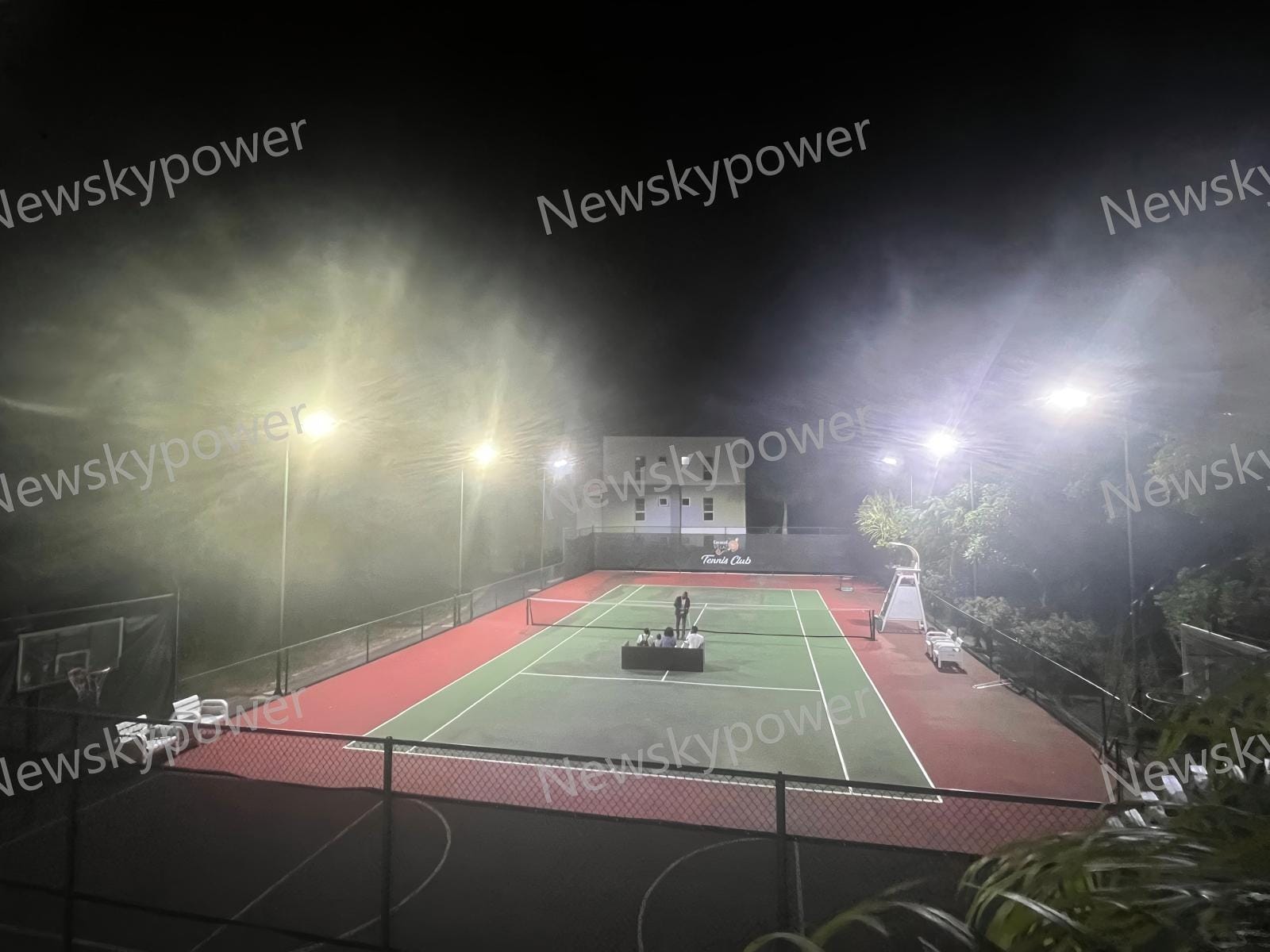
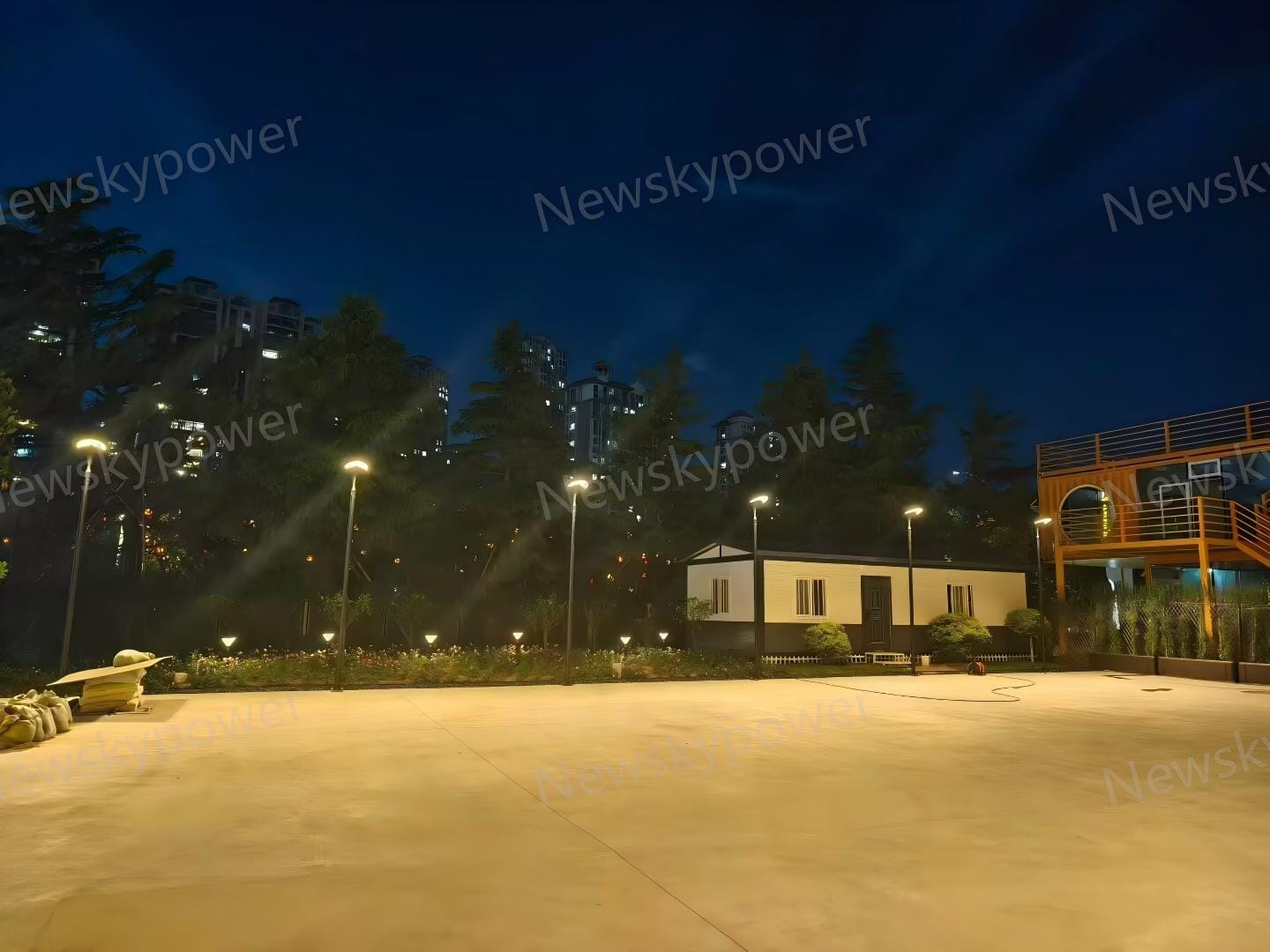
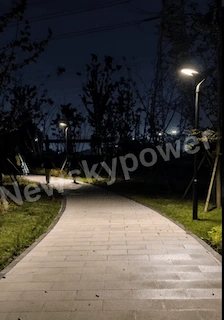
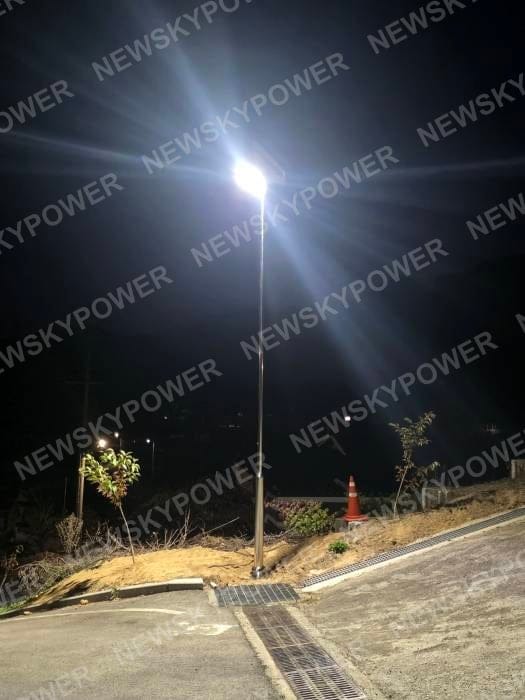
In the overview, the low lights trace the walking route and light patches of the adjacent ground. The building-side night view shows an operating light above the sloping paved approach. Another view records a solar street light beside a drainage channel and a change in level. Together, these images show the installed arrangement in use at the time of photography.
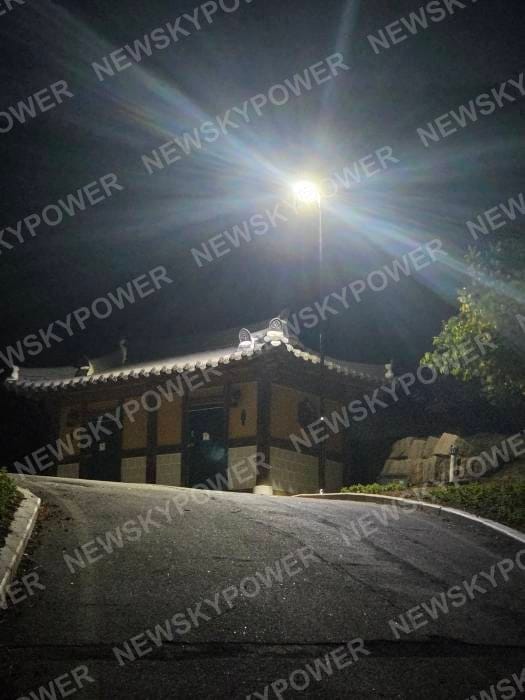
For a buyer, the useful observation is the combination of low fixtures along a route and higher-mounted fixtures at separate access positions. Night photographs do not provide a measured illuminance, uniformity or full-night operating record. Those checks need a defined lighting requirement and appropriate site measurements or operating records.
Prepare one site plan with separate lighting zones
For a comparable enquiry, mark the route and adjoining areas on one sketch, then describe the lighting task for each zone. This makes it easier to compare a bollard proposal and a solar street light proposal within the same project, without assuming that every fitting needs the same output or programme.
Provide these inputs for a useful first review:
- Path widths, slopes, steps or changes of level, plus the areas that need illumination.
- Possible installation points, available clearances, drainage features and maintenance access.
- Daytime photos showing nearby trees, roofs and the sky around each proposed solar-panel position.
- Required lighting hours and whether reduced output is acceptable during quieter periods.
- Any specified illuminance, uniformity, glare or colour requirements, and the project's location for solar-resource assessment.
System sizing should consider the lighting schedule together with the available solar energy during the design period. Separately, foundations and mounting arrangements need site-specific checks; a solar-powered light still requires a suitable physical installation. If the product structure is still undecided, compare integrated and semi-integrated solar street lights alongside the proposed layout.
Send NEWSKYPOWER a simple site sketch, daylight photographs and the required nightly operating schedule. We can review which areas are candidates for bollards, which need a solar street light option, and what further information is needed for a configuration proposal.
Buyer FAQs
Can solar bollard lights and solar street lights be used on the same site?
Yes. This installation shows both forms within one landscaped site. For a new project, assign each type to a defined lighting task and assess coverage where the zones meet.
How should bollard spacing on a sloped walkway be decided?
Use the path width, terrain, mounting arrangement, required illumination and luminaire light-distribution data. A photograph of another installation is useful for understanding the arrangement, but does not provide a spacing specification for your site.
Does choosing the higher-wattage NF model settle the lighting design?
No. The mounting height, optics, target area and operating schedule all affect the proposal. Panel and battery selection must also be checked against that operating demand and the site's solar conditions.
What is the minimum information needed for a first enquiry?
A sketch with basic dimensions, photographs of the path and adjoining areas, possible mounting points and required lighting hours provides a useful starting point. Include any project lighting specifications so that the proposal addresses them from the beginning.