


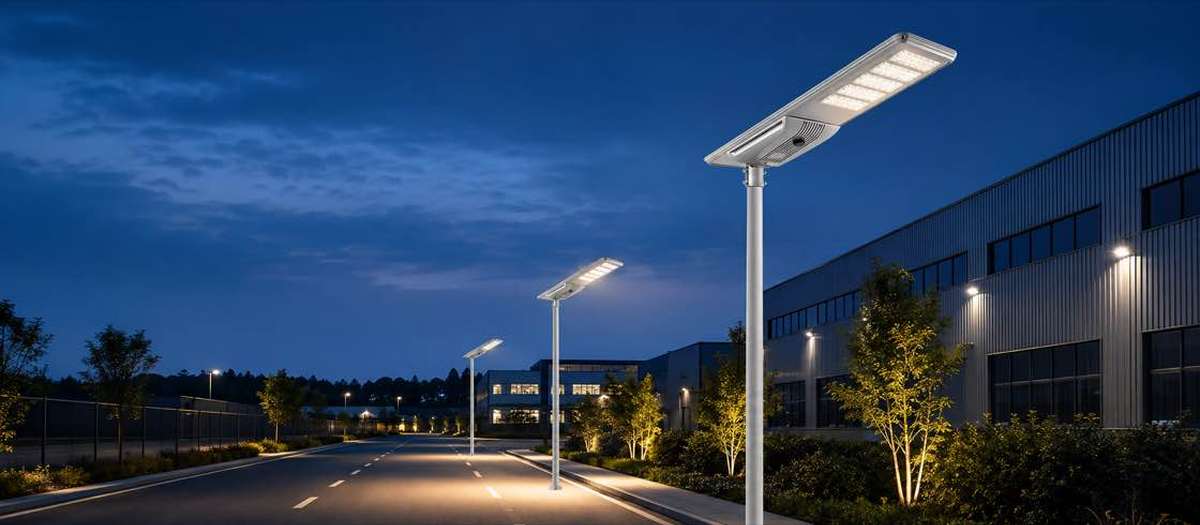
Find the Right LED Solar Street Light for Your Application
An LED solar street light combines a photovoltaic panel, rechargeable battery, controller and LED luminaire into an independent outdoor lighting system. During the day, the panel converts sunlight into electrical energy and the controller manages battery charging. At night, the controller operates the LED according to the selected program.
A suitable configuration depends on the site rather than on a single wattage label. Road width, pole height, lamp spacing, required operating hours, local solar conditions and seasonal weather all affect system selection. Buyers should compare the complete system—including the panel, battery, controller, optics, housing and mounting method—before choosing a model.
Newskypower’s current range includes all-in-one, split and application-specific designs. Model-dependent options shown in the product catalogue include monocrystalline panels, LiFePO4 batteries, smart-control functions, motion or radar sensing, MPPT control and different mounting orientations. Confirm the exact configuration and outdoor protection rating for the selected model before ordering.

- Model: LKX-60/80/100/120/130W
- MONO Solar panel
- LiFePO4 lithium battery
- Die-casting aluminum housing
- MPPT Controller
- Motion Sensor
- Supports Horizontal & Vertical Installation
- All-New External Controller
- Slide-out Battery Box

- Model: LKH-30/40/60/80/100/120W
- MONO Solar panel
- LiFePO4 lithium battery
- Die-casting aluminum housing
- MPPT Controller
- Motion Sensor
- Supports Horizontal & Vertical Installation
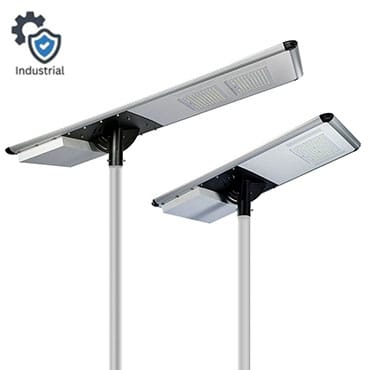
- Model: LKA-80/100/120/150W
- MONO Solar panel
- LiFePO4 lithium battery
- Die-casting aluminum housing
- MPPT Controller
- Motion Sensor
- Supports Horizontal & Vertical Installation

- Model: NZ-80/ 100/ 120/150/200W
- MONO Solar panel
- LiFePO4 lithium battery
- Die-casting aluminum housing
- MPPT Controller
- Dual-sided charging

- Model: NT-30/40/60/80/100/120/150W
- MONO Solar panel
- LiFePO4 lithium battery
- Die-casting aluminum housing
- MPPT Controller
- Supports Horizontal & Vertical Installation
- Dual-sided charging

- Model: SSP-40/60/80/100/120W
- MONO Solar panel
- LiFePO4 lithium battery
- Die-casting aluminum housing
- Motion sensor
- Supports Horizontal & Vertical Installation
- Economy Model

- Model: NF-30/40/60/80W
- MONO Solar panel
- LiFePO4 lithium battery
- Die-casting aluminum housing
- MPPT Controller
- Motion sensor is optional
- Semi-integrated design

- Model: CD06-200/300/400/500
- MONO Solar panel
- LiFePO4 lithium battery
- Die-casting aluminum housing
- Dual solar panel (Split model)

- Model: MJ-SSO100/200/300/400
- MONO Solar panel
- LiFePO4 lithium battery
- Die-casting aluminum body
- Motion sensor

- Model: SS-100/200/300 /400 /500
- MONO Solar panel
- LiFePO4 lithium battery
- Die-casting aluminum housing
- Supports Horizontal & Vertical Installation

- Model: X1-400/600/1000/1200W
- MONO Solar panel
- LiFePO4 lithium battery
- Die-casting aluminum housing

- X1Pro-500/800/1500/1800W
- MONO Solar panel
- LiFePO4 lithium battery
- Die-casting aluminum housing

- Model: MJ-XJ902/903/904/906
- MONO Solar panel
- LiFePO4 lithium battery
- Die-casting aluminum housing

- Model: NE-100/200/300
- MONO Solar panel
- LiFePO4 lithium battery
- Die-cast aluminum body

- Model: JD-H200/300/400/500
- MONO Solar panel
- LiFePO4 lithium battery
- Die-cast aluminum body
What to Compare in a Solar LED Street Light

Compare the panel, battery, controller, LED module, optics and housing as one system. A balanced configuration is more useful than evaluating a single component in isolation.

Check how the luminaire directs light across the intended road or area. The right distribution should be selected from the road geometry, pole position and target coverage—not brightness wording alone.

LiFePO4 batteries and intelligent control functions are available on selected models. Confirm the battery specification, dimming schedule, sensor mode and controller type for the exact product under consideration.

Review housing material, mounting hardware, cable routing and the model’s verified ingress-protection information. Requirements may differ for roads, coastal locations, industrial yards and residential sites.
Choose Between Integrated and Split Designs
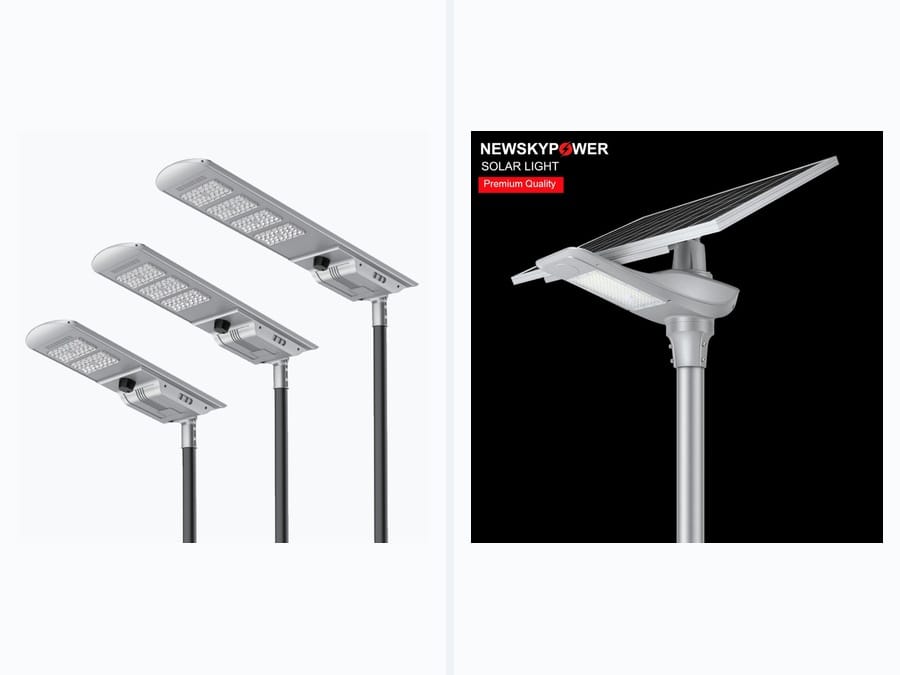
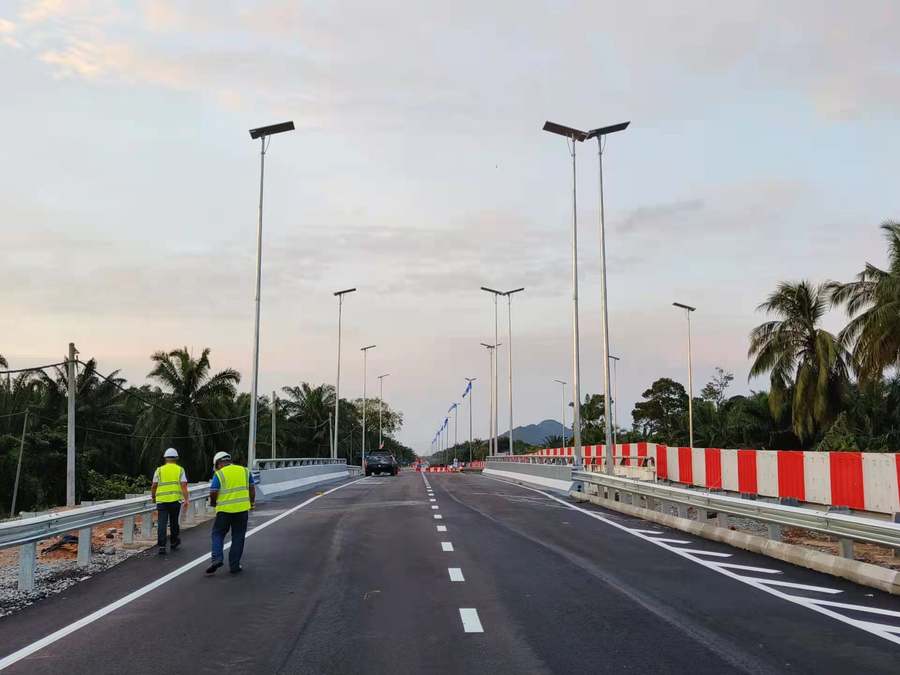
All-in-one solar street lights place the main components in a compact assembly, which can simplify transport and installation. Split designs separate the solar panel from the luminaire and battery arrangement, giving the installer more flexibility to orient the panel and configure the system for the site. The right choice depends on project access, pole structure, solar exposure, maintenance preferences and the selected model.
Start With the Site, Not the Headline Wattage
A solar light for street use should be selected from practical inputs: road dimensions, pole height, spacing, expected traffic, required operating schedule and the solar resource at the installation location. Share these details when requesting a recommendation so the proposed configuration can be reviewed against the actual application.
Applications Across Outdoor Environments
Solar powered street light systems can support roads, parking areas, industrial sites, campuses, residential communities and locations where extending grid power is difficult. Product choice should reflect the environment, mounting conditions and required lighting pattern. For public or engineered projects, the final layout should be checked by a qualified lighting or electrical professional.

Solar Street Light Project
- Commercial Solar Street Lights
- Municipal Solar Street Lights
- Residential Solar Street Light


Related Solar Street Light Models


It is an outdoor lighting system that uses a photovoltaic panel to charge a battery and an LED luminaire to provide light after dark. A controller manages charging, discharging and the operating schedule. Component arrangement varies between integrated and split designs.
An all-in-one design combines the principal components in a compact assembly. A split design places the solar panel and other components separately, which can provide more installation flexibility. Neither format is automatically better; the site, pole, solar exposure and maintenance plan should guide the choice.
Useful inputs include the installation location, road width, pole height, lamp spacing, required operating hours, lighting objective, seasonal weather, available solar exposure and purchasing quantity. Existing drawings or site photos can also help clarify the application.
LiFePO4 batteries are listed for selected models in the current product range. Battery chemistry, capacity and enclosure arrangement must be confirmed for the exact model and configuration in the quotation.
No. Motion or radar sensing, dimming programs and controller types are model-dependent. Ask for the control logic and settings of the model you intend to purchase.
Use the verified rating for the complete selected product and confirm what the rating covers. Do not assume every model has the same ingress-protection level. Installation quality, cable connections and local exposure conditions also matter.
No. Road geometry, mounting height, spacing, target illumination, operating schedule and solar conditions vary. A suitable configuration should be selected for the specific site, and engineered projects should receive a professional lighting review.