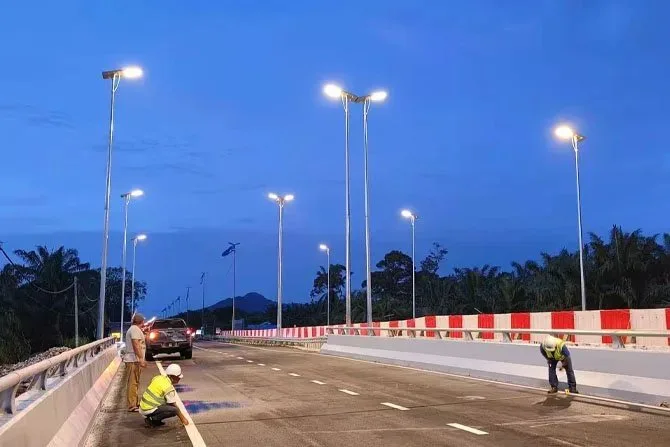


Choosing a solar street light pole starts with three decisions: what the supplier must deliver, what equipment the pole will carry, and how the pole will connect to the project foundation. A height label and a photograph are not enough to compare quotations or approve a bulk order.
For wholesalers, the useful outcome is a repeatable specification: the same completed height, joint version, mounting interfaces and packing contents from the approved sample to the delivered batch. This guide uses NEWSKYPOWER sectional Q235 steel poles to explain those decisions. The light pole range provides the commercial starting point for model enquiries.
1. Define the supply scope before comparing solar light poles
Searches for solar light poles, a solar street light post or solar powered light poles can lead to different offers. One supplier may quote only the pole; another may include the luminaire, solar panel and battery. The steel shaft itself does not generate or store electricity.
Put a bill of materials beside each quotation:
| Part of the order | What the buyer should establish |
|---|---|
| Pole assembly | Model, completed height, section count, joint version and base configuration |
| Connection hardware | Fasteners, tools and accessories included in each set |
| Foundation interface | Whether an anchor assembly, nuts, washers or a positioning template is included |
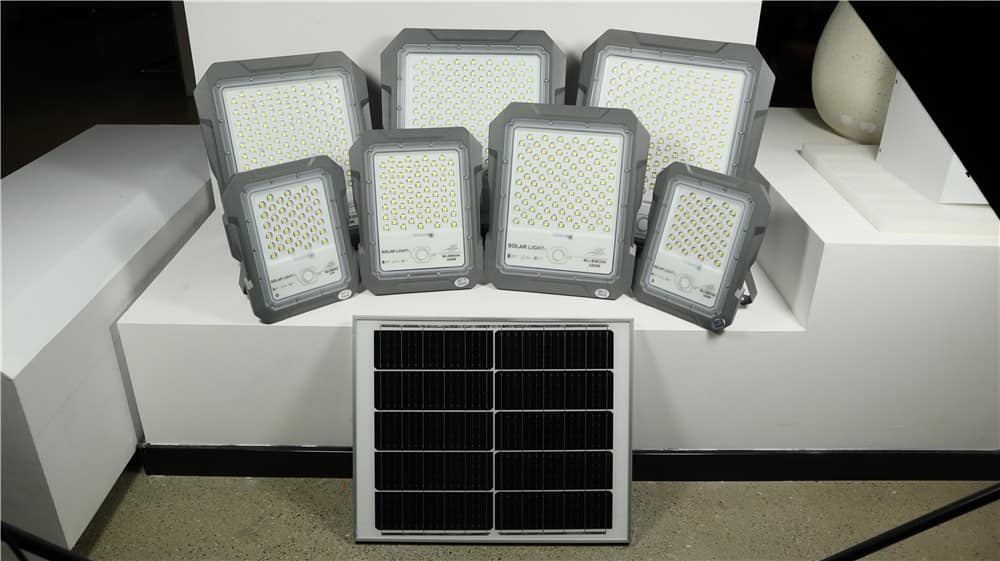
| Lighting equipment | Whether the luminaire, arm, solar panel, bracket, battery and controller are separate items |
| Documents and packing | Approved drawings, assembly instructions, labels and packaging contents |
An anchor assembly is not the same deliverable as a designed and constructed foundation. State who supplies each item and who checks compatibility. For pole-specific solar applications, use the solar light pole selection page alongside the proposed lighting equipment, rather than assuming every pictured accessory is standard. If your enquiry covers the complete lighting system, use the solar street light product range to select the lighting configuration as well as its support.
2. Start with the site requirement, then specify completed height
Choose the lighting arrangement first
The appropriate height depends on the area to be lit, the luminaire's optical distribution, target illuminance and uniformity, mounting positions and spacing. A path, an entrance and a vehicle route can require different arrangements even when they occupy similar areas.
Record the required light mounting height separately from the pole's completed height. An arm, adapter or luminaire bracket can change the final mounting position. Our solar street light installation guide explains the height-and-spacing inputs for the wider lighting layout.
Compare SP and MF using the same height definition
For the two NEWSKYPOWER specification versions below, the model height label does not always equal completed height. Joint overlap is one reason a sectional assembly must be checked as a complete product, rather than by adding the advertised lengths of loose sections.
| Model height label | Standard SP model | Completed height | Full-height MF model | Completed height |
|---|---|---|---|---|
| 2.5 m | SP-2.5M | 2.23 m | SP-2.5MF | 2.50 m |
| 3 m | SP-3M | 2.82 m | SP-3MF | 3.00 m |
| 3.5 m | SP-3.5M | 3.23 m | SP-3.5MF | 3.50 m |
| 4 m | SP-4M | 3.73 m | SP-4MF | 4.00 m |
| 5 m | SP-5M | 4.65 m | SP-5MF | 5.00 m |
| 6 m | SP-6M | 5.72 m | SP-6MF | 6.00 m |
These values belong to the identified SP and MF specifications. Put the selected model, completed height and approved drawing revision on the order; do not apply the table to another joint or product version. The SP split pole product details are the next step for a model-specific discussion.
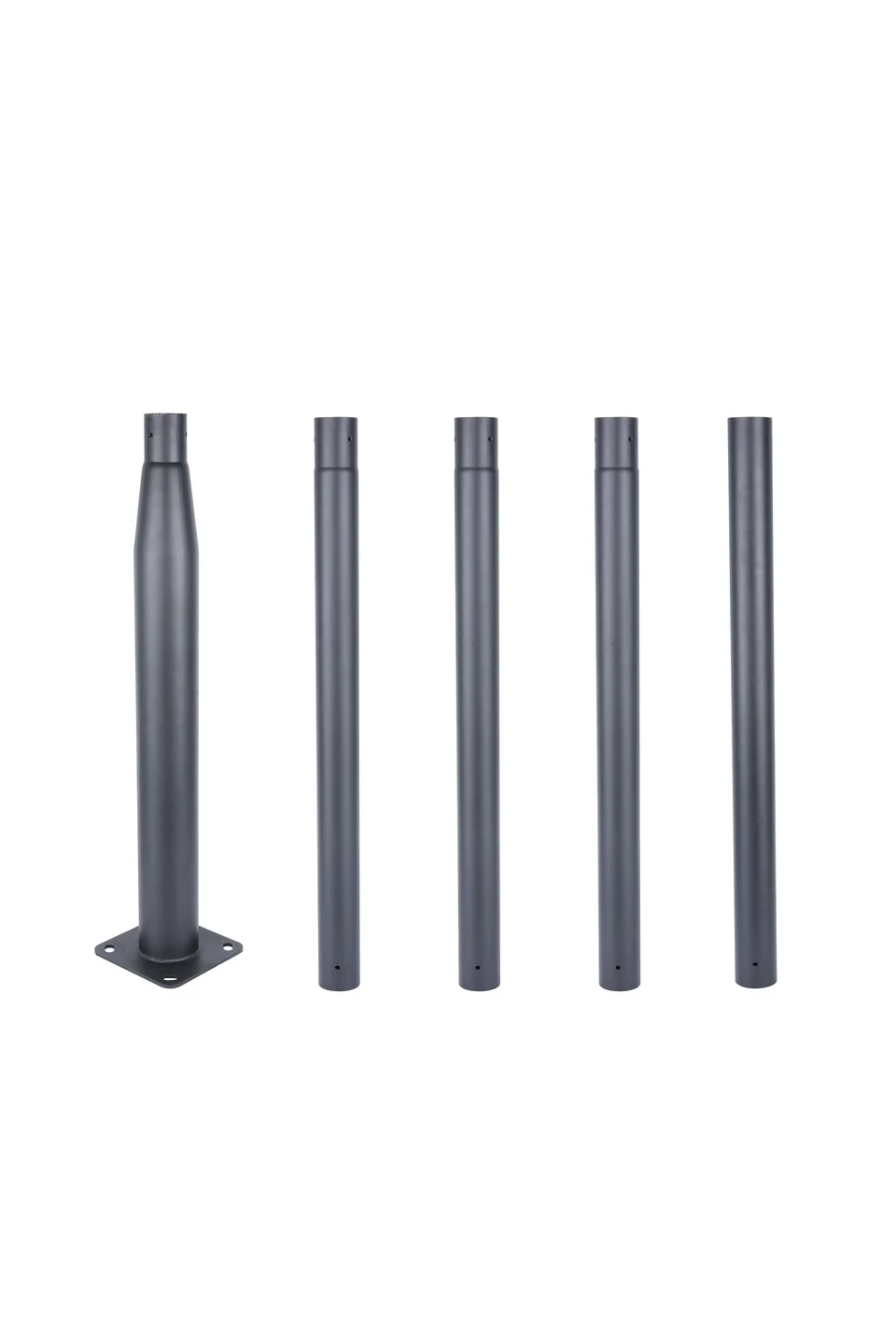
A purchasing decision: 5 m on the order means which height?
If a project brief requires 5.00 m completed pole height, standard SP-5M at 4.65 m does not meet that stated height. SP-5MF is the corresponding full-height model to discuss, subject to its own drawing, section list and equipment review. If the brief instead specifies a 5 m luminaire mounting height, establish the arm and bracket arrangement before choosing the pole.
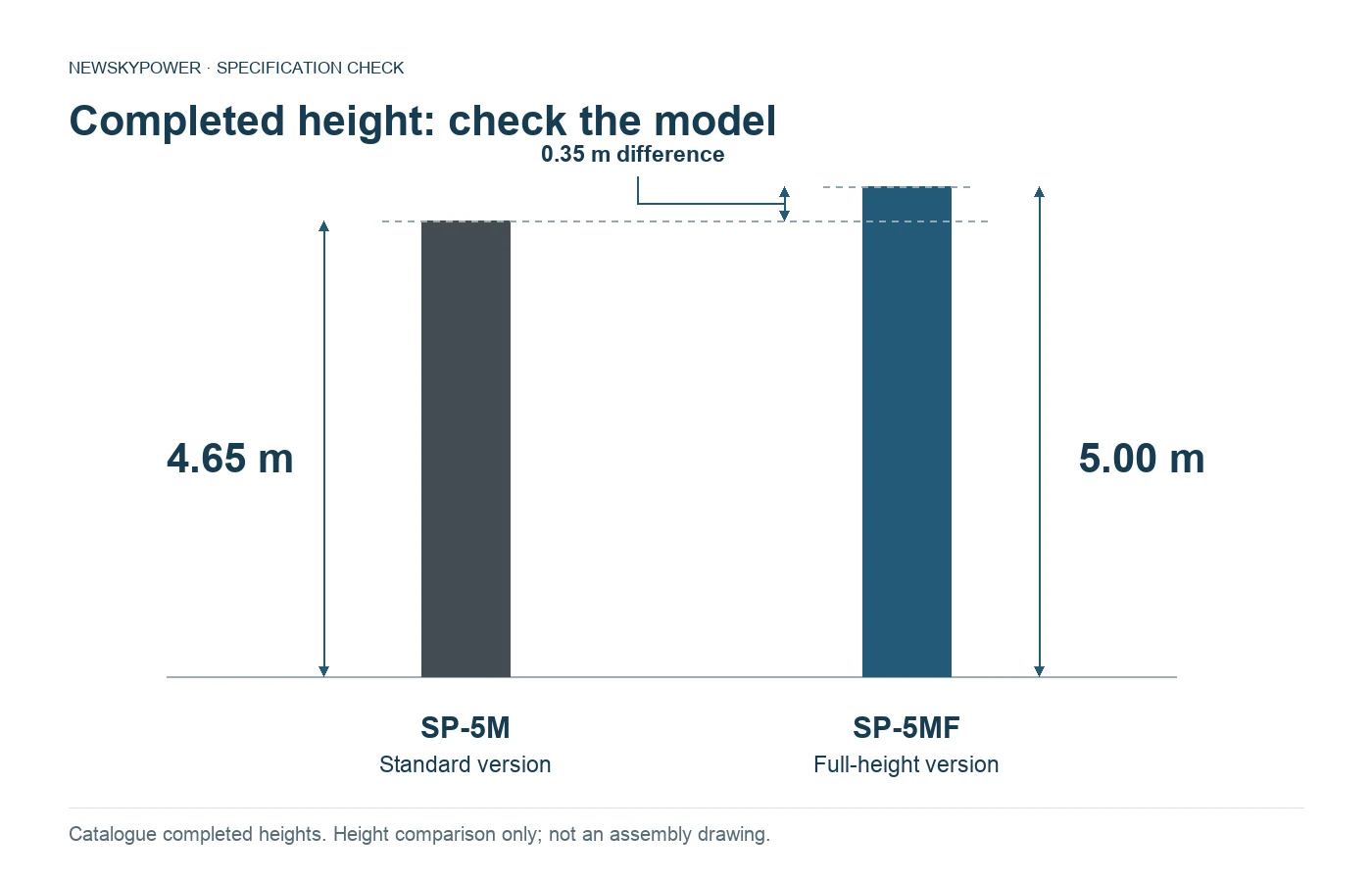
A clear enquiry states the required completed height and full model code together. Do not carry the SP-5M packing figures into an SP-5MF quotation: a similar model name does not establish an identical section arrangement or shipment.
3. Build a street light pole specification that can be quoted
A useful street light pole specification covers both the shaft and its connections. It also identifies which information is already fixed and which needs supplier review.
| Specification field | Procurement detail to record |
|---|---|
| Height and configuration | Model, completed height, section arrangement and joint type |
| Steel and dimensions | Material grade, selected wall thickness, relevant diameters and drawing tolerances |
| Surface protection | Agreed galvanizing/coating process, colour, inspection criteria and repair requirements |
| Top assembly | Luminaire, arm, panel and battery arrangement; bracket drawings and mounting orientation |
| Base connection | Base plate, hole pattern, anchor arrangement and cable entry drawing |
| Shipment | Set contents, packed dimensions, net/gross weight definitions and identification labels |
NEWSKYPOWER's SP/MF documents specify Q235 steel. Surface treatment is a separate selection: write the agreed process into the quotation instead of using “galvanized” as a complete specification. A black surface or a process photograph cannot establish coating thickness, corrosion-test results or the exact galvanizing method.
Where project requirements differ from the standard configuration, send them through the custom light pole enquiry route. Ask which requirements can be supplied and documented before finalising the purchase specification.
A documented example: standard SP-5M with a 2.0 mm wall
The following example uses NEWSKYPOWER's standard SP specification and parameter sheet. It selects the 2.0 mm wall option for SP-5M; it is a catalogue configuration, not a customer order or a test result.
| Field | Documented SP-5M example | How to use it when buying |
|---|---|---|
| Model/version | Standard SP-5M, 2.0 mm wall option | Keep the model and selected thickness together |
| Completed height | 4.65 m | Compare with the required completed height, not the 5 m model label |
| Material | Q235 steel | Specify the finish separately |
| Upper sections | Ø76 mm; four sections listed at 1 m each | Match the section list to the approved joint drawing |
| Bottom section | Ø114 mm; one section listed at 1 m | Include the base configuration in the same drawing set |
| Catalogue gross weight | 25 kg for the 2.0 mm option | Use as G.W. for the listed packing configuration, not bare-pole N.W. |
| Listed carton dimensions | 1020 × 240 × 230 mm | Confirm the packing contents and final shipment configuration |
Confirm whether anchors and accessories are included in the quoted packing contents and agree the final shipment weight. The listed section lengths total 5 m before accounting for the assembled connections; the documented completed height is 4.65 m. For a repeat order, attach the accepted drawing revision and bill of materials to this specification. For a different finish, accessory set, connection version or MF model, request the corresponding dimensions and packing data instead of copying this example.
4. Match the luminaire, panel and joint as one assembly
Buying a pole for an existing solar light
When selecting a pole for solar light equipment already purchased, send the actual mounting drawing. Include the mounting diameter or hole pattern, insertion length, arm projection, orientation and equipment weights. A similar-looking bracket does not establish fit.
For a solar LED street light pole, consider everything attached above the shaft: the luminaire, arm, panel, battery enclosure and their brackets. Identify the total arrangement, not only the lamp head.
A solar panel light pole with a separate panel also requires the panel dimensions, tilt and mounting position. Wind exposure and the distance of equipment from the pole affect the structural assessment. A catalogue load-weight figure alone cannot confirm an arbitrary panel-and-arm combination.
Keep joint versions separate
Sectional poles may use different connection methods. Match the joint drawing, hardware list and assembly instructions to the delivered version. Do not transfer the instructions for a knock-in connection to a bolted connection, or mix replacement sections because their external diameters appear similar.
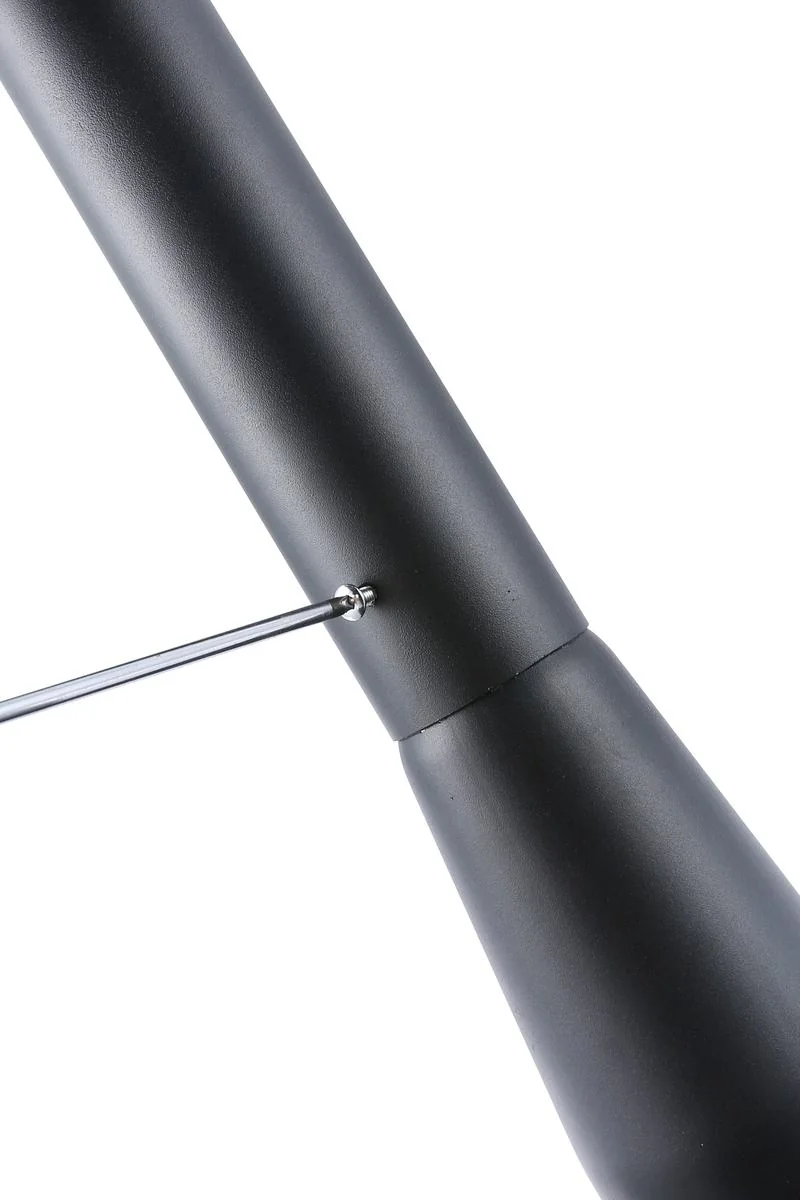
For joint selection and section handling, see the modular light pole buying guide. The key procurement record is the approved assembly, with compatible sections and hardware identified together.
5. Treat the foundation interface as a documented handover
Match the base plate and anchor arrangement
The connection between street light poles and their foundations needs a shared drawing. Before manufacturing anchors or constructing a foundation, compare the pole supplier's base details with the project's foundation design.
The interface drawing should identify:
- Base-plate outline and thickness, hole size and hole-centre positions.
- Anchor arrangement, specified fasteners, projection and relevant installation tolerances.
- Cable entry position, route through the base and clearance for the selected arrangement.
- Pole orientation, foundation top level and the agreed installation detail.
- Drawing number, revision, units and the people responsible for acceptance.
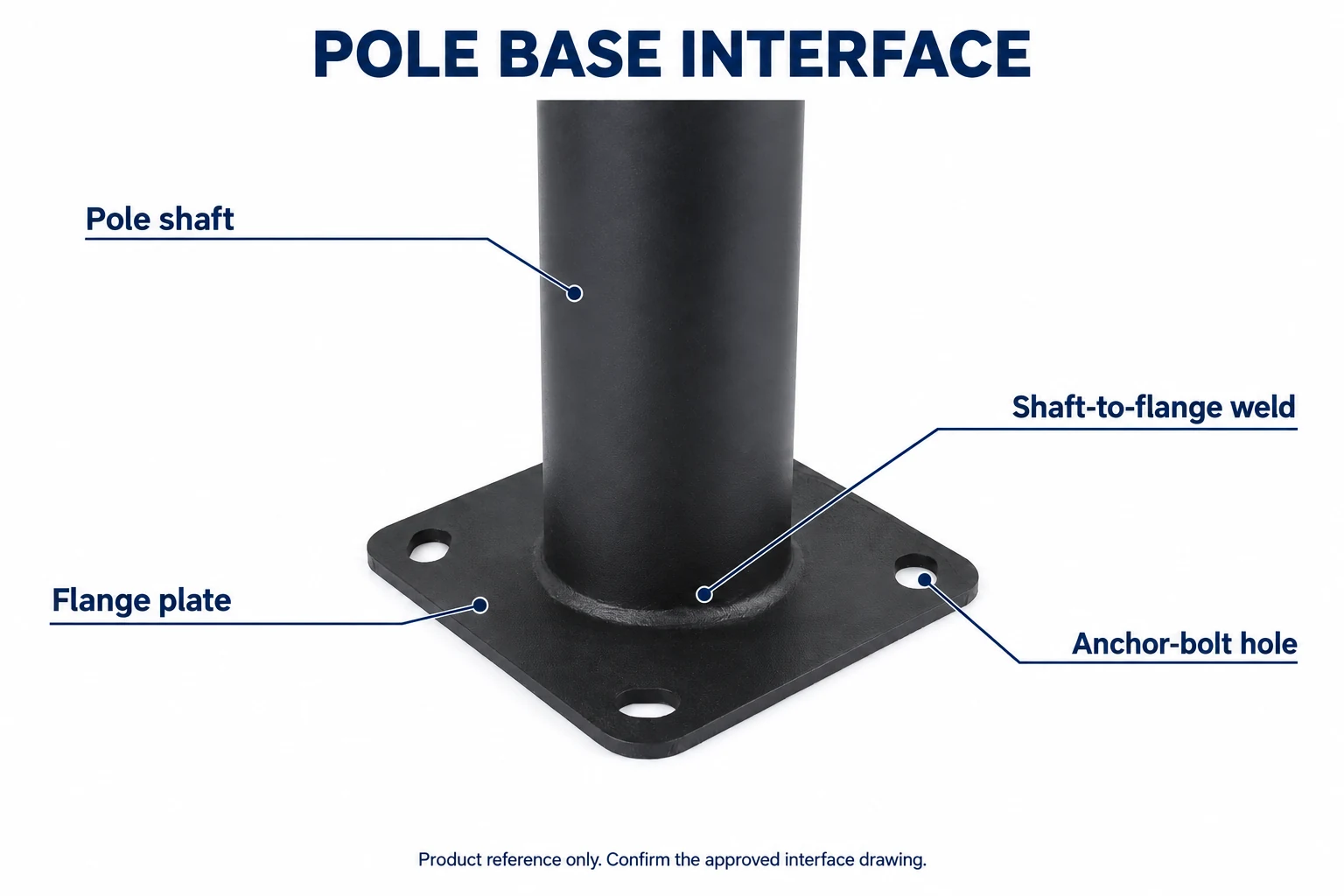
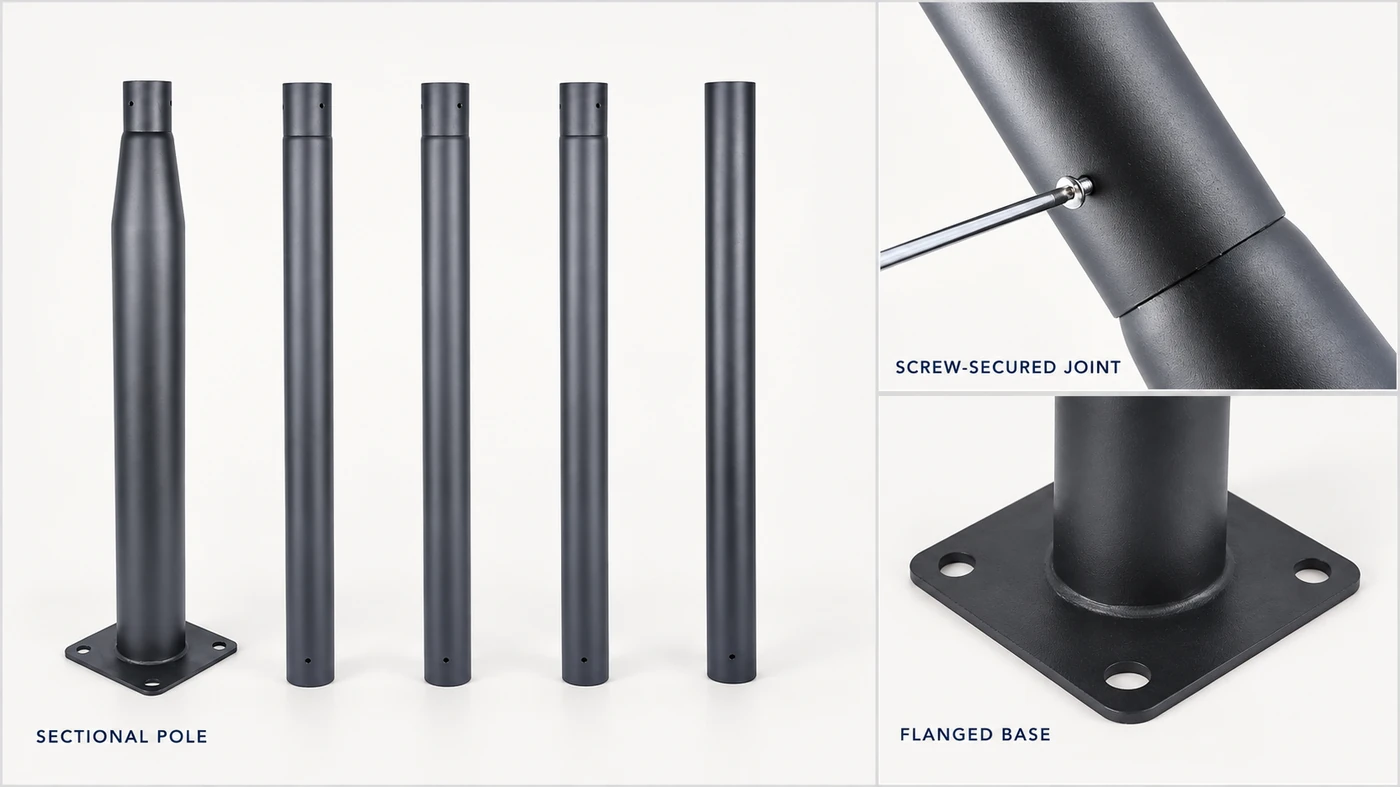
Use each visible feature to ask for the relevant document:
| Label in the illustration | Detail to obtain before approval |
|---|---|
| Pole shaft | Selected model identity and corresponding bottom-section drawing |
| Flange plate | Plate outline, thickness and specified material |
| Shaft-to-flange weld | Applicable drawing detail and agreed inspection criteria |
| Anchor-bolt hole | Hole size, centre positions and orientation; matching anchor layout |
The photograph does not show the anchor assembly or the complete cable route. Obtain the specified fasteners, anchor projection, cable entry and required clearances from the coordinated drawings rather than inferring them from the image.
A useful interface review compares the pole drawing, anchor drawing and foundation drawing together. The buyer should be able to identify which revision fixes the hole pattern, who supplies the matching hardware and who accepts the site-specific foundation.
An existing concrete base needs its own review. Measurements and photographs help identify it, but they do not establish that it can support a new pole-and-equipment assembly. Substituting different anchors or drilling a different hole pattern requires assessment of the resulting connection.
Agree who checks each part
The pole supplier provides the agreed pole and interface information. The project's responsible designer assesses the support arrangement using the site conditions, equipment configuration and applicable requirements. The purchaser coordinates the documents; the installer works to the accepted design and assembly instructions.
Foundation dimensions, reinforcement, anchor suitability and connection details depend on those inputs. A generic depth or bolt torque copied from another model is not a purchasing specification for this project. Complete the interface review before the foundation work fixes the connection in place.
6. Inspect the sample, then make the batch traceable
Use the approved sample to agree observable acceptance checks: section identity and fit, fastener contents, hole positions, visible weld/coating condition and the correspondence between the product and its drawing. If dimensional inspection or test records are required, state the method, acceptance criteria and document responsibility in the order.
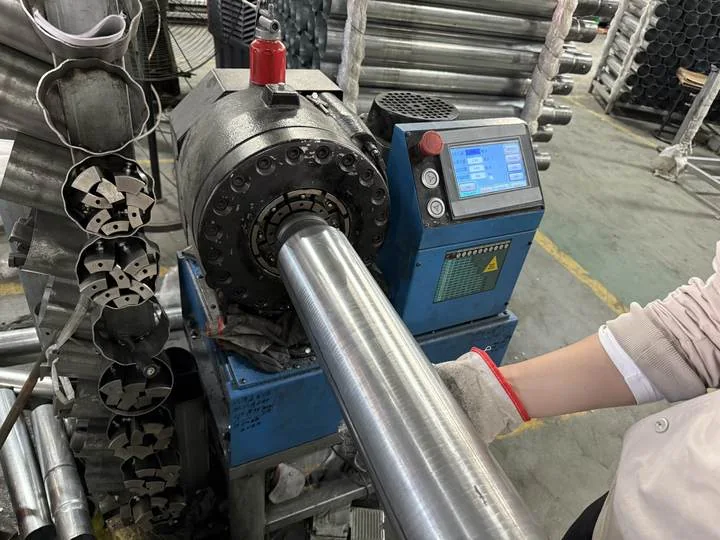
NEWSKYPOWER's production documentation describes tube-end forming, flange welding, surface preparation and fit checking. These are useful subjects for a supplier review; a photograph of a process is not proof of a particular batch's inspection result or structural capacity.
Record the model and revision on the packing list and labels so the distributor can identify each set at destination. The sectional pole specification and delivery checklist provides a more detailed framework for document and arrival checks.
7. Compare packed shipments and weight on the same basis
Distinguish bare-pole net weight, equipment weight, packed gross weight and any stated load rating. They answer different questions. In the SP-5M example above, 25 kg is the parameter sheet's G.W. for the 2.0 mm option. It is not a verified bare-pole N.W., a measured weight for a customer shipment or evidence of how much equipment the pole can carry.
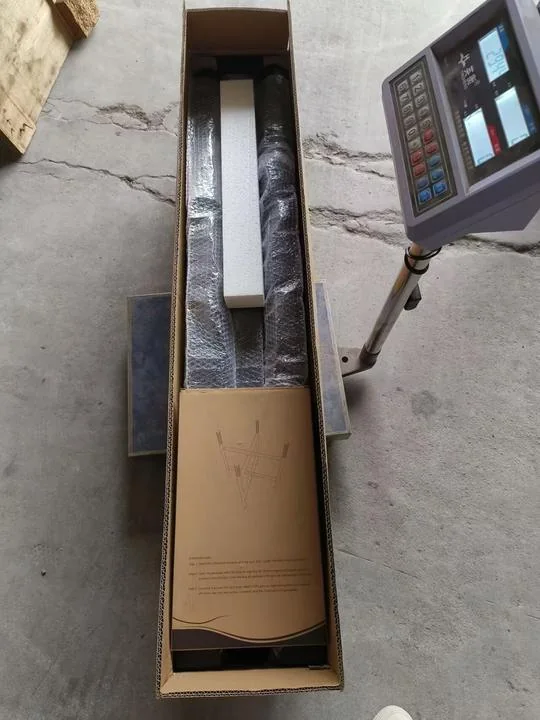
Ask for the dimensions and gross weight of the selected packing configuration, set count, accessory packaging and labelling. Include destination handling and final-site access when comparing a sectional pole with a one-piece alternative. Our modular versus one-piece pole cost comparison separates these purchasing costs without assuming a fixed saving for every order.
8. Send a quotation brief the supplier can act on
A first enquiry can be short. Provide the quantity, destination and required completed height, then attach the available luminaire, panel and base drawings. Identify any missing inputs so the supplier can explain what must be resolved.
For the final quotation, agree:
- Pole model/version, completed height, material and surface treatment.
- All mounted equipment, interfaces and the required project review.
- Pole, hardware and anchor supply responsibilities.
- Drawing revisions, inspection requirements, packing and labels.
- Commercial terms, sample approval, delivery requirements and replacement-part identification.
If the application is still being defined, the sectional pole applications guide helps organise the site questions. To discuss a wholesale or project order, send NEWSKYPOWER your pole requirements and available drawings.
Frequently asked questions
1. Is a street lamp pole the same as a solar street light pole?
The terms can describe similar supporting structures, but the attached equipment and supply scope differ. Check whether the quotation covers a pole alone or a complete solar lighting system, and verify the proposed assembly rather than relying on the name.
2. What is the best height for solar street lights?
There is no single best height for every site. Use the lighting task, luminaire optics, required illumination, spacing and mounting arrangement to establish the design height. Then select a pole with the appropriate completed height and interfaces.
3. Does SP-5M mean a completed height of 5 metres?
Not in the standard SP specification shown here: SP-5M has a completed height of 4.65 m, while SP-5MF is 5.00 m. Keep the full model code and approved drawing on the purchase order; the same height label can refer to different versions.
4. What should a street light pole specification include?
Include completed height, material, dimensions, joint configuration, surface treatment, mounted equipment and top/base interfaces. Add the supply list, drawing revisions, inspection requirements and packing information so suppliers quote the same deliverable.
5. Can the same poles support different solar lights?
They may be suitable for more than one arrangement, but compatibility needs checking. Submit the mounting details, equipment weights, panel dimensions and arm geometry for each arrangement. A matching mounting diameter alone is insufficient.
6. Can an existing concrete foundation be reused?
Only after its condition, geometry, anchors and suitability for the proposed assembly have been assessed. Obtain the existing records and measurements where available, and coordinate them with the pole supplier's interface drawing and the project's responsible designer.
7. Are anchors and a foundation included with the pole?
Treat them as separate quotation items. Confirm whether an anchor assembly, nuts, washers and any positioning template are included. Site-specific foundation design and construction also need an identified responsible party; they are not implied by the presence of an anchor kit.
8. How much does a street light weigh?
First define the object: luminaire, bare pole, complete mounted assembly or packed shipment. For example, the SP-5M parameter sheet lists 25 kg G.W. for its 2.0 mm configuration; that is not the bare-pole net weight. Request N.W. and the final packed G.W. separately. A maximum load figure is a different parameter again.
9. Is galvanized steel enough to specify the finish?
No. Agree the galvanizing/coating process, colour and required inspection evidence for the intended environment. Put that selected finish in the order. Do not infer the process or corrosion performance from the visible colour of a pole.
10. What should wholesalers check before approving a bulk order?
Check that the sample, drawings and quotation identify the same model, height and connection version. Confirm the equipment and foundation interfaces, set contents, packing labels and agreed inspection records. Resolve exceptions before authorising the batch against that specification.
Related Posts
Explore the buying guides for other solar lighting and off-grid product categories.