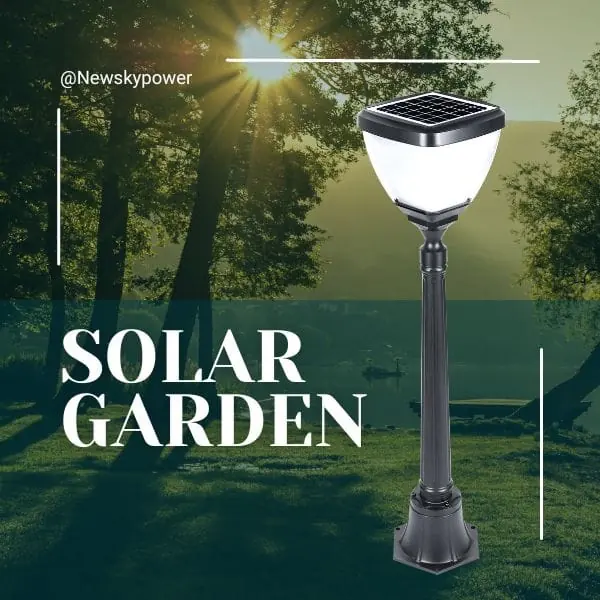


Choosing a solar light for a yard is easier when you start with the job the light must do, not with wattage or appearance. A decorative stake light, a fixed bollard and a pole-top courtyard light may all use solar energy, but they serve different locations and must be evaluated differently.
This guide explains how to choose solar garden lights by purpose, installation position, sunlight conditions, lighting needs and maintenance access. It also shows where to continue when you need a specific product type or a real project example.
1. Decide Whether You Need Lighting, Decoration or Both
First define the result you want after dark.
- Functional lighting helps people identify a route, entrance, step, edge or activity area. The design should consider the required light level, distribution, glare control and operating time.
- Decorative lighting emphasizes plants, walls, water features or landscape form. Appearance and atmosphere may matter more than broad ground coverage.
- Combined lighting must balance visibility with visual comfort. One product does not have to perform every task; a site can use several types of fixtures.
Write down the exact area before comparing products: a soft-soil garden border, a paved pathway, an existing gate pillar, a wall beside a side passage, or an open courtyard with poles. This prevents a common buying mistake – comparing products that are not designed for the same installation method.
2. Choose the Right Type for the Installation Position
Solar pathway lights for soft ground and route marking
Solar pathway lights are commonly considered for garden borders, planting areas and route markers where a ground stake can be installed. Check the soil condition, stake strength, expected movement and whether the light is intended mainly for orientation or for useful ground illumination.
Solar bollard lights for fixed low-level lighting
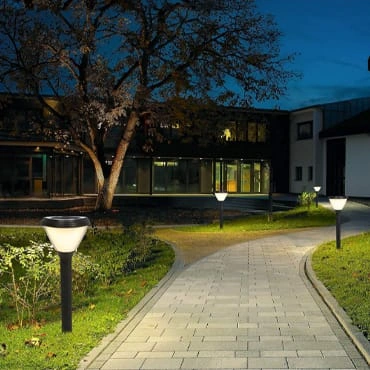
Solar bollard lights are self-supporting low-level fixtures used beside paths, lawns and landscape zones. Unlike simple stake lights, they normally require a stable base or mounting surface. Check the base, fixture height, plant growth, possible impact and access for cleaning.
Solar pole lights for a pole-and-luminaire system
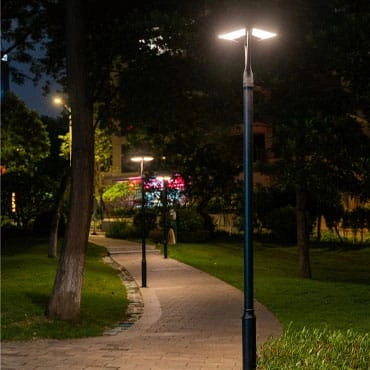
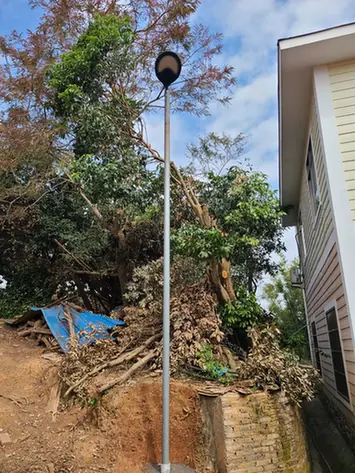
Solar pole lights suit projects that need a complete pole-based lighting arrangement. Confirm whether the quotation includes the pole, how the pole and luminaire connect, whether the system uses one or more light heads, and what foundation, transport and lifting work the site requires.
Solar courtyard lights for pole-top applications
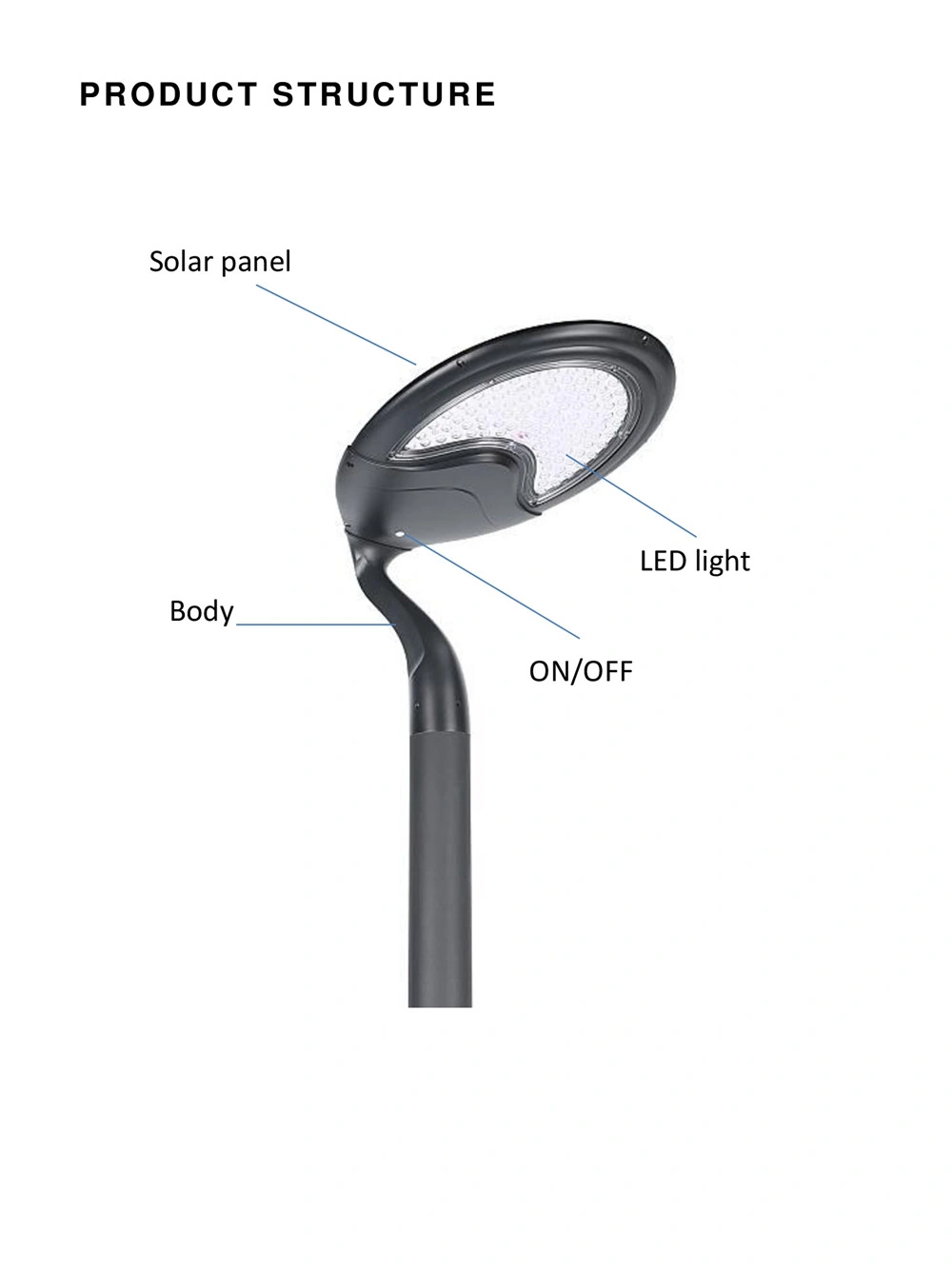
Solar courtyard lights are useful when a project needs a garden-style pole-top luminaire or already has a compatible pole. Check the mounting interface, recommended installation range, solar exposure at the luminaire position, light distribution and the relationship between pole spacing and the target area.
Solar pillar lights for gates and boundary columns
Solar pillar lights are designed for a gate pillar, wall column or similar horizontal surface. Measure the available surface, base dimensions and fixing points. Do not assume that one base fits every masonry, metal or timber pillar.
Solar wall lights for entrances and side passages
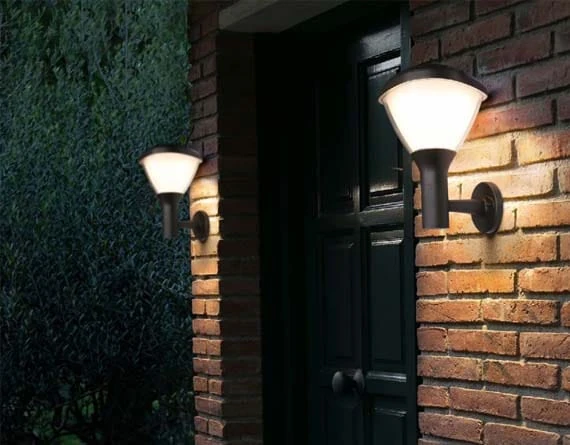
Solar wall lights can suit entrances, courtyard walls and side passages. Check the mounting surface, the sunlight reaching the panel, the direction of light and the modes supported by the specific model. Constant, timed and motion-triggered operation are different functions; they should not be assumed unless the product documentation lists them.
These categories can be combined. For example, a courtyard may use pole-top lights for the main route, wall lights at entrances and small pathway lights as landscape markers.
3. Check Sunlight and Define the Nighttime Requirement
A solar light is a small energy system. The panel collects energy during the day, the rechargeable battery stores it, and the luminaire uses that stored energy at night. The result depends on both energy collection and energy consumption.
Assess the proposed location at different times and, where possible, in different seasons. Trees, buildings, eaves, walls and the luminaire itself can shade a panel. Winter sun paths and longer nights may make a location more demanding than it appears in summer. Day length alone is not enough; the useful solar resource at the panel and the duration of shading both matter.
Then define the night requirement:
- Which surface or object must be visible?
- How many hours of operation are required?
- Is a lower output acceptable during low-traffic periods?
- Must the project meet a target illuminance or other lighting criterion?
- What happens after several low-sun days?
If the project requires a measured lighting result, use a layout and photometric data rather than judging from a product photograph. A night image can show appearance, but it cannot establish illuminance, uniformity or glare performance by itself.
4. Read the Key Specifications as a System
Light output, distribution and color temperature
Lumens describe total light output, while illuminance describes the light reaching a surface. The useful result also depends on mounting position, optics, spacing, obstructions and aiming. A single lumen range cannot be used as a universal answer for stake, bollard, pillar and pole-top lights.
Color temperature describes the visual color of the light. Warmer light can support a softer residential atmosphere, while cooler light may create a different visual impression. Neither option automatically guarantees better visibility. Output, distribution, glare and layout still need to be considered.
Beam shape comes from the optical and mechanical design, not simply from how closely the LED chips are arranged. Ask for a light distribution curve or project layout when the lighting task is important.
Solar panel and site energy input
Do not use one minimum panel wattage as a rule for every light. Compare the actual panel specification with the site’s winter solar resource, shading and expected energy use. A larger panel may collect more energy under comparable conditions, but size alone does not prove better conversion efficiency or reliable operation in every climate.
Panel angle adjustment, a separate panel or USB charging are model-specific features. Only include them in the selection if the exact product supports them.
Battery voltage, capacity and operating program
Battery capacity should be reviewed with voltage. Amp-hours alone are not a complete comparison. Nominal energy can be estimated as:
Nominal battery energy (Wh) = voltage (V) x capacity (Ah)
Actual usable energy is lower than the nominal figure and depends on the battery pack, controller limits, temperature, ageing and system losses. Operating time also depends on the real electrical load and the programmed output through the night.
Timed dimming can be a useful energy-management approach, but it is not a standard feature of every solar light. Confirm the available program before using it in a project calculation.
Never replace one battery chemistry with another only because the case looks similar. The battery, voltage, battery-management system, controller, charging limits and temperature protection must all be compatible. Follow the manufacturer’s instructions for the exact model.
IP rating, materials and temperature limits
An IP rating describes protection against specified levels of solid-particle and water ingress. It does not by itself prove resistance to freezing, condensation, corrosion, impact or every outdoor environment.
Material descriptions such as die-cast aluminum, stainless steel, glass, PC or ABS identify construction materials, not completed durability tests. For cold, coastal, humid or chemically exposed sites, ask for the relevant operating limits, coating information and test evidence.
5. Check Installation and Maintenance Before Buying
An independent solar system can reduce the need for supply cabling, but it is not installation-free. Depending on the product, the project may still require a pole, foundation, anchor bolts, wall fixings, access equipment, structural checks and safe working procedures.
Before ordering, confirm:
- the exact mounting method and interface dimensions;
- whether the pole, base, fasteners and foundation are included;
- the recommended installation range and any project-specific structural requirements;
- access to the panel and luminaire for inspection;
- cleaning guidance for dust, leaves, bird deposits or snow;
- battery and spare-part policy for the supplied version;
- warranty scope, exclusions and the evidence required for a claim.
Maintenance usually includes checking shade, keeping the panel surface reasonably clear, inspecting fixings and looking for damaged seals or housings. Rechargeable batteries also age. Whether a battery is replaceable, who may replace it and which part is approved must come from the product manual or supplier.
6. Continue Reading by the Question You Need to Solve
Fundamentals and initial decisions
Start with suitability, then learn how to compare the specifications behind a complete solar lighting system.
Product formats and solution selection
Compare fixture types, mounting formats and operating modes before choosing a product family.
- Solar stake lights versus fixed bollard lights
- Choosing solar bollard light height
- Solar pole light kits versus post-top fixtures
- Single-head versus multihead solar pole lights
- Sizing solar pillar lights
- Constant-on versus motion-sensor solar wall lights
- Coordinating a courtyard lighting layout
- Solar versus low-voltage landscape lighting
Site planning, layout and retrofit
Use these guides to plan spacing, mounting and application-specific layouts for new or existing sites.
Brightness, runtime and environmental conditions
Check light distribution, colour, solar exposure, weather protection and seasonal performance.
Installation, troubleshooting and maintenance
Follow practical checks for installation, cleaning, fault finding, service life and ongoing maintenance.
Commercial buying and validation
Prepare project information, compare offers on the same basis and verify samples before placing an order.
Real project examples
Review two installations and compare their site conditions, fixture selection and mounting approach with your own project.
7. Frequently Asked Questions
What type of solar light is best for a garden path?
It depends on the surface and the lighting task. Stake pathway lights may suit soft ground and route marking. Fixed bollards may suit a stable low-level installation. Pole-top courtyard lights may be more appropriate when the project needs broader lighting from a higher position. Compare mounting, light distribution, solar exposure and maintenance access.
How many lumens should a solar garden light have?
There is no universal number for every garden light. Define the area and task, then assess light output together with optics, mounting height, spacing and the target surface. Use photometric data or a lighting layout when the project has a measurable requirement.
Can solar garden lights work all night?
Some systems may support long operating periods under suitable conditions, but the result depends on solar input, battery energy, load, operating program, temperature and weather. Ask for the test conditions or a project-specific energy calculation instead of relying on an unconditional claim.
Are solar garden lights wire-free?
They can operate without a grid-supply cable when the panel, battery and luminaire form an independent system. However, poles, foundations, mounting hardware and maintenance access may still be required.
What should I send a supplier for a project recommendation?
Provide the location, application, site photos or drawings, shaded areas, required operating time, target lighting result, mounting conditions and expected quantity. This gives the supplier a better basis for matching the fixture, panel, battery and operating program to the project.